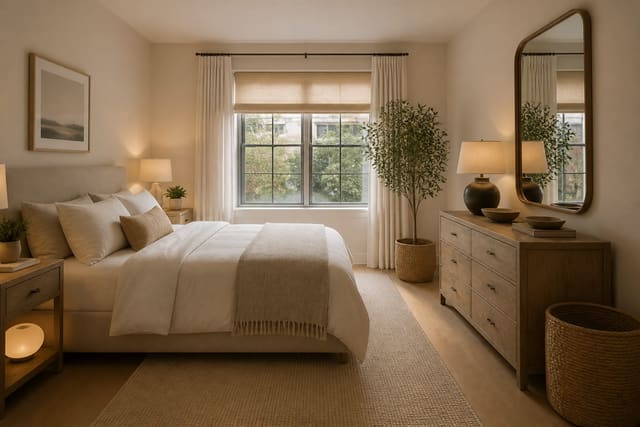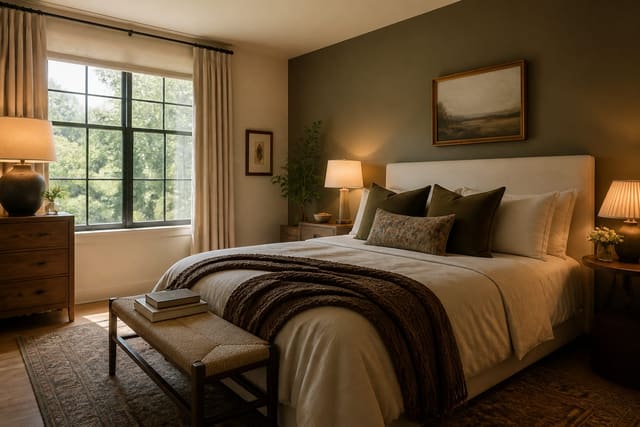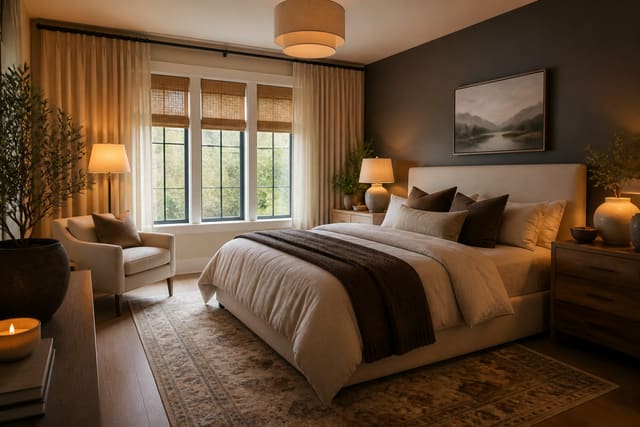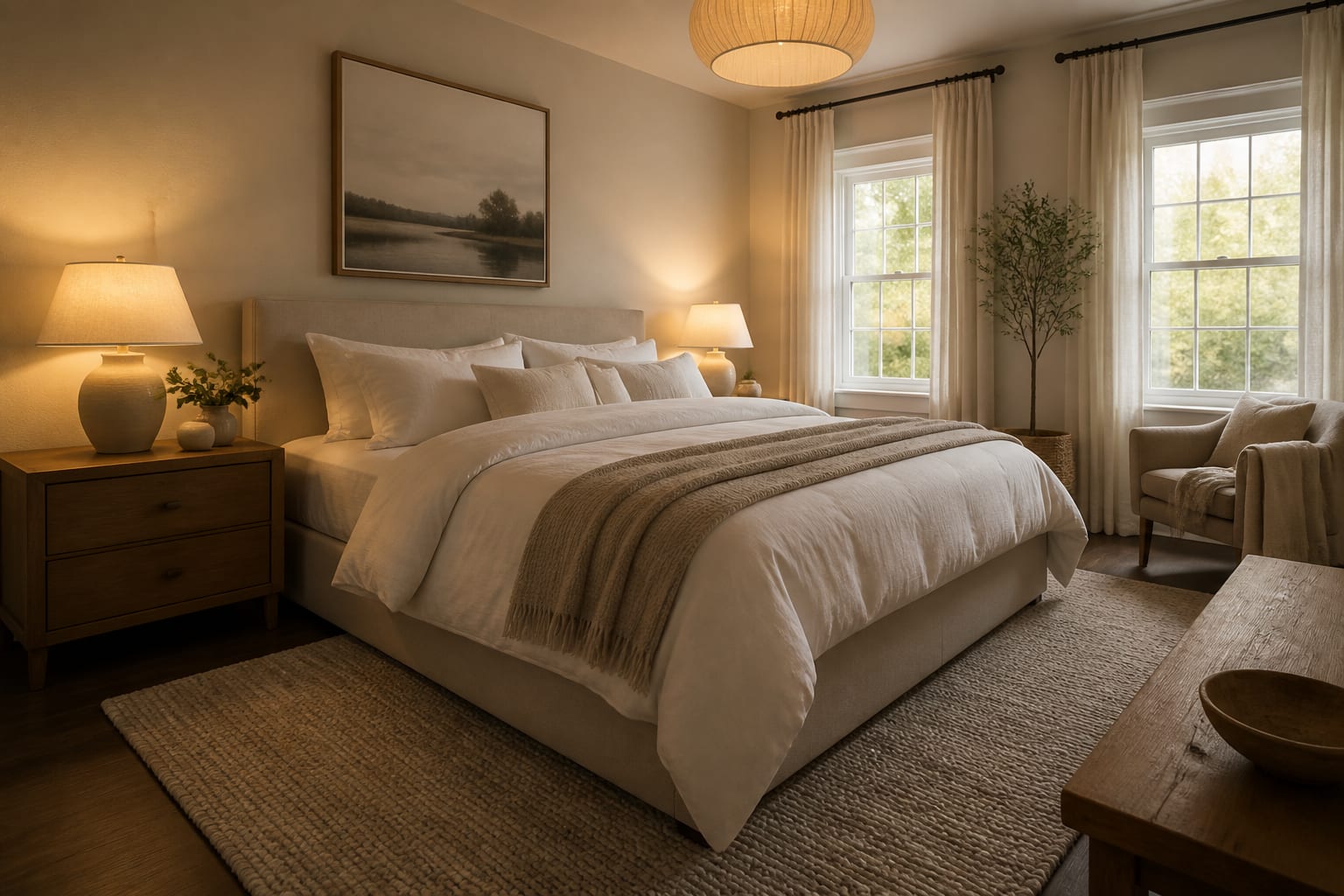
Your bedroom is the only room whose entire job is to help you stop, and most bedrooms quietly betray that job. The honest answer is that a bedroom rarely needs a renovation; it needs an edit. The laundry chair, the cable rats' nest behind the nightstand, the eight half-used products on the dresser, these are the things standing between you and a room that actually feels like rest. You can reset most bedrooms in a single focused afternoon with no budget beyond a few storage bins.
The trick is to work in a fixed order so you do not just shuffle clutter from one surface to another. Clear, then sort, then style, then fix the light. Below is the exact afternoon plan I use, with the surface rules and lighting specs that make the difference between a tidied room and a genuine sanctuary you want to be in.
The one-afternoon reset, in order
The single biggest reason declutter sessions fail is that people sort and style at the same time, get attached to an object mid-decision, and lose the afternoon. Work in strict phases instead. Phase one is a full clear: pull everything off the nightstands, dresser, windowsill, and floor, and put it in one staging pile outside the room or on the bed. An empty room resets your eye and lets you see the space, not the stuff.
Phase two is the sort, and the rule is speed. Move through the staging pile with three destinations: things that belong in the bedroom, things that belong elsewhere in the house, and things that leave the house entirely. Set a timer for 30 to 45 minutes and keep your hands moving, because the longer an object sits in your hand the more reasons your brain invents to keep it. Be ruthless about the third bin, because a sanctuary is defined as much by what you remove as by what you keep, and a bedroom holding only what it needs always feels larger and calmer than one crammed with maybes. The same edit-first discipline drives good budget bedroom makeover ideas, where the cheapest improvement is almost always taking things away rather than buying more.
Build calm with surfaces, storage, and color
Once the room is empty and the keep pile is small, you style for calm rather than for display. Surfaces are the battleground. A nightstand should hold no more than 3 things: a lamp, a single book or a small tray, and maybe a glass of water. A dresser top earns one low grouping and nothing else. The floor stays clear of everything that is not furniture, full stop.
When you put the keep items away, look for the storage and styling moves that read as restful rather than busy:
- Hidden storage: a bed with drawers or a lidded bench at the foot absorbs the items that used to live on the floor.
- Contained cords: route the charger and lamp cables into a single channel or box so the nightstand stops looking like a switchboard.
- A tight color story: 2 to 3 muted, low-contrast tones across the bedding and walls calm the eye far more than a busy palette.
- One soft layer: a throw and a textured rug add warmth without adding clutter.
Keeping the palette quiet and the surfaces clear is also what makes a small room read as larger, which is why this overlaps so cleanly with ideas to make a bedroom feel bigger, where visual calm and spaciousness turn out to be the same project.
Fix the light, the smell, and the wind-down
A reset that ignores light is only half done, because the wrong color temperature can keep a perfectly tidy room feeling like an office. Bright, cool overhead light around 4000K and up signals daytime alertness, exactly wrong for a bedroom. Swap to warm bulbs in the 2700K to 3000K range, and put a bedside lamp on its own switch so you can drop the room to a low, warm glow an hour before sleep without crossing to the wall switch.
The finishing touches are sensory. Fresh, line-dried or simply clean bedding resets the feel of the whole room more than any single object, and it costs nothing but a wash cycle. Blackout curtains or a 5 percent light-blocking liner help if streetlight leaks in, and even a 1 to 2 degree drop in room temperature toward the 65 to 68 degree range that suits most sleepers signals the body that it is time to rest. A single low-key scent, not a competing stack of them, anchors the room as a place to wind down rather than a place to scroll. None of this has to cost much, and many of these moves sit right alongside cheap bedroom decor ideas that lean on light, texture, and editing rather than spending.
Common mistakes to avoid
The most common mistake is treating the reset as a tidy-up, sweeping clutter into a drawer or a closet so the surfaces look clear while the volume of stuff stays exactly the same. A reset only sticks if things genuinely leave. The second mistake is buying storage before sorting; you do not know what bins you need until you know what survives the edit, and pre-bought organizers often become clutter themselves.
Another frequent error is leaving the lighting cold and harsh after a careful declutter, which keeps the room feeling clinical no matter how neat it is. People also overstyle the comeback, repopulating the nightstand with decorative objects and undoing the calm they just created; resist the urge to fill the space back up. Finally, do not skip the under-bed and behind-furniture zones, because the dust and forgotten boxes hiding there are a big part of why the room never feels truly reset.
Use AI design to preview your bedroom reset before you commit
The frustrating thing about a bedroom reset is that you cannot see the calm version until you have already done the work, which is where Re-Design helps you skip ahead. You upload a photo of the current room, clutter and all, and generate the decluttered version: clear surfaces, a quieter palette, warmer light, and the lamp glow you are aiming for. Seeing the calm result first gives you a target to work toward instead of guessing whether a softer color or a clearer nightstand will actually feel better.
I like it for testing the small reversible choices that add up, like a muted bedding color, a single throw, or a warmer bulb tone, before spending a cent. Upload the photo, generate a few calm variations, and you spend your afternoon executing a clear plan rather than rearranging the same objects three times hoping the room finally feels like somewhere you want to sleep.