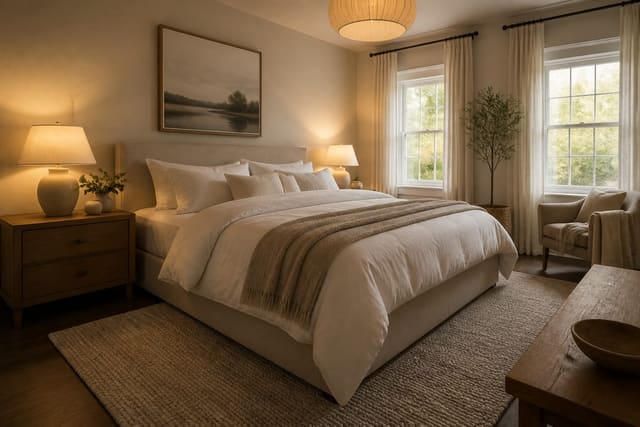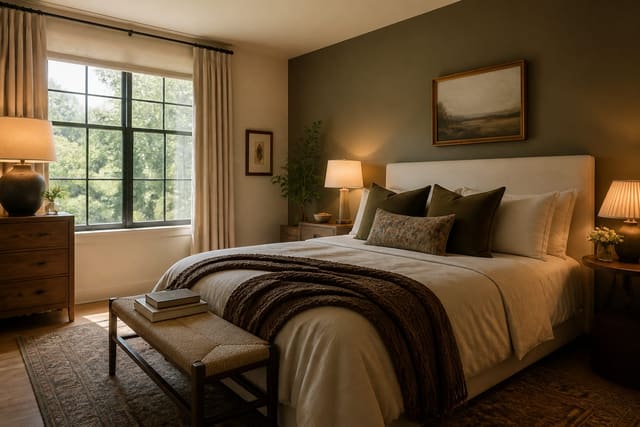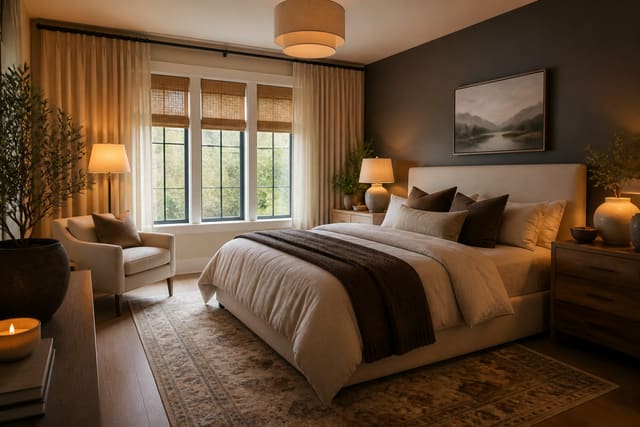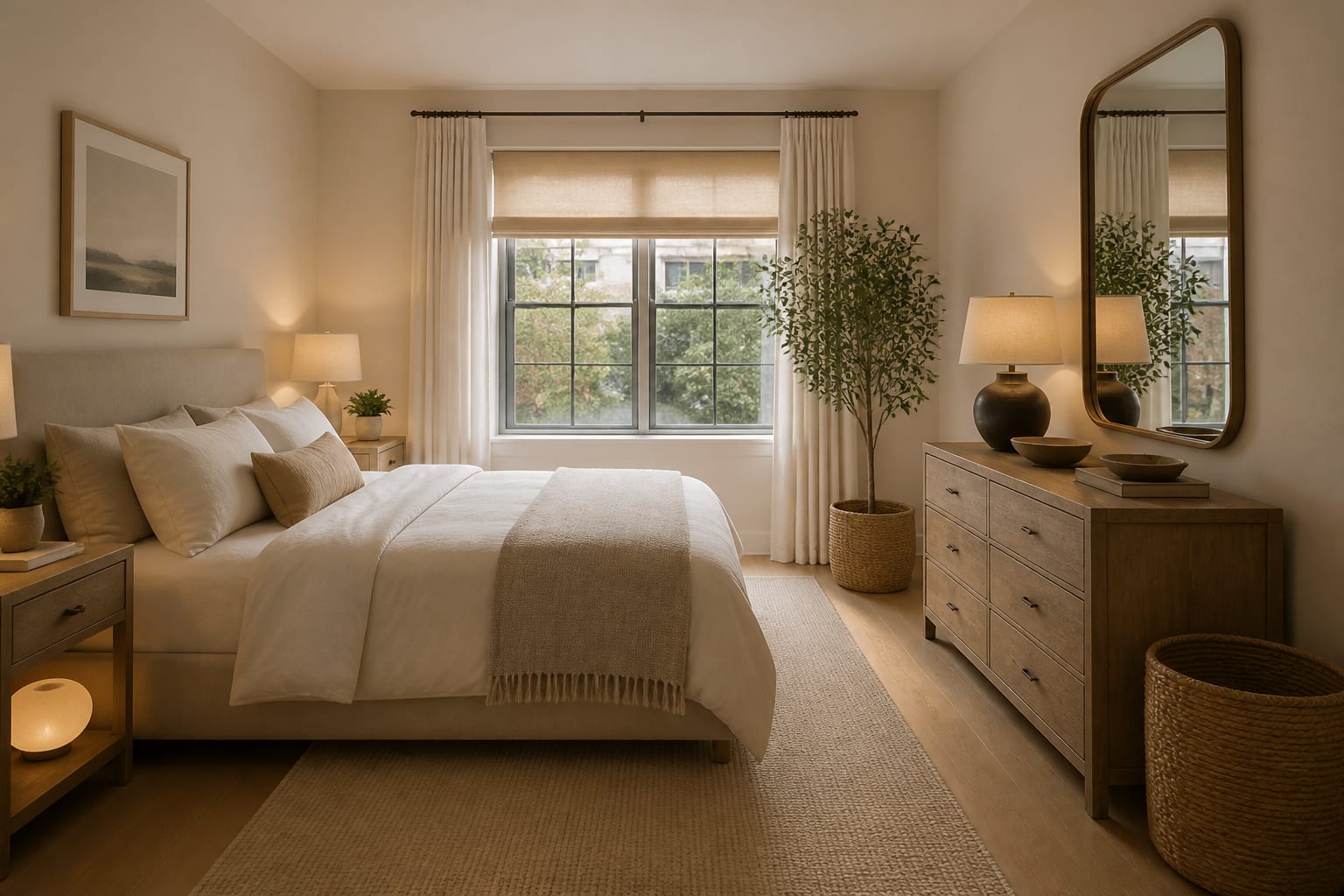
A small bedroom rarely feels cramped because of its square footage. It feels cramped because the furniture is too tall, the floor is invisible, and your eye hits a wall the second you walk in. The honest answer is that you can make a 10-by-10 room feel noticeably bigger without knocking down a wall, just by changing what your eye sees first and how much floor stays visible. Square footage is fixed; perceived space is not.
I have tested most of these tricks in genuinely tiny rooms, and the ones that work share a logic: keep sightlines long, keep furniture low and leggy, and let light bounce. The ones that fail are the gimmicks that ignore how cramped storage actually makes a room feel. This checklist runs through ten moves in roughly the order I would do them, with the measurements that make each one land.
Sightlines, scale, and the furniture you choose
The first thing to fix is the bed itself, because it eats the most floor. A platform bed or one with exposed legs lets light and floor flow underneath, which reads as more space than a bulky storage divan sitting flat on the carpet. Keep the headboard low, ideally under 48 inches, so it does not block the wall above and crowd the ceiling. Everything you add after the bed should follow the same rule: lower and leggier beats tall and boxy in a small room every time.
Next, protect your floor. Aim to keep at least 24 inches of clear, visible floor around the bed and along the main walkway, because the amount of floor you can see is the strongest cue your brain uses to judge room size. That means wall-mounting the bedside lighting and choosing a slim nightstand, or skipping it for a floating shelf. If the room doubles as anything else, a desk or a reading corner, the layout logic in bedroom-declutter-reset-ideas helps you keep the extra function from re-cramping the space.
Color does quieter work than people expect. Painting the walls, ceiling, and trim in close tones removes the hard lines that visually slice a small room into segments, so the eye reads one continuous surface. Light tones reflect more light and recede, but a small room in a deep moody color can also feel intentional and cocooning rather than cramped, as long as the lighting is warm enough to support it.
Light, mirrors, and reflective tricks
Light is the cheapest space you can buy. A dark bedroom always feels smaller, so layer your lighting instead of relying on one overhead fixture: a warm 2700K bulb overhead, a pair of wall-mounted reading lights, and maybe a small lamp keep shadows from collapsing the corners. Pull any heavy, light-blocking furniture away from the window so daylight reaches deep into the room.
Mirrors are the classic trick because they genuinely work. A large mirror placed opposite or beside a window bounces daylight back across the room and effectively doubles the apparent light, which makes the space read open. Position it to reflect something pleasant, a window or a piece of art, rather than a cluttered dresser, because a mirror amplifies whatever it points at.
A few more reflective and visual moves are worth stacking:
- Use glossy or satin paint on the ceiling to bounce a little extra light down
- Choose a glass or acrylic bedside table that visually disappears
- Add metallic or mirrored accents that catch and scatter light
- Keep window treatments sheer or light-colored so they glow rather than block
- Hang one large piece of art instead of a busy gallery wall that chops up the wall
Storage that buys back floor
Clutter is the enemy of perceived space, so the storage you choose has to hide things, not display them. Under-bed storage is the obvious win, and a bed with 9 to 12 inches of clearance underneath swallows seasonal bedding and shoes without taking any extra footprint. Vertical storage is the other lever: tall, narrow shelving uses wall space the floor cannot spare, and drawing the eye upward makes the ceiling feel higher.
The goal is fewer, larger storage pieces rather than many small ones, because a scatter of bins and baskets reads as busy and shrinks the room. A single wardrobe with doors hides more visual chaos than open shelving ever will. When you are working a tight budget, the smart-spend approach in budget-bedroom-makeover-ideas helps you decide which storage pieces are worth buying versus DIYing, and the quick wins in cheap-bedroom-decor-ideas cover the finishing touches that keep a small room feeling considered.
Think vertically wherever the floor cannot help you. Mounting a shelf 12 to 18 inches above a doorway turns dead wall into storage for books or baskets, and running a slim 10-inch-deep shelf along the perimeter near the ceiling stores the things you reach for twice a year. Hooks on the back of the door hold robes and bags that would otherwise live on a chair, and a wall-mounted folding desk gives you a workspace that disappears when you are done. Every item you lift off the floor is floor you get back, and reclaimed floor is the currency a small bedroom trades in.
Common mistakes to avoid
The most common mistake is cramming in too much furniture. Squeezing a dresser, a bench, two nightstands, and a chair into a 10-foot room defeats every other trick, because the floor disappears. Edit ruthlessly and keep only what earns its footprint.
Another mistake is pushing everything against the walls in the hope of opening the center. In a tiny room that often just lines the edges with clutter and leaves an awkward void, so float the bed off the wall slightly and let the layout breathe where it can.
The last one is over-lighting with cold bulbs. A small bedroom flooded with 5000K daylight light feels clinical, not spacious, which works against the calm you want. Stick to warm 2700K light and layer it, so the room feels open and restful at the same time.
Use AI design to preview make bedroom feel bigger ideas before you commit
The frustrating thing about small-room tricks is that you cannot tell which ones will land in your specific room until you try them, and rearranging furniture for an experiment is exhausting. Re-Design removes that effort. Upload a photo of your bedroom and the AI can re-render it with a lower platform bed, lighter wall color, a large mirror by the window, and the clutter cleared, so you see the more spacious version before moving anything.
What I like is being able to compare opposite strategies side by side. You can test the airy light-and-bright direction against a moody dark-and-cocooning one in the same room, see which actually feels bigger to your eye, and check whether floating the bed off the wall reads better than tucking it in a corner. Run a couple of versions, pick the layout that opens the room most, and only then start hauling furniture around.