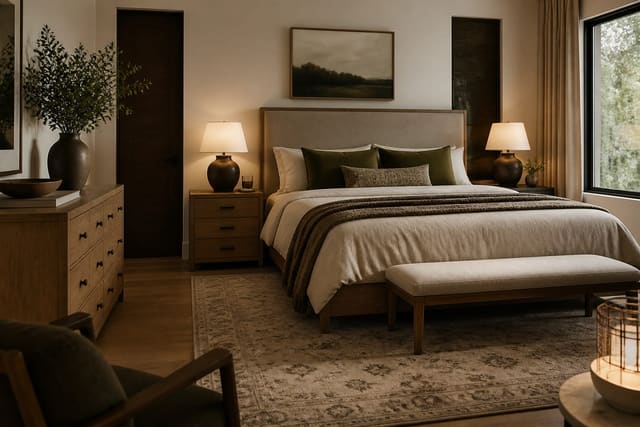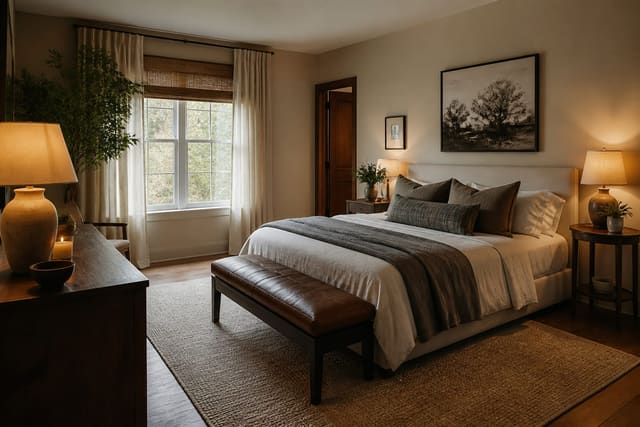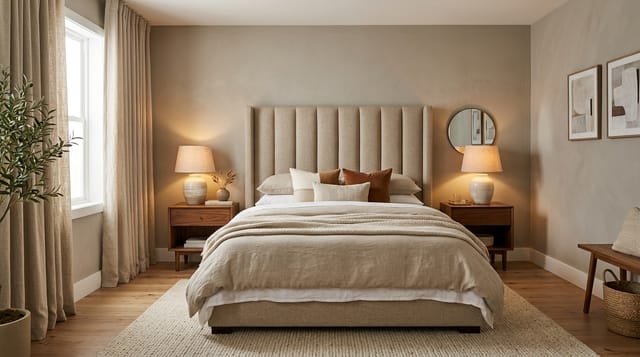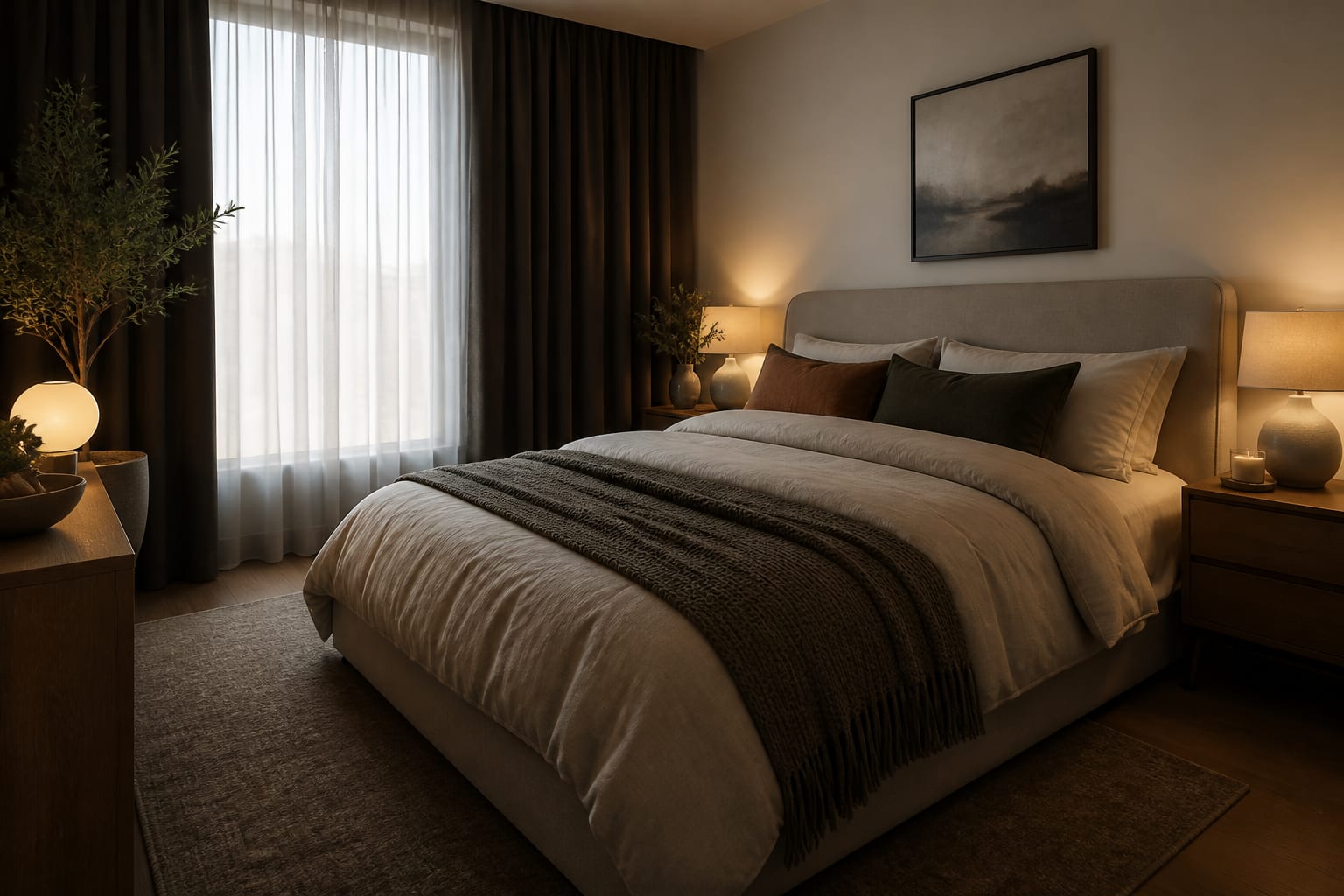
A bedroom makeover is the rare project where spending less often produces a better room. Bedrooms reward restraint—a calm palette, good light, and one quality bed—far more than they reward a pile of new furniture. So the useful question is not what the maximum costs but what the minimum is to make the room feel finished. For most rooms that floor is around $1,200, and a polished mid-range makeover lands between $3,000 and $6,000.
What a bedroom makeover actually costs
Bedrooms are smaller than living rooms—a standard secondary bedroom runs about 11 by 12 feet, or 132 square feet—so the envelope costs stay low. Paint is one gallon at $40 to $60. The spend concentrates instead on the bed and on light control, because sleep quality is the room's real job.
A budget makeover at $1,200 to $2,500 keeps the existing frame and mattress, then spends on paint, a new duvet and pillows, blackout curtains, two nightstand lamps, and a rug. A mid-range makeover at $3,000 to $6,000 adds a new mattress at $800 to $2,000, an upholstered frame at $400 to $1,200, and matched nightstands. A high-end makeover with custom built-ins, a premium mattress, and designer textiles climbs past $8,000, but most bedrooms do not need it.
The bed components deserve their own research because the range is so wide; the bedroom furniture cost guide breaks down frames, mattresses, and storage piece by piece. Placement matters as much as the pieces—the bed position and clearances in the feng shui bedroom guide determine whether an 11x12 room feels restful or cramped.
The mattress is worth treating as a separate decision from the rest of the makeover, because its price is driven by sleep quality rather than looks. A foam mattress runs $400 to $1,200, a hybrid with coils and foam runs $800 to $2,000, and a premium latex or specialty model climbs past $2,500. None of that shows in a photo, which is exactly why it gets cut from decor-led budgets and then quietly undermines the room every night. Fund the mattress to your sleep needs first, and let the visible upgrades fill whatever is left.
Storage is the line item that separates a bedroom that stays calm from one that drifts back to cluttered within a month. A makeover that adds a new bed but no place for the clothes that were on the chair simply relocates the mess. A dresser at $300 to $900 or a pair of nightstands with drawers at $250 to $600 does as much for how finished the room feels as any decorative purchase, because a clear surface is what reads as restful. Budget for closed storage before throw pillows, not after.
A line-item makeover budget
Here is a realistic mid-range bedroom makeover for a 132-square-foot room:
- Paint, walls and ceiling, two coats: $60 doing it yourself, $350 hired out.
- Mattress, mid-range queen: $1,100.
- Upholstered queen frame and headboard: $650.
- Two nightstands and two lamps: $500.
- Duvet, cover, sheets, and pillows: $350.
- Blackout curtains and rod, two windows: $220.
- Wool-blend 8x10 rug: $600.
That totals about $3,800, with the mattress and frame making up nearly half. Skip the new mattress and frame and the makeover drops under $1,800. If you want the room to do double duty as a reading nook or workspace, plan the layout with AI bedroom design ideas before buying, so the extra function does not crowd the walking space.
The order of operations matters in a bedroom even more than in a living room, because the bed is heavy and central. Paint the walls and ceiling before the mattress arrives, since painting around a made bed is slow and risky. Hang the curtain rod and install blackout panels next, because light control is what makes the finished room feel like a bedroom rather than a guest space. Place the bed, then the nightstands and lamps, and only then unroll the rug—an 8x10 should slide two-thirds of the way under the bed so the frame anchors it rather than floating on bare floor.
One spending trap is worth naming early: matching everything from a single bedroom set. A boxed set of frame, two nightstands, and a dresser in identical finish reads flat and dated the moment trends move, and it usually costs more than assembling the same pieces individually. Vary at least one element—a different wood tone on the nightstands, or lamps that contrast the frame—and the room reads designed instead of delivered. The savings and the look both improve when you stop buying the matched collection.
Common mistakes to avoid
The most common mistake is spending on visible decor while sleeping on a worn mattress. The mattress is the one purchase that affects the room's actual purpose every night, so fund it before the throw pillows.
A second mistake is ignoring light control. A bedroom with sheer curtains and a single cool-white overhead light never feels restful no matter how nice the bedding is; blackout curtains and warm 2700K bulbs fix it for under $300. The third mistake is buying a frame that is too tall or too bulky for an 11x12 room, which makes the space feel like a furniture showroom. The fourth is matching the nightstands, lamps, dresser, and frame all from one set, which reads flat—vary at least one element.
Preview your bedroom makeover in Re-Design
Frequently Asked Questions
How much does a bedroom makeover cost? A budget makeover that keeps the bed runs $1,200 to $2,500. A mid-range makeover with a new mattress and frame runs $3,000 to $6,000 for a standard 132-square-foot room. The mattress and frame are usually about half the total.
What should I spend the most on in a bedroom? The mattress, then light control. The mattress affects sleep every night and ranges from $800 to $2,000 for a quality queen. Blackout curtains and warm bulbs are the cheapest upgrades that change how restful the room feels.
Can I make over a bedroom for under $1,000? Yes, if you keep the bed. Paint at $60, warm bulbs, new bedding, blackout curtains, and a rug can refresh a standard bedroom for $800 to $1,000. The savings come from reusing the frame and mattress.