A 500-dollar design lift compounds when the budget concentrates on five specific moves — paint one accent wall in a saturated color (under 80 dollars), swap all hardware in the room (100 to 200 dollars), add one statement light (150 to 250 dollars), layer one new rug or art piece, and edit the room down — chasing 30 small purchases rarely beats five committed swaps. Great design isn't a function of budget — it's a function of choices. There's a reason interior designers can transform a room with $500 worth of carefully selected objects while a poorly designed showcase home with $50,000 of furniture still looks generic. The fifteen budget design moves below are the ones designers reach for over and over because they consistently make rooms look more expensive than they cost. None require a contractor, and most can be done in a weekend.
Fifteen budget design moves that look expensive
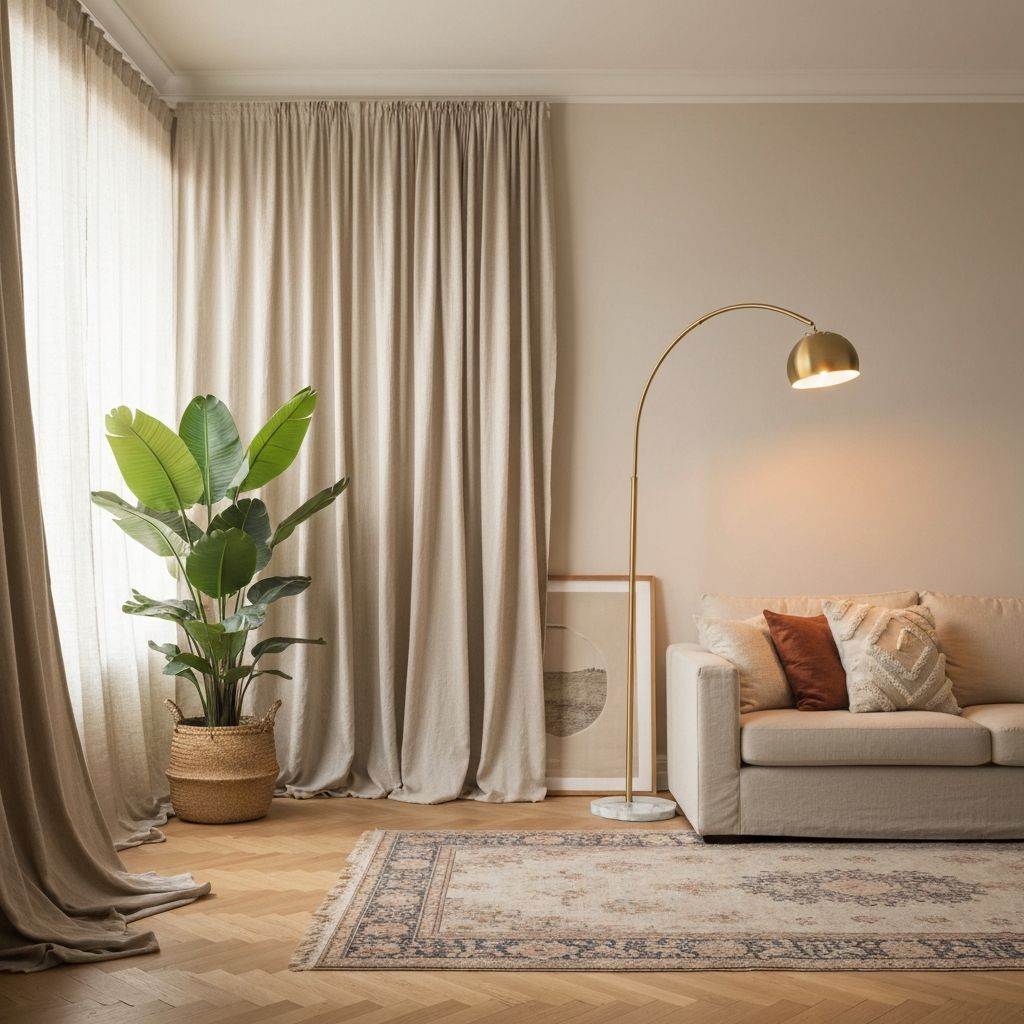
- Floor-length curtains, mounted high and wide. The single highest-ROI budget move there is. Hang the rod 4-12 inches above the window (ideally near the ceiling) and extend the rod 6-12 inches beyond each side. Use floor-pooling linen curtains. Even $60 IKEA curtains read as luxurious with this hanging technique.
- A great rug — or even a great-looking jute. A large rug grounds a room and signals "this space is designed." A 9x12 jute or flatweave for $300 outperforms a $1,500 cheap-looking rug every time.
- Lamp lighting only at night. Kill the overhead light after sunset. Use three or four warm lamps instead. This single move makes any room look more expensive than upgrading any individual piece of furniture.
- Warm bulbs everywhere (2700K or warmer, ideally 2200K-2700K). Cool bulbs make rooms feel like dressing rooms at a department store. Warm bulbs make every room read as inviting and high-end.
- One real plant per room minimum. Real plants signal care and life. A 6-foot fiddle leaf fig, a snake plant, or even a pothos in a textured basket dramatically lifts a room for under $50.
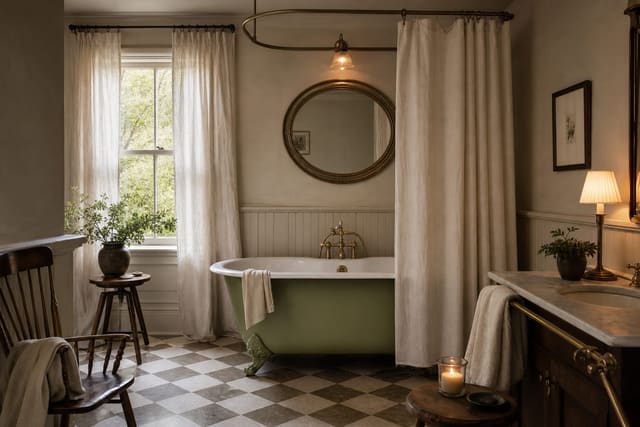
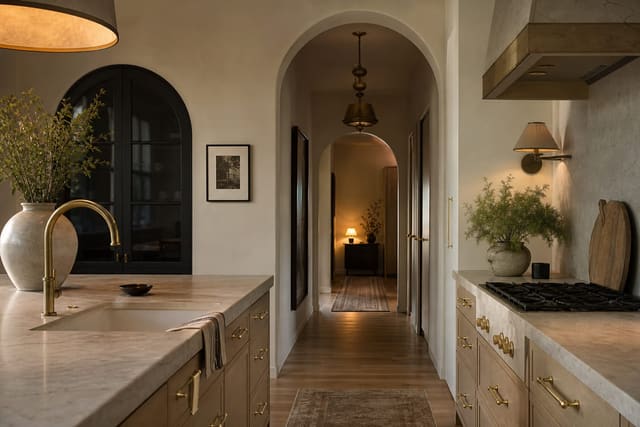
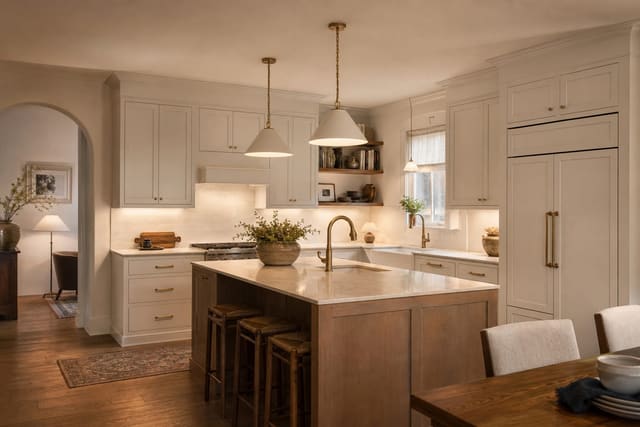
- Hardware swap on cabinets, doors, and drawers. Replacing builder-grade hardware with unlacquered brass, matte black, or oil-rubbed bronze pulls instantly elevates kitchens and bathrooms. Often under $200 for a full kitchen.
- A single piece of original art from Etsy, a local artist, or a thrift store. Original art reads as soul; mass-produced prints read as filler. One large piece is better than ten small ones.
- Stacked books on the coffee table. A pile of three or four large hardcover books (design, photography, travel) with one object on top is the easiest styled-look you can create.
- Linen everything — sheets, curtains, throws, slipcovers, table runners. Linen has a casual elegance that polyester and cotton blends never achieve. It also gets better with age.
- A piece of natural material in every room. A wood bowl, a stone vessel, a ceramic vase, a piece of driftwood, a vintage cutting board. Natural materials read as collected and warm.
- Symmetry in lighting. Matching lamps on either side of a sofa, matching sconces flanking a bed, matching pendants over an island. Symmetry signals intention, and intention reads as expensive.
- One vintage piece per room for soul. A vintage rug, a flea-market mirror, an estate-sale dresser. New furniture alone makes a room feel like a furniture store; one vintage piece makes it feel like yours.
- Edit the visible clutter. Empty surfaces are luxurious. The cheapest design upgrade you can make is removing things. Boxes, baskets, and bins hide what needs to live in the room without adding to the visual noise.
- Paint one bold wall. One is enough. A deep navy, terracotta, sage, or moody plaster wall gives the room a focal point without overwhelming it. A gallon of paint and a weekend is all it takes.
- Frame your TV with art around it so it disappears. Group three or four pieces of framed art on either side of the TV at the same height. The eye reads the TV as part of a gallery rather than as the room's centerpiece.
Where to spend vs. where to save
Knowing where to spend and where to save is the unlock that makes budget design work.
Spend on:
- Sofa — You'll sit on it every day for 10+ years.
- Mattress and bedding — Same logic.
- Dining chairs — Daily contact, slow to replace.
- Real art — Carries any room, holds value.
- One signature light fixture per room — The single biggest "designer move" you can make.
Save on:
- Side tables and accent chairs — Vintage and secondhand are often better than new.
- Mirrors — Even big ones are inexpensive online and at HomeGoods.
- Rugs — Jute, flatweave, and machine-made vintage-look rugs at a fraction of handmade prices.
- Bedding — IKEA linen and budget brands are often equivalent to luxury options.
- Decorative objects — Thrift stores, estate sales, and Facebook Marketplace.
For a useful room-planning comparison, keep Avocado Green Bathroom Update: Renovation Strategies by Budget, Brass Hardware Everywhere: Update Brass Hardware Home Without Replacing All of It, and Builder Grade Kitchen Upgrades: 5 Fixture Swaps That Lift the Room nearby so this retrofit stays connected to the adjacent lighting, storage, scale, and layout decisions in the same photo-led workflow.
Test this on your own room photo with ReDesign before you choose the final direction; keep the doorway, walls, windows, main furniture, lighting, and awkward fixed features visible so the preview solves the room you actually have.
The cheapest design upgrade that looks the most expensive
If you have $50, hang floor-length curtains mounted high and wide. If you have $200, add a great rug. If you have $500, add a real plant, a vintage piece, and warm bulbs in every fixture. These three moves alone will transform any room, regardless of how cheap the existing furniture is.
Common budget design mistakes
- Buying new before editing the old. most rooms get better by removing one of every three objects; new purchases rarely outrun a cluttered surface.
- Cool bulbs to "save money". 4000K bulbs cost the same as 2700K and make every budget room feel like a dressing room.
- Curtains hung at the window frame. short curtains read as cheap no matter what they cost; high and wide reads expensive even at $60 a panel.
- Tiny art scattered on a big wall. one large piece outperforms ten small ones in any room under any budget; size beats count every time.
- Matching everything from the same store. a room of one brand reads as showroom; one vintage piece or estate-sale find adds the soul that catalog sets cannot buy.
- Skipping the dimmer. a $20 dimmer on a $40 lamp delivers more daily mood improvement than a $400 fixture without one.
Use AI to preview these budget moves on your actual rooms
The smart way to do budget design is to test before you buy. AI design lets you photograph your room and preview each of these moves — curtains, rug, paint colors, lighting — before committing a dollar. You'll buy less, regret less, and end up with a room that looks far more expensive than the receipts.
Frequently Asked Questions
What gives the biggest design impact for under 200 dollars?
A gallon of saturated paint on one accent wall (under 60 dollars) plus a coordinated set of cabinet or door hardware (60 to 140 dollars) reads in every photo of the room and reads more committed than a 1,500-dollar furniture upgrade. Use the room photo to compare the visible layout and fixed constraints before committing, because door swings, windows, outlets, storage reach, circulation, and existing furniture decide whether the idea survives daily use.
Are thrift store furniture finds actually worth it?
Yes when you can see the joinery and frame — solid wood dressers, mid-century chairs, and dining tables are 75 percent cheaper than new and often better made; skip upholstered pieces unless you plan to reupholster. Keep the preview honest by leaving the problem area visible in the frame, then compare one conservative version against one bolder version before you buy lighting, paint, furniture, or storage.
What budget kitchen update has the most resale lift?
Painted cabinets, new hardware, and a new faucet read like a 20,000-dollar remodel for 600 to 1,500 dollars; full cabinet replacement is 5 to 10x the cost for marginal additional resale lift in starter homes. Check the result against ordinary movement first: drawer clearance, chair pullout, walkway width, glare, switch access, and sightlines matter more than a perfect catalog angle.
Is it cheaper to buy or DIY built-ins?
IKEA Billy or PAX boxes plus paint, trim, and crown moulding deliver an installed-look built-in for 800 to 1,500 dollars; custom millwork runs 3,500 to 8,000 for the same footprint. Use the image to narrow priorities and measurements before ordering anything custom; final purchases still need real dimensions, outlet locations, installation limits, and product clearances.
What budget mistake do people make most often?
Buying small accessories instead of committing budget to one larger swap — 30 small purchases of 15 dollars each (450 total) read scattered, while one 450-dollar statement light or one large rug reads designed. If the preview invents architecture or hides the awkward feature you need solved, rerun it with stricter instructions so the result remains tied to your actual room.
> Try this: Ready to see this on your own room? Open ReDesign and run the preview.
Three transformations to try
1. Living room with painted accent wall and statement light 2. Kitchen with painted cabinets and brass hardware 3. Bedroom with thrift dresser refinished and new lamp pair