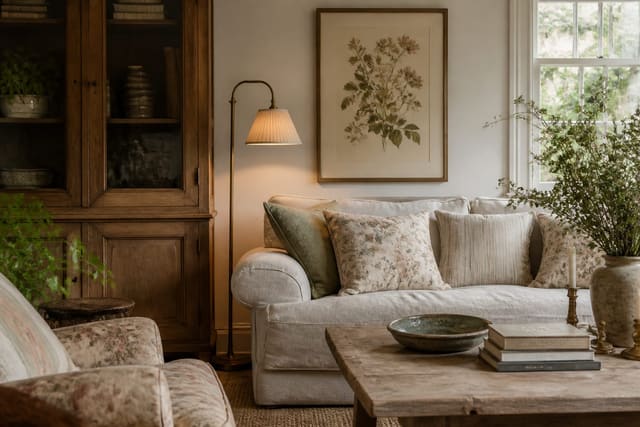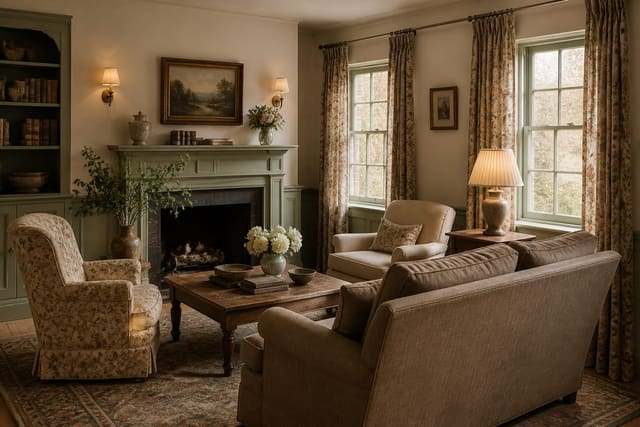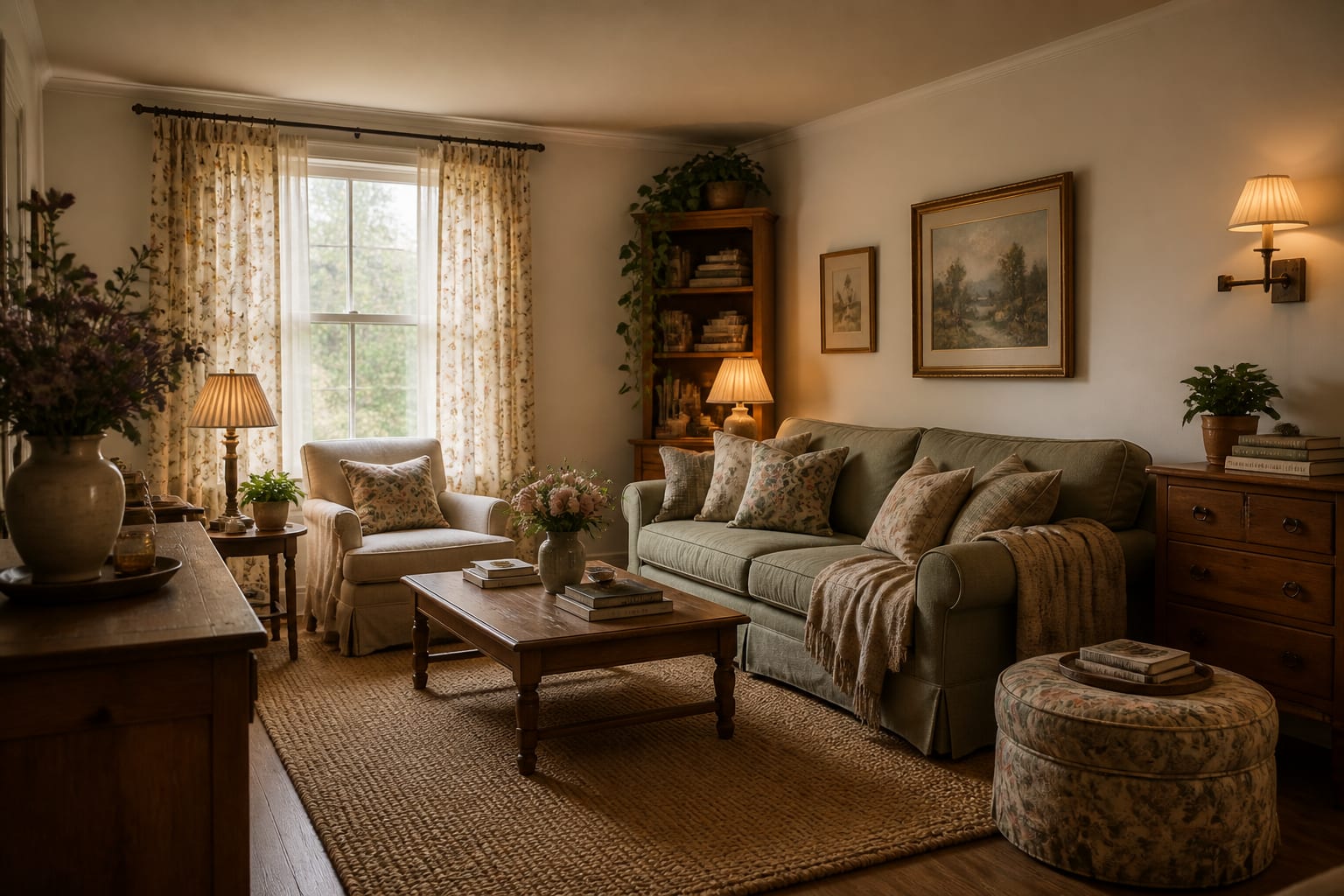
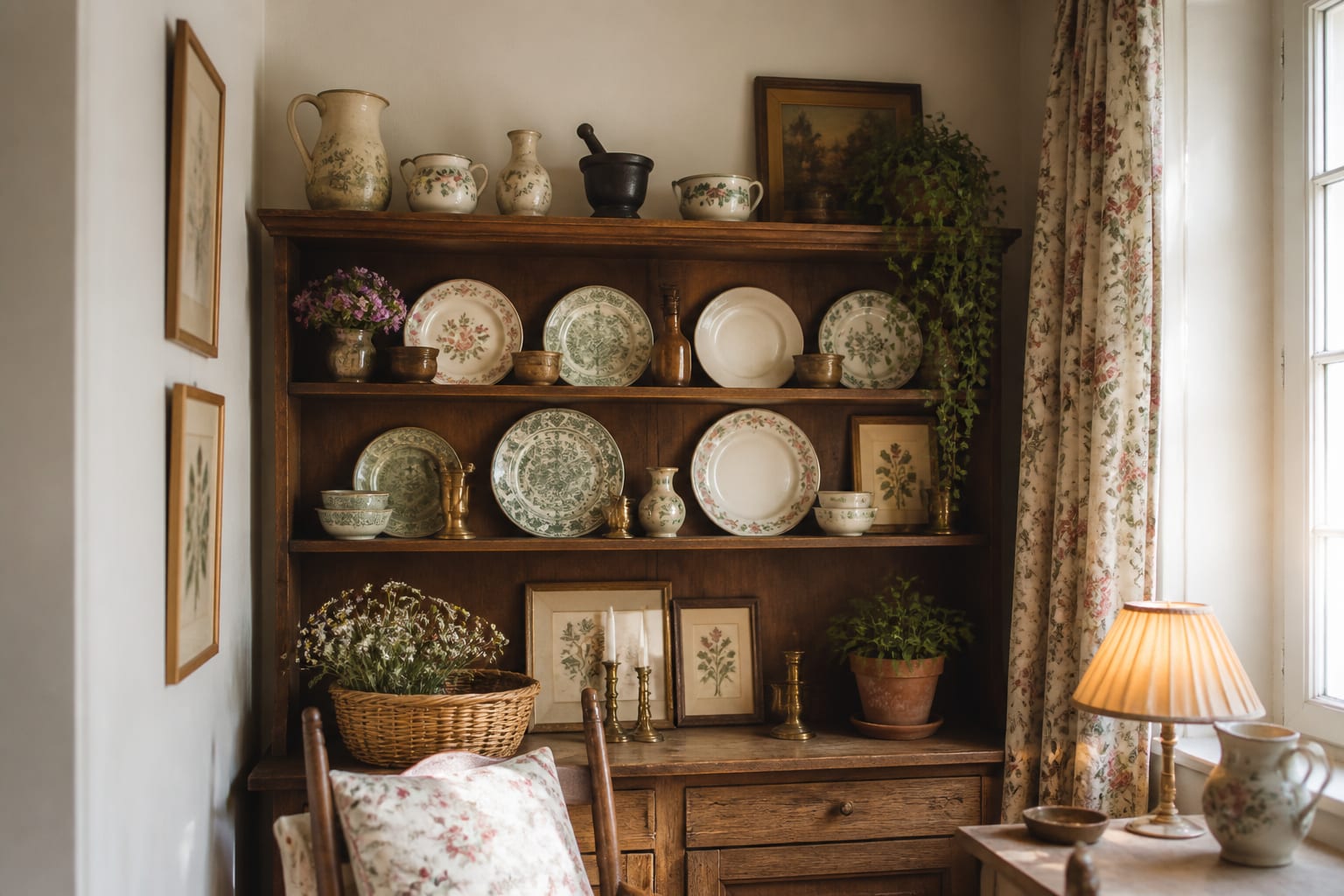
Cottagecore on a budget works by spending on texture, warm light, and one botanical focal point while sourcing furniture, frames, ceramics, and storage secondhand. Start with what your eye sees from the doorway: curtains, bedding or sofa textiles, lamps, a rug, wall color, and the largest wood piece in the room. Skip the tiny themed objects until those core layers are right.
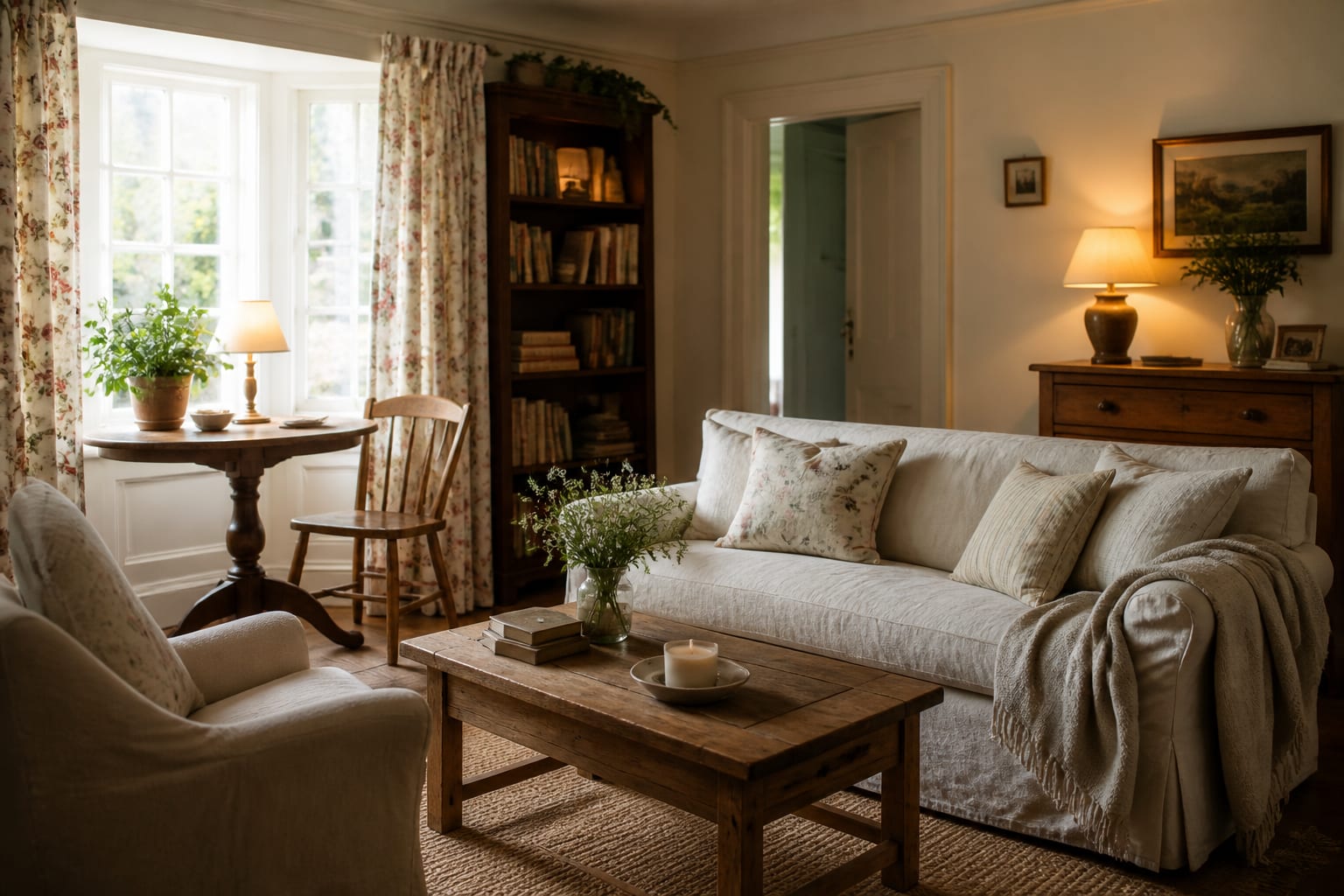
What makes budget cottagecore look intentional instead of thin?
A balanced budget room needs a warm neutral base, one garden color, one aged wood tone, and one darker accent such as bronze, deep olive, walnut, or blackened iron. All pale florals with no shadow reads sugary; all thrifted brown furniture with no softness reads heavy. If you're still sorting the look from the trend, read what cottagecore design actually means before buying baskets and prints — the style is about comfort and visible use, not a costume.
Which 15 affordable moves should you try first?
Pick five to seven of these for one room. Trying all 15 at once turns a small budget into clutter.
- Swap cool bulbs for warm bulbs around 2200K to 2700K — start with bedside and table lamps before overhead fixtures.
- Hang thrifted curtains high and wide: rod 6-10 in. above the casing, 8-12 in. past each side.
- Use one floral textile as the lead pattern (curtain panel, quilt, tablecloth, or 20x20 in. pillow) instead of scattered mini prints.
- Repaint a dresser or nightstand in sage, mushroom, cream, or dusty blue, then add 1-1.5 in. ceramic or aged brass knobs.
- Thrift real wood — pine, oak, cherry, walnut — before buying faux-vintage; check drawers run smoothly first.
- Frame botanical pages, postcards, pressed leaves, or fabric remnants in mismatched wood or brass, spaced 2-3 in. apart.
- Add a washable runner in a hall or kitchen, leaving 4-6 in. of floor visible at the sides.
- Skirt an open sink or utility table with cotton gathered to about 1.5x the opening width.
- Replace plastic storage with lidded baskets or wood boxes so daily clutter doesn't compete with the decor.
- Style one tray, 10-16 in. wide, on a dresser or counter with soap, a book, or a small vase.
- Use a thrifted lamp with a fabric shade 20-28 in. tall; tiny lamps make budget rooms look flimsy.
- Add one humble ceramic piece — a pitcher, crock, bowl, or soap dish — for texture that feels authentic.
- Bring in herbs or one small plant where light supports it; a 4-6 in. pot can beat a large faux garland.
- Cover a modern sofa or chair with a washable cotton throw, linen pillow, or simple slipcover.
- Paint only a feature if full-room paint is too costly: a door, vanity, shelf back, or 36-48 in. wainscot.
How do you make secondhand pieces look intentional?
Secondhand cottagecore works when pieces share an undertone, scale, or material story. A thrifted pine table, brass lamp, cream curtain, and floral print can come from different places and still feel related if colors are warm and shapes are simple. Start with the fixed pieces you can't replace: orange oak floors like cream, olive, faded blue, and mushroom; gray rental tile often needs putty, dusty blue, pewter, and warm textiles. For a fuller plan, use this cottagecore color palette before buying paint or fabric.
Give every used piece one small improvement — tighten hardware, clean wood with an appropriate finish, replace a damaged shade, or repaint just a mirror frame. Don't distress everything; real age looks better beside something crisp, like clean white cotton or a straight lampshade. Renters should lean on furniture, fabric, lamps, hooks, and freestanding storage rather than touching cabinets or floors — the same discipline behind a whole-home rental design checklist applies: repeat two or three materials so rooms feel connected.
What common mistakes make budget cottagecore look cheap?
- Buying only tiny accessories scatters the eye; choose one larger move such as curtains, a rug, or a 24x36 in. print.
- Bright white with pastel florals looks new and thin; switch to cream, oatmeal, putty, sage, or faded blue for age.
- Too much open storage looks messy; keep at least half of daily clutter behind doors or lids.
- Mixing too many wood tones without a bridge looks accidental; repeat one medium wood twice and connect darker pieces with metal or framed art.
- Copying cottagecore symbols too literally weakens the room; swap novelty mushrooms and signs for useful ceramics and aged furniture.
The harsh edit is often the best free move: stand at the entrance and remove the item that shouts the theme first. If softness, nature, and function remain, you removed the right thing.
How can you preview cottagecore changes before spending?
Small purchases add up before you know whether they work together — a floral curtain may look strange beside your sofa, or sage paint may fight your floor. Upload a photo of the actual room to Re-Design and test a few complete versions before buying: one with pattern on the windows, one with a painted furniture piece, one quieter with more wood. Keep the room's real windows, door swings, and existing flooring in the preview.
This is especially useful for renters, north-facing rooms, or homes where you're keeping most furniture. The preview shows which affordable change pays off most — if curtains carry the mood, skip the wallpaper; if a painted dresser does the work, leave the walls alone.
Frequently Asked Questions
How much does it cost to get the cottagecore look?
There's no fixed cost, but the cheapest path is thrifted furniture and ceramics, warm bulbs, one floral textile, and paint on a single piece rather than a full room — the budget goes toward fabric, light, and one focal item instead of many small decor pieces.
What colors work best for budget cottagecore?
Stick to muted, earthy tones: cream, sage, putty, mushroom, dusty blue, faded rose, warm brown, and soft olive. Bright pastels and stark white tend to look thin and new rather than lived-in and aged.
Can you do cottagecore in a rental?
Yes — lean on furniture, fabric, lamps, hooks, and freestanding storage instead of altering cabinets or floors. A painted hutch, skirted table, peg rail, or full curtain panel brings the mood without touching finishes you don't own.
How many floral patterns should one room have?
Limit florals to one lead surface, such as curtains, a quilt, a lampshade, or framed art. Scattering small floral prints across many surfaces makes a room feel crowded rather than romantic.
What's the biggest mistake people make with budget cottagecore?
Buying many tiny themed accessories before fixing texture, light, and one larger anchor piece. A room full of small objects looks scattered; a room with strong curtains, a rug, or a painted dresser looks intentional even on a small budget.