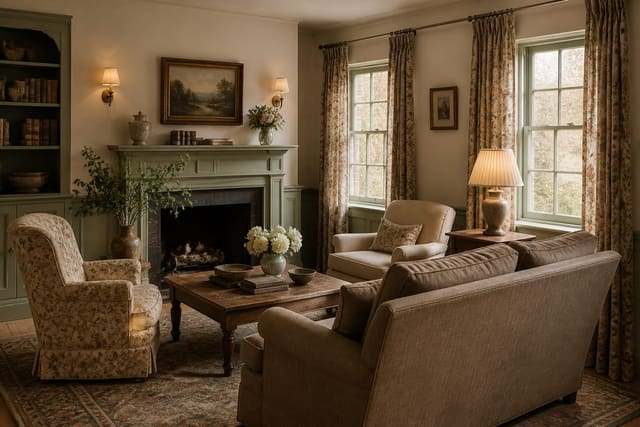
Cottagecore design is a nature-led interior style built from vintage or handmade-feeling furniture, floral pattern, warm light, and visible everyday comfort. It borrows from rural cottages, English country rooms, farmhouse kitchens, and useful objects that look better with handling. The style only works when the home still functions for reading, cooking, or gathering, not just staged for a picnic photo.
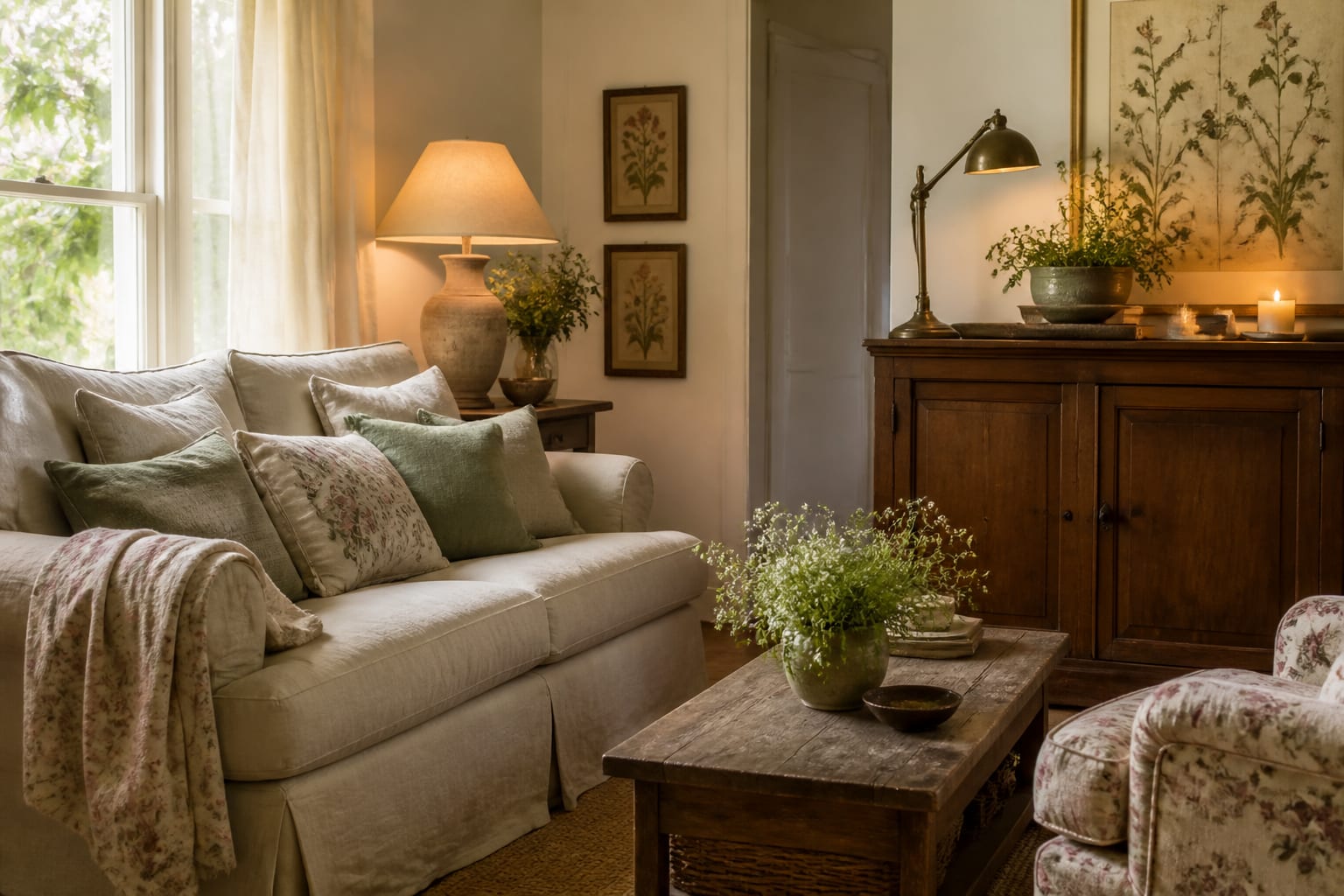
What is cottagecore interior design, really?
The key word is useful. A cottagecore room makes space for real tasks: cooking, sewing, bathing, potting herbs, or drinking tea at an actual table. Chipped paint and worn wood should feel cared for, not neglected.
A strong cottagecore home has three layers. First, a quiet base: cream walls, warm white trim, wood floors, stone, or beadboard. Second, a garden layer: botanical prints, leafy greens, faded rose, dusty blue, ochre, or a restrained floral fabric. Third, a human layer: books, ceramics, baskets, quilts, and lamps that carry the room after dark.
For palette choices before you pick paint, see this cottagecore color palette guide. Color is what keeps the room from tipping into either sugary or gloomy.
What materials and colors make cottagecore feel grown up?
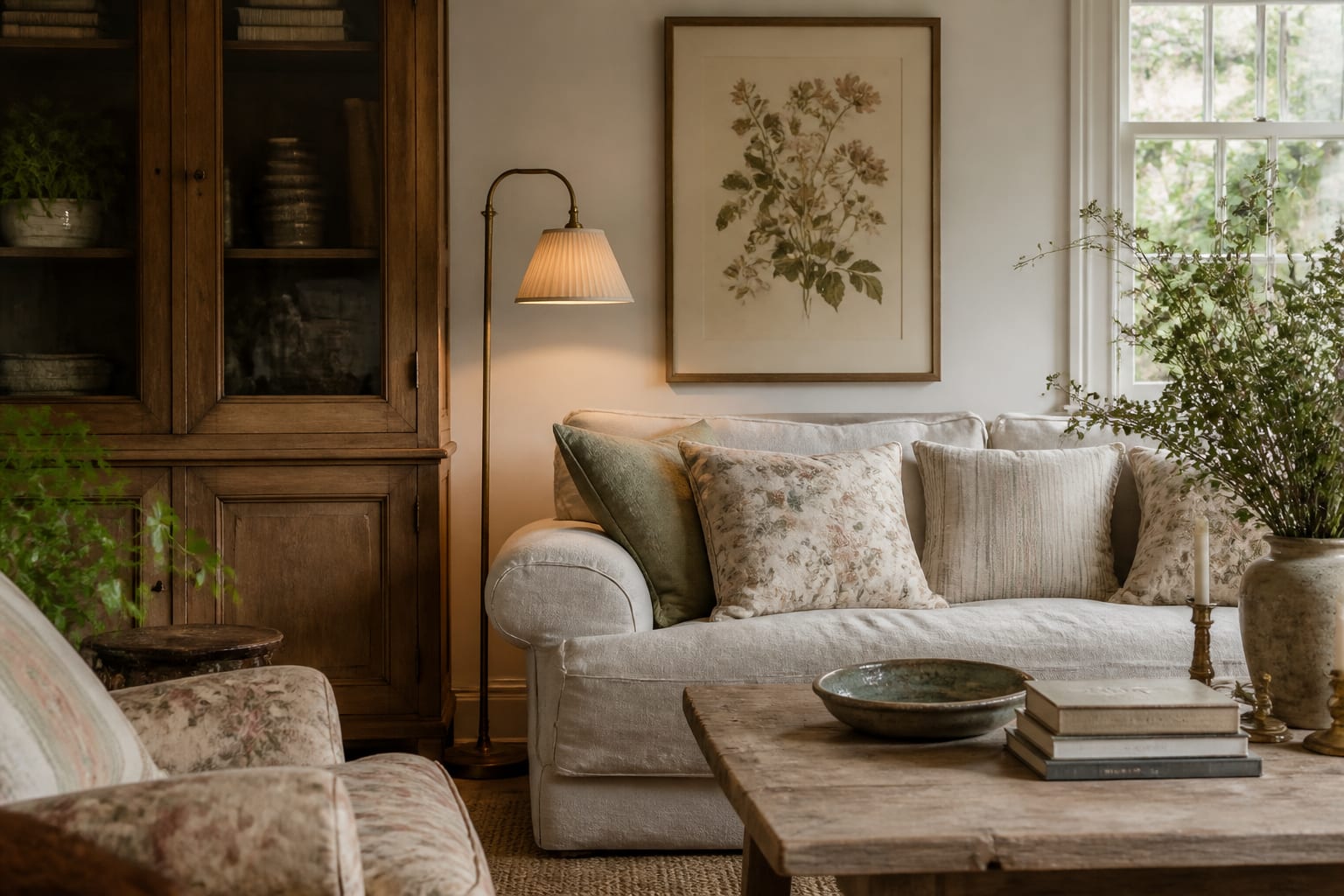
Cottagecore needs tactility more than novelty: linen, cotton, wool, unfinished wood, stoneware, terracotta, iron, brass, rattan, beadboard, plaster, and botanical paper. Glossy plastic, chrome, blue-white LED light, and matching furniture sets fight the mood.
Start with colors that look slightly weathered: cream, bone, oatmeal, sage, olive, dusty blue, faded rose, butter yellow, muted ochre, clay, and warm brown. Saturated colors need grounding, dusty rose pairs better with walnut than more pink, and sage reads stronger against cream, blackened iron, or old pine.
Use this structure when a room feels confusing:
- Base (about 60%): one quiet color on walls, sofa, bedding, or curtains so florals have room to breathe.
- Midtone (about 30%): one nature-based color on a cabinet, drapery, rug, or large chair, this is where the cottage feeling becomes visible.
- Depth (about 10%): a darker wood, metal, frame, or stripe; without shadow, the room can look washed out.
- Light: keep bulbs at 2200K-2700K in bedrooms and living rooms so cream paint, brass, and textiles feel warm at night.
Handle pattern with restraint. One floral curtain, quilt, or wallpapered wall can carry a room; florals on every surface remove hierarchy. Let checks, ticking stripes, plain linen, and solid wood support instead.
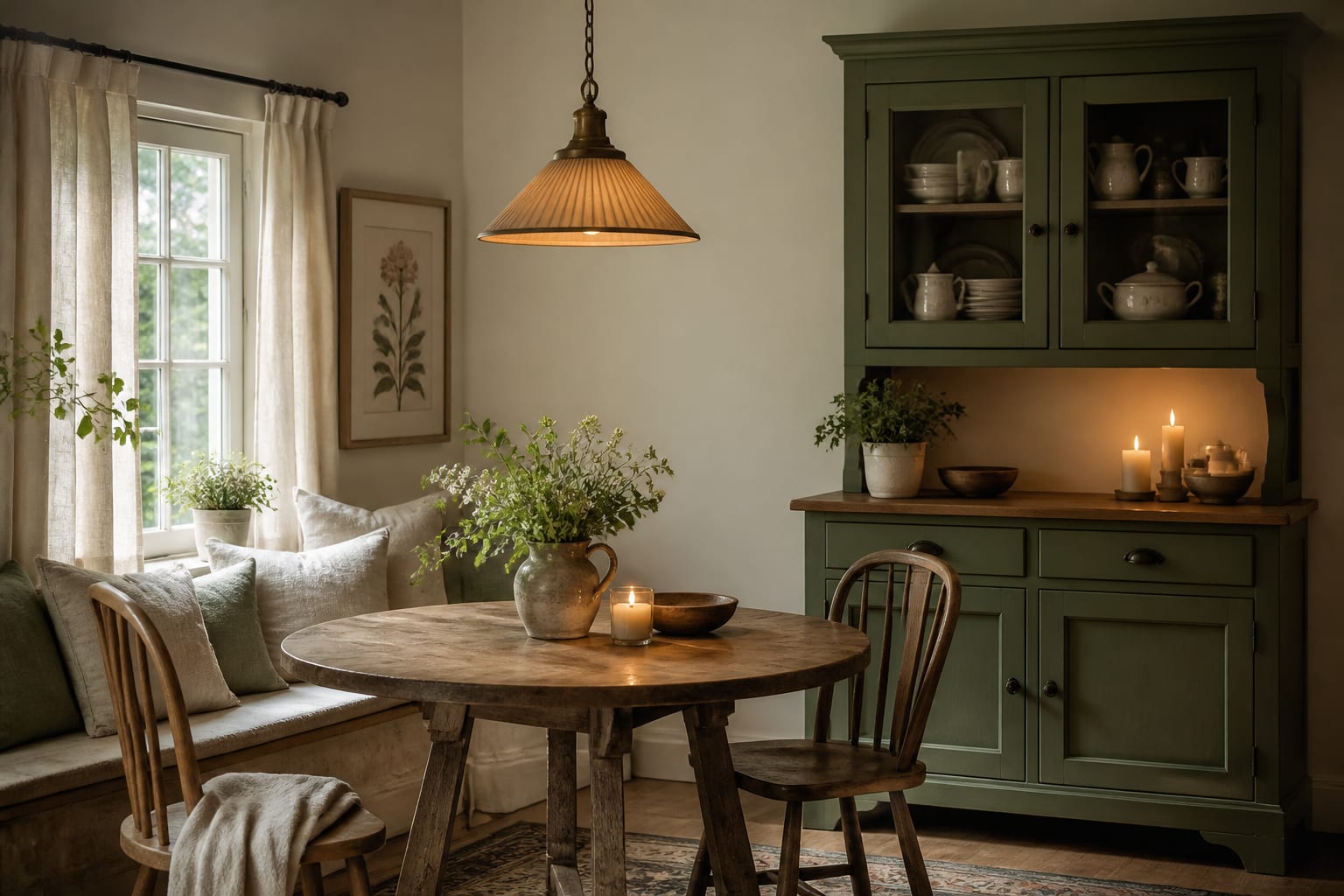
How do you build cottagecore room by room?
Repeat materials across the house without duplicating them. The hallway might carry cream walls, the kitchen sage and brass, the bedroom faded blue and linen. Repetition feels collected; duplication feels themed.
- Living room: a linen or cotton sofa, a wood coffee table, a shaded lamp, and a rug extending 6 in-12 in past the front seating legs. One large botanical print beats a crowded gallery wall in small rooms.
- Kitchen: cafe curtains, open shelves, aged brass pulls, a peg rail, or a freestanding hutch. Keep at least 24 in of clear counter near the sink or range so charm doesn't cost prep space.
- Bedroom: breathable sheets, a quilt or coverlet, nightstands within 2 in of mattress height, and bedside lamps 20 in-28 in tall for better proportion.
- Bathroom: a cotton shower curtain, sealed wood stool outside splash zones, ceramic tray, glass jars, and warm vanity bulbs. In a standard 5 ft x 8 ft bath, the shower curtain is usually the largest pattern surface.
- Entry/utility: hooks, benches, baskets, washable runners, and painted storage to keep shoes, leashes, and mail managed.
Common cottagecore design mistakes
Most mistakes come from buying symbols of the style instead of building the atmosphere.
- Too many tiny themed objects read as a gift shop; choose fewer larger pieces, like a 24 in x 36 in print or full-length linen curtains.
- Pure white everywhere makes vintage wood and floral fabric look dingy; use cream, plaster, or putty instead.
- No storage plan turns charm into clutter; use closed drawers, lidded boxes, or a freestanding cabinet before styling open shelves.
- Only pale colors flattens the room; add walnut, olive, oxblood, or blackened iron for depth.
- Curtains hung too low weaken the architecture; mount rods 6 in-10 in above the casing and extend 8 in-12 in past each side.
Don't assume vintage automatically means better. A wobbly table or musty rug isn't romantic if it makes daily life harder. Look for sturdy joinery, washable covers, and rugs that can forgive pets and shoes.
Use AI design to test cottagecore before paint or purchases
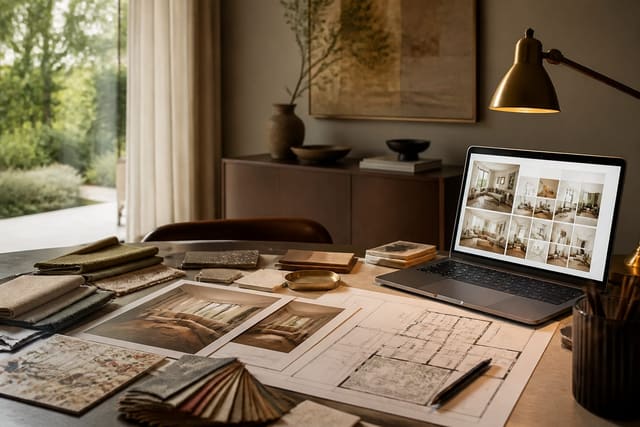
Cottagecore is hard to judge item by item because it depends on relationships: wood against wall color, floral scale against room size, brass against appliances. Uploading a room photo to Re-Design lets you preview those relationships before buying paint, curtains, wallpaper, or a secondhand cabinet.
Keep your real windows, ceiling height, flooring, and furniture visible in the preview so results respect the house you actually have. Test specific versions, florals on textiles only, color on furniture only, pattern on one wall only, and compare.
This matters most with rental flooring, orange wood, gray tile, or furniture you must keep. For why clear prompts matter, read how AI search cites interior design advice. To judge what to trust in a preview versus verify with samples, see how accurate AI room visualization really is.
The best preview helps you remove an idea. If floral wallpaper shrinks the room, try curtains instead. If sage paint turns muddy, test putty or dusty blue. If a vintage cabinet crowds the walkway, use a wall shelf no deeper than 8 in.
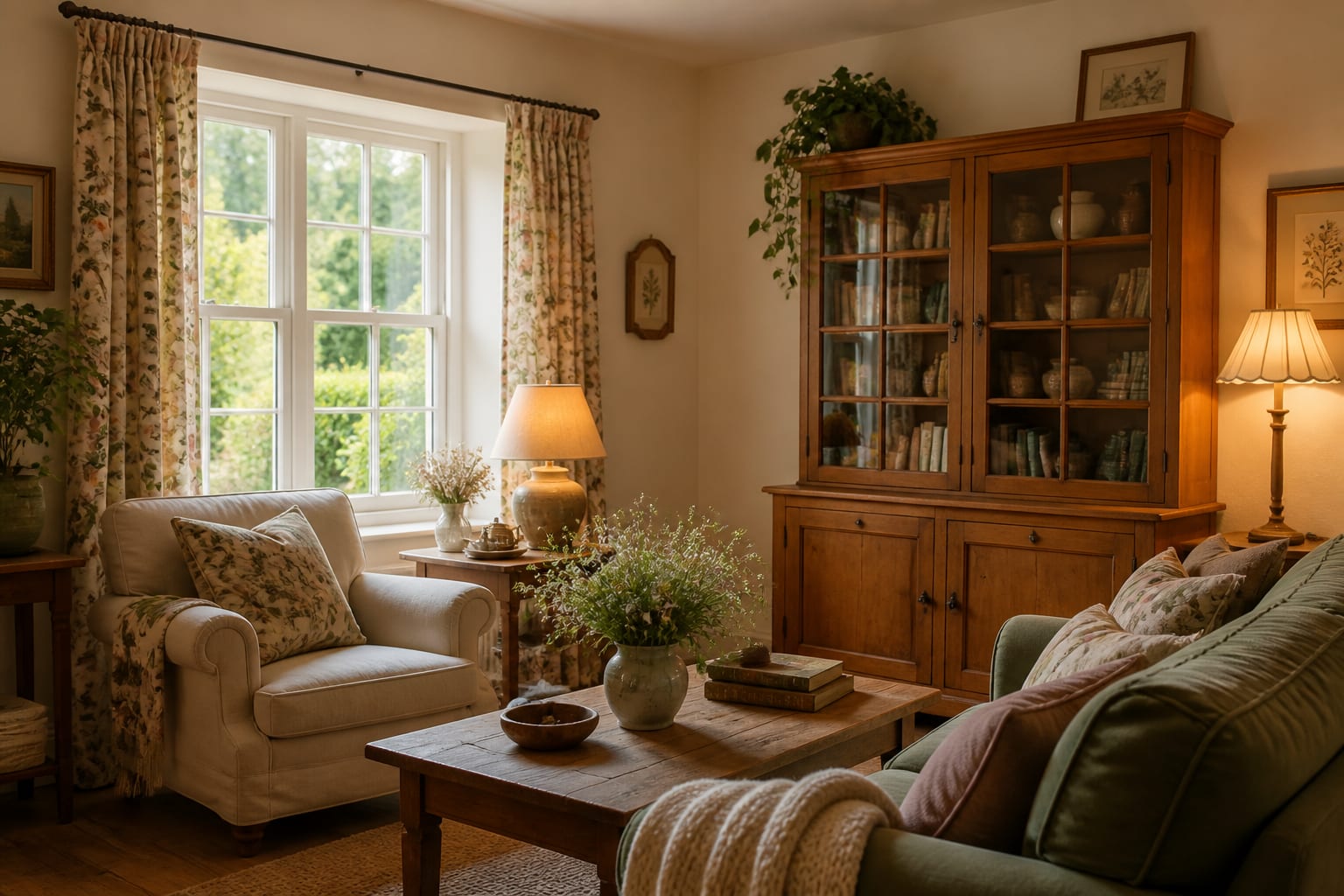
What final details make cottagecore feel personal, not precious?
The last layer should connect to habits, not hashtags: a reading lamp by the chair you actually use, a bowl for keys, linen napkins, a herb pot at the kitchen window, or a small framed landscape from a place you remember.
Hang standalone art at 57 in-60 in on center, or keep 2 in-3 in between frames in a grouping. Let curtains touch the floor, keep tabletop arrangements low enough to talk across, and use one tray near a sink or dresser instead of several competing clusters.
The doorway test is the most useful check. Stand where you first see the room and remove whatever shouts the theme loudest. If warmth, texture, storage, and comfort remain, you have cottagecore design rather than cottagecore costume.
Frequently Asked Questions
What is cottagecore design in simple terms?
Cottagecore design is a nature-inspired interior style combining vintage or handmade-feeling furniture, floral pattern, warm neutral color, and visible everyday comfort. It draws on rural cottages, farmhouse kitchens, and garden imagery, but the rooms must still function for cooking, reading, and daily storage, not just look picturesque.
What colors are used in cottagecore design?
Cottagecore favors weathered, nature-based colors: cream, bone, oatmeal, sage, olive, dusty blue, faded rose, butter yellow, muted ochre, clay, and warm brown. Pair lighter shades with darker wood, iron, or bronze accents so the palette has depth instead of looking washed out.
How do you avoid cottagecore looking too themed or twee?
Limit florals to one lead pattern per room and let linen, checks, stripes, and solid wood support it. Choose fewer, larger decor pieces over many small themed objects, keep storage edited, and use the doorway test: remove the loudest themed item and confirm the room still feels warm and useful.
Can cottagecore work in a modern or small home?
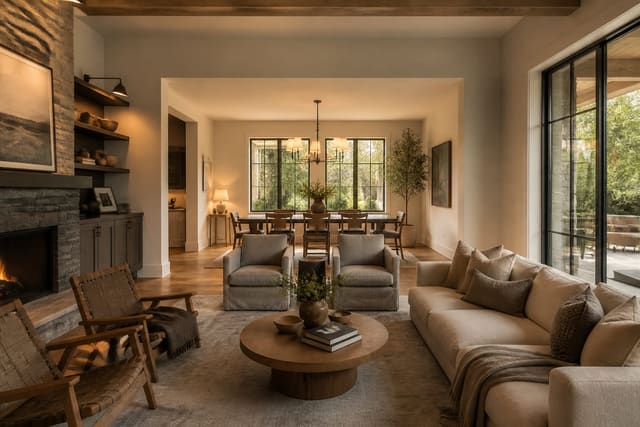
Yes. Use the same base, midtone, and depth color structure, keep pattern to one dominant surface, and prioritize function, like clear counter space or a rug sized to the seating. Small rooms benefit from one large botanical print rather than a cluttered gallery wall.
What lighting works best for cottagecore rooms?
Use warm bulbs around 2200K-2700K in bedrooms and living rooms so cream paint, brass hardware, and floral textiles read as intentional rather than cold. Avoid blue-white LED light, which tends to clash with the style's soft, aged materials.