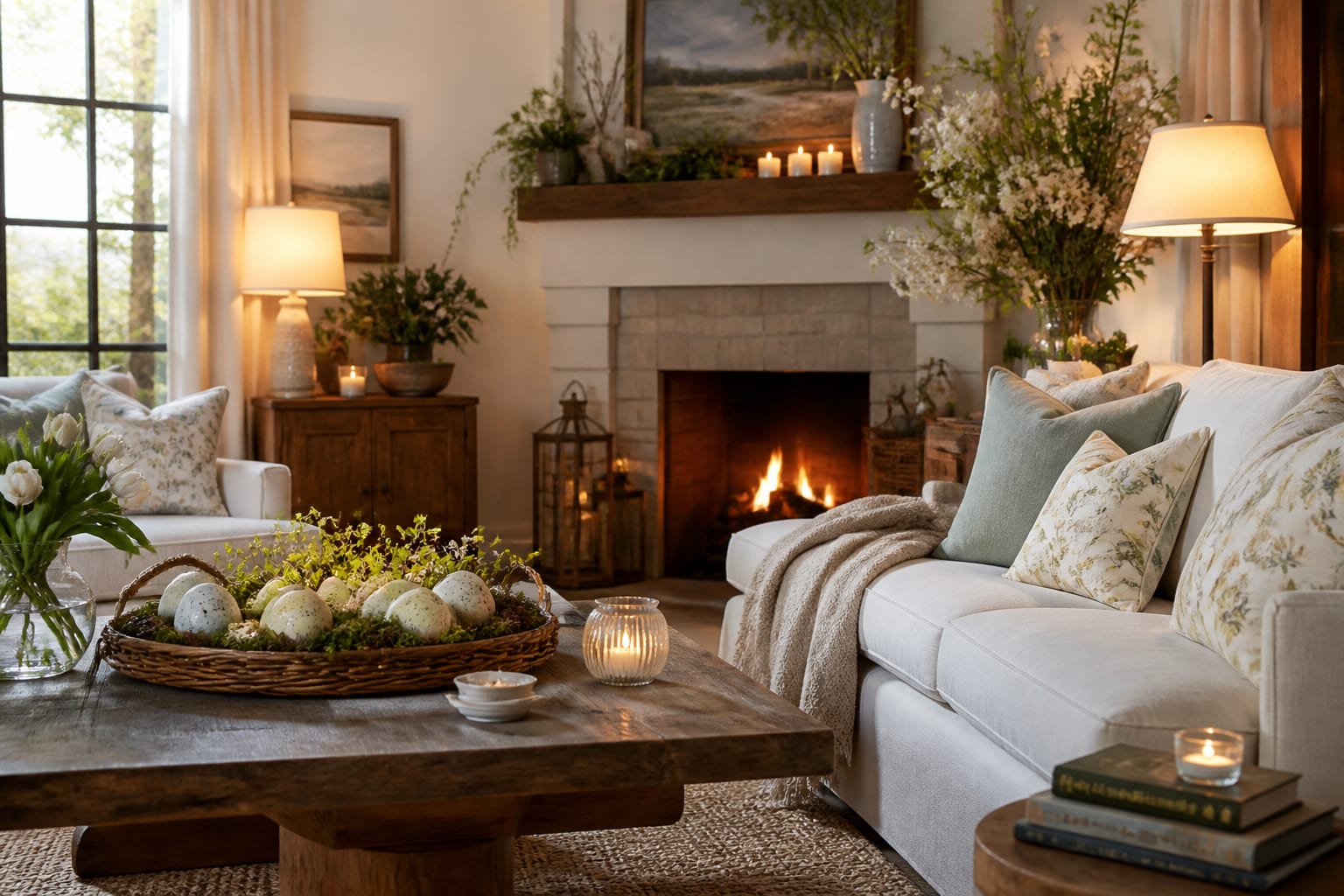
Easter decor has a reputation for plastic pastels and cartoon bunnies, and that reputation is earned. My view: the holiday is really a celebration of spring, so the most beautiful Easter homes lean into living botanicals, natural materials, and a soft natural palette rather than dyed-egg novelty. Treat it as the first real spring refresh of the year and the decor takes care of itself.
Why Botanical Beats Bunnies
The adult version of Easter decor works because it borrows from what is actually happening outside the window. Spring is green tips, swelling buds, and the first cut tulips, and a home that mirrors that feels alive in a way no plastic egg garland can. When you anchor the decor in real or realistic botanicals, the styling reads as seasonal rather than juvenile, and it keeps working for weeks instead of one Sunday. The shift also tracks the calendar honestly; by the time Easter arrives, most regions are genuinely greening up, so botanical decor feels true to the moment instead of imposed on it. Decorating with what is in season outside is the simplest way to make a room feel current rather than themed.
Natural materials carry the look. Woven baskets, linen runners, unglazed terracotta, and wooden or blown-glass eggs all sit comfortably in a grown-up room, while glossy plastic instantly signals the holiday aisle. The same egg motif can read charming or cheap depending entirely on the material, so choosing matte over shiny and natural over synthetic is the single biggest lever you have.
Color is the other half. Saturated pastels can feel like a nursery, but the muted versions of those same hues, sage instead of mint, butter instead of canary, blush instead of bubblegum, feel sophisticated and current. Pull the palette from real spring flowers rather than a candy aisle and the whole scheme matures instantly.
Scent and sound round out the seasonal shift in ways pure visuals cannot. The smell of cut hyacinth or a sprig of crushed rosemary on the table signals spring more powerfully than any color, and it costs almost nothing. Throw open the windows for the first warm afternoon, let in real daylight by swapping heavy winter drapes for sheer linen, and the room registers the season before a guest notices a single decoration. Easter at its best is less about objects on a shelf and more about inviting the outdoors in, which is exactly why the living, fragrant elements outperform the static ones every time.
Botanical Easter Ideas to Steal
- Force a few branches of forsythia, quince, or cherry in a tall clear vase two to three weeks early so they burst into bloom indoors by the holiday.
- Plant a low bowl of paperwhites, muscari, or mini daffodils in moss for a living centerpiece that lasts well past Easter Sunday.
- Display six to eight wooden or blown-glass eggs in muted tones in a shallow stone or ceramic bowl, skipping the basket entirely.
- Set the table with a linen runner, fresh herb sprigs at each place, and a low arrangement of ranunculus and hellebores kept below eye level.
- Drape a simple spring wreath of fresh or dried eucalyptus and olive branches on the door instead of a pastel-egg version.
- Group potted herbs like thyme and rosemary on a kitchen windowsill in matching terracotta for fragrance and an edible payoff.
- Swap heavy winter throws for washed linen or light cotton in soft sage and warm white to lighten every room for the season.
Carrying Spring Through the Whole Home
Easter styling lands best when it reads as a seasonal turn, not a one-day costume. The branches, linen, and lighter textiles you bring in for the holiday should stay through spring, so think of the decor as the moment you finally pack away the heavy materials of winter. That transition is the natural sequel to good winter home decor ideas, where you trade deep tones and chunky knits for the airy palette the new season calls for.
Let the change ripple beyond the dining table. A few branches in the entry, a linen runner in the kitchen, and fresh herbs on the sill connect rooms into one coherent spring mood, the same whole-home thinking behind a thorough new year room reset where one considered change sets the tone for the rest. Cohesion across rooms is what makes seasonal decor feel intentional.
Keep an eye on what comes next so the styling can evolve. The natural, botanical base you set at Easter carries you straight into late spring and summer with minimal effort, since the materials are timeless rather than holiday-specific. A bowl of real eggs leaves on Monday; the branches and herbs simply stay. The same gentle, reversible approach links Easter to the holiday before it, since the muted-palette restraint behind good valentines day home decor ideas is exactly the instinct that keeps spring styling from tipping into novelty.
There is a practical reward in this continuity beyond aesthetics. Holiday-specific decor that only works for one Sunday tends to live in a box eleven months a year and feels wasteful to buy. A forced branch, a linen runner, a set of terracotta pots, and a few wooden eggs cost roughly $40 to $80 together and earn their keep for the entire season, then store flat in a single shallow bin. Spending on timeless naturals instead of disposable plastic is the cheaper choice over any two-year stretch, and it is kinder to the closet.
Preview Your Spring Styling in Re-Design
A preview pays off for the table proportions too. Drop a low floral runner into a photo of your set table to check that it stays below eye level and leaves room for the food, so the centerpiece reads as gracious rather than as a hedge guests have to talk around. The same quick test reveals whether your muted palette holds up against the actual dishes and linens you own, which is far more useful than guessing from a styled catalog photo shot in someone else's light.
Frequently Asked Questions
How do I decorate for Easter without it looking childish? Lean on real branches, bulbs, and natural materials in muted tones, and keep egg motifs to a few wooden or glass pieces in one bowl. Material and restraint, not the absence of symbols, are what make it adult.
When should I force branches for Easter? Cut and bring in branches like forsythia or quince about two to three weeks before the holiday. Kept in water in a warm room, they open indoors right on schedule.
What colors work for a grown-up Easter palette? Muted spring tones: sage green, butter yellow, warm white, blush, and stone. Pull them from real flowers rather than candy-colored pastels and the scheme stays sophisticated.