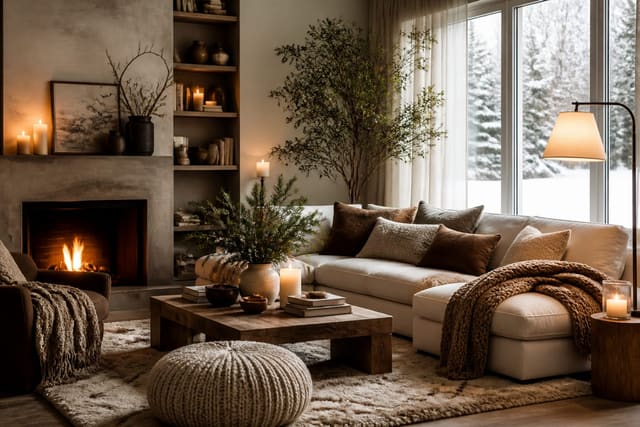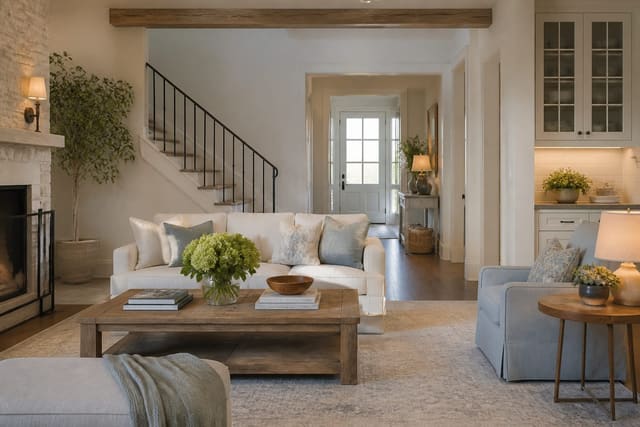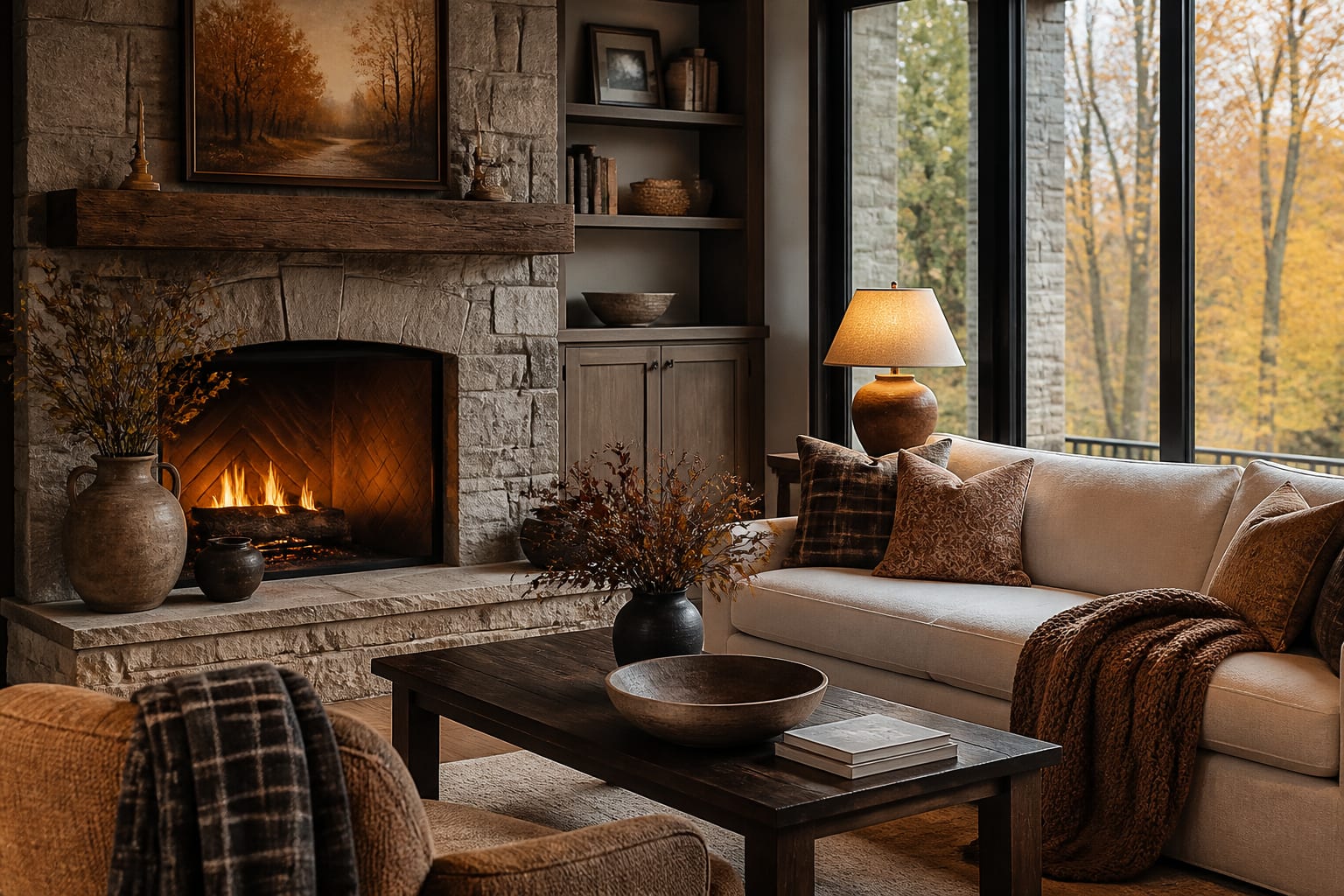
Fall decorating goes wrong when people treat it as a costume instead of a wardrobe change, burying a room under plastic pumpkins and fake leaves. The better approach is restraint: swap a few textiles, shift your color story toward warm earth tones, and let texture do the heavy lifting. A wool throw, a rust-colored pillow, and a bowl of real gourds will read more like fall than an entire bin of orange-and-black props. Decorate the season the way you would dress for it, in layers you can actually live with.
Why texture matters more than pumpkins in fall
The instinct every September is to add stuff, but fall is really about changing how a room feels, not how many seasonal objects it holds. Heavier materials are the shortcut. When you trade a crisp linen throw for a chunky wool one, or a thin cotton pillow cover for a velvet or boucle version, the room reads cozier the moment you walk in, even if the color barely shifts. Texture is what your eye registers as the temperature dropping, and it does the work that a pile of decorations only pretends to do.
Color is the second lever, and the trap is using too much of it. A tight palette of three warm tones, say rust, cream, and a touch of olive, looks deliberate, while a free-for-all of every autumn shade looks like a clearance aisle. Pull the season's color into a room through textiles and a few natural elements rather than repainting anything. The point is a warm, settled feeling, not a themed display, and the quieter version is the one that still looks good in late November.
There is a practical reason to favor restraint beyond taste, which is reuse. Textiles and natural elements like dried branches or a wool throw carry over year after year and even slide into winter, while bins of molded plastic pumpkins get used for six weeks and then crowd a closet. Investing $30 in a quality throw you keep for a decade beats spending the same on disposable props every autumn. The most convincing fall rooms I have seen lean almost entirely on materials a homeowner already owned, simply rearranged and warmed up, which is also the cheapest way to make the change.
Fall home decor ideas to try this season
These are the swaps that deliver the most autumn for the least effort and money. Pick three to five per room and stop there, because the restraint is what keeps it from tipping into kitsch.
- Drape a chunky wool or boucle throw over the arm of the sofa to add instant weight and warmth to the seating area.
- Swap summer's bright pillow covers for rust, mustard, and deep-olive ones, mixing two textures like velvet and knit.
- Fill a low wooden bowl with real or dried gourds, branches, and dried wheat instead of buying molded plastic versions.
- Move a few warm-white candles, around 2700K if they are LED, into the living room and entry for early-evening glow.
- Layer a smaller textured rug over a larger neutral one to add depth underfoot as the floors get cold.
- Switch sheer summer curtains for heavier linen or velvet panels that hold warmth and soften the lower autumn light.
Work one room at a time and resist the urge to decorate every surface. A few well-chosen layers carry the whole season far better than a house full of seasonal clutter.
How to style a transitional fall mantel and table
The mantel and the dining table are where fall decorating either looks curated or chaotic, so give them a simple rule: vary height, keep the palette tight, and use mostly natural materials. On a mantel, anchor each end with something tall, like a pair of candlesticks or a leaning piece of art, then fill the middle with a low, loose run of dried branches, a few gourds, and two or three candles at staggered heights. Leave breathing room; an empty third of the surface keeps the arrangement from looking crammed.
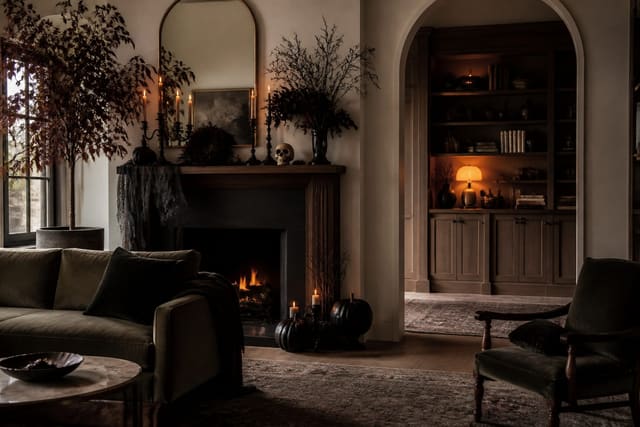
For the table, a runner in a warm tone does more than a full tablecloth and is easier to wash. Center a low arrangement so people can see across it, and repeat one material, such as brass or wood, in the candleholders and serving pieces to tie it together. This same logic carries you straight into the holidays, since a warm neutral base transitions cleanly. When the season turns, our winter home decor ideas pick up exactly where the fall palette leaves off, and for the spookier weeks in between, our Halloween home decor ideas show how to add a playful layer without redoing everything.
Lighting deserves a place in the fall plan that most people forget. As the days shorten, the harsh summer brightness you wanted in July starts to feel cold, so this is the season to add warm lamplight and candles at seated height. A couple of table lamps with 2700K bulbs and a cluster of candles on the coffee table change the mood of a room more than any pillow swap, and they cost almost nothing if you already own the lamps. The warm glow is what makes the rust and mustard tones read the way they do in the photos that drew you to fall decorating in the first place.
Preview fall home decor in Re-Design
Frequently Asked Questions
When should I start decorating for fall?
Early September is the natural starting point, when the light shifts and evenings cool, but the textile-and-tone approach works any time the weather turns. Because the look leans on warm neutrals rather than dated props, it holds up cleanly from September through late November without feeling rushed or stale.
How do I decorate for fall without it looking cheap?
Trade plastic props for natural materials and keep your palette to three warm tones. Real or dried gourds, wool throws, and linen runners read as intentional, while bins of molded decorations read as temporary. Spending on a couple of quality textiles you reuse every year beats buying disposable seasonal clutter.
Can I transition fall decor into winter without starting over?
Yes, and that is the whole advantage of a warm neutral base. Keep the cream and natural textures, pull out the brightest autumn oranges, and add cooler accents and more candles as the holidays approach. The textiles carry over, so you are adjusting rather than redecorating from scratch.