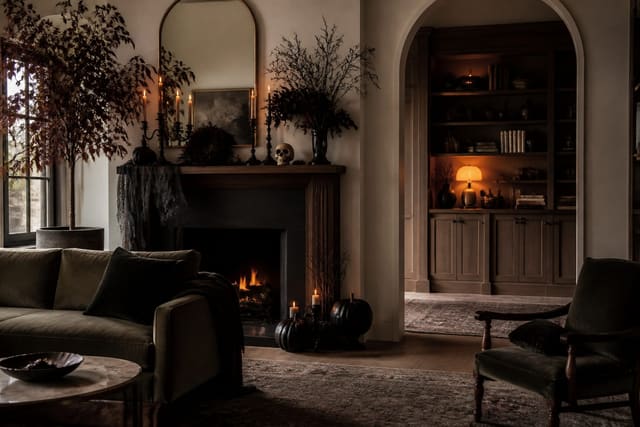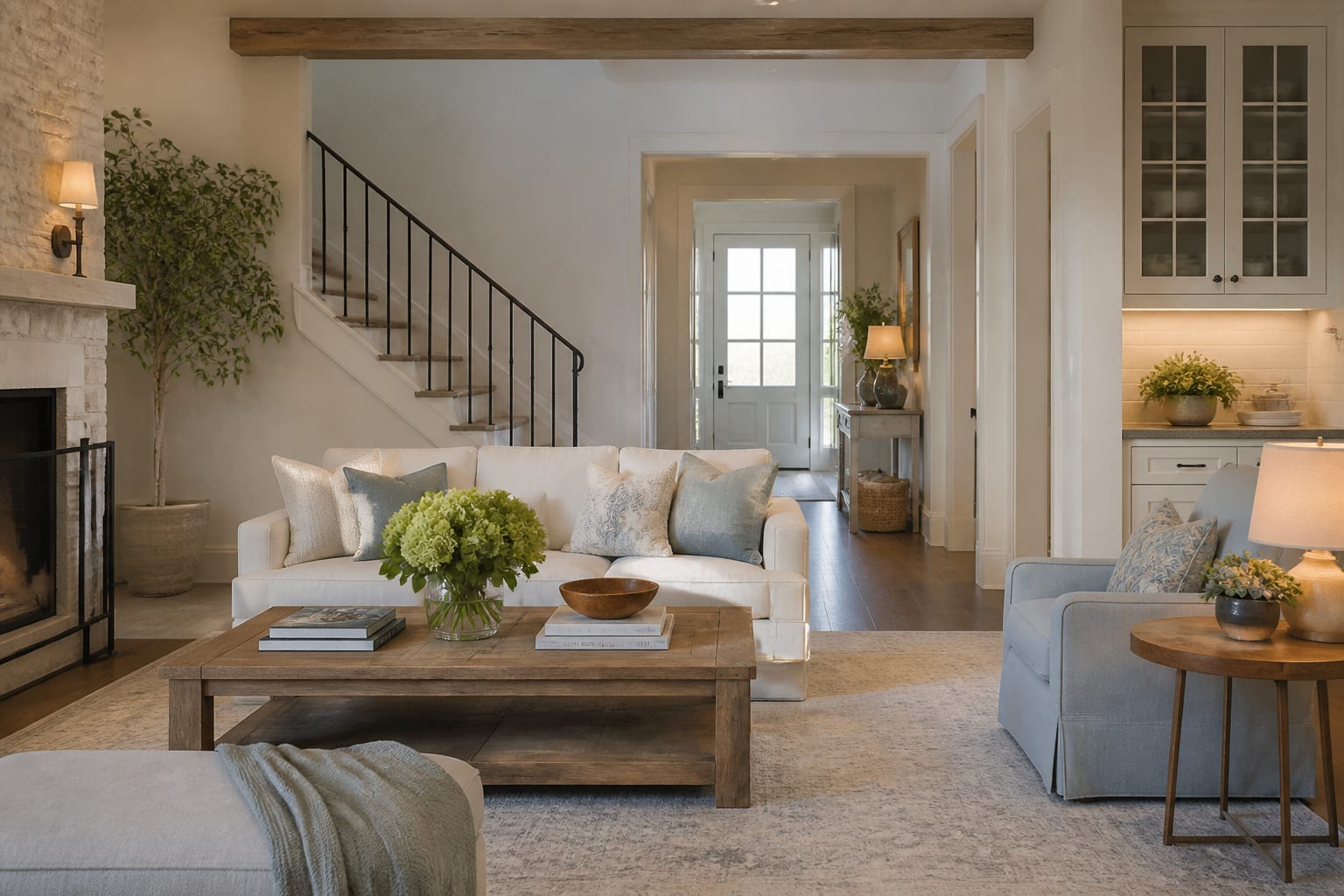
Spring decorating goes wrong when people treat it as an excuse to buy more stuff. The better instinct is subtraction: pull out the heavy throws, swap dark textiles for lighter ones, and let the room breathe. My strong opinion is that a clean palette and two or three deliberate accents beat a cart full of pastel knickknacks every single time. Done right, a spring refresh costs under $200 and takes a Saturday afternoon.
Why subtraction beats decoration in spring
The instinct after a long winter is to fill a room with color, but crowded surfaces fight the light you are trying to invite in. Start by clearing every horizontal surface and putting back roughly half of what was there. A mantel with three objects looks intentional; a mantel with eleven looks like storage. This single edit does more for a room than any purchase, and it costs nothing.
Light is the real material of spring. Pull curtains fully off the glass during the day, clean the windows, and consider switching a dark drape for a linen or cotton panel that filters rather than blocks. Warm white bulbs around 2700K keep evenings cozy without the orange cast of older incandescents. When the surfaces are calm and the light is generous, even an unchanged room already feels seasonal. A clean mirror placed opposite a window doubles the daylight a room receives, which is the cheapest brightness upgrade available to anyone.
Color should arrive in small, confident doses. A warm-neutral base on walls and large furniture lets a single accent color carry the season, whether that is a soft sage, a clear sky blue, or a muted coral. Repeat that accent two or three times across a room so it reads as a choice, not an accident. This restraint is the difference between a refresh that looks designed and one that looks decorated by committee.
Scent and sound belong in the same conversation, even though most decor advice ignores them. Open windows for ten minutes a day, swap a heavy winter candle for something green or citrus-forward, and the room reads as spring before you change a single object. These sensory cues cost almost nothing and reinforce the visual edit you have already made. The goal across all of it is a space that feels lighter the moment you walk in, not one that simply looks different in a photo.
Spring decor ideas to try this weekend
Here is a short list of moves that deliver the most change for the least money and effort. Pick three or four rather than attempting all of them at once.
- Swap a wool or chunky-knit throw for a washed cotton or waffle-weave one in a pale tone.
- Replace dark velvet pillow covers with linen or cotton in two complementary light shades.
- Move a healthy potted plant or a tall stem of branches to a spot that catches morning light.
- Change a dark entry runner for a flatweave or jute rug to brighten the first thing you see.
- Group three clear glass vessels with seasonal stems on a single tray instead of scattering small objects.
- Switch heavy bedding for a lighter quilt or coverlet and lose one of the winter layers.
- Bring in citrus or a simple bowl of green apples on the kitchen counter for low-cost color.
The point of a list like this is permission to stop. Three of these changes in your main living space will register as a full seasonal shift, and you will avoid the trap of half-finishing six rooms. If you want a benchmark, fall styling follows the same edit-first logic in reverse, layering warmth back in, which you can see in our take on fall home decor ideas.
Where to spend and where to save
Spend on the things you touch and see every day. Good pillow inserts that actually fill the cover, a quality linen throw, and a healthy plant are worth real money because they last beyond one season. A pair of well-made linen pillow covers runs $40 to $70 and reads far better than a five-dollar pastel cover that pills after one wash. Treat textiles as the season's main lever and you rarely need anything else.
Save on the decorative extras. Branches clipped from your own yard outperform store-bought stems, and a thrifted clear vase does the same job as a new one. Resist themed seasonal decor with bunnies and eggs unless you genuinely love it; that stock looks dated by June and clutters your storage the other eleven months. The same discipline that keeps a space feeling fresh in spring carries through the year, including the heavier moods of winter home decor ideas when you reverse the palette toward warmth.
Think in terms of one anchor purchase per room with a ceiling around $100. That might be a new flatweave rug, a single statement plant in a good pot, or a set of curtains. Everything else should be a swap from what you already own. A spring refresh is a styling project, not a furniture project, and keeping that boundary is what keeps it affordable.
There is also a strong case for spending nothing at all in some rooms. A guest bedroom or a hallway rarely needs a seasonal touch, and forcing one there just spreads your attention thin. Concentrate the budget where you actually spend time, usually the living room and kitchen, and let the rest of the house ride on the deep clean and the open windows. A focused $80 spent on two pillow covers and a plant in the room you use most will read louder than $200 scattered across five spaces nobody lingers in.
Preview your spring refresh in Re-Design
Frequently Asked Questions
How much should a spring decor refresh cost? A focused refresh of your main living space runs $100 to $200 if you lean on swaps and one anchor purchase. The biggest savings come from editing what you own and reusing vases, trays, and frames rather than buying new. Plants and quality pillow covers are the line items worth funding.
What colors say spring without looking childish? Keep a warm-neutral base and add one clear accent: soft sage, a muted sky blue, or a grounded coral all work. The trick is repetition in small doses rather than coating a room in pastel. Saturated but muted tones read as adult and intentional.
Do I need real plants or will faux work? One or two healthy real plants do the most for a spring feel because they bring movement and a living quality faux cannot match. If light is poor, a single good-quality faux stem in a real vase is an acceptable compromise. Avoid filling a room with cheap plastic greenery, which flattens the whole effect.