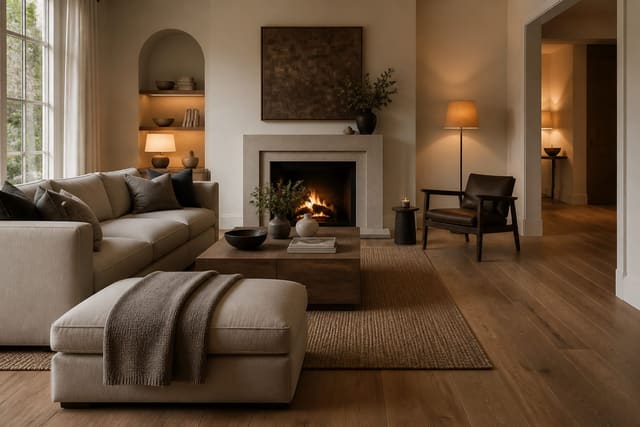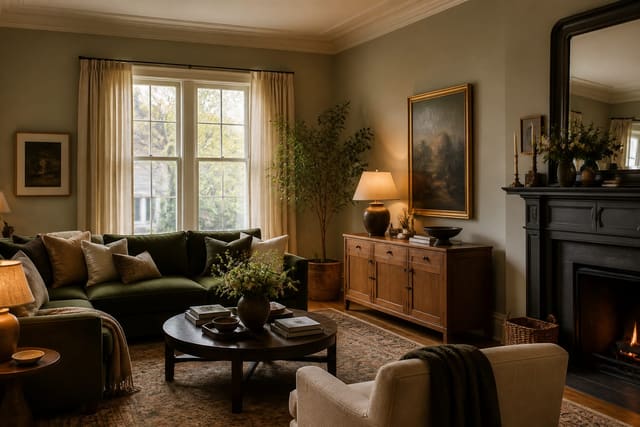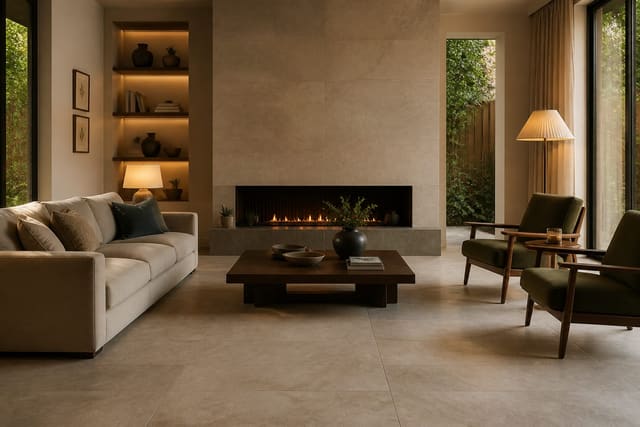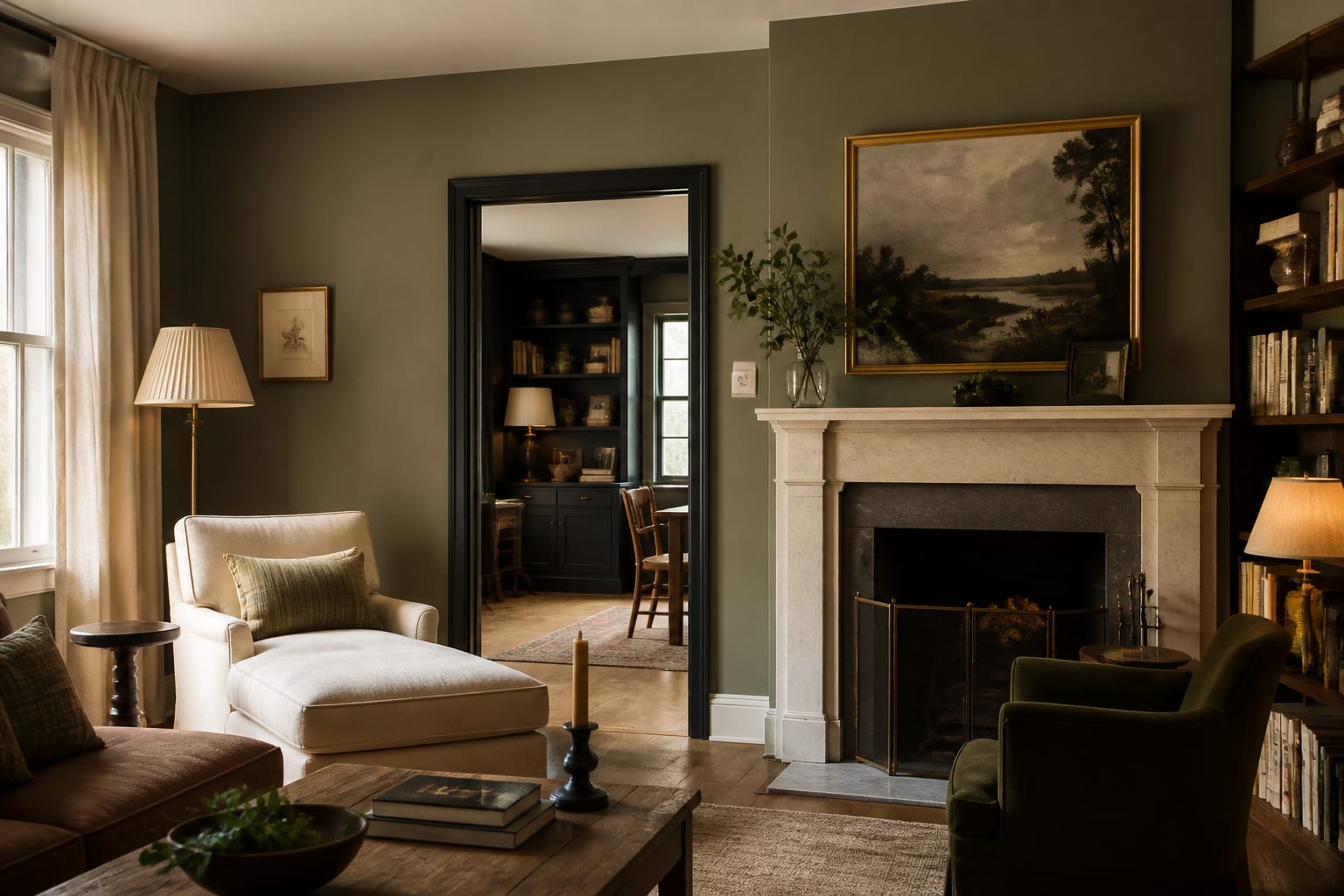
Farrow & Ball is the paint people quietly apologize for buying, and I understand the reflex, because a single gallon can cost two to three times what a premium Benjamin Moore gallon does. The honest answer to whether it is worth that premium is a qualified yes, but only for specific rooms and specific colors where the difference genuinely shows up on the wall. Buy it for the whole house and you are mostly paying for a feeling.
My read after years of specifying both brands is that Farrow & Ball sells a particular quality of light and pigment, not better durability or coverage. Once you understand precisely what you are paying for, you can decide which walls truly deserve it and which are perfectly happy with a far cheaper can of Benjamin Moore doing the same visual job.
What the Farrow & Ball premium actually buys
The core selling point is pigment load and the deliberate way the brand layers undertones into each color. A Farrow & Ball off-white is rarely a single flat note; it carries a whisper of green, pink, or grey that makes the wall feel alive as the sun travels across the room. That chromatic complexity is genuine and carefully engineered, and in a room with good natural light it is something you can actually see, not just something you tell yourself you see to justify the receipt.
There is also a craft and provenance story baked into the price. The brand's heritage palette, its evocative color names, and its richly pigmented recipes give it a cachet that designers and period-home owners value for reasons beyond pure performance. That is a legitimate thing to pay for, as long as you go in with clear eyes about what it is.
The finish range is part of the appeal too, and it is genuinely distinctive. Farrow & Ball's Estate Emulsion is an unusually flat, chalky matte that gives walls a soft, suede-like quality you rarely see from mainstream lines, while its Modern Emulsion adds wipeability for busier rooms. That dead-flat look photographs beautifully and feels expensive in person, which is a real part of what the money buys. Just remember that the chalkiest finishes are also the least scrubbable, so reserve the most matte option for low-traffic, grown-up rooms rather than a hallway full of bikes and backpacks.
What the premium does not buy is meaningfully tougher paint. Independent testing has repeatedly shown mainstream premium lines matching or beating Farrow & Ball on scrub resistance, hide, and stain removal. So the money goes toward depth, atmosphere, and a curated palette, not toward longevity on the wall. If you are coordinating that nuanced wall color with floors, my flooring comparison helps you read undertones across materials so a complex paint does not quietly fight a warm wood underfoot.
How they compare on the numbers
| Factor | Farrow & Ball | Benjamin Moore (Regal/Aura) | | --- | --- | --- | | Price per gallon | $110 to $130 | $50 to $90 | | Coats typically needed | 2 to 3 | 2 | | Coverage per coat | 300 to 350 sq ft | 350 to 400 sq ft | | Standout quality | Pigment depth, undertones | Value, durability, washability | | Best use | Feature walls, refined neutrals | Whole-home, trim, ceilings |
Notice the coverage line carefully, because it drives the real cost. Since Farrow & Ball often needs an extra coat and covers less ground per gallon, the true price difference on a full room can be wider than the per-gallon sticker alone suggests. A 200-square-foot accent wall that takes three coats of the boutique paint can quietly double the gallon count you budgeted for.
For deep, saturated colors specifically, Benjamin Moore's Aura with Color Lock holds its own against the boutique option at a fraction of the price, locking pigment against fade in a way that closes most of the perceived quality gap. I dig further into that brand-on-brand contest in my Sherwin-Williams versus Benjamin Moore comparison, which is worth reading if you have not already settled on a mainstream brand.
There is also a clever middle path that many people overlook entirely. Most quality paint shops can color-match a Farrow & Ball shade into a Benjamin Moore or Sherwin-Williams base, giving you the famous color name in a tougher, cheaper, better-covering formula. The match is rarely pixel-perfect, since the proprietary pigment recipe is part of what you lose, but on a low-light wall the difference is often invisible. If you adore a specific Farrow & Ball hue but balk at the price and the extra coats, a color match is the pragmatic compromise I reach for most often.
Where to spend and where to save
My spending rule is blunt: pay for the expensive paint only where your eye will actually register the difference. Here is where I think the Farrow & Ball premium earns itself:
- A living room or bedroom with strong natural light that reveals those undertone shifts hour by hour
- A nuanced neutral that anchors the entire palette and absolutely has to read perfectly
- A small jewel-box space like a powder room where a single feature wall does all the work
- A historic or period property where the curated heritage palette genuinely suits the architecture
- A deep, atmospheric color in a low-light snug where richness matters more than scrubbability
For ceilings, closets, hallways, laundry rooms, and trim, Benjamin Moore delivers a result almost no guest could ever distinguish, often at half the cost. The same disciplined restraint applies to hard finishes throughout the project; spend on the surfaces you touch and see every single day, and economize quietly on the rest. I extend that same budgeting logic to the porcelain versus ceramic tile decision whenever a renovation budget is genuinely tight.
It also pays to think about how long you plan to keep the paint up. A feature wall you expect to live with for a decade justifies the splurge far more easily than a trendy color you suspect you will tire of in two years. For the second case, the smart move is to spend the saved money on a tester pot and a good primer instead, so you can repaint sooner without flinching at the cost. Matching the quality of the paint to the lifespan of the decision is the discipline that keeps a Farrow & Ball habit from quietly draining the whole renovation budget.
Use AI design to preview premium paint before you commit
The entire case for Farrow & Ball rests on how its undertones behave in your specific light, which is nearly impossible to judge honestly from a tiny sample card propped against the baseboard. Re-Design closes that gap directly: upload a photo of the room and the AI paints the walls in the shade you are weighing, so you can see whether the much-praised complexity actually shows up in your space.
This is the cheapest possible way to test an expensive decision before any money leaves your account. Render the same wall in a Farrow & Ball neutral and a close Benjamin Moore match side by side, and if your eye honestly cannot tell them apart on screen, treat that as a strong signal to pocket the difference. Upload the room, compare both options under your own light, and spend the premium only on the wall where it truly earns its place.