The biggest myth about a home sauna is that it needs to be a luxury build. The truth is the opposite: the Nordic version was always a humble, practical room, and the worst home saunas are the over-designed ones that ignore the basics of heat and airflow. The decisions that actually matter are unglamorous, heater type, ventilation, the right wood, and bench geometry, and a modest cedar room that nails those beats a showpiece that traps moisture and rots. Pick the heat source for how you actually want to sweat, then build a simple, well-vented box around it. Everything else is finish.
Traditional versus infrared heat
The first real decision is how you want to be heated, because it changes everything downstream. A traditional Finnish sauna uses an electric or wood-burning heater to bring the air to 150 to 195 degrees Fahrenheit, then you ladle water over hot stones to create the burst of steam, the loyly, that defines the Nordic ritual. It is an intense, enveloping heat that needs proper framing, a moisture-tolerant interior, and serious ventilation. An infrared sauna works differently, using panels to warm your body directly at a gentler 120 to 140 degrees with very low humidity, which many people find easier to tolerate for longer sessions.
The practical trade-offs are clear. Infrared cabins are lighter, plug into a standard outlet in many cases, and can squeeze into a spare corner, so they suit apartments and smaller homes. Traditional saunas deliver the authentic steam experience but demand a dedicated, well-built room, a heater drawing a 30 to 60 amp circuit, and careful waterproofing. Neither is better in the abstract; choose the one matching the ritual you actually want and the space you genuinely have.
Sizing, framing, and the right wood
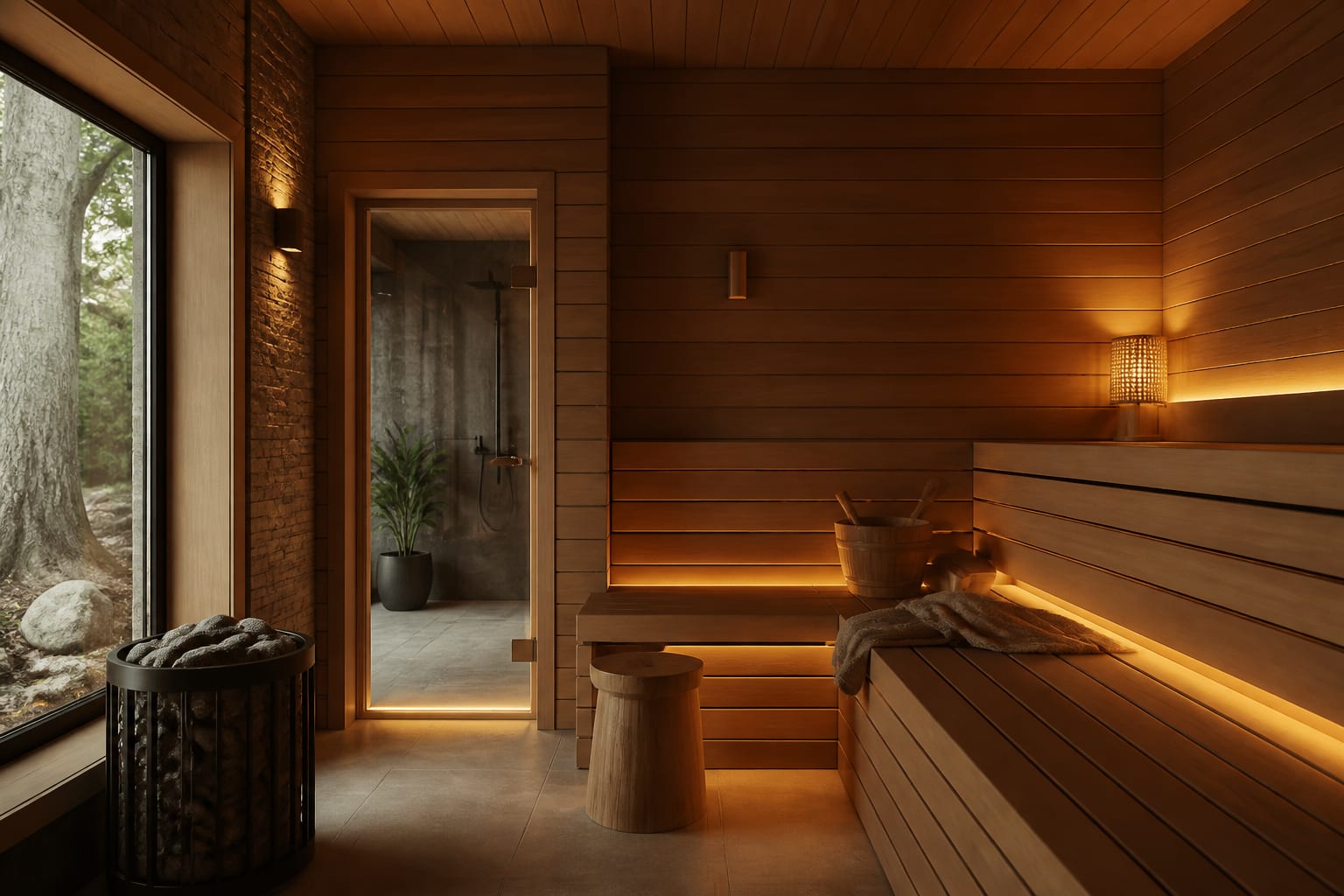
Size the room around the bench, not the floor. A comfortable one- or two-person sauna runs about 4 by 4 feet, while a family-sized room sits closer to 6 by 5 feet, and you want a ceiling around 7 feet, low enough to hold heat at head level but tall enough to stand. Frame with standard studs, insulate the walls and ceiling well, and crucially install a foil vapor barrier on the warm side before the paneling so moisture cannot soak into the structure behind your beautiful cedar.
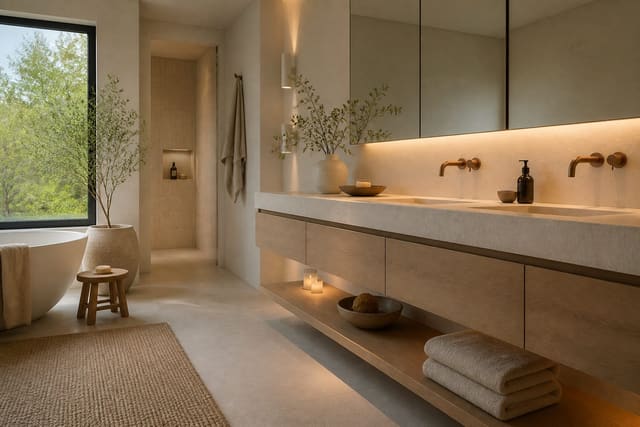
Wood choice is a genuine performance issue, not just a look. Use kiln-dried softwoods that stay cool and resist rot, cedar, hemlock, basswood, or Nordic aspen are the classics, and never seal or varnish them, since the bare wood needs to breathe and absorb moisture. Avoid resinous pine with knots that can heat up and burn skin, and never use pressure-treated lumber anywhere near a sauna. The same warm, simple material palette shows up across calm bathing spaces, including the bare-wood-and-stone restraint in our Scandinavian bathroom ideas guide.
Ventilation, benches, and the layout that works
Ventilation is the detail most home saunas get wrong, and it is the one that quietly ruins them. A traditional sauna needs a fresh-air intake low on the wall near or under the heater and an exhaust vent placed high on the opposite wall, ideally adjustable, so warm air circulates and the room dries out between uses. Without that loop, heat pools at the ceiling, the lower benches stay cool, and trapped moisture rots the wood within a few seasons. Treat the two vents as non-negotiable, not optional trim.
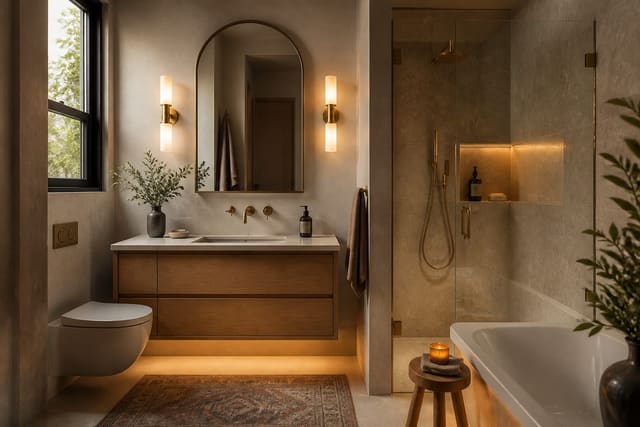
Benches are where comfort lives. Build two tiers roughly 18 inches apart so you can sit on the upper bench, around 40 inches off the floor, to bask in the hottest air near the ceiling, or drop to the lower one for a milder session. The top bench should be deep enough, about 20 inches, to lie down on. Keep the heater guarded and out of the direct path of bare feet, and leave the floor in a sealed, sloped tile or duckboard so water drains. If your sauna shares a bathroom, the planning logic in our AI bathroom design guide helps you fit it without crowding the rest of the room.
Common mistakes to avoid in a home sauna
Most disappointing home saunas trace back to the same handful of errors. Watch for these:
- Skipping the foil vapor barrier behind the paneling, so moisture soaks into the framing and rots it from inside.
- Installing only an intake or only an exhaust instead of both, leaving cold lower benches and a stuffy room.
- Sealing or varnishing the interior wood, which traps moisture and ruins the bare-wood feel a sauna depends on.
- Using knotty pine or treated lumber where hot resin or chemicals can reach skin and lungs.
- Building the ceiling too high above 8 feet, which wastes energy heating air no one ever sits in.
- Undersizing the electrical, then learning a 6-kilowatt heater needs a dedicated 30-amp circuit you did not run.
The ventilation error is the most insidious because the sauna seems fine at first. It heats up, you sweat, and only months later do you notice the lower bench never gets warm and the cedar near the floor is darkening. Get the low intake and high exhaust right on day one and the room will perform and last for a decade or more.
See it first in Re-Design
A sauna is a small, all-wood room where proportions read very differently in person than on paper, and the warm cedar tone shifts the whole mood. Upload a photo of the spare room, basement corner, or bathroom alcove you are considering to Re-Design and preview a cedar-lined cabin, the bench tiers, and the door and glass placement against your actual walls. You can compare a light aspen interior with a darker hemlock one, test how a glass front opens up a tight space, and see whether a 4-by-4 footprint truly fits before you frame a single stud or order paneling.
Frequently Asked Questions
Is an infrared or traditional sauna better for home use?
It depends on the experience you want. Traditional saunas hit 150 to 195 degrees with steam from water on hot stones, the authentic Nordic ritual, but need a dedicated, vented, waterproofed room and a heavy electrical circuit. Infrared cabins run cooler at 120 to 140 degrees, warm the body directly, and fit smaller spaces, often on a standard outlet, making them easier for apartments.
How big does a home sauna need to be?
A comfortable one- or two-person sauna is about 4 by 4 feet of floor with a 7-foot ceiling, while a family room runs closer to 6 by 5 feet. Keep the ceiling low enough to hold heat at head height. Plan the room around two bench tiers rather than starting from the floor area alone.
What wood should I use for a sauna?
Use kiln-dried softwoods that stay cool and resist rot, such as cedar, hemlock, basswood, or Nordic aspen. Never seal or varnish the interior, since bare wood needs to absorb moisture and breathe. Avoid knotty pine, which can leak hot resin onto skin, and never use pressure-treated lumber anywhere in the room.
Why does a sauna need ventilation?
Without airflow, heat pools at the ceiling, the lower benches stay cold, and trapped moisture rots the wood within a few seasons. A traditional sauna needs a fresh-air intake low near the heater and an exhaust high on the opposite wall so air circulates and the room dries between uses. Treat both vents as required, not optional.