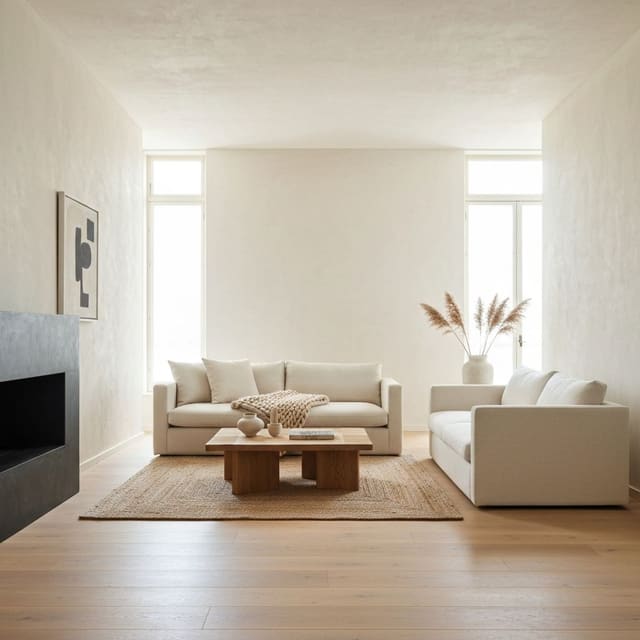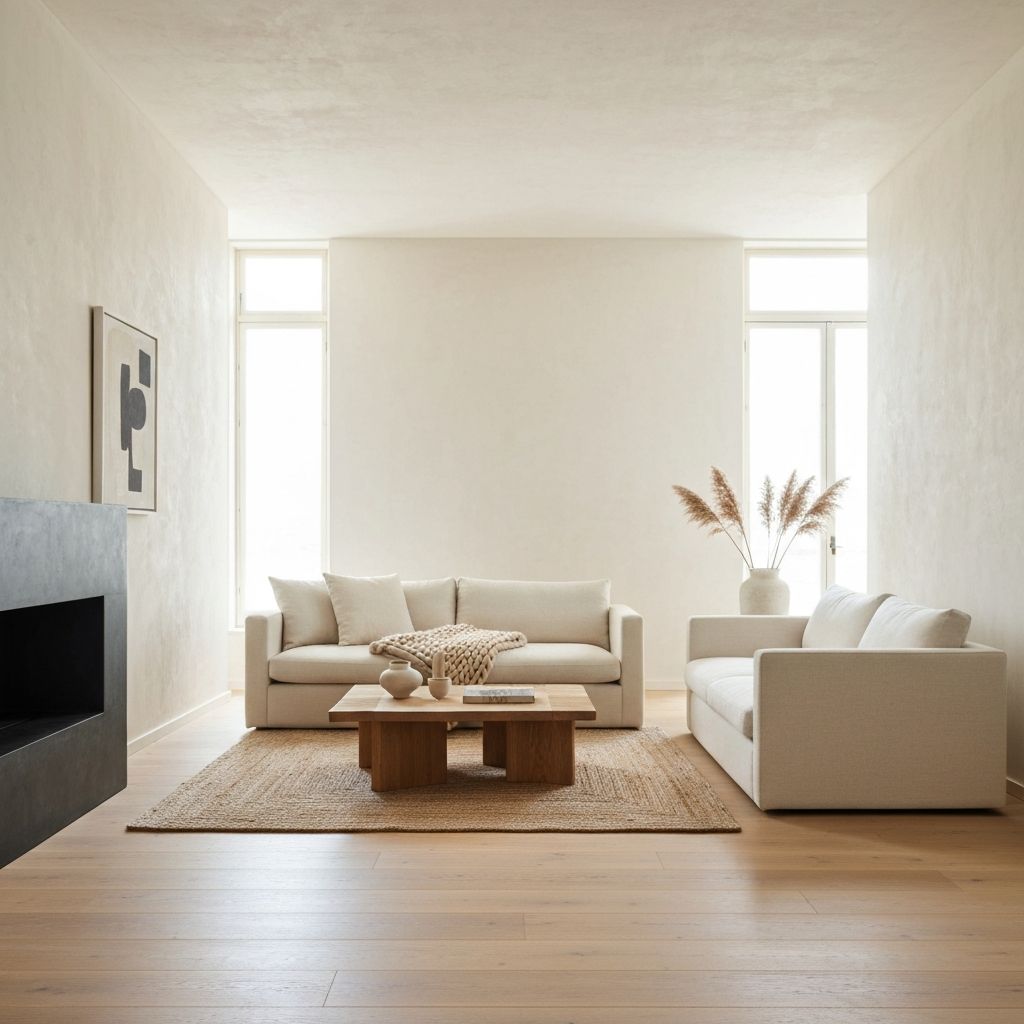
Modern minimalism is restrained furniture (low-profile sofas, clean-lined case goods), high-quality materials (oak, walnut, stone, leather), a tight color palette (1-3 colors total), and intentional negative space — not the absence of comfort or texture. Modern minimalist design has a perception problem. For years, "minimalism" meant white-on-white rooms, hard edges, and the kind of spaces that look stunning in photos but feel cold and lonely to actually live in. The minimalist trap is real — and avoidable. The new minimalism, often called warm minimalism or Japandi, keeps the discipline of restraint but layers in warmth, texture, and humanity. Here's how to design modern minimalist spaces that feel calm, considered, and genuinely lived-in.
The minimalist trap (and how to avoid it)
Most failed minimalist rooms share the same five mistakes:
- Stark cool whites that read clinical rather than calm.
- Hard edges everywhere with no soft curves to break the geometry.
- One color with no tonal variation.
- Hidden everything — including the things that would have made the room feel like a home.
- Single light sources that create harsh, even illumination.
The fix isn't more stuff. It's better stuff, layered with intentional warmth.
The five elements of warm modern minimalism
A modern minimalist room that actually feels good to be in consistently has these five elements.
- A warm color palette. Replace cool stark whites with cream, oat, putty, greige, and warm whites. The same restraint, completely different feeling. Limewashed plaster walls add warmth and subtle texture in a way flat paint never can.
- Natural materials throughout. Wood (warm-toned oak and walnut, never cool-toned maple), linen (curtains, slipcovers, throws), stone (a coffee table, a vase, a bowl), wool (rugs, throws), leather (one chair, one bench), and ceramics. Natural materials patina with age and signal humanity.
- Negative space with texture. Empty walls and surfaces are powerful — but only when the surfaces themselves have visual interest. Limewashed walls, oak floors, a textured rug, and a single ceramic vessel beat a sterile white surface every time.
- One curve in every room. Modern minimalism is full of right angles. The fix is to introduce one curved element per room — a round dining table, an arched mirror, a soft swivel chair, a curved sofa, a circular pendant. The curve interrupts the geometry and adds humanity.
- Warm lighting layered at night. Multiple low-watt warm sources (2200K-2700K), never the overhead. A floor lamp, two table lamps, picture lights, and a sconce or two will completely transform any minimalist room after sunset.
What modern minimalism is not
- Empty. A minimalist room is edited, not empty. The things in it are chosen carefully.
- All-white. Color belongs in minimalism — it's just used with restraint. A deep terracotta wall, a forest green chair, or a clay-toned ceramic can all live in a minimalist room.
- Without personality. A minimalist room should still feel like yours. One vintage piece, one piece of original art, one collected object — these are what give a minimalist room soul.
- Anti-pattern. Subtle patterns (a striped rug, a plaid throw, a checkered cushion) are fine in moderation. The discipline is keeping the number of patterns low.
- Cold. Done right, modern minimalism is the warmest style — because nothing competes with the materials, textures, and light.
Test this on your own room photo with ReDesign before you choose the final direction; keep the doorway, walls, windows, main furniture, lighting, and awkward fixed features visible so the preview solves the room you actually have.
For a useful room-planning comparison, keep AI Interior Design: The Complete Guide to What It Does, What It Cannot Do, and When to Use It, All-White Room That Feels Cold: The Fix, and The Best AI Design Apps in 2026: Honest Comparison by Real Use Case nearby so this retrofit stays connected to the adjacent lighting, storage, scale, and layout decisions in the same photo-led workflow.
How to design a warm minimalist living room
- Walls: Limewashed warm white or putty.
- Floor: Wide-plank natural oak or warm-toned engineered wood.
- Rug: A large neutral wool or wool-jute blend, often with subtle texture.
- Sofa: Low-profile, cream linen or bouclé, with deep cushions.
- Coffee table: A sculptural piece in solid oak, travertine, or natural stone.
- Lighting: A floor lamp, two table lamps, and warm-bulb sconces.
- Art: One large piece, or a small grouping at human eye level.
- Curve: A round coffee table, an arched mirror, or a soft swivel chair.
- Plants: One sculptural plant (olive tree, fiddle leaf fig, or potted palm) in a textured planter.
How to design a warm minimalist bedroom
- Bed: Low-profile platform with a tall upholstered linen headboard.
- Bedding: Layered linen — fitted sheet, flat sheet, linen blanket, duvet, two pillows.
- Bedside tables: Matching, in oak or walnut.
- Lighting: Two table lamps or two sconces flanking the bed.
- Walls: Warm white or a soft moody tone like clay or sage.
- Floor: Wood with a large wool rug under the bed.
- One curve: An arched mirror or a round nightstand.
Does minimalism mean only neutrals?
No. Minimalism is about restraint, not absence of color. A minimalist room can absolutely include one bold color — a terracotta wall, a forest green chair, a clay-toned vessel — it just shouldn't have ten. The discipline is choosing one or two accent tones and committing.
Common warm minimalist mistakes
- Picking cool white paint. a cool white wall undoes every warm material in the room; warm whites are the foundation, not a finishing touch.
- Hiding everything. closed storage with zero visible objects reads as a model home; one shelf of considered objects is what makes minimalism feel human.
- Running everything on the overhead. a single ceiling fixture at full brightness erases the calm; layered low-watt warm sources do the evening work.
- All right angles, no curves. a room of squares and rectangles reads as hard; one curved object per room rescues the geometry.
- One color, no tonal variation. three or four shades of the same warm neutral read as designed; one flat color reads as unfinished.
- Banning pattern entirely. a subtle striped rug or a checkered cushion adds rhythm without breaking restraint; total pattern abstinence is what makes minimalism boring.
Use AI design to preview warm minimalist directions
The biggest reason people don't commit to a minimalist redesign is fear that it'll feel cold once they've actually pulled the trigger. AI design solves this in minutes. Photograph your existing room and preview multiple warm minimalist directions — Japandi, organic modern, Mediterranean minimalism — before buying anything. You'll see exactly which direction feels warm versus sterile, and walk into the project with confidence.
Frequently Asked Questions
What is the difference between minimalist and sparse?
Minimalist is restrained but complete — a sofa, chair, rug, lamp, and one piece of art done well; sparse is missing pieces — a sofa alone reads underfurnished, not minimal. Use the room photo to compare the visible layout and fixed constraints before committing, because door swings, windows, outlets, storage reach, circulation, and existing furniture decide whether the idea survives daily use.
How many colors should a minimalist room have?
One to three — typically a wall neutral, a wood tone, and one accent (black, navy, or olive); more than three colors moves the room out of minimalism. Keep the preview honest by leaving the problem area visible in the frame, then compare one conservative version against one bolder version before you buy lighting, paint, furniture, or storage.
Can minimalist rooms have texture?
Yes — texture is what keeps minimalism warm; boucle, linen, jute, leather, and grained wood add visual interest without breaking the color discipline. Check the result against ordinary movement first: drawer clearance, chair pullout, walkway width, glare, switch access, and sightlines matter more than a perfect catalog angle.
What materials work in minimalist rooms?
White oak, walnut, plaster walls, honed stone, leather, and natural-fiber rugs; high-gloss laminate, plastic, and chrome read commercial rather than minimalist. Use the image to narrow priorities and measurements before ordering anything custom; final purchases still need real dimensions, outlet locations, installation limits, and product clearances.
Does AI preview minimalist style on my room?
Yes — upload the room photo and AI previews minimalist furniture, palette tightening, and material upgrades against the existing space. If the preview invents architecture or hides the awkward feature you need solved, rerun it with stricter instructions so the result remains tied to your actual room.
> Try this: Ready to see this on your own room? Open ReDesign and run the preview.
Three transformations to try
1. Minimal living with oak + linen + boucle 2. Minimal bedroom with three-color palette 3. Minimal dining with plaster walls