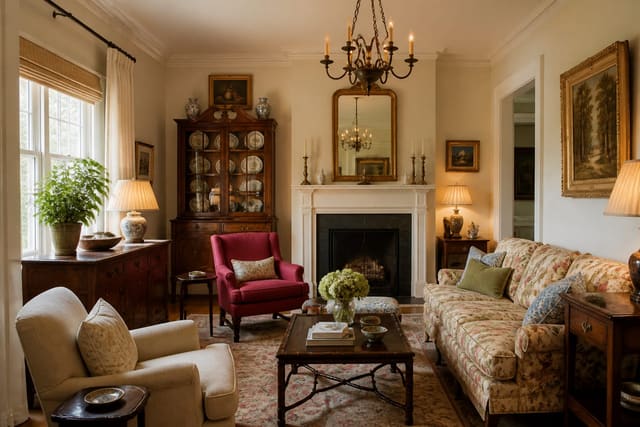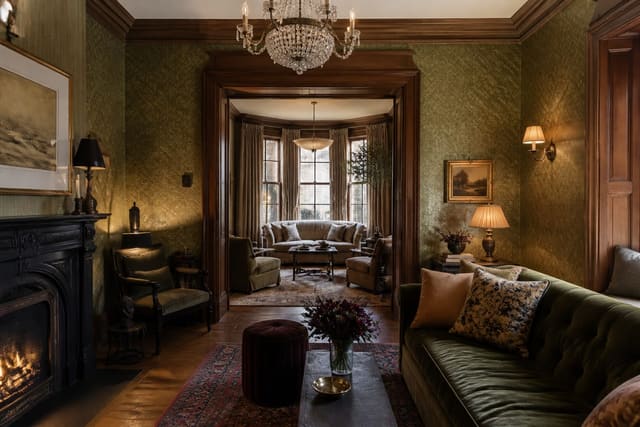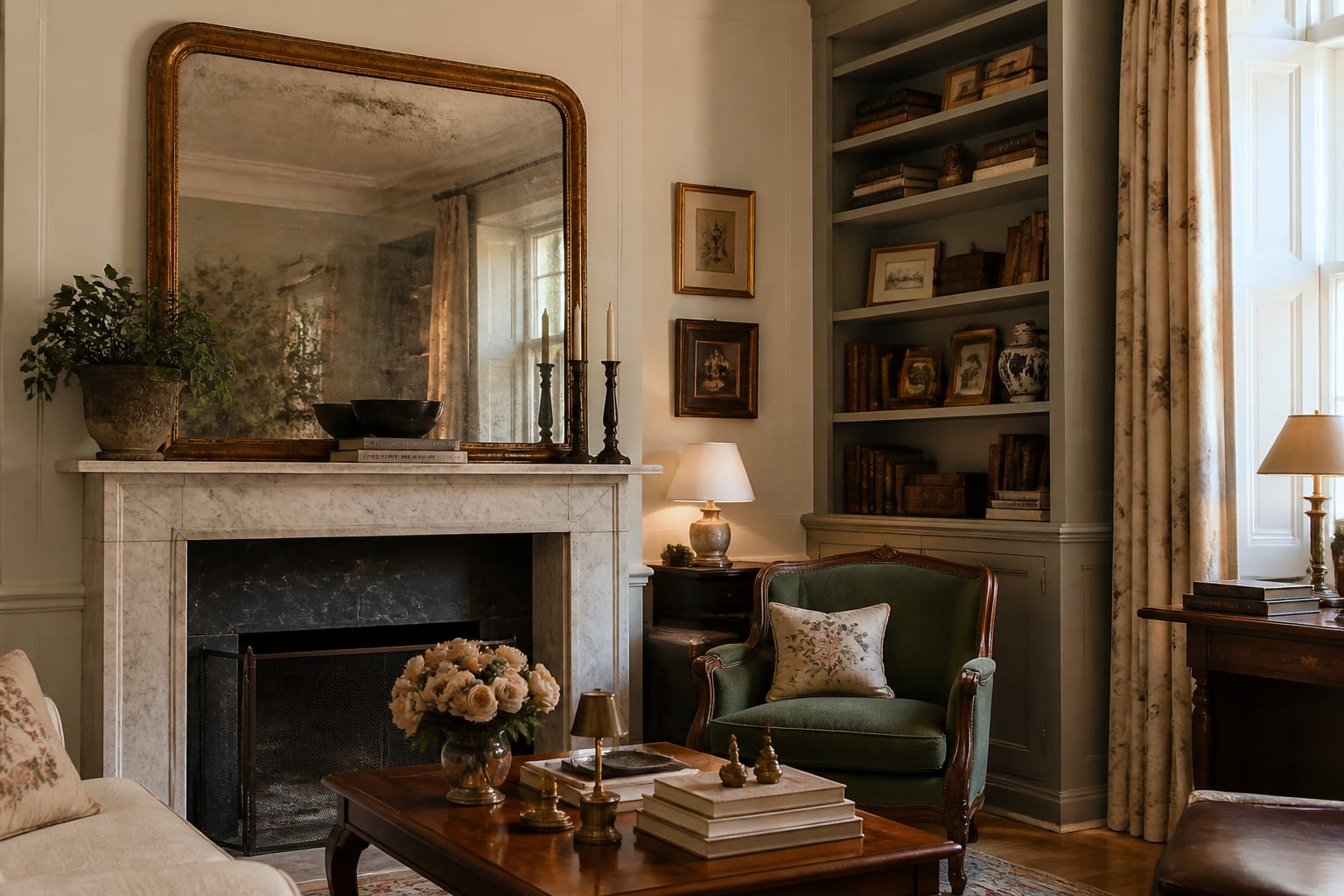
Aged glass is one of the few decorative shortcuts I never talk a client out of. A foxed or antiqued mirror carries the soft, clouded patina of decades in a single object, and that depth is almost impossible to fake with anything else on the wall. My read is that the trick is restraint: one beautifully aged piece per sightline reads as a genuine find, while a whole wall of them starts to feel like a theme restaurant. The patina should whisper history, not shout it from every surface in the room.
The honest answer to the question "will this look dated" is that it depends entirely on how modern everything around it is. Put a speckled antique mirror over a crisp marble fireplace and the contrast does the work for you, turning age into deliberate counterpoint rather than tired old decor. Surround the same mirror with brown furniture and heavy drapes and it disappears into a fog of sameness.
What aged, foxed, and antiqued glass actually mean
These terms get used interchangeably, but they describe a spectrum worth understanding before you shop. "Foxing" is the brown-and-black speckling that appears when the silver backing oxidizes and moisture creeps in at the edges of an old mirror. "Antiqued" glass is the broader category, covering both genuinely old mirrors and new glass deliberately treated to mimic that slow decay. The look ranges from a faint silvery haze across an otherwise clear surface to dramatic black blooms spreading over the whole panel like ink in water.
Price tracks authenticity and effort. A real Victorian or Edwardian mirror with original silvering carries the most character and the highest cost, while artisan-foxed reproductions deliver a controlled, even patina for far less. Mass-market "antique mirror" tiles sit at the bottom; they read convincingly from a distance but flatten under close inspection. Knowing which tier you are buying keeps your expectations honest when the package arrives.
For a grandmillennial scheme, I lean toward the gentler end of that spectrum. A mirror with a soft, even cloudiness flatters a room the way a sheer curtain softens hard afternoon light. Heavily blotched panels are gorgeous, but they pull focus and demand a confident hand to balance. If you are building a room around inherited pieces, an aged mirror slots in naturally next to a patinated sideboard or a faded oil painting. My approach to mixing those generations is in this look at working old furniture into a modern room, and aged glass follows the same logic of letting honest wear become the decoration itself.
Where to hang aged mirrors for maximum effect
Placement decides whether antiqued glass looks magical or simply muddy. Direct overhead light flattens the foxing into a smudge, draining the depth that makes the piece special. Raking light from a window or a nearby sconce, by contrast, makes the speckling glow and gives the surface real dimension. Over a console in an entry hall is the classic move, because guests catch the mirror at an angle and the patina shimmers as they pass through.
Here is where a foxed mirror earns its keep:
- Above a fireplace mantel, where it reflects candlelight into soft, broken sparkle
- In a dim hallway that needs the illusion of depth without a glaring clear reflection
- Behind a bar or buffet, where bottles and glassware multiply into a layered still life
- As a closet or armoire door insert, hiding utilitarian storage behind something decorative
- Leaning oversized against a bedroom wall for casual, unfussy grandeur
- Flanking a window as a matched pair to bounce daylight deeper into a north-facing room
Scale and height matter as much as room choice. Center the mirror at roughly eye level for the average standing guest, around 57 to 60 inches to the middle of the glass, and let it overlap the furniture below by a few inches so the two pieces feel connected. The densely ornamented, layered quality of antiqued glass sits beautifully in a Victorian-leaning scheme, where pattern and patina are already doing a great deal of the talking. In a calmer, fresher room it becomes the single weathered note that keeps everything from feeling brand new and sterile.
Think about what the mirror will reflect before you hang it, because a foxed surface bounces back a softened, dreamy version of whatever sits opposite. Position it to catch a chandelier, a vase of branches, or a sunny window rather than a cluttered doorway or a television, and the reflection becomes part of the decor instead of an accident. In a small or dark room, that captured light is the practical reason aged mirrors have earned their place for centuries, even setting the romance aside.
Pairing finishes and frames so it reads collected
The frame matters as much as the glass it surrounds. Warm metals are the safest companions: unlacquered brass, antique gilt, and aged bronze all share the amber undertone that foxing naturally throws off. A chrome or cool nickel frame fights the glass and makes the speckling look like an accident rather than a feature. If you want a fresher, more tailored take, a simple painted wood frame in soft white or a chalky blue keeps a preppy, traditional room from tipping over into stuffy territory.
Scale is the other lever you control. An aged mirror wants to be generous; a tiny foxed panel reads as an afterthought, while a 36 by 48 inch piece becomes genuine architecture on the wall. When you mix an antiqued mirror with newer accessories, give it breathing room and let the surrounding palette stay quiet, so the patina remains the loudest texture in the vignette. Resist the urge to crowd the mantel beneath it with too many objects; the mirror needs negative space to register as the focal point it deserves to be.
Texture pairing is the finishing touch that sells the whole look. Aged glass sings next to other materials that carry their own history, like a worn leather chair, a slubby linen drape, or a stone garden urn brought indoors. Avoid surrounding it with too many high-gloss, machine-perfect surfaces, which throw the patina into unflattering relief and make the speckling read as damage. The goal is a conversation among textures that have all lived a little, with the mirror as the eldest voice in the room.
Use AI design to preview aged mirrors before you commit
Aged glass is hard to picture in your own space because so much depends on the light you happen to have and the finishes already living in the room. Re-Design takes the guesswork out of that decision: upload a photo of your wall, mantel, or entry and the AI renders a foxed or antiqued mirror in place, complete with the frame finish you are weighing against the rest of the scheme.
That preview matters because antiqued glass is a committed, often pricey buy. Seeing the speckling against your actual paint color and trim tells you in seconds whether a heavily foxed panel overwhelms the wall or whether you can comfortably push the patina further. Upload a few angles, swap brass against painted frames, and settle the whole decision before you spend real money on real antiqued glass.