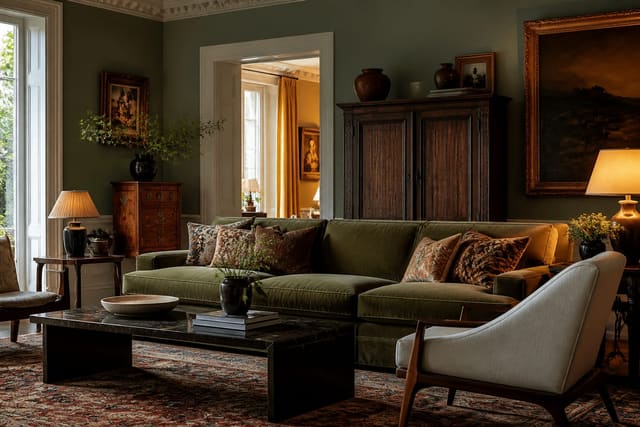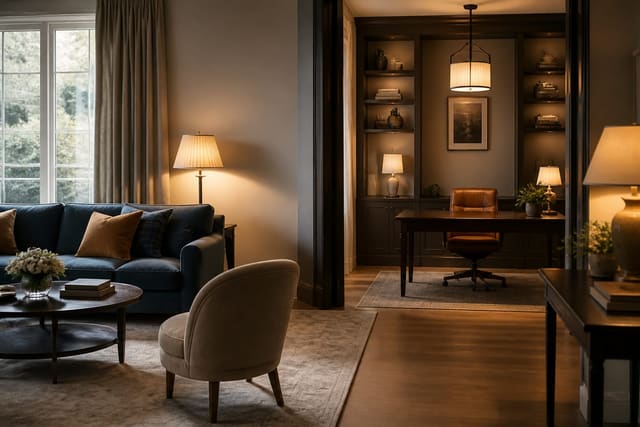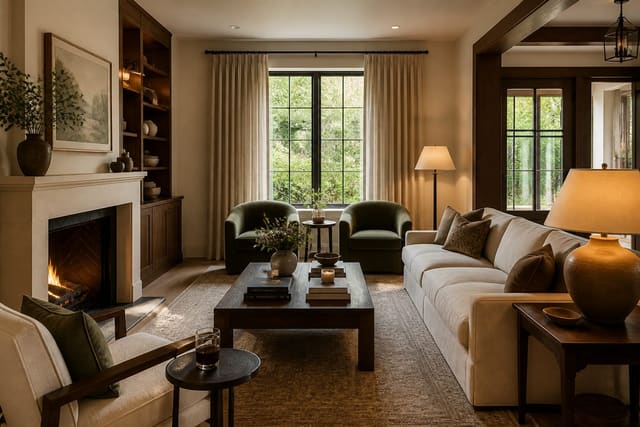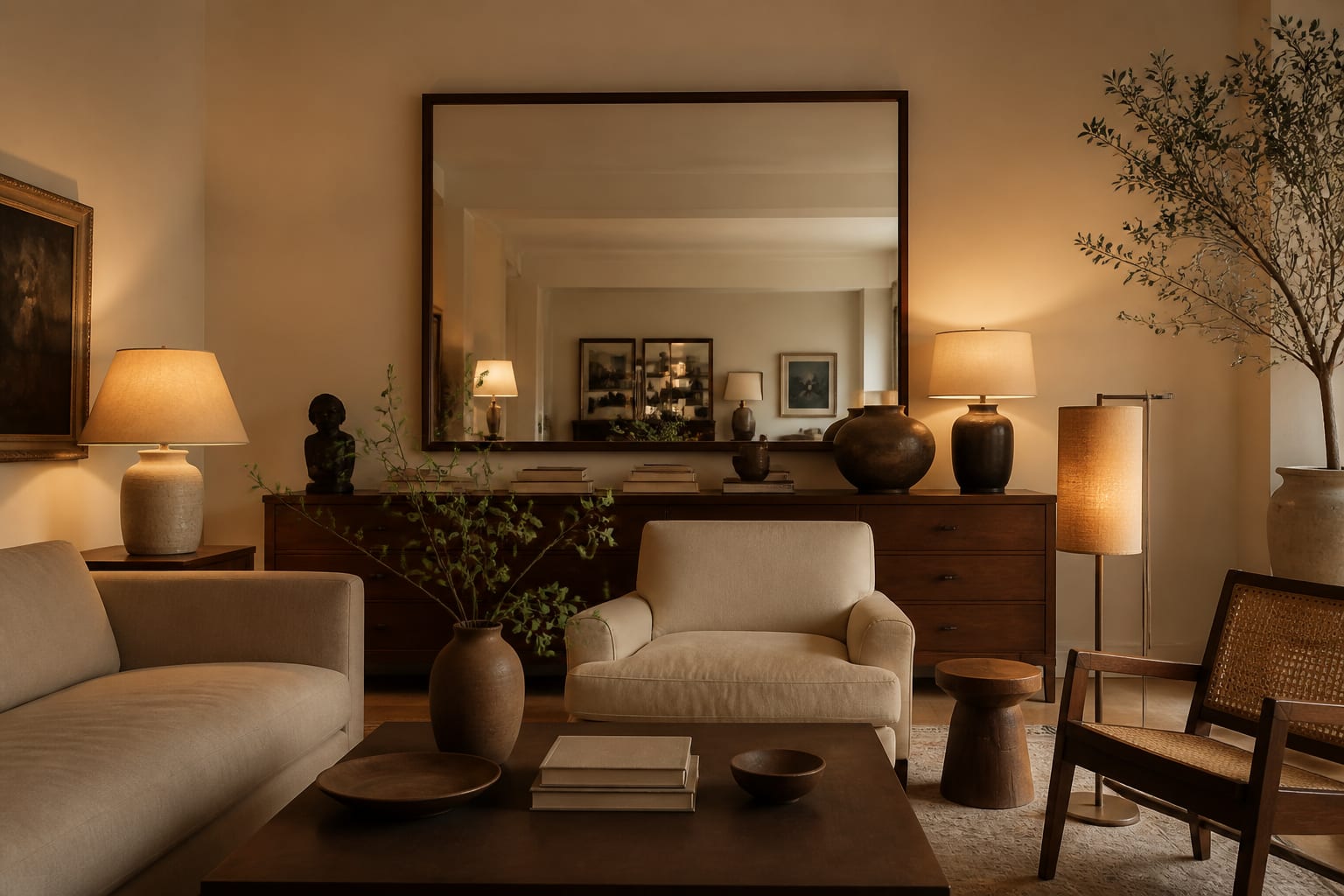
AI design dark room solutions work by turning a photo of a dim, no-natural-light space into visual options for lighting layers, wall color, mirrors, rugs, and furniture placement before you spend a dollar. A dark room isn't doomed, it's just under-supported: most fail because owners try one brighter bulb instead of a full lighting and surface plan. The goal isn't fake sunshine, it's a room that feels deliberate once the sun is gone.
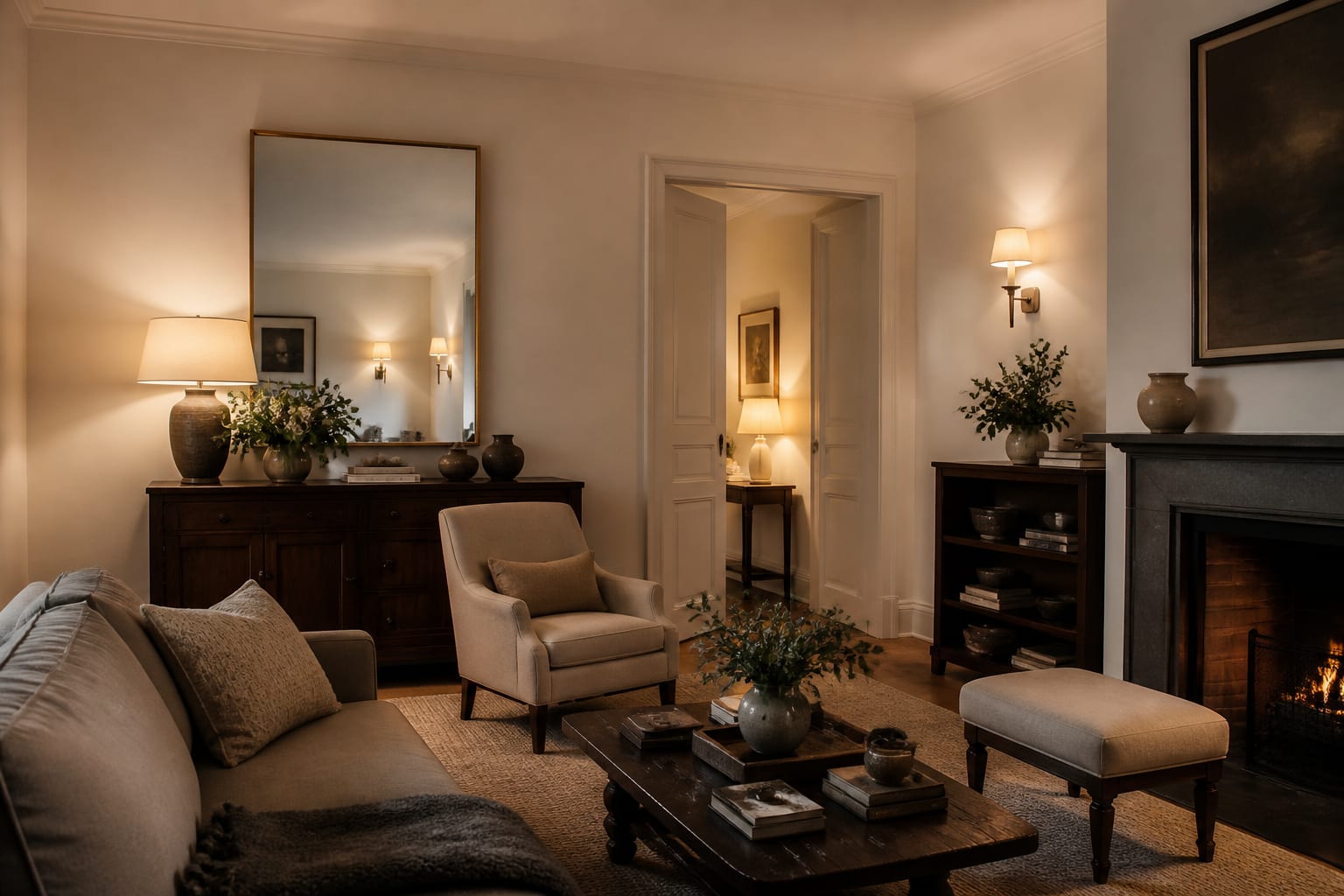
How do you get useful AI results for a dark room?
The photo has to show the real problem: ceiling fixture, dark corners, any window, doorways, bulky furniture, and wall color you're not changing. A cropped photo of one chair produces a prettier chair, not a solution; a full-room shot reveals that the lamp sits too low or the bookcase blocks the only bright wall.
Give the tool constraints a designer would need, such as ceiling height, rug size, sofa length, rental status, and whether new wiring is allowed. Instead of \"make this room brighter,\" try: \"keep the 84 inch sofa and dark floor, add three warm light sources, use cream or mushroom walls, add a mirror opposite the lamp wall, keep a 30 inch path to the door, and avoid construction.\"
What makes a dark room feel intentional instead of gloomy?
A dark room feels intentional when the darkness has a job, not an accident. Pick one direction: warm and reflective, or moody and enveloping. The confused middle, dim beige walls, a gray rug, one ceiling dome, and a black TV, feels tired at every hour.
Start with the surfaces covering the most area. A dark floor needs a rug in cream, camel, or muted pattern to bounce light back. Pale walls that still feel flat need contrast through walnut, blackened metal, aged brass, or deep olive, not more white paint. Color can work in a windowless room, but only with light and texture behind it.
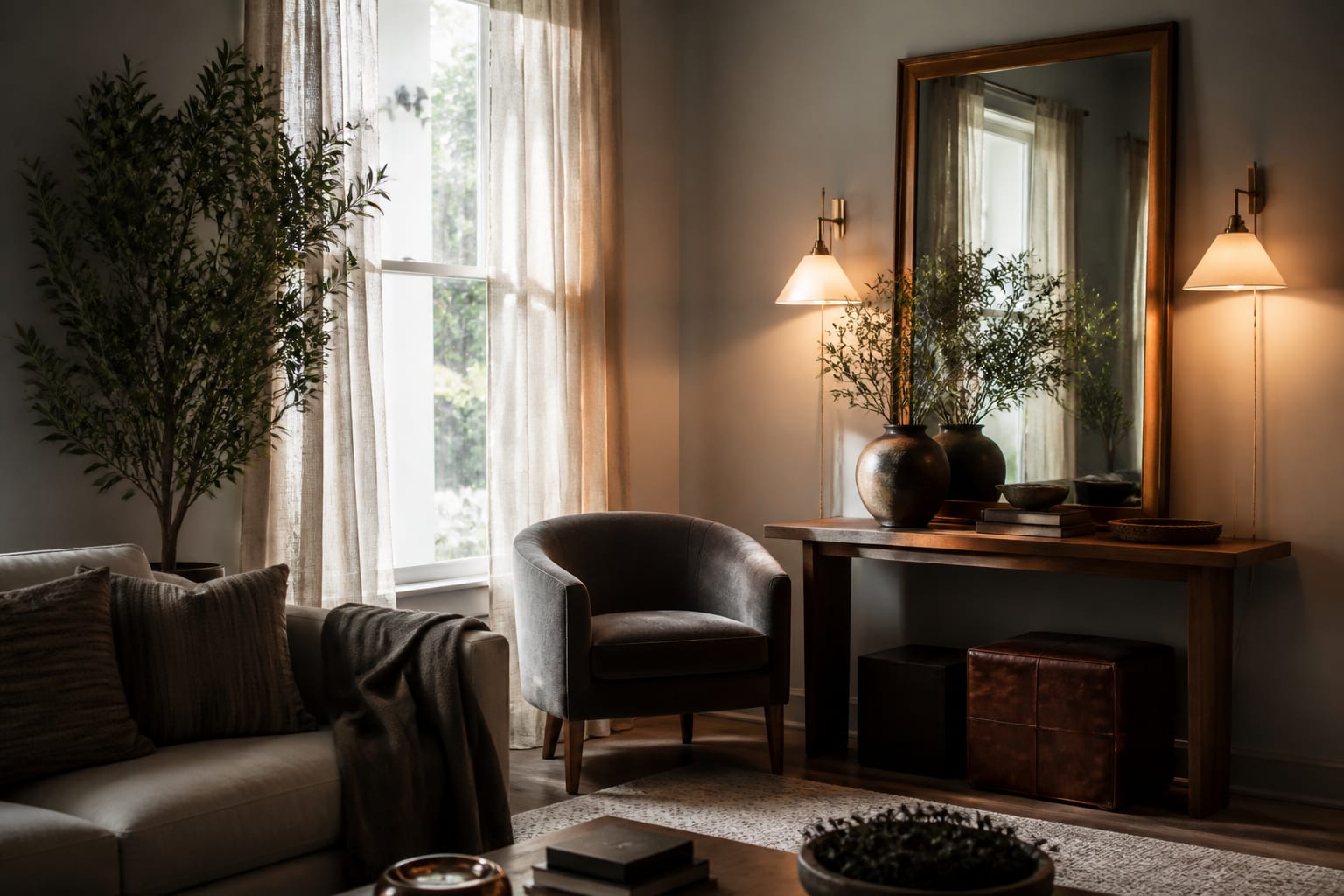
Mirrors only help if they reflect something worth repeating. One facing a blank wall doubles the problem; one catching a lamp, artwork, or pale curtain lifts the room. If the space mixes styles, borrow the rule from mixing design styles without chaos: repeat one color or material at least three times so it reads as collected, not random.
Which lighting plan fixes dim rooms fastest?
Several smaller sources placed where people actually sit, read, and enter beat one overhead fixture every time. A ceiling light cleans the room visually but rarely makes anyone want to stay.
- Put ambient light on a dimmer with warm 2700k bulbs for lounges and bedrooms; cold ceiling glare feels harsh in a dim room.
- Add task lighting within reach of the activity, like a 24-30 inch table lamp beside a sofa or a directional lamp near a bed.
- Light the darkest vertical surface with picture lights, plug-in sconces, or a shaded floor lamp; a lit wall often makes a room feel larger than a brighter floor does.
- Keep walking paths near 30 inches; a floor lamp that fixes the light but blocks the route gets moved to the wrong corner within a week.
- Hang curtains 6-10 inches above the casing and wider than the frame; fabric crowding the glass steals whatever daylight exists.
Heavy dark curtain panels can look handsome but should stack off the glass by day. For privacy without blocking light, check curtain ideas for real rooms and test sheers, lined linen, or woven shades before covering the only useful window.
What mistakes make a dark room worse?
Most dark-room mistakes treat brightness as a bulb problem instead of a whole-room problem. The fixture matters, but shade, wall color, floor, and clutter decide where that light actually goes.
- Painting every wall stark white fails without daylight to activate it; try warm white, mushroom, clay, or muted green and test samples beside your actual lamps.
- A huge dark sectional eats the room's only visual breathing space; balance it with a lighter rug, pale pillows, and a lamp taller than the sofa back.
- Tiny lamps starve the room of vertical glow; a 26-32 inch lamp usually scales better than a 12 inch bedside piece in a living room.
- Ignoring plug locations backfires in rentals; plan cord routes, floor outlets, or battery sconces before an AI preview convinces you every wall can glow.
- Filling the room with glossy pieces creates glare instead of light; mix matte paint, woven shades, linen, and wood with just one or two reflective accents.
A dark room doing double duty, like a guest room that's also an office, needs stricter lighting: 3000k task light at the desk, 2700k near the bed. Check dual-purpose room ideas before adding decorative layers.
How should you prompt AI to preview a dark room?
Decide what kind of darkness you want first: softened, cozy, dramatic, or simply less depressing. Upload one wide photo from the doorway, plus one of the darkest corner if the geometry is awkward. Turn on existing lamps if they're part of the problem, but skip a nighttime-only shot that flattens color.
A grounded prompt: \"Redesign this north-facing living room with limited light. Keep the dark wood floor, 84 inch sofa, white ceiling, and existing media wall. Add a warm mushroom wall color, 8 by 10 foot cream rug, two 28 inch table lamps, one plug-in sconce, a mirror opposite the lamp wall, linen curtains hung 8 inches above the trim, and 2700k lighting. Do not add recessed lighting or construction.\"
Run three versions: lightest cosmetic update, moody library direction, and rental-friendly plug-in lighting. Compare lamp placement, what the mirror reflects, and whether furniture still leaves a believable path.
Which finishes make artificial light look softer?
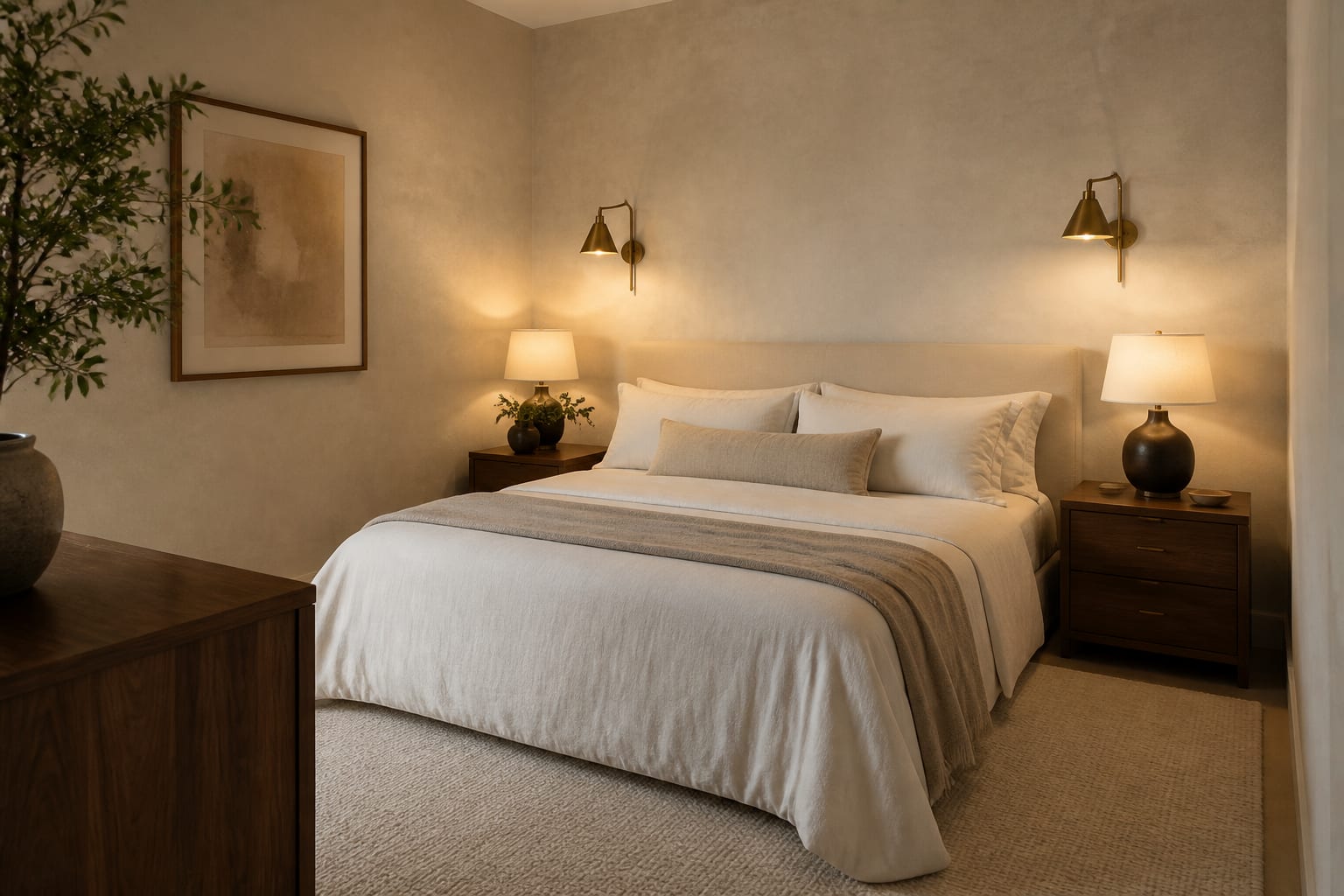
Matte, textured surfaces behave better than slick, cold ones in low-light rooms. A creamy wall, wool rug, linen shade, or brushed metal frame gives light somewhere gentle to land.
Use contrast carefully: one dark anchor, like a charcoal bookcase or walnut console, repeated in two smaller spots, adds depth without heaviness. Keep the ceiling lighter unless you want a cocoon effect, and don't let the TV be the only black shape in the room.
Bulb color matters. Around 2700k flatters bedrooms, lounges, and hallways; around 3000k suits kitchens, bathrooms, and desks where clarity matters more. Stay consistent within one open area so the home doesn't shift from amber to clinical white every ten feet.
Finally, edit objects that absorb light without earning it, dead plants, dusty shades, tiny art, cluttered dark shelves. Replace a couple with height, texture, and warm glow. A dark room doesn't need to go bright white; it needs to look like someone made decisions on purpose.
Frequently Asked Questions
Can AI actually fix a room with no windows?
Yes. AI can't add daylight, but it can preview layered lighting, warm wall colors, reflective surfaces, and mirror placement that make a windowless room feel intentional. Upload a full photo showing every fixture and dark corner so the suggestions address the actual layout instead of guessing.
What bulb temperature works best in a dark room?
Use around 2700k for bedrooms, living rooms, and hallways since it flatters skin and wood tones. Choose around 3000k for kitchens, bathrooms, and desks where tasks need more clarity. Stay consistent across one open area to avoid a jarring shift between warm and cold light.
Will painting the walls white fix a dark room?
Usually not on its own. Stark white needs daylight to activate it, and without that light the walls can look flat or gray. Warm white, mushroom, clay, or muted green paired with layered lighting typically performs better in rooms with no natural light.
Where should mirrors go in a dark room?
Place mirrors so they reflect something worth repeating, like a lamp, artwork, or pale curtain, not a blank wall. A mirror facing your main light source can meaningfully brighten the room, while one facing a dark corner just doubles the problem.
How many lamps does a dark living room need?
Most dark living rooms need at least three light sources: one ambient dimmable source, one task lamp near seating at 24-30 inches tall, and one accent light on the darkest wall. This layered approach outperforms a single bright ceiling fixture in both comfort and usability.