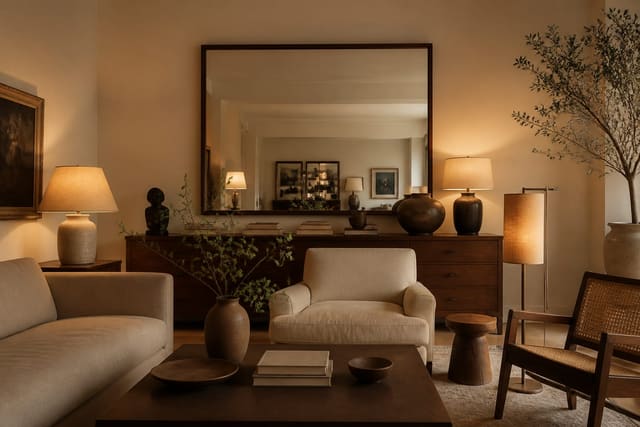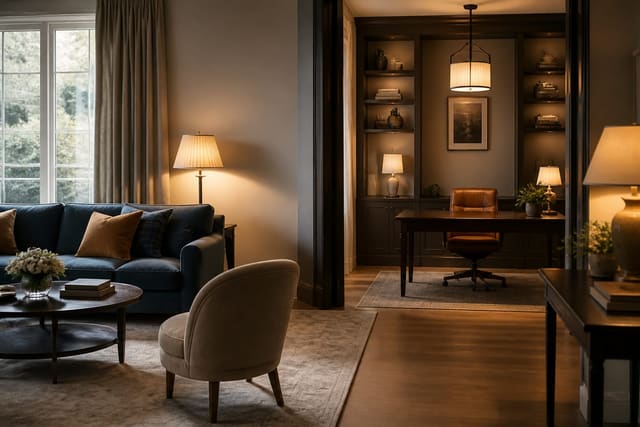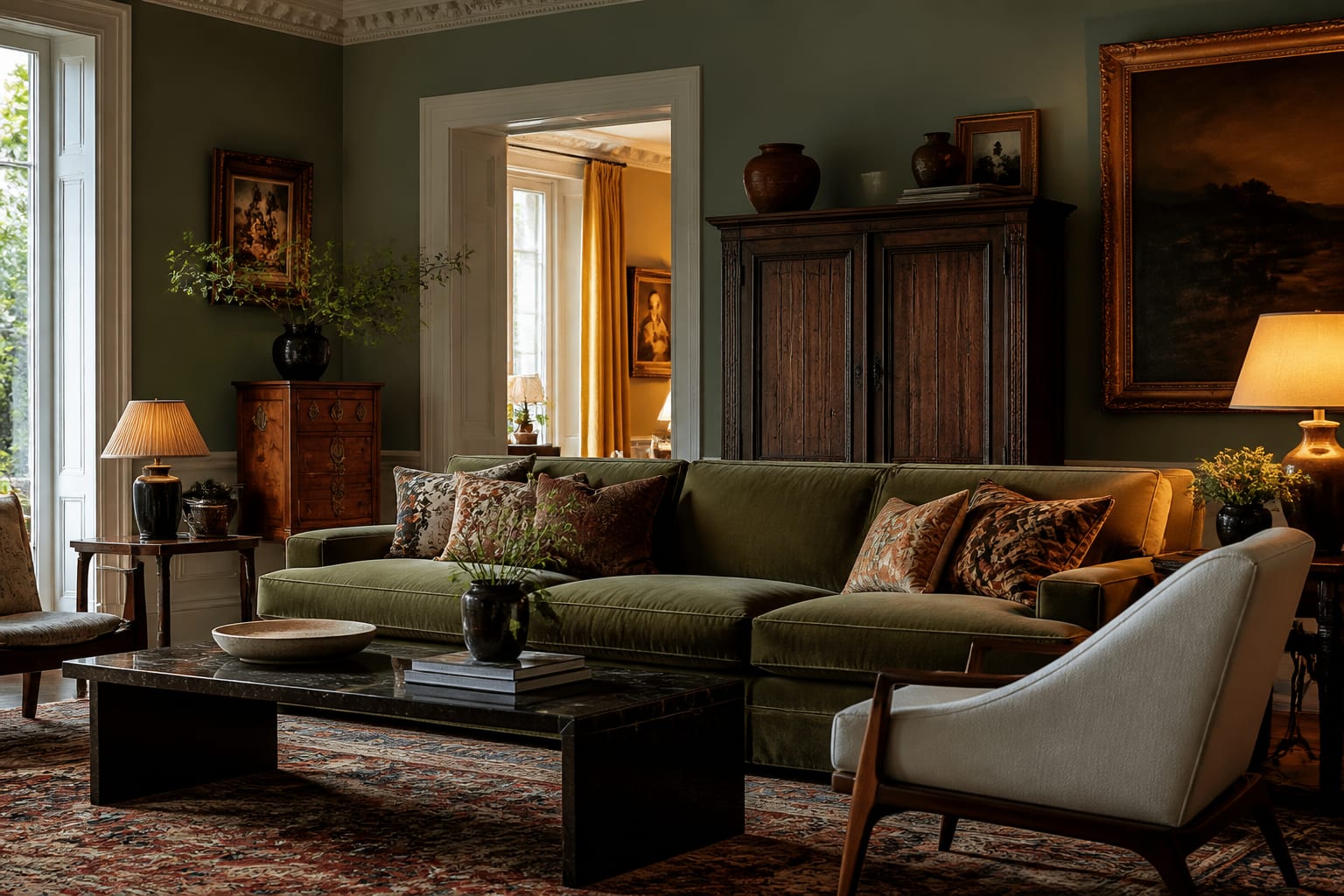
To mix interior design styles without clashing, let one style lead at roughly 80 percent of the room while a second contributes about 20 percent, then unify both with a shared three-color palette, two or three repeated materials, and one dominant anchor piece the eye can settle on.
How Do I Choose a Dominant Style and Ratio?
Every successful mixed room has a leader. Decide which style will set the foundation before you shop, then treat everything else as a guest in its house. A reliable starting point is an 80/20 dominant-to-secondary ratio: the dominant style governs big-ticket items like the sofa, cabinetry, flooring, and wall treatment, while the secondary style lives in swappable pieces like accent chairs, lighting, art, and textiles.
This ratio works because the eye needs one clear primary read to feel calm. When two styles compete equally, the room looks confused rather than curated. A predominantly modern room with one antique writing desk reads as confident; a room split evenly between modern and antique reads as indecisive.
Hold your total styles to three at most, and treat two as the easier target. Each added style multiplies the relationships you have to manage, and beyond three the room loses its center of gravity. If you want a third influence, let it appear as a whisper, such as one industrial light fixture in an otherwise traditional and mid-century room. Name your dominant and secondary styles before buying anything so impulse purchases don't quietly tip the balance.
See also our guide to AI Design Dark Room Solutions for more on how to mix interior design styles.
How Do I Unify Mixed Styles With Color?
Color is the fastest way to make different pieces feel related. When a French country armchair and a sleek modern sofa share the same three core tones, the brain reads them as belonging together regardless of era. Lock a palette of about three colors plus a neutral background, pulling the scheme from one piece you already love, like a rug or painting.
The discipline is repetition: repeat each accent color at least three times, spread across objects from different styles. If your accent is deep blue, let it appear on a traditional lamp, a contemporary throw, and a vintage cushion. A color that shows up once reads as an accident; a color that recurs reads as intent.
Keep saturation and undertones consistent even as styles vary, since warm whites fight cool grays and muted tones clash with neon brights. Decide early whether the room runs warm or cool and hold that line. When in doubt, narrow the palette rather than widen it, since restraint makes a mixed room feel intentional instead of accidental.
For a related angle, read Dual Purpose Room Ideas.
Which Materials and Finishes Should I Repeat?
Materials do the same unifying work as color, often more subtly. Choose two or three materials to echo throughout, such as warm oak, black metal, and woven natural fiber, and make sure each shows up in objects from more than one style.
Mismatched metals are a common source of visual noise. Pick one or two finishes, like aged brass and matte black, and carry them across lighting, hardware, and table legs regardless of style. A vintage brass lamp and a modern brass faucet quietly rhyme even decades apart. The same logic applies to wood tones: staying within a consistent warm or cool range lets a mid-century walnut credenza and a rustic farmhouse table coexist peacefully.
Texture is the third lever, adding depth without clutter. Mixing smooth, rough, soft, and hard surfaces keeps a tight palette from feeling flat and gives a mixed room a layered, collected quality. A linen sofa, leather chair, jute rug, and glossy vase can share one palette yet feel rich because the surfaces differ.
How Do Anchor Pieces and Negative Space Prevent Clashing?
Once palette and materials are working, an anchor piece gives the eye a home base. An anchor is one large or visually heavy item, often a sofa, rug, dining table, or substantial artwork, in your dominant style. It sets the tone and gives every other piece something to orient around.
Contrast becomes the spice once the anchor is in place. With a stable foundation, one unexpected piece, such as an ornate antique mirror in a minimalist room, lands as a statement rather than a mistake. Give each contrasting piece at least 18 inches of clear space, and live with a new pairing for 48 hours before adding anything else. One or two of these surprises per room is plenty; more than that and the tension dissolves into chaos.
Negative space is the quiet partner that makes the mix legible. A room needs empty wall, clear floor, and uncluttered surfaces so the eye can register each style and how they relate. Cramming a small room with pieces from multiple styles guarantees a muddle no palette can rescue, so edit ruthlessly and keep only what serves your two chosen styles.
Common Mistakes to Avoid
- Giving two styles equal weight, so the room reads as confused instead of curated.
- Mixing more than three styles, which scatters focus and removes any clear center.
- Using a different palette for each style instead of one shared set of tones.
- Letting metal finishes and wood tones clash because nothing was repeated on purpose.
- Skipping a dominant anchor piece, leaving the eye with nowhere to settle.
- Overfilling the room and erasing the negative space that lets contrasts read as intentional.
How Can I Preview a Style Mix Before Buying?
Mixing styles carries real risk because the clash only shows once everything is in the room. Instead of gambling on a costly accent chair or contrasting rug, upload a photo of your space to Re-Design and preview the combined look before committing. Test how a mid-century sofa sits beside a traditional cabinet, swap palettes, and confirm your 80/20 balance actually holds in your own proportions before you buy.
Frequently Asked Questions
Can you mix two completely different design styles?
Yes. Let one style dominate roughly 80 percent of the room, share a single palette of about three tones, and repeat two or three materials across both. Those shared threads let contrasting silhouettes, like modern and traditional, read as a deliberate pairing rather than an accident.
How many design styles can I mix in one room?
Two is easiest to execute well, and three is the practical ceiling. Each added style multiplies the relationships you must balance, and beyond three the room loses its center of gravity. A third influence should stay a whisper, such as one industrial fixture, so it accents rather than competes for the lead.
What ties a mixed-style room together?
Three connective threads do the work: a shared palette repeated at least three times, two or three materials and metal finishes echoed across pieces, and one strong anchor like a sofa or rug. Negative space matters too, since breathing room lets each style register instead of blurring into clutter.
What's the easiest way to start mixing styles without a big risk?
Pick your dominant style first, choose a three-color palette from a piece you love, then add one secondary-style item at a time. Testing combinations digitally, such as previewing a piece in your actual room photo, lets you catch clashes before spending money on furniture you might return.