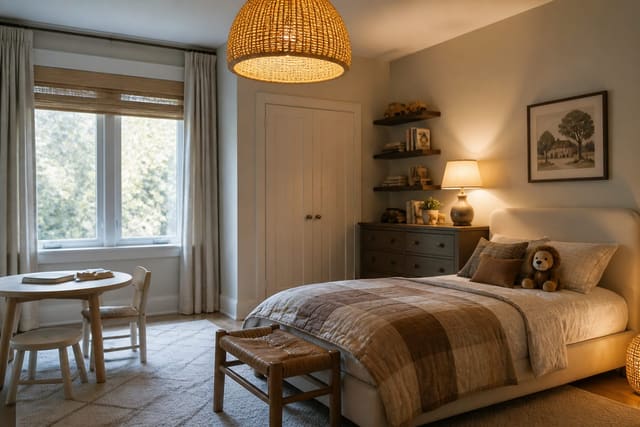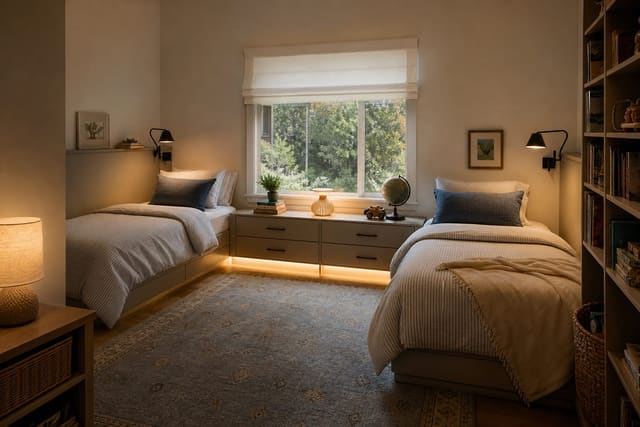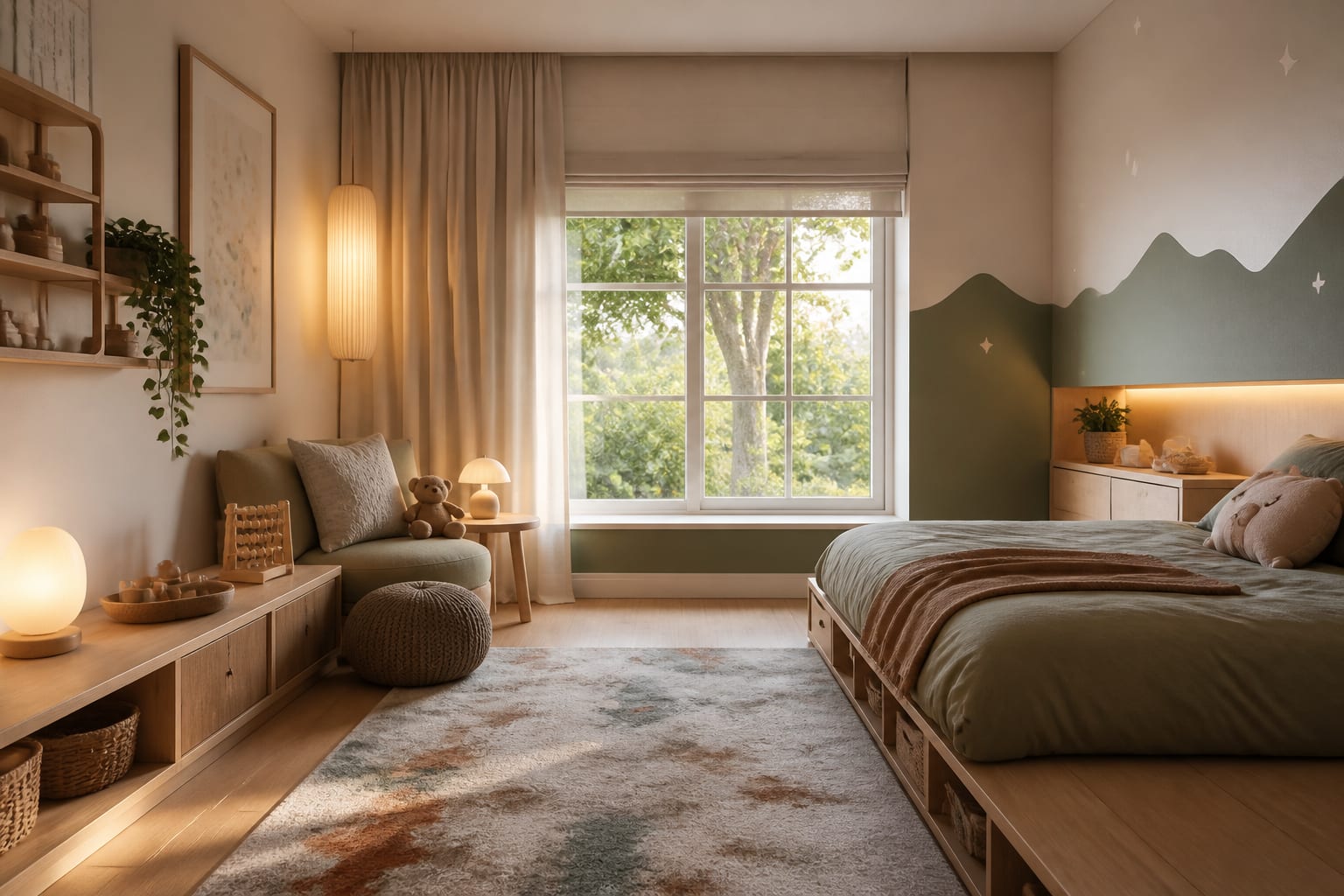
AI design kids room tools turn a photo of your child's bedroom into layout, storage, and style concepts you can review before buying anything. They can show whether a loft bed overwhelms the space or where toy bins fit best, but you still must verify anchoring, cords, mattress fit, and product safety yourself. The best results come from prompts that name the child's age, existing furniture, and room dimensions.
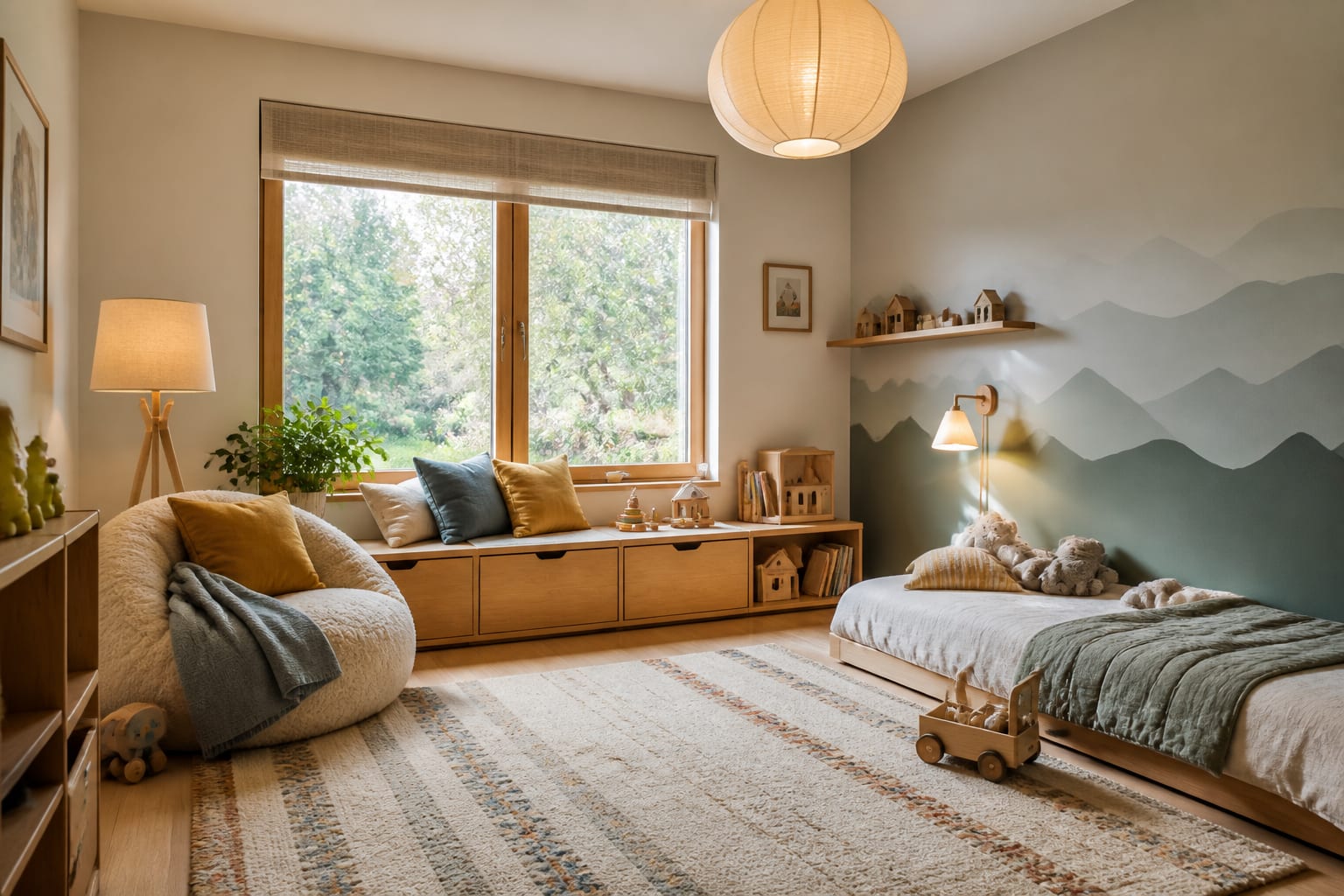
If you're gathering references first, use practical kids bedroom ideas that fit real rooms to build vocabulary for the prompt. "Rainbow room" is too vague; "twin bed on the solid wall, low book ledges, washable 5' x 8' rug, blackout curtains, closed toy storage, warm cream walls, and one removable mural" gives the preview real boundaries.
What makes a kids' room feel playful without becoming chaotic?
A playful kids' room works when the big surfaces stay calm and personality lands in replaceable layers. One terrific color moment beats a dozen small themed purchases fighting for attention. Walls, flooring, bed, storage, and window treatments should form the quiet frame; bedding, art, decals, and lampshades carry the current obsession.
Put the bed against the most solid wall rather than under a busy window; it usually feels calmer at bedtime. Keep the space beside the bed simple: a 16"–20" nightstand or low shelf beats a large table that becomes a toy landing pad. For color, soft clay, warm white, pale blue, muted green, or lavender-gray plus one strong accent ages better than a fully themed paint scheme.
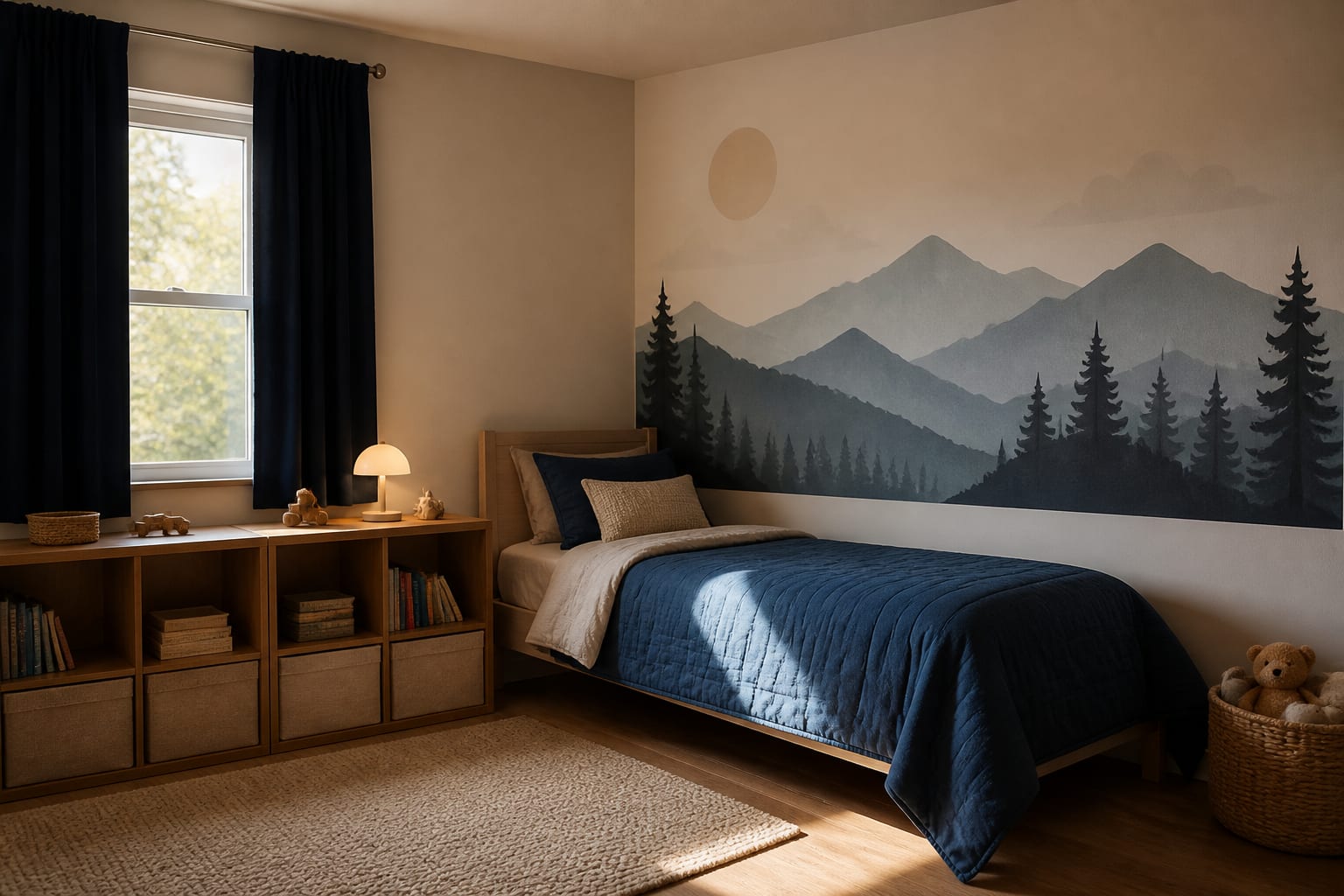
How should sleep, storage, and study zones share one bedroom?
The strongest AI kids' room concepts assign each zone a job before choosing style. Children do better when the room tells them where to sleep, drop toys, read, and do homework. That takes hierarchy, not square footage.
Use these rules before approving any AI concept:
- Keep the path from door to bed and closet around 30"–36" clear for a child carrying pajamas or a parent changing sheets.
- Choose low closed storage at 18"–30" high so kids can use it without climbing or help.
- Put a warm 2700K reading light within arm's reach of the bed, since a ceiling fixture alone keeps the room feeling awake.
- Size the desk to the actual stage: 24"–30" wide for younger kids, 42"–48" once a laptop and books join in.
- Leave 24" in front of drawers and cabinets so storage that can't open fully doesn't become floor clutter.
Shared rooms need sharper zoning. Check shared kids bedroom layout ideas before requesting matching beds; an L-shape, bunk, trundle, or curtain divider may serve two children better than symmetry. Fairness can mean equal shelves and reading lights with two different accent colors, not identical furniture.
For study zones, protect the chair path before styling the desk. Borrow scale rules from kids study room design ideas so the AI preview includes task light, storage, a pinboard, and believable chair clearance.
Common AI kids' room design mistakes
Most AI children's room concepts fail when the image chases delight and forgets the parent who has to clean, supervise, and say no.
- Choosing a theme before a layout. Fix the bed wall, storage, and paths first, then let the theme attach to soft goods and art.
- Letting AI add fantasy furniture. Slides, lofts, ceiling nets, and platforms need real structure and anchoring; verify with professionals before building anything shown in a render.
- Using open shelving for every toy. Small pieces become visual noise; use doors, drawers, and labeled bins, reserving open shelves for books or items the child treasures.
- Skipping window treatment safety. Specify cordless shades and blackout panels that clear heaters and floor clutter.
- Designing only for a current favorite character. Keep the bed, dresser, rug, and wall color flexible; let posters and pillows carry the phase.
Nurseries deserve extra caution. Nursery AI design can compare rocker placement, blackout curtains, and palettes, but crib placement, mattress fit, monitor cords, and changing-table safety need current product guidance, not just a pretty image.
How do you use AI to preview a child's room before committing?
Measure the room and decide what it must do for the next two or three years before generating anything. Upload a straight daylight photo from the doorway showing the bed wall, closet, windows, outlets, and existing storage — including the messy toy pile if storage is the problem.
A useful prompt: "Redesign this 10' x 11' kids' bedroom for a seven-year-old. Keep the existing twin bed, white closet doors, wood floor, and window location. Add low closed toy storage, a 5' x 8' washable rug, blackout curtains, a reading corner, a 30" homework desk, warm 2700K lamps, and a playful space theme using removable decals. Keep a 30" clear path from door to bed and avoid loft beds or construction."
Generate a few versions with different priorities — one for floor play, one for calmer bedtime, one for a bigger study zone — and show your child only the top two or three. The winning preview isn't the most dramatic image; it's the one where the bed feels settled, storage looks reachable, and the desk doesn't block the closet.
Which finishing choices make the room grow with your child?
A kids' room grows well when the expensive pieces are boring in the best way. Choose the bed frame, dresser, bookcase, rug, and window treatment to survive at least one style phase, then make the room personal through easy-to-swap layers.
Washability matters more than perfection: washable rugs, wipeable paint, sturdy drawer glides, and light baskets a child can move all hold up. Anchor tall dressers and bookcases to the wall even when the AI preview makes them look harmless. Keep most bulbs in the 2700K–3000K range, and leave one wall unfinished on purpose for school art, collections, and the poster you'd never choose yourself.
Frequently Asked Questions
Can AI design a kids' bedroom safely?
AI can safely help plan a kids' bedroom when you give it real measurements, existing furniture, and safety requirements in the prompt. It's useful for testing layout, storage, and style ideas, but it cannot verify crib compliance, anchoring hardware, or mattress fit — parents still need to confirm those details against manufacturer instructions.
What should I include in an AI kids' room prompt?
Include the child's age, room dimensions, existing furniture to keep, door and window locations, closet openings, and any must-have features like a reading corner or homework desk. Specific requests such as "5' x 8' washable rug" or "30" clear path" produce far more usable results than vague theme requests like "rainbow room."
What furniture sizes work for a young child's room?
Younger children generally do well with 24"–30" wide desks, 18"–30" high closed storage bins, and 16"–20" nightstands. Keep the main walking path 30"–36" wide and leave 24" of clearance in front of drawers and cabinets so everything can open fully without creating clutter.
Should siblings share an identical room layout?
No, symmetry isn't required for fairness in a shared kids' room. Equal shelves, equal reading lights, and equal storage matter more than matching beds or colors; an L-shape, bunk, trundle, or curtain-divided layout can serve two children better than mirrored furniture.
Is AI design safe to use for a nursery?
AI can help compare rocker placement, blackout curtains, and color palettes for a nursery, but it can't confirm crib safety standards, monitor cord placement, or changing-table hardware. Treat any nursery render as a starting point for style decisions, then verify all safety-critical products against current guidelines yourself.