A shared kids bedroom feels fair when each child gets a labeled storage zone, a personal reading light, an equal share of daylight, and one bed arrangement that fits the door, closet, and window paths — not when the room is painted in matching themes. Two kids sharing one bedroom can be sweet for about five minutes, then brutally revealing. My firm opinion: fairness matters more than theme in a shared kids room. Conflict usually starts when one child gets the better light, easier drawer, quieter corner, or more grown-up side of the room. The design has to make ownership visible without splitting the room into two angry little territories.
What makes a shared bedroom for two kids feel fair?
You design a shared bedroom for two kids by giving each child a real personal zone, keeping the biggest furniture symmetrical or deliberately balanced, and making storage rules visible enough that the room does not depend on goodwill. The goal is not perfect sameness; the goal is that neither child can point to the room and say the other one got the good half.
Start with the bed placement, because beds are the emotional real estate. Two twin mattresses are usually 38 by 75 inches each, which makes them the most flexible choice for siblings who need equal territory. Place them on opposite walls when the room is wide enough to keep a clear middle path, or put them parallel on one wall when doors, closets, or windows make opposite walls impossible. Aim for at least 24 inches between the beds if a shared nightstand or lamp sits in the middle; 30 inches feels calmer when both kids climb in from the same aisle.
If the room is tiny, do not automatically jump to bunks. Bunk beds solve floor area, but they can create arguments about the top bunk, reading light, ceiling fan clearance, and who gets tucked in easily. A top bunk should have comfortable headroom, guardrails that suit the mattress thickness, and a ladder location that does not block the closet. If standard twins fit, compare the room against a two twin bed bedroom layout before choosing vertical furniture.
Color can create identity without making the room look divided down the middle. Use one shared wall color, then give each child a bedding color, art ledge, pinboard, or small rug. That gives them a side without turning the bedroom into a scoreboard.
The bed decision that prevents most sibling fights
The bed arrangement should follow the room’s traffic, not the children’s latest preference. Draw the door swing, closet doors, dresser drawers, and window area before promising anyone a side. A layout that looks equal on paper can feel unfair if one child has to squeeze past a dresser every morning while the other steps straight into open floor.
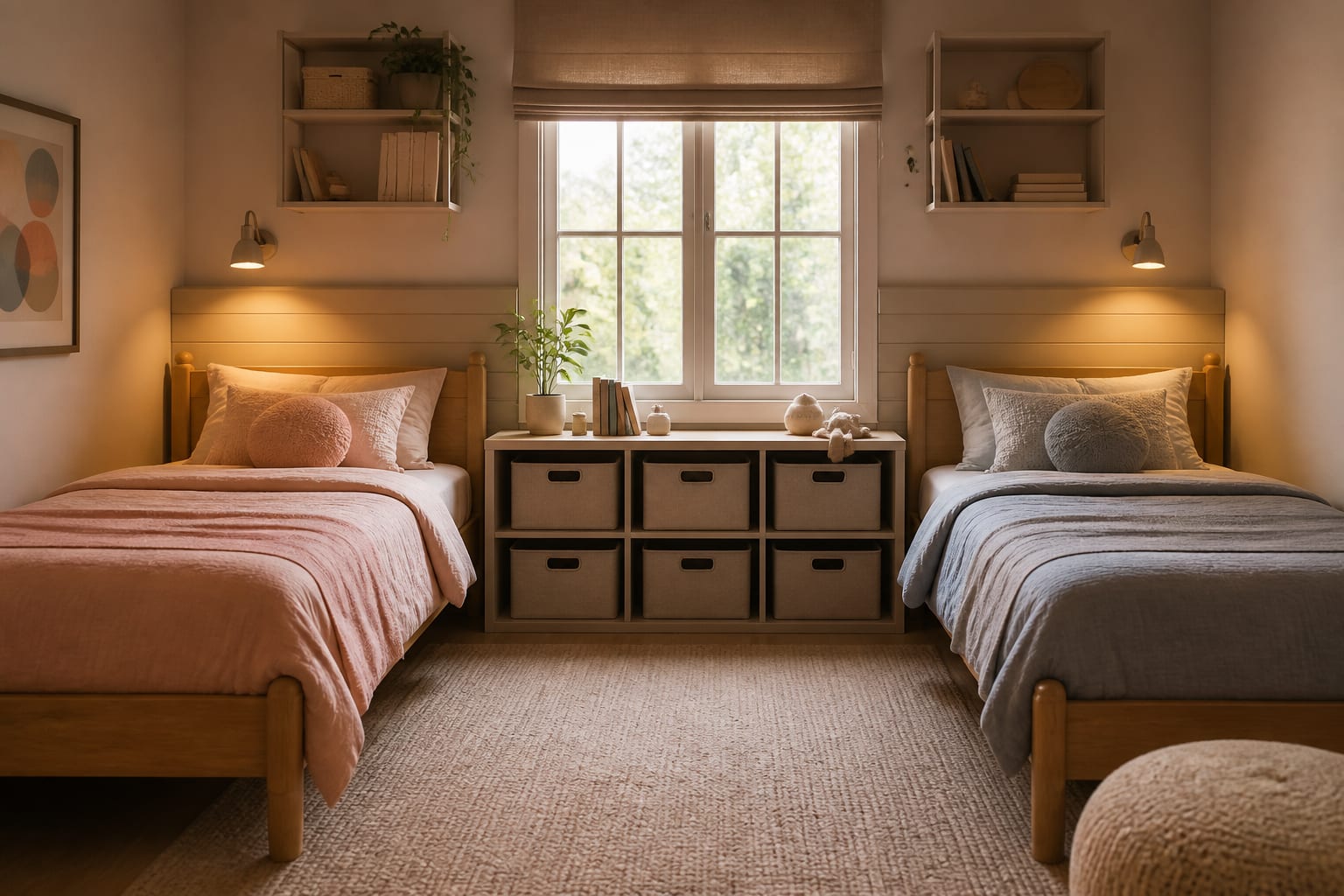
Side-by-side twin beds with a shared table work well in square or nearly square bedrooms. Keep the shared table 16 to 22 inches wide so each child can reach a water bottle, book, or small lamp. If the table becomes a dumping ground, use two narrow wall shelves instead, one on each side, mounted close to mattress height.
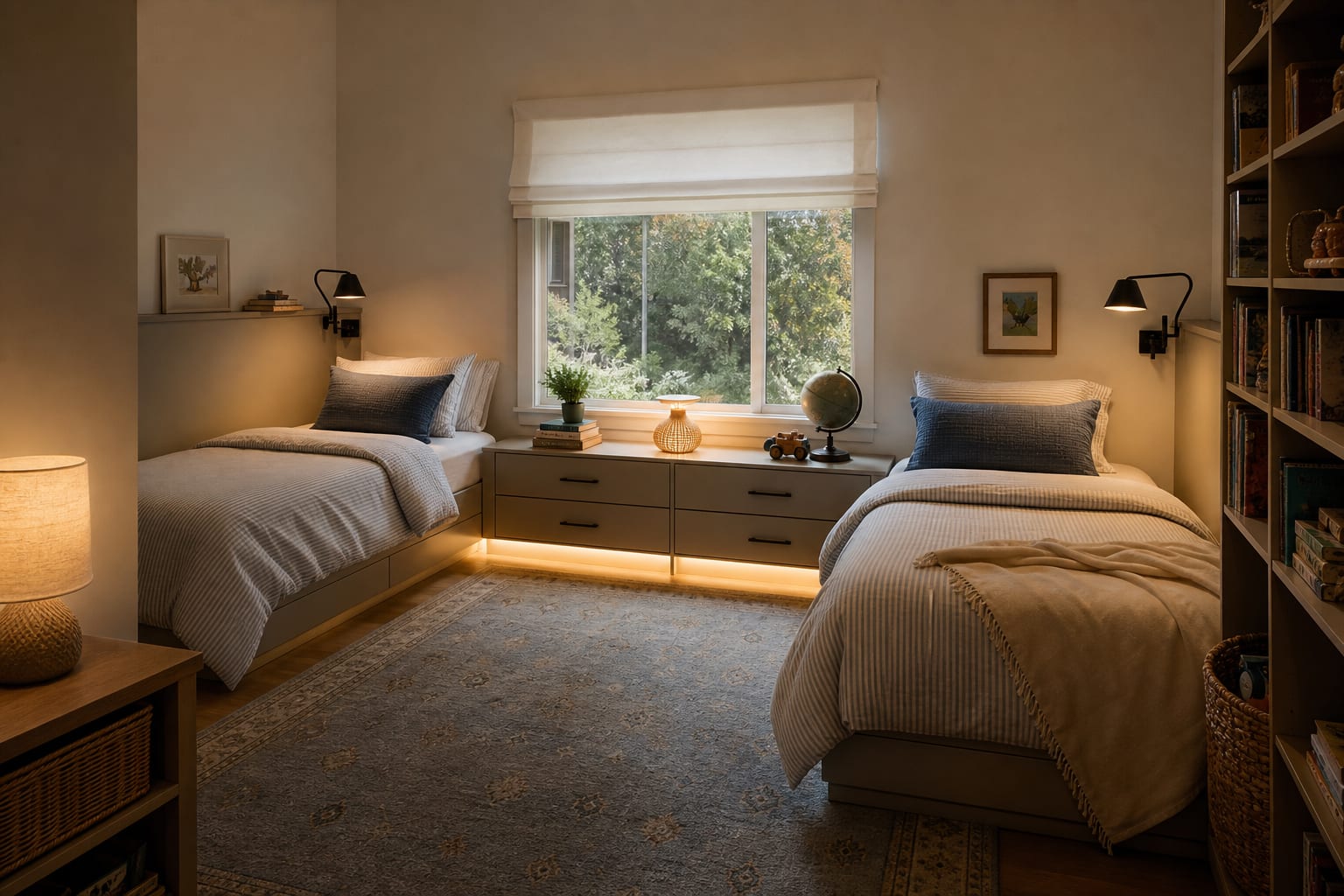
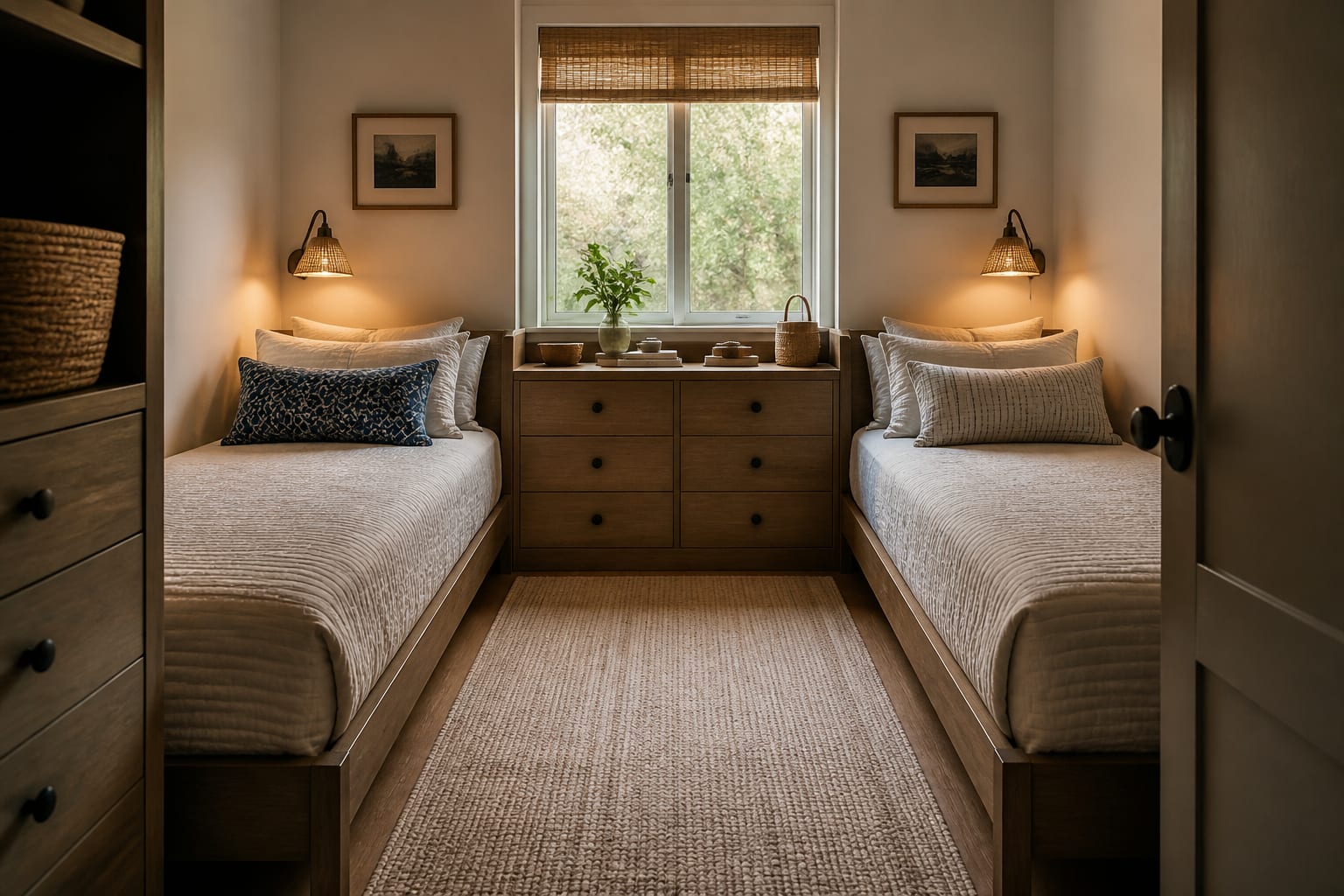
Opposite-wall beds work better when the room is long and narrow. This plan gives each child a wall, which often feels more private than side-by-side sleeping. Keep the path between beds at least 30 inches if the room allows it, because that center lane will carry laundry, backpacks, bedtime stories, and half-asleep parents.
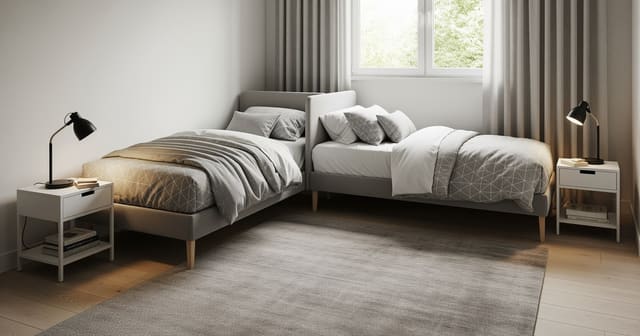
An L-shaped corner layout can be excellent for younger siblings or cousins who like the sleepover feeling. Put the headboards on adjacent walls and use the shared corner for a lamp, toy basket, or small cube shelf. The risk is that one bed can feel tucked and cozy while the other feels exposed, so balance the room with art, sconces, or a canopy-style fabric panel on the less protected side.
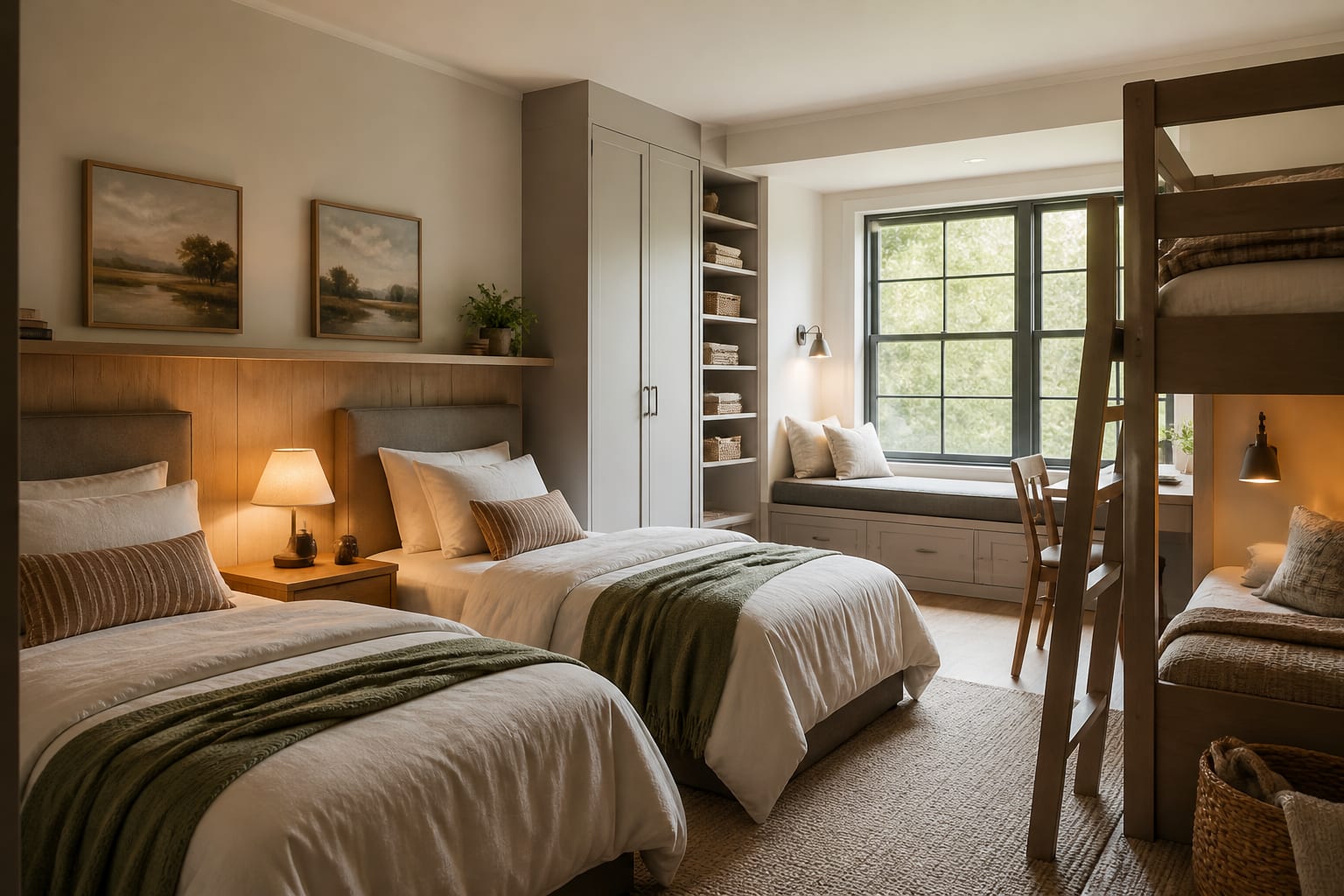
Bunks and lofts are strongest when the room needs open floor for play, a desk, or physical therapy equipment. Keep the ladder out of the doorway path, and place a soft rug where feet land. In rooms with an 8-foot ceiling, many tall bunks feel tight on top; measure the mattress surface to ceiling distance, not just the catalog height.
Test this on your own room photo with ReDesign before you choose the final layout; keep the room structure, daylight, ceiling line, and main path visible so the preview solves the space you actually have.
How do you give each child privacy without building a wall?
Privacy in a kids sharing a room design is usually about control, not secrecy. Each child needs one place to keep treasures safe, one light they can control, and one surface that is not automatically shared. Those details matter more than a curtain between the beds.
Give each child a named storage zone. A drawer, cubby, lidded bin, or bedside shelf should belong to one child only. For younger kids, use picture labels; for older kids, use plain labels or color-coded pulls. Shared storage works for blocks, sports gear, and extra blankets, but personal items need a boundary that adults enforce.
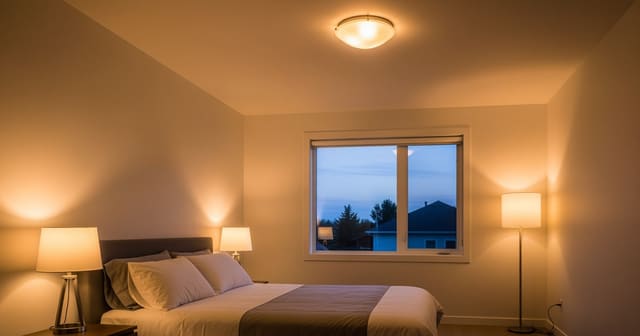
Lighting matters most: one 2700K reading lamp per kid with a tap switch, aimed where the child reads — the rule echoes single-window bedroom lighting.
Use soft dividers carefully. A low bookcase, ceiling-mounted curtain, or pair of bed canopies can help siblings who have different sleep schedules, but every divider costs light and floor space. Keep low dividers around 30 to 42 inches high if you want separation without a chopped-up room. Curtains should glide easily and stop just above the floor so they do not become a dusty tug-of-war.
Desks are another friction point. If homework happens in the bedroom, two small 30-inch desks may be fairer than one larger shared desk. If there is room for only one work surface, assign times or use a 48-inch tabletop with two chairs, two task lights, and separate supply cups.
Which storage and style choices keep the peace?
The best sibling bedroom layout makes cleanup obvious. Children do not maintain complicated systems because the bins are beautiful; they maintain systems when the right home is closer than the floor. Keep daily storage between knee and shoulder height for the child who uses it.
Use one dresser only if drawers divide clearly: three drawers per child, labeled, no overlap.
Under-bed storage works only when both kids get equal drawers; one-sided drawers turn into the most contested storage in the room.
Leave one shared 5-by-7-foot rug between the beds as a play zone that prevents either side from owning the floor.
Style splits into a shared base (one wall color, one wood tone) plus one personal accent color per child on bedding and art.
A full bed for two siblings is a short-term fix; plan for twins, or borrow cues from a small bedroom with a king size bed.
Common shared bedroom mistakes that start arguments
The first mistake is designing the room around a theme instead of routines. A forest mural, sports wall, or princess canopy will not prevent fights if one child cannot open a drawer without moving the other child’s backpack. Solve sleeping, dressing, reading, charging, and cleanup before choosing the decorative story.
The second mistake is making everything identical when the children have different ages or temperaments. Equal does not always mean matching. A six-year-old may need lower hooks and picture bins, while a ten-year-old needs a reading light, book ledge, and private drawer. Match the dignity of the zones, not every object.
The third mistake is letting the closet become contested territory. If one side has easy shelves and the other side has the dark corner behind sliding doors, the closet will create daily resentment. Split the closet vertically or horizontally, then label the boundary. Keep shared items in the middle or on the highest shelf, not mixed through both children’s sections.
The fourth mistake is ignoring sound and sleep. One child may read late, one may wake early, and one may need white noise or a darker corner. Use separate lamps, lined curtains, a washable rug, and soft storage bins instead of hard plastic towers that clatter at bedtime.
The fifth mistake is giving the older child the only grown-up corner; both sides should age at the same pace.
A quick fairness checklist before you buy
- Aisle width: minimum 24 inches between beds, 30 inches if both kids climb in from the same side.
- Storage parity: identical drawer counts and identical labeled bins for each child.
- Light parity: one tap-on 2700K reading lamp per side, never one shared overhead.
- Color split: one shared neutral wall plus one personal bedding color per kid.
Use AI to preview your shared bedroom before you commit
AI design helps with shared bedrooms because the room has to satisfy two children from the same camera angle. Upload a straight photo from the doorway, one photo from the window wall, and one view that shows the closet and dresser. Leave the existing beds visible if you have them, because the awkwardness teaches the preview what needs fixing.
Ask for specific tests. Try one version with opposite twin beds, a 5 by 7 center rug, two wall reading lights, labeled under-bed bins, pale walls, and different bedding colors. Run another with bunk beds, a low shared bookcase, two personal pinboards, warm 3000K lighting, and open floor for play. A third version with an L-shaped bed layout can show whether the corner feels cozy or crowded.
Look at fairness before style. Does one child get all the daylight? Does the ladder block the dresser? Can both beds reach a light? Does the shared rug leave a real walking path? AI cannot verify bunk safety, wall anchors, exact mattress thickness, or whether siblings will honor a drawer boundary. It can show which layout feels balanced before you buy beds, paint, storage, and bedding for two strong opinions.
After you pick a direction, tape the bed frames and dresser depth on the floor so the room is rehearsed before any delivery.
For the broader upload workflow, use the AI design complete guide as the parent checklist, then return to this room-specific pass for scale, light, and layout choices.
Frequently Asked Questions
Are twin beds or bunk beds better for a shared kids bedroom?
Twin beds on opposite walls beat bunks in any room over 110 square feet because both kids reach a light, a closet, and a path to the door without competing for a single ladder or top-bunk privilege. Use the room photo to compare the visible layout and fixed constraints before committing, because doors, windows, storage, outlets, and traffic paths decide whether the idea survives daily use.
How much space do I need between two twin beds?
Leave at least 24 inches between beds if a shared nightstand sits in the middle, and 30 inches if both kids climb in from the same side, so backpacks and laundry can pass without anyone stepping over a sibling. Keep the preview honest by leaving the problem area visible in the frame, then compare one conservative version against one bolder version before you buy materials or furniture.
How do I split a shared closet fairly?
Split closet bars vertically at 48 and 60 inches and assign one dresser drawer per child by name, so missing socks have an owner and the closet does not become contested territory. Check the result against ordinary movement first: chair pullout, walkway width, door swing, glare, storage reach, and evening light matter more than a perfect catalog angle.
What color scheme works in a shared kids room?
Pick one shared wall neutral plus one personal bedding color per child; that gives each kid identity without turning the bedroom into a scoreboard or forcing identical taste. Use the image to narrow priorities and measurements before ordering anything custom; final purchases still need real dimensions, code checks, outlet locations, and product clearances.
How do I keep sleep schedules and reading lights from causing fights?
Give each child a 2700K bedside lamp on a tap switch so one kid can read while the other sleeps; one shared overhead is what creates the nightly 'she turned my light off' argument. If the preview invents architecture or hides the awkward feature you need solved, rerun it with stricter instructions so the result remains tied to your actual room.
> Try this: Ready to see this on your own room? Open ReDesign and run the preview before you buy, paint, drill, or move furniture.
Three transformations to try
1. Opposite-wall twin beds with shared center rug and labeled drawers
2. Side-by-side twins with shared nightstand and split closet labels
3. Bunk plan with low bookcase divider and two personal pinboards