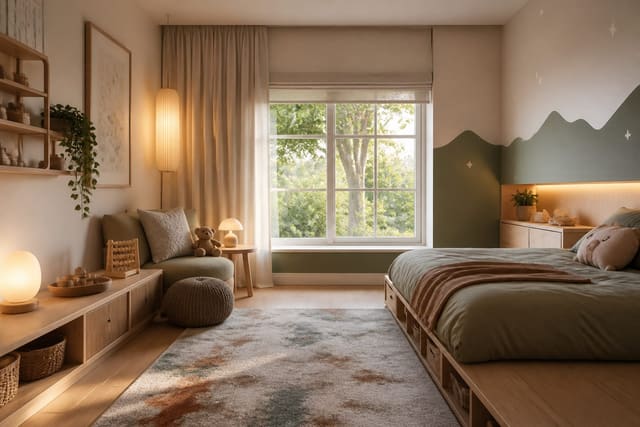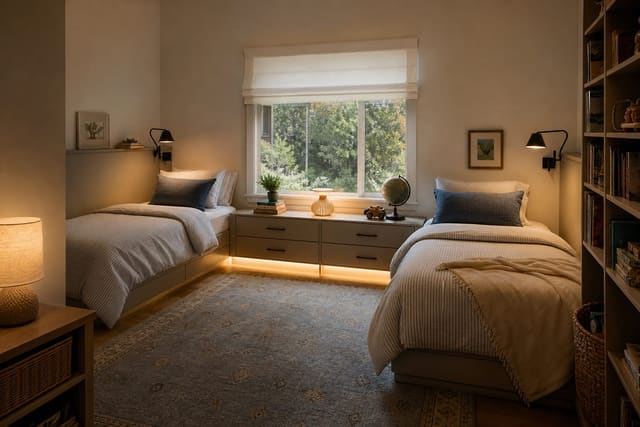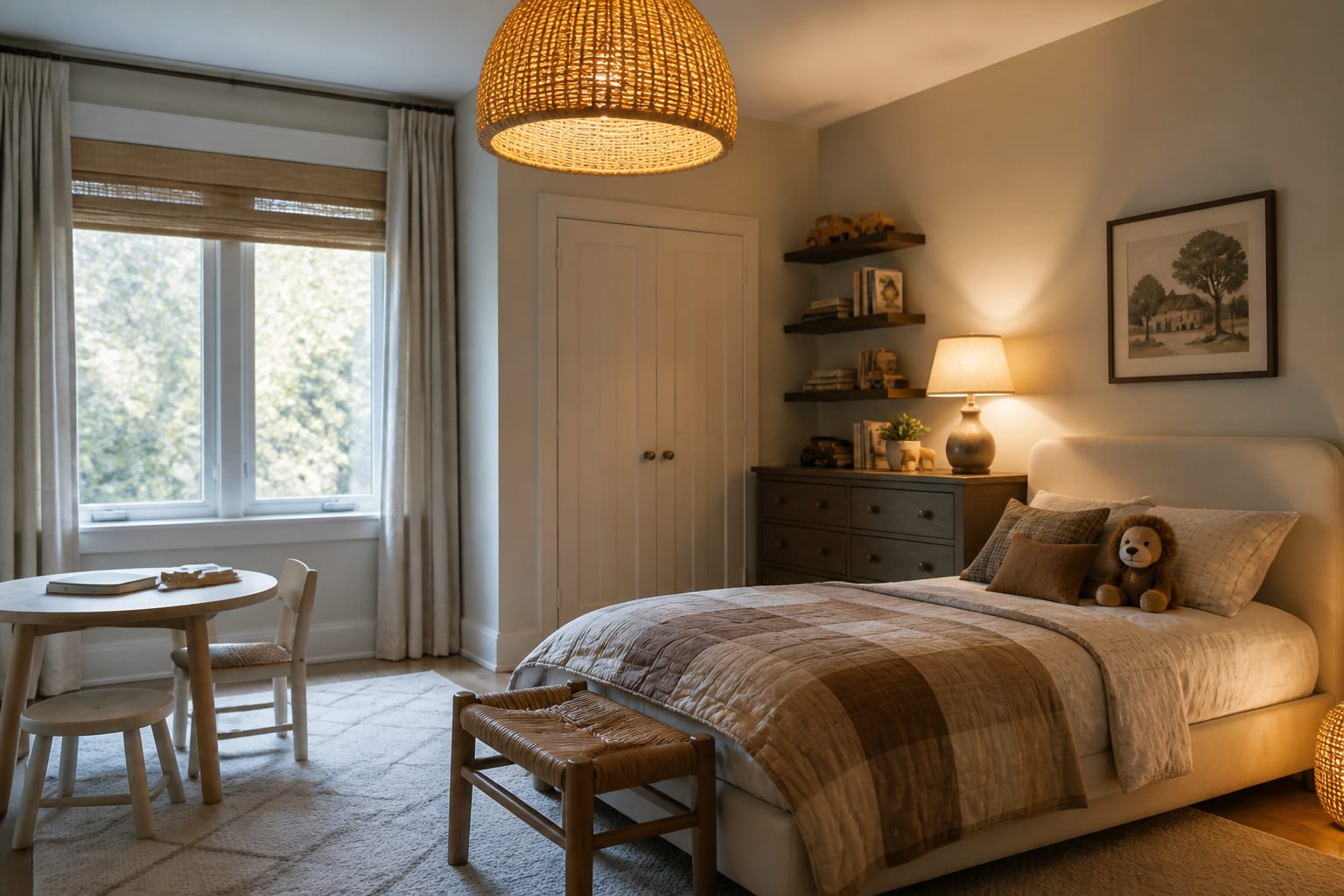
The best kids bedroom ideas divide one room into four zones, sleep, storage, play, and study, then build them from washable, anchored, durable materials that survive daily use. Get the zoning, safety anchoring, and growth-friendly furniture right, and a single room works from preschool through grade school without a full redo.
How Do You Zone a Child's Bedroom?
Carve the room into four working zones instead of treating it as one space. The sleep zone centers on the bed, placed against a wall and away from the door's draft, kept calm and clutter-free. The play zone needs the most open floor you can spare, a clear stretch of rug for building or games.
Storage works best low and open. Bins and cubbies topping out around 30 inches let a four-year-old reach them and actually put things away. Reserve a shelf above 60 inches, out of climbing range, for keepsakes and supplies that need adult supervision.
The study zone grows in importance every year. Even a 36-inch desk with a supportive chair and task lamp near natural light gives homework a dedicated home away from the bed. A rug, shelf line, or lighting change marking each boundary teaches a child where each activity belongs and cuts daily chaos.
See also our guide to AI Design Kids Rooms.
What Materials Hold Up in a Kids Room?
Assume spills, scuffs, marker, and rough handling on every surface. Scrubbable matte or eggshell paint wipes clean without leaving a shine patch; semi-gloss trim handles the sticky-hand traffic near doors.
Hard flooring, sealed wood, vinyl plank, or laminate, wipes clean and outlasts carpet. Add a washable, tight-weave rug in the play zone, and skip deep shag or pale solids that show every mark; a patterned or mid-tone rug hides stains far better.
For furniture and textiles, durability beats delicacy. Solid wood or sturdy laminate survives climbing that flimsy particleboard cannot, and rounded corners reduce bumps. Choose machine-washable bedding, performance fabric on seating, and duvet covers you can strip and wash in one go. If a material can't be wiped, washed, or replaced cheaply, it doesn't belong in a young child's room.
For a related angle, read Shared Kids Bedroom Ideas.
How Do You Keep a Kids Room Safe?
Anchoring tops the safety list. Strap or bracket every dresser, bookcase, and tall shelf to a wall stud, since a child climbing an open drawer can topple an unsecured piece in seconds. Anti-tip straps cost a few dollars and are the most important hardware in the room; install them before furniture holds anything.
Layout carries safety weight too. Keep the bed clear of windows and cords, swap corded blinds for cordless, cover unused outlets, and route lamp cords behind furniture rather than across the floor. A low platform bed around 12 inches off the floor, or a guardrail, suits a child transitioning out of a crib.
Hang hooks and place bins at a height the child can use, building independence into the room. These protective steps are yours to handle as the parent, guided by product instructions, not something a design tool decides; a rendering shows you a layout, but anchoring the dresser and choosing cordless blinds are safety calls you make yourself.
How Do You Design a Room That Grows With the Child?
Children change faster than any other client, so build a durable, neutral foundation and let cheap, swappable layers carry the current obsession, dinosaurs now, space next year, through bedding, wall art, decals, and an easily replaced rug.
Favor adaptable furniture: a height-adjustable desk and chair, a bed that sizes up from toddler to twin, and modular shelving that shifts from toys toward books as the balance changes. Plan the study zone to expand, since the desk a six-year-old uses for crayons becomes homework real estate by nine.
Let the child choose within boundaries you set, like picking between two paint colors or arranging their own low shelf; ownership makes them likelier to keep the room tidy. Keep big pieces calm and neutral, and put kid-driven choices in the elements you can change in an afternoon.
Common Mistakes to Avoid
- Treating the room as one space instead of zoning sleep, storage, play, and study.
- Skipping anti-tip straps, the single most important safety hardware in the room.
- Choosing delicate fabrics and pale rugs that show every spill.
- Mounting storage too high for the child to reach and use independently.
- Buying everything for the child's current age, forcing a redo within a year.
- Leaving lamp and blind cords within reach instead of routing them away.
Bring the Look Home with Re-Design
Upload a photo of your child's bedroom to Re-Design to preview zone layouts, washable color schemes, and storage arrangements in the actual space. Seeing how a low bin wall, a clear play rug, and a compact desk fit together helps you commit before buying furniture. Use the rendering for layout and color; anchoring and cord safety remain your call as the parent.
Frequently Asked Questions
How should I organize a child's bedroom?
Split the room into four zones: sleep, storage, play, and study. Keep the bed calm and away from the door's draft, give play the most open floor, run low reachable bins along the storage wall, and add a compact desk for homework. Defining each zone with a rug or shelf line teaches a child where activities belong and cuts clutter.
What materials hold up best in a kids room?
Washable, durable surfaces built to survive spills work best. Scrubbable matte paint wipes clean, sealed wood or vinyl plank floors outlast carpet, and a tight-weave, mid-tone rug hides marks better than pale cream. Choose solid wood furniture over flimsy particleboard and machine-washable bedding throughout.
How do I make a kids room safe?
Anchor every dresser, bookcase, and tall shelf to a wall stud, since a climbing child can topple an unsecured piece in seconds. Swap corded blinds for cordless, cover unused outlets, and route lamp cords behind furniture. These protective steps belong to you as the parent, guided by product instructions.
At what height should I mount storage for a young child?
Keep bins and cubbies topping out around 30 inches so a four-year-old can reach and use them independently. Reserve shelves above 60 inches, out of climbing range, for keepsakes and supplies that need adult supervision.
How do I design a kids room that won't need a full redo?
Build the bed, dresser, and shelving in timeless, neutral finishes, then express the current phase through bedding, wall art, decals, and a swappable rug. Choose adaptable furniture like a height-adjustable desk and a bed that sizes up from toddler to twin so the room absorbs each new phase.