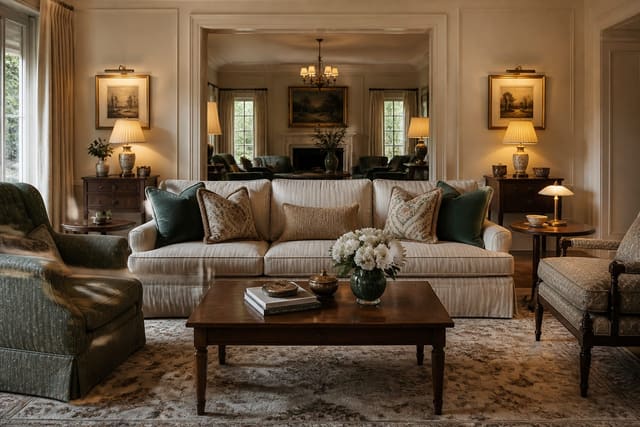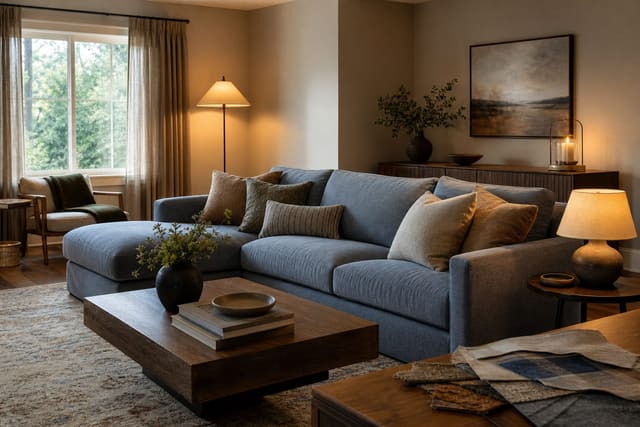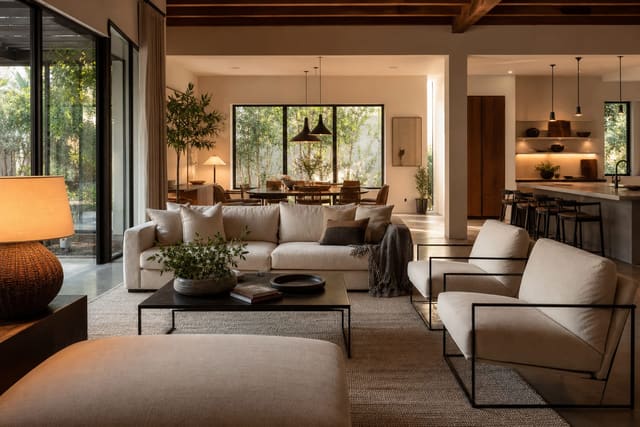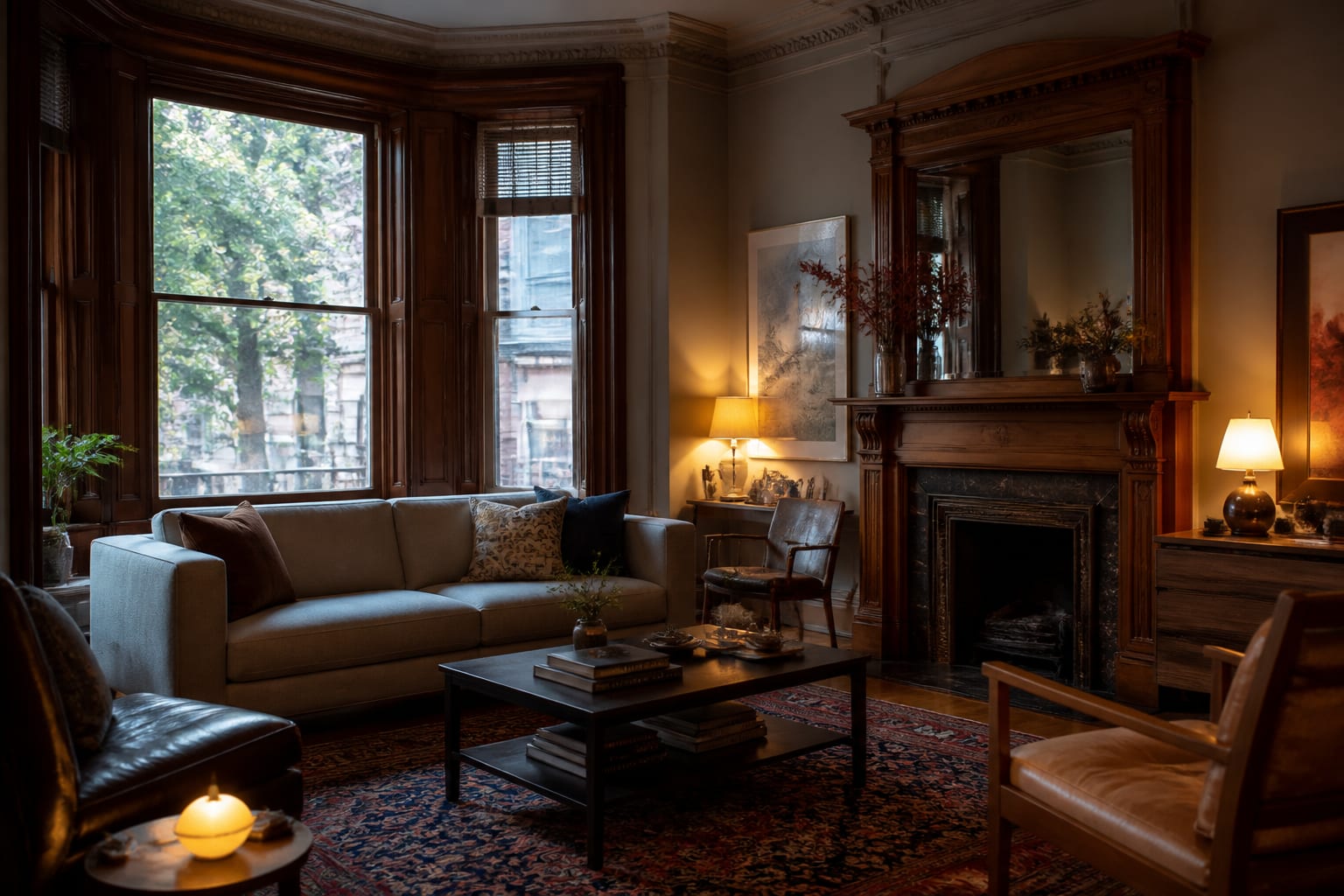
AI interior design for period homes works by previewing modern furniture, paint, lighting, and layout inside rooms that keep original trim, fireplaces, built-ins, and proportions intact. It shows whether a direction respects a Victorian, Tudor, or Craftsman room before you commit to paint, permanent fixtures, or large furniture purchases.
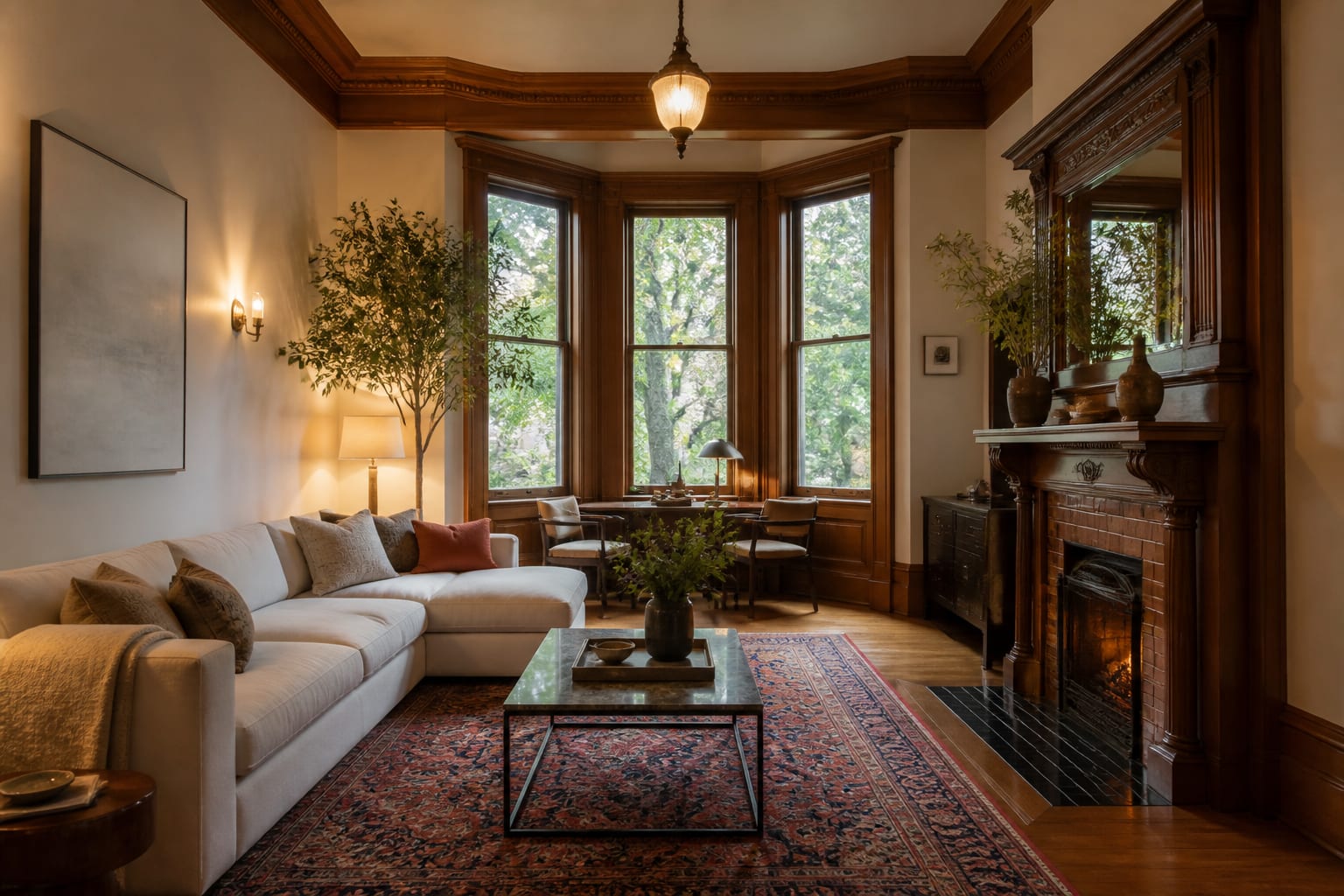
Can AI actually design around a period home's original features?
Yes, but it is not a preservation architect and should not be trusted to identify historical materials from a photo alone. It excels at testing whether a design direction respects the room or smothers it. Feed it evidence: photograph the baseboards, window casings, stair rail, mantel, ceiling height, door style, and floor color instead of hiding them.
If your room has stained wood, lead with that reality rather than requesting a blank white remodel. If you like traditional interiors generally, a broader AI traditional interior design approach keeps the language consistent room to room.
Period homes need stricter prompts than newer houses. Ask for "a Craftsman dining room with quarter-sawn oak trim, a 42 inch round table, warm white walls, 2700K sconces, and no painted woodwork" rather than "cozy traditional dining room." The specific version gives the preview a boundary; the vague one invites it to erase the house.
Which original details should lead the redesign?
Choose the architectural feature that gets protected first, then let everything else support it. In a Victorian room that might be a carved mantel or tall windows; in a Tudor room, dark beams or leaded glass; in a Craftsman home, the trim package itself. Do not start with paint color — start with the fixed materials that will outlast the project.
Stained oak can handle olive, oxblood, tobacco, deep cream, and muddy blue. Orange shellac floors usually need softer walls than online inspiration suggests, and gray paint against warm old wood is a fast route to a room that feels off.
- Keep original stained trim visible unless truly damaged; a 4 to 6 inch casing often makes a room feel authentically old.
- Size rugs to the room's geometry: an 8x10 can work in a small parlor, while 9x12 lets front furniture legs sit on the textile.
- Hang drapery higher only when casing allows it; rods 4 to 8 inches above trim lengthen a room without covering a rosette or picture rail.
- Use warm 2700K bulbs first, since cooler light can make plaster look chalky and old wood look strangely orange.
Brick, shellac, stained glass, encaustic tile, and aged pine all cast color into a room, so surfaces are rarely neutral. If combinations keep looking sour, use the same logic as fixing clashing undertones in a room: identify the bossy fixed material, then pick supporting colors instead of fighting it.
How do Victorian, Tudor, and Craftsman rooms need different fixes?
Victorian rooms tolerate more decoration than homeowners think but dislike flimsy scale. Tall ceilings and ornate trim need furniture with enough height and texture to hold the room — an 84 to 96 inch sofa with a tight back or turned legs reads better under 10 foot ceilings than a low platform sofa. Patterned rugs, pleated drapery, and dark-framed art modernize without pretending it's a loft.
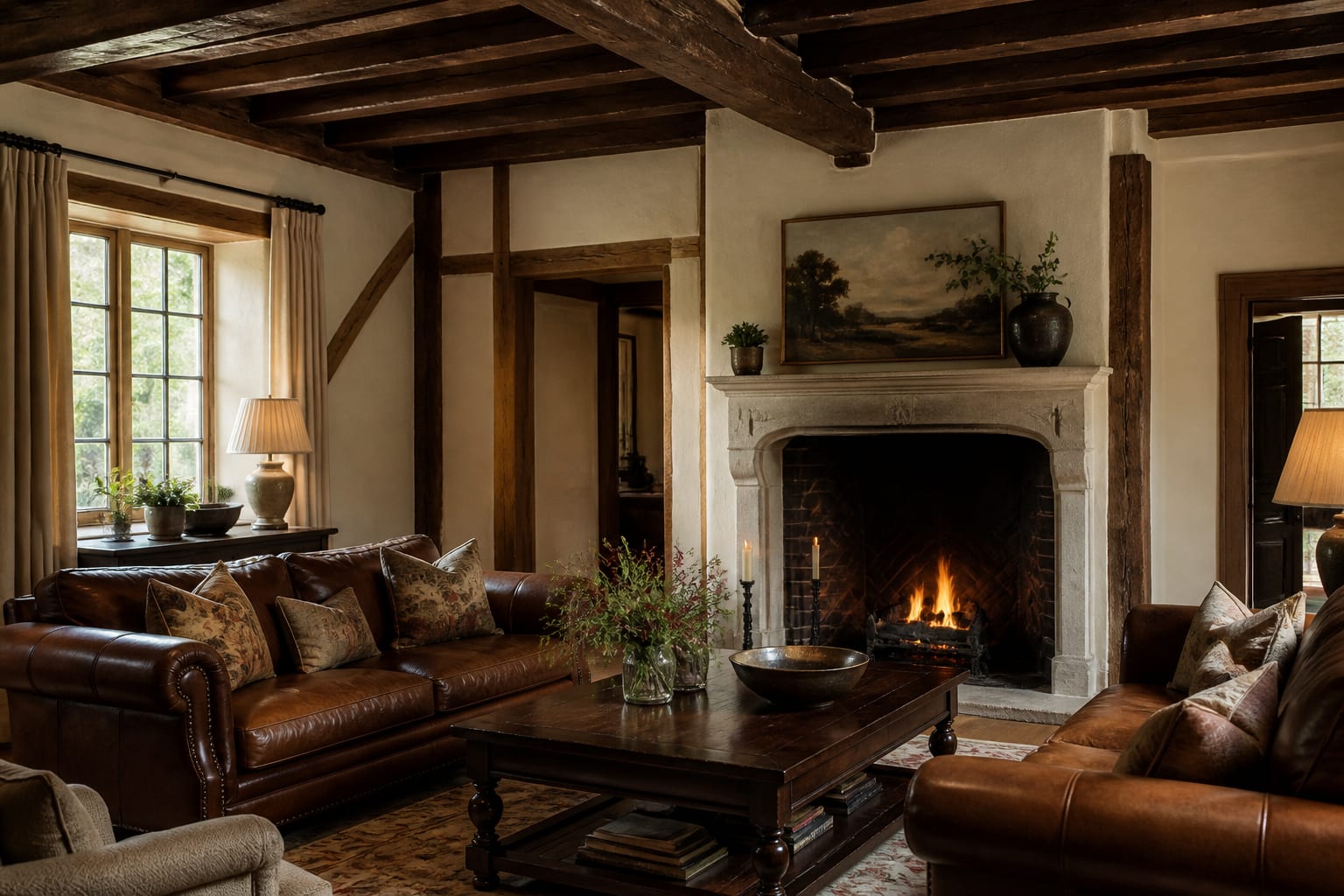
Tudor interiors need weight, contrast, and restraint. Beams, arched doors, and dark wood already bring drama, so cleanup beats bleaching: cream walls, tobacco leather, wool plaid, iron, and aged brass usually beat stark white and glossy black hardware.
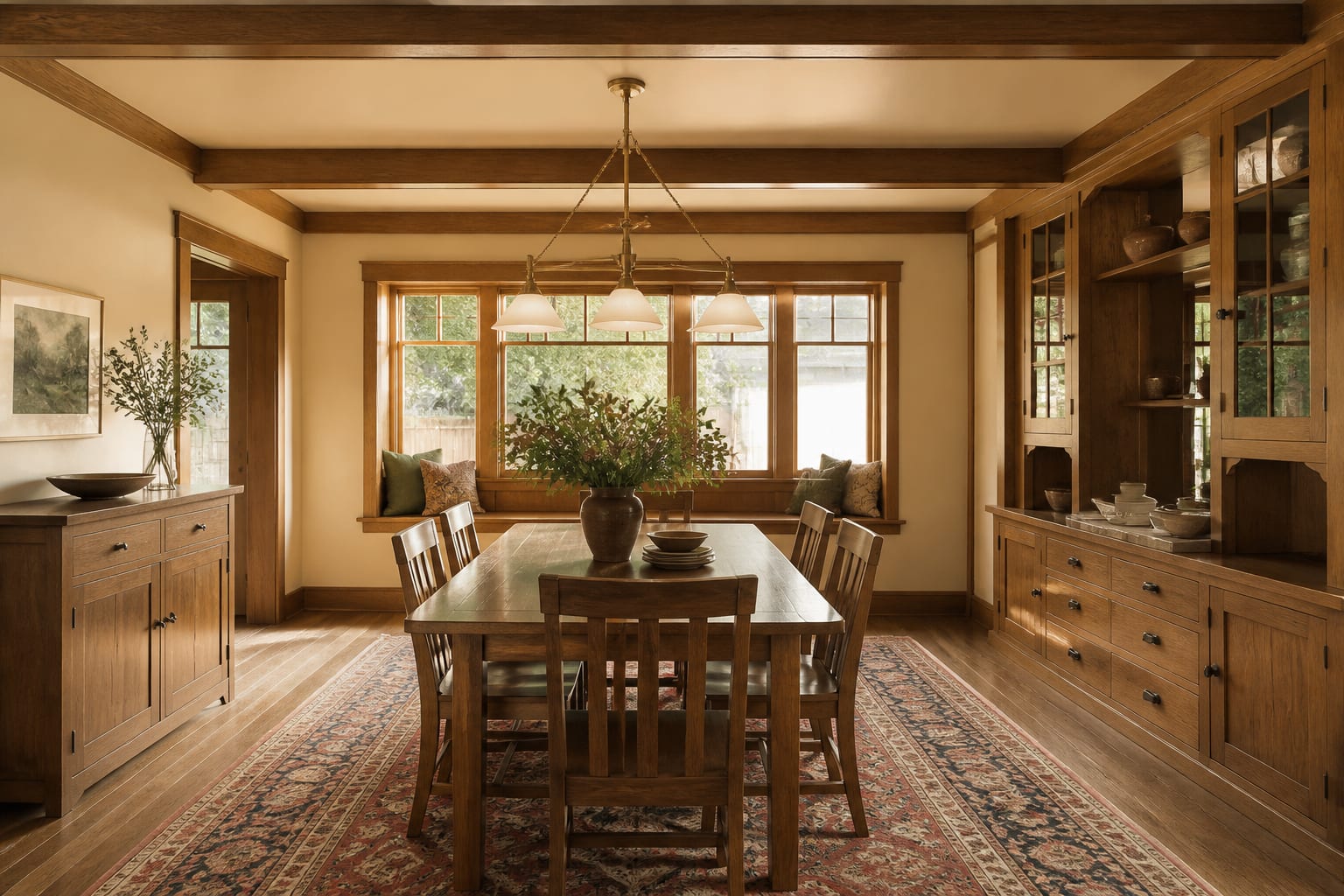
Craftsman rooms want honesty and horizontal calm. A 30 inch dining table, simple-railed chairs, flat-weave wool rugs, and matte ceramic lamps suit the low, grounded lines better than glam pieces. Leave 12 to 18 inches of breathing room around built-ins so the millwork reads as intentional rather than crowded.
All three styles can accept modern art and cleaner storage — the difference is proportion. New pieces should read as respectful additions, not evidence the old room lost an argument.
How do you preview old-house changes with AI before committing?
Test one level of change at a time, starting with the least reversible: painting trim, replacing floors, swapping a fixture, or buying a large sofa. Run a second preview where the original feature stays and only the surrounding choices improve. That comparison often proves the room needed better supporting actors, not demolition.
- Upload a straight-on photo from chest height with floor and ceiling visible; turn on lamps if the room is dark and avoid wide-angle distortion.
- Use prompts that forbid your specific fear: "Preserve the original dark wood trim, keep the fireplace brick unpainted, add a warm traditional-modern living room with a 9x12 rug, two reading lamps, 2700K bulbs, and closed storage."
- For rentals or protected properties, add "no demolition, no painted woodwork, no new recessed lights, no window changes."
- Confirm real sofa depth, table diameter, sconce height, and rug size with a tape measure before buying anything.
What mistakes should you avoid in period home modernization?
The most common mistake is making a room younger by making it flatter — period character is the design brief, not a problem to sand down.
- Painting all woodwork white destroys contrast; preview it beside an untouched version and test a warmer wall color first.
- Recessed lights as the sole plan can flatten ornate ceilings; layer shaded lamps, sconces at 60 to 66 inches, and a dimmable fixture instead.
- Furniture that's too low leaves tall Victorian or Tudor rooms feeling empty above the seating; balance an 18 inch seat height with taller bookcases or art.
- Ignoring circulation near radiators and hearths causes daily irritation; keep 36 inches clear on the main path.
- Copying one historical style too literally can feel staged; pair period-aware shapes with modern upholstery and washable rugs.
Treating every room as equally formal is a second mistake. Many period homes had built-in hierarchy — parlor, dining room, service spaces, bedrooms — so let public rooms carry richer color while bedrooms stay quieter with linen and warm white paint. Trust your actual trim profile and ceiling height over an inspiration photo of a different house entirely.
When is a period room ready for real purchases?
A room is ready once the original features, largest furniture, lighting temperature, and main palette have survived the same preview. Don't wait for every pillow, but don't order custom upholstery while the rug size and window treatment plan are still unresolved.
For a living room, settle sofa length, chair count, rug size, lamp placement, and TV treatment. For a dining room, confirm table size, chandelier drop, chair pullback, and whether a sideboard blocks a door swing. Then buy in order: rug, main seating, case goods, lighting, and finally art and accessories.
Frequently Asked Questions
Can AI design software damage or misidentify historic materials?
AI can't verify historic materials from a photo, so it shouldn't replace a preservation architect for structural or material decisions. It's reliable for previewing paint, furniture, rugs, and lighting changes around features you photograph and describe accurately, such as stained trim or original brick.
Should I paint over original wood trim in an old house?
Not without previewing it first. Painting all woodwork white often removes the contrast that gives period architecture depth, so test a painted version against the original and try a warmer wall color before committing to permanent paint.
What light temperature works best in Victorian, Tudor, or Craftsman rooms?
Warm 2700K bulbs generally work best because they flatter wood, plaster, brick, and brass, while cooler white light can make old surfaces look chalky or oddly orange. Use shaded lamps and sconces around 60 to 66 inches high rather than relying on recessed lighting alone.
How big should a rug be in a period living or dining room?
Rug size depends on room geometry: an 8x10 rug can suit a small Victorian parlor, while a 9x12 rug works better when furniture legs need to sit on the textile. Always confirm the size against your actual floor plan before buying.
In what order should I buy furniture for a period room redesign?
Buy the rug or largest textile first, then main seating, case goods, lighting, and finally art and accessories. This order keeps the biggest, least reversible decisions anchored to the room's architecture before smaller purchases are made.