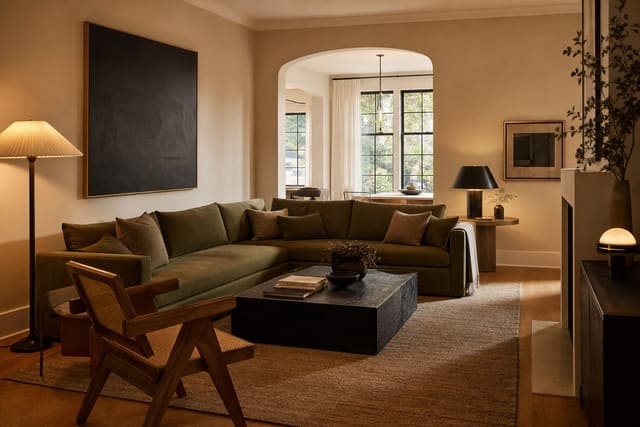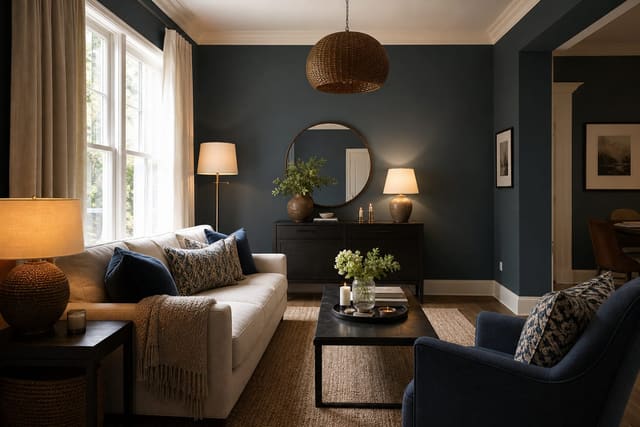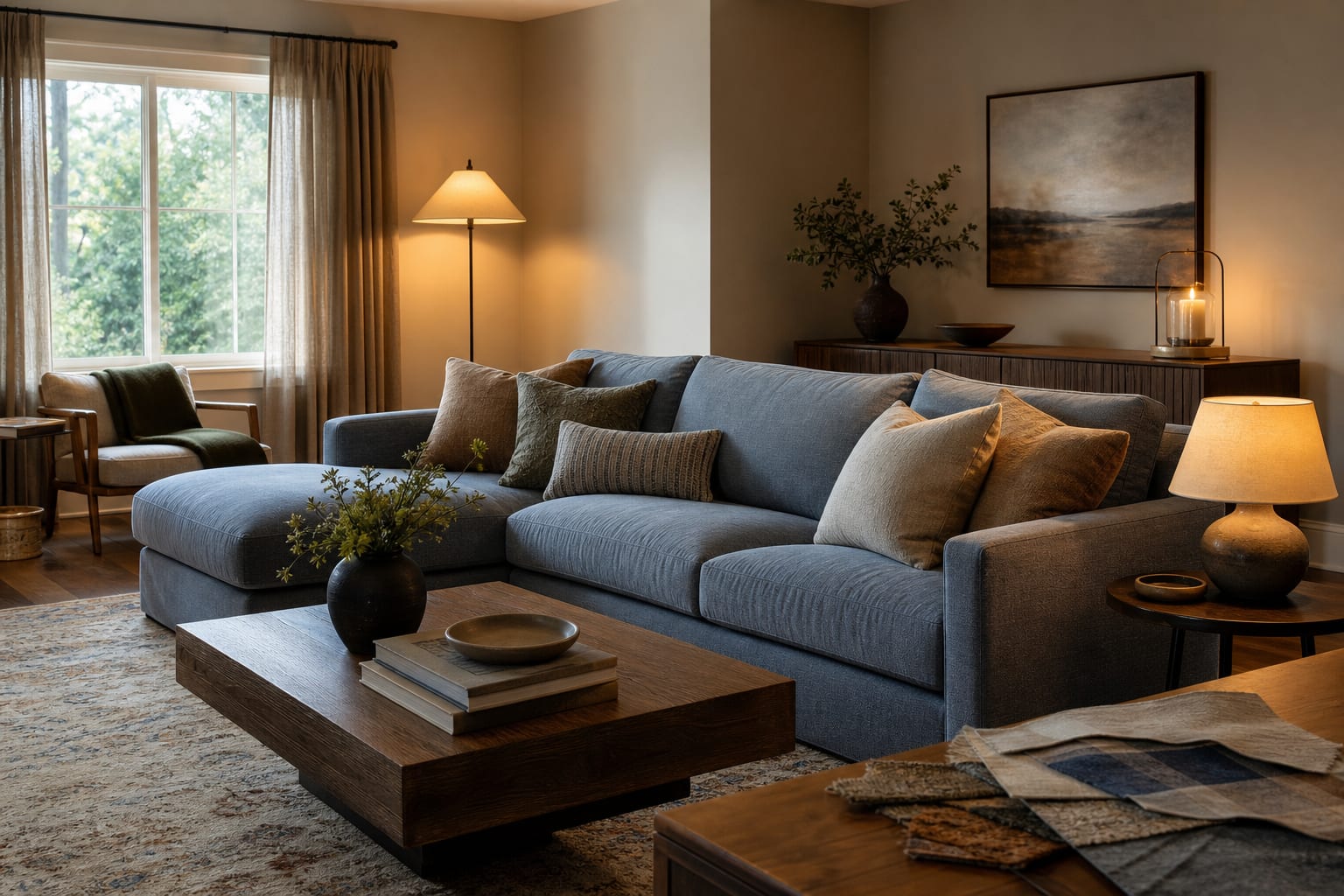
Clashing undertones get fixed by picking one undertone family — warm (yellow/red), cool (blue/green), or neutral — locking it on the largest surface (floor or walls), and matching every other finish to that family rather than the surface color. Undertones are the quiet bully in most mismatched rooms, and ignoring them makes expensive choices look cheap.
Why do similar colors clash when they look related?
Room colors clash even when they seem similar because their undertones can be warm, cool, muted, pink, green, yellow, blue, or gray in ways that show up only when the colors sit beside each other. A cream wall with a yellow base can make a pink beige sofa look fleshy. A blue gray rug can make honey wood flooring look orange, and a bright white lampshade can make ivory trim look dingy even though both are technically "white."
Undertone is the color underneath the color you name first — a wall called "beige" might actually be yellow beige, pink beige, or gray beige. The fastest test is comparison: hold a plain sheet of printer paper, a warm cream sample, a cool gray sample, and a muddy taupe sample beside the surface you're judging. One comparison will usually reveal the bias within seconds. Do this in daylight and again at night under your actual lamps.
A room feels off when warm oak floors, pink beige upholstery, cool gray walls, and yellow bulbs are all reasonable choices alone but share no plan together.
How do you read undertones before buying anything?
Start with the surfaces that cost the most to change: flooring, tile, countertops, built-ins, large upholstery, and existing trim. These are the undertone anchors whether you like them or not — a pillow can leave the room, but a concrete floor or stone fireplace usually stays.
Check each anchor under real light conditions. North-facing rooms exaggerate coolness, while west-facing rooms turn beige and wood more golden in late afternoon. Bulbs around 2700K to 3000K with 90+ CRI generally read paint, fabric, and wood more accurately than icy bulbs.
Use a white comparison card, not memory, against the wall, floor, sofa, and rug. If the wall reads peach against the paper, a gray linen curtain won't create peace; if the floor reads orange, a blue-white wall won't hide it. A muted green, mushroom, tobacco, or dusty blue may be the better fix.
If the room also shows too many visible colors, solve the palette hierarchy at the same time — see how to harmonize a room with too many colors so accents stop amplifying the undertone problem.
Keep the largest three surfaces in the same undertone family, or in a deliberate contrast: cream walls, warm wood, and camel leather agree; warm wood, muted green walls, and black accents oppose on purpose. What fails is the accidental middle — yellow beige walls, blue gray rug, pink beige sofa, cool white trim, no referee.
Test this on your own room photo with ReDesign before choosing a final direction; keep the doorway, walls, windows, main furniture, and lighting visible so the preview solves the room you actually have.
What is the fix once the undertones are fighting?
Choose the undertone you'll honor first — usually the fixed surface you can't easily replace: floor, tile, countertop, fireplace, or sofa. Everything else should either support that undertone or oppose it clearly.
| Fixed undertone | Avoid | Pair with |
|---|---|---|
| Yellow/orange (warm wood, honey floor) | Icy gray, cool blue-white | Warm white, cream, olive, mushroom, tobacco, clay |
| Pink beige | Yellow cream, heavy orange wood | Taupe, plum brown, soft charcoal, stone, muted green |
| Blue gray | Yellow beige, butter tones | Cooler white, slate, charcoal, walnut, black, muted navy |
| Green (tile, carpet, concrete) | Pink beige | Neutrals that share the green family |
For floors with strong mineral variation, the same logic used for stained concrete floors inside a home applies — the floor is not a blank neutral just because it looks gray.
Repeat the chosen undertone through at least three visible decisions: a mushroom wall wants a mushroom or stone note in the rug, art mat, or lampshade. Repetition tells the eye the undertone is intentional. Use contrast with restraint — one black line in curtain rods or lamp stems can sharpen a beige room, but five unrelated contrast moves create a new problem.
Common undertone mistakes that keep a room looking wrong
- Judging paint from a tiny chip. Paint two coats on a 12x18 inch board and check it against the floor, sofa, and trim in morning, afternoon, and evening light.
- Treating white as one color. Blue white, warm white, cream, and chalk all change nearby surfaces — compare whites directly before ordering curtains or bedding.
- Matching neutrals by name instead of undertone. A beige rug, sofa, and wall can still clash if one leans pink, one yellow, one green. Aim for family resemblance, not identical labels.
- Ignoring wood and metal finishes. Brass, chrome, black iron, walnut, and oak all add temperature. Limit metals to one dominant and one supporting finish, then repeat each twice.
- Adding a bright accent to "fix" undertones. A cobalt pillow won't reconcile pink beige walls and orange floors. Correct the background temperature first, then add accent color at 10-15% of visual weight.
- Forgetting bulb temperature. A palette that works in daylight can turn green or peach at night under cheap cool bulbs.
How AI previews expose undertone clashes before money moves
Undertone problems are relational — a paint color isn't right or wrong alone, it's right or wrong beside your actual floor, sofa, trim, and lighting. Uploading a real photo lets you test those relationships before buying gallons of paint or returning a rug a third time.
Use a straight photo from the room's main entrance or a back corner, including the floor, ceiling line, windows, largest furniture, trim, and at least two walls. Don't crop out "ugly" fixed finishes — those are often the source of the clash. Photograph night scenes with the lamps you normally use.
Run focused versions: one palette that cooperates with warm floors, one that cools with muted green or blue, one using mushroom or taupe, and one that keeps the walls but changes textiles and lighting. Keep large furniture consistent. The value is diagnostic, not a fantasy makeover — see which undertone strategy survives contact with the room you own.
Before treating any preview like a purchase order, read can AI design a room for you. Use it to compare versions, identify repeated moves, then test the smallest real-world change first.
What should you change first for the biggest undertone correction?
Change light, then textiles, then paint, in that order.
- Fix the bulbs. Light changes every undertone in the room, so swap bad bulbs before judging any surface. Use lamps with fabric or paper shades 14-18 inches wide to avoid harsh, stingy pools of light.
- Change the largest movable textile. Curtains, rugs, and slipcovers correct a room faster than accessories. Hang rods 6-10 inches above the casing and 8-12 inches beyond the trim, with panels finishing about 1/2 inch above the floor.
- Size and match the rug. In many living rooms, an 8x10 foot rug connects the sofa and chairs. Choose one that contains a small amount of the floor tone plus the undertone you want the room to follow.
- Paint last. Paint covers the most area and punishes guessing. Once you've confirmed the fixed undertone and tested one textile direction, choose a wall color that repeats or deliberately balances that decision.
The room doesn't need every surface to match. It needs every surface to admit what color family it belongs to.
Frequently Asked Questions
How do I tell if my undertones are clashing?
Stand at the room entry — if the walls read pink-beige while the floor reads orange-yellow and the trim reads cool white, the undertones are clashing even though each individual color looks neutral on its own.
Which surface dictates the undertone family?
The largest fixed surface dictates it — usually the floor in living spaces, the cabinets in a kitchen, or the tile in a bathroom. Match wall, trim, and furniture undertones to that surface's family.
Can I mix warm and cool undertones in the same room?
Yes, but limit off-family pieces to small accents like one rug or one piece of art. Most of the room should sit in a single undertone family for a calm, cohesive read.
What is the most common undertone clash in rented homes?
Builder-beige walls (pink-yellow) against cool-gray LVP floors (blue-gray) is the most common pairing. The clash makes a room read dated even though both finishes are recent.
Does AI help diagnose undertone clashes?
Yes. Upload a room photo and AI can show which surfaces fall into warm versus cool families, then preview neutralizing color shifts before you commit to paint or refinishing.
> Try this: Ready to see this on your own room? Open ReDesign and run the preview.
Three transformations to try
1. Cool-toned room with matched cool whites 2. Warm-toned room with matched warm whites 3. Neutralized accent against cool floor