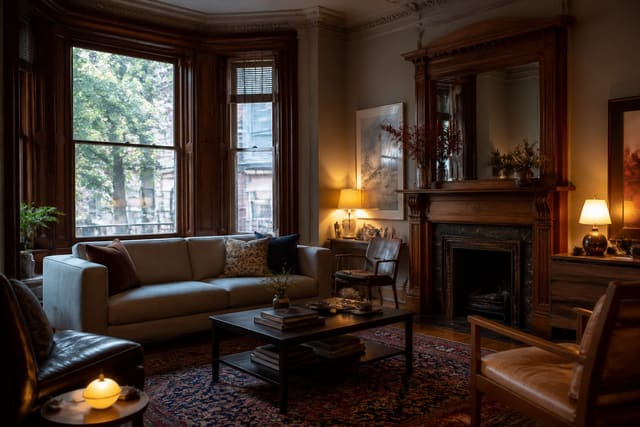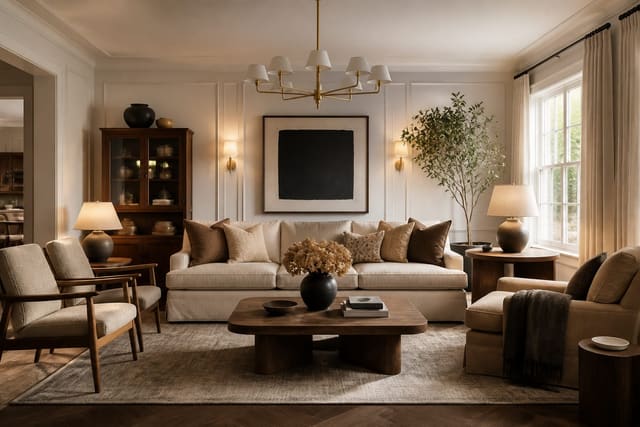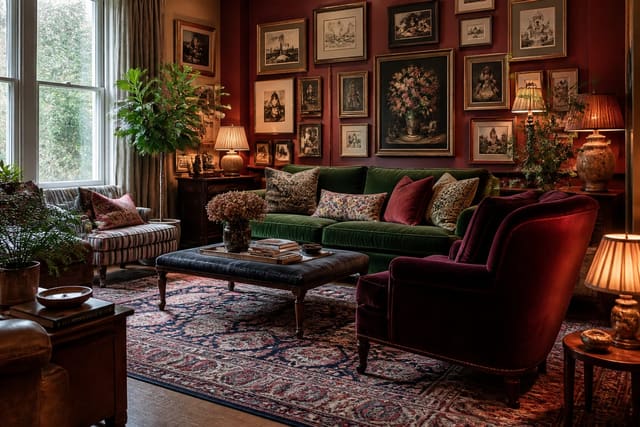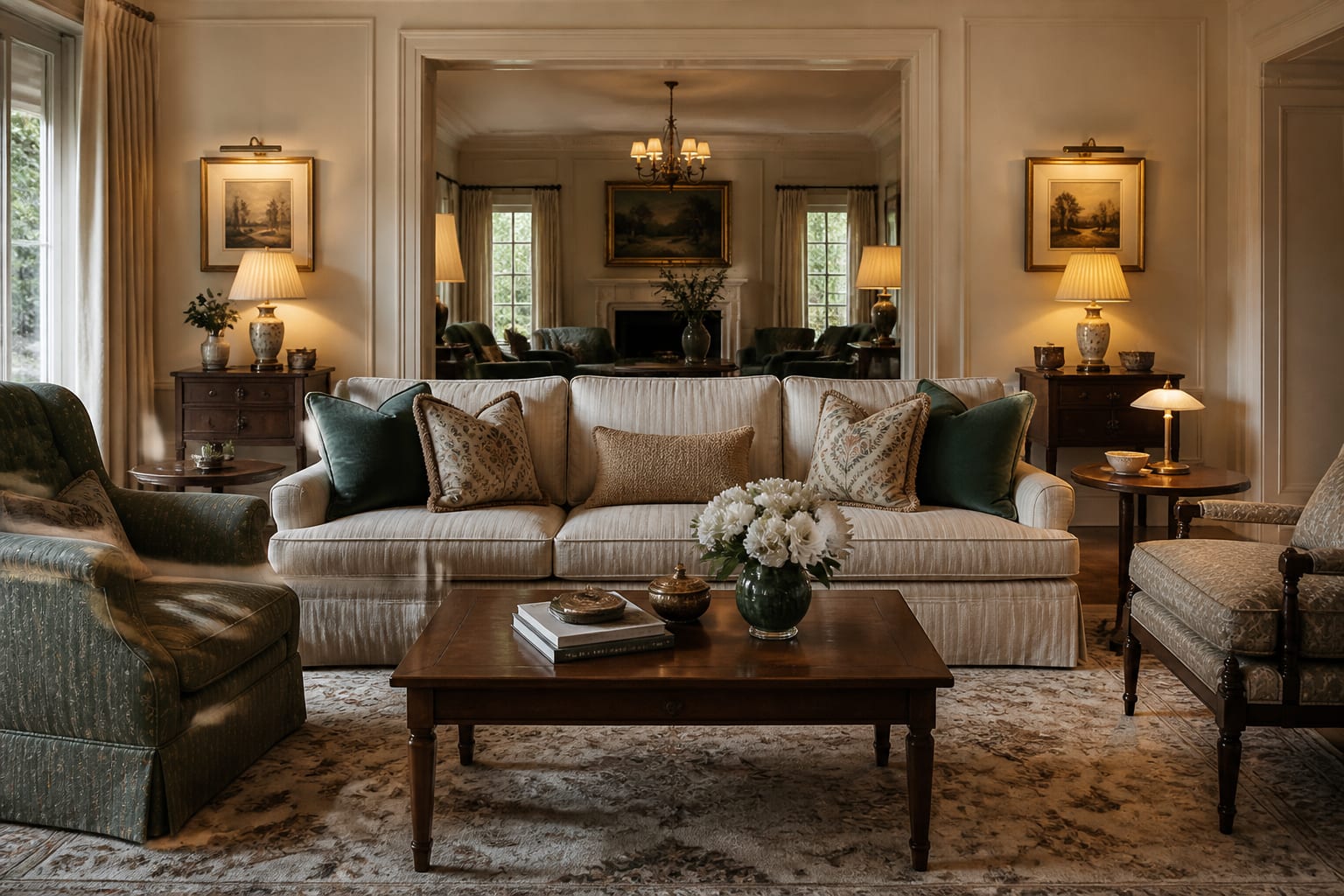
AI traditional interior design succeeds when you give the tool proportion, classic furniture forms, wood tones, warm lighting, and your room's real architectural limits instead of a vague request for "classic" or "elegant." The useful test isn't whether the preview looks rich for three seconds; it's whether the layout feels gracious in your actual space, with ceiling height, floor, and windows intact.
How well can AI handle traditional interiors?
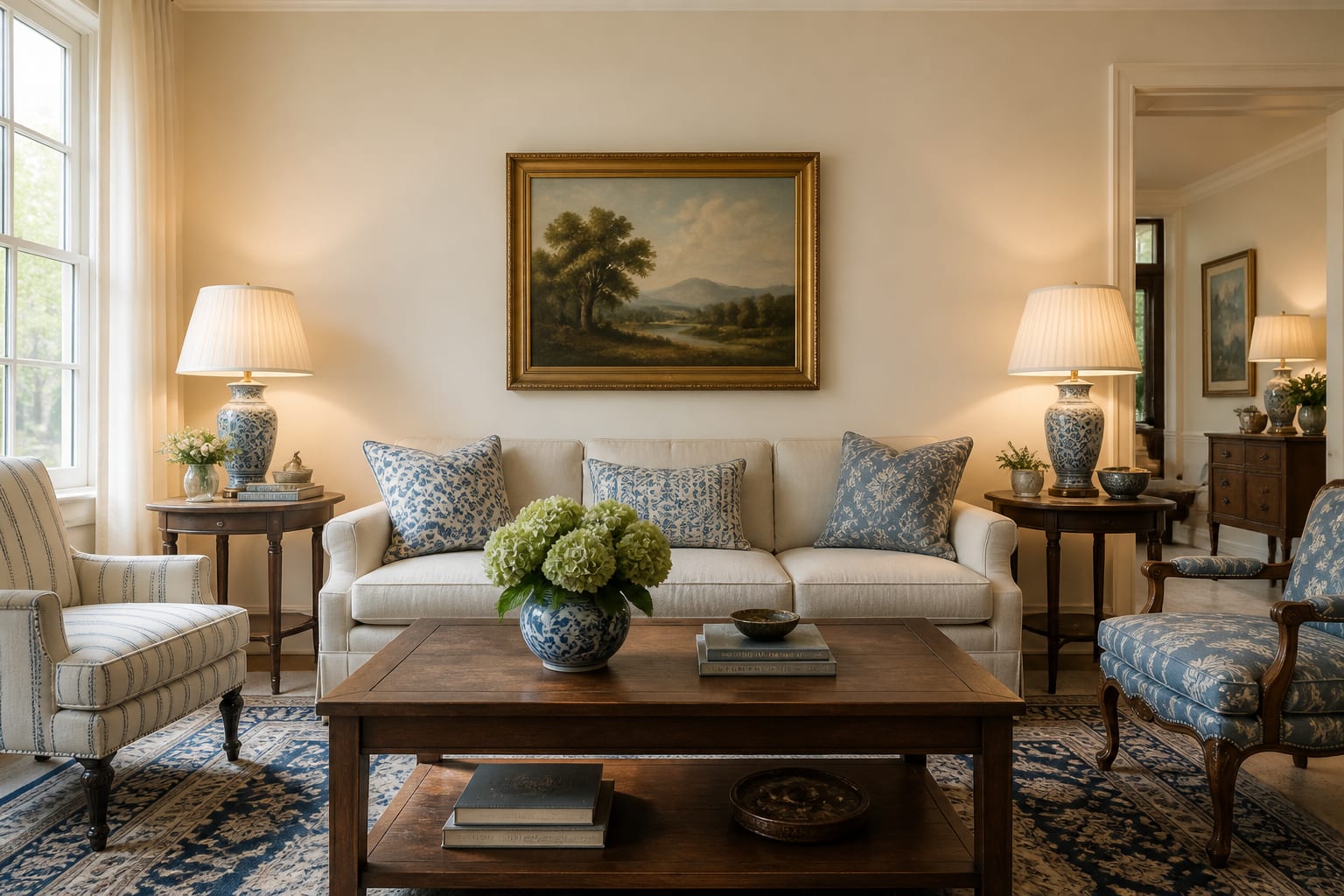
AI produces strong traditional interiors when the prompt defines the classic language and limits fantasy architecture. It recognizes symmetry, crown molding, paneled walls, antique rugs, rolled arms, pleated shades, framed landscapes, wood case goods, and formal seating plans. This works well for living rooms, dining rooms, bedrooms, libraries, foyers, and older houses.
The weak version appears when AI mistakes traditional for expensive, adding marble fireplaces and grand drapery to a plain rental with a baseboard heater. A better render keeps your real window height, floor color, and ceiling line visible, then solves the room through furniture scale, color, lamps, and layout.
If your home has older bones, compare the output with AI design for period homes before approving a concept that erases trim, picture rails, or original fireplaces. Period details are often the reason a traditional idea works, not background clutter.
Traditional vs. transitional: which brief should you give AI?
Traditional and transitional prompts produce different rooms even when palettes overlap. Traditional accepts more symmetry, heavier case goods, formal rugs, and visible history; transitional edits those details down with cleaner silhouettes. If your formal room keeps looking too plain, you may be asking for transitional by accident.
| Brief | What AI usually adds | Where it fails | Better instruction |
|---|---|---|---|
| Traditional | Paired lamps, patterned rug, wood tables, classic seating | Too stiff or fake-mansion formal | "Use classic forms with relaxed upholstery and warm lamps" |
| Transitional | Clean sofa, neutral palette, simpler tables | Bland beige room, no memory | "Keep 35% traditional detail and one dark wood anchor" |
| Grand traditional | Carved pieces, molding, ornate drapery | Overdone scale in small rooms | "No new architecture; fit the existing ceiling" |
| Casual traditional | Slipcovers, antiques, books, shaded lamps | Drifts into cottage or clutter | "Use symmetry on the main wall and quieter accessories" |
For a cleaner classic-modern balance, study AI transitional style design alongside your traditional preview to see which tension you actually want.
What symmetry decisions make classic rooms convincing?
Traditional design relies on order, but order isn't duplication. The room needs a clear centerline, a readable focal wall, and furniture weighted to the architecture, such as a sofa facing the fireplace with chairs angled inward.
- Pair the architectural moment first. Symmetry works best around a fireplace, bed wall, or main window; keep the sofa, bed, or table centered within a few inches of that feature.
- Size the rug generously. Start with an 8x10 rug for most living rooms, or 9x12 when front legs need at least 6 inches on the rug.
- Keep the table gap livable. Leave 16-18 inches between sofa and coffee table, and protect about 30 inches for the main walkway.
- Let lamps carry the atmosphere. Use shaded table lamps 26-32 inches tall with warm 2700K-3000K bulbs; a single ceiling fixture kills the classic mood.
- Hang curtains like architecture. Mount rods 4-8 inches above the casing where possible, and let fabric meet the floor cleanly.
What are the common traditional AI mistakes?
The first mistake is asking for "timeless elegance" without specifying furniture language. Ask for a camelback sofa, English roll-arm chair, pedestal table, turned-leg desk, campaign chest, spindle bed, or framed landscape instead.
The second is letting AI overmatch the room. Two lamps can work beautifully, but identical chairs, pillows, tables, art, and topiaries in pairs can turn a living room into a showroom. Keep symmetry in the largest moves and loosen the accessories.
The third is allowing heavy furniture to shrink a normal room. A 40-inch-deep chair or giant armoire wrecks circulation even in a balanced image. Ask for chair widths around 30-34 inches in compact rooms and case pieces 14-18 inches deep near walkways.
The fourth is confusing traditional richness with maximalism. If you want the louder, layered version, compare the concept with AI maximalist room design before forcing a classic brief to carry every color and print you love.
How do you test the formal room before spending money?
Photograph the space from the doorway or main sightline, with floor, ceiling, windows, trim, outlets, radiator, doors, and current furniture visible. A cropped sofa shot won't tell the tool how symmetry should behave.
A strong prompt: "Create a traditional living room using the existing 8-foot ceiling, oak floor, white window trim, and current fireplace wall; add an 84-inch rolled-arm sofa, two 32-inch classic lounge chairs, an 8x10 patterned wool rug, dark wood coffee table, shaded table lamps, framed art, full-length curtains, warm lighting, and no invented molding."
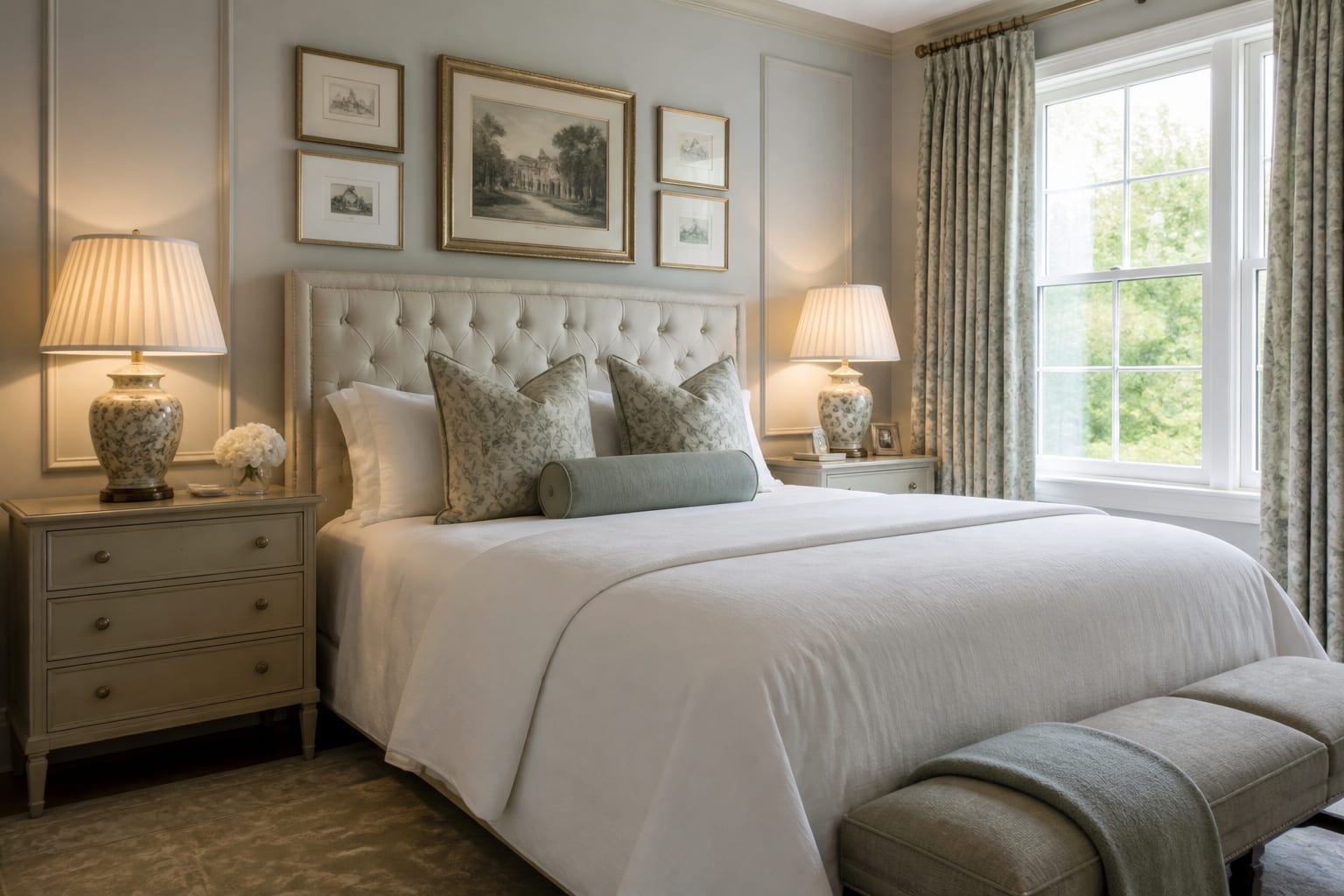
For a bedroom: "traditional bedroom with current window placement, 56-inch upholstered headboard, 28-inch wood nightstands, pleated lampshades, framed landscape art, muted blue or warm putty walls, full-length curtains, and no change to ceiling height." Run three versions — restrained, warmer/darker, more formal — and keep whichever preserves your floor color and window proportions.
How do you turn the winning preview into a real room?
Translate the AI image into five decisions before shopping: main seating shape, wood tone, rug pattern, lamp style, and level of symmetry. If those five agree, the room reads as traditional without custom millwork or antique prices.
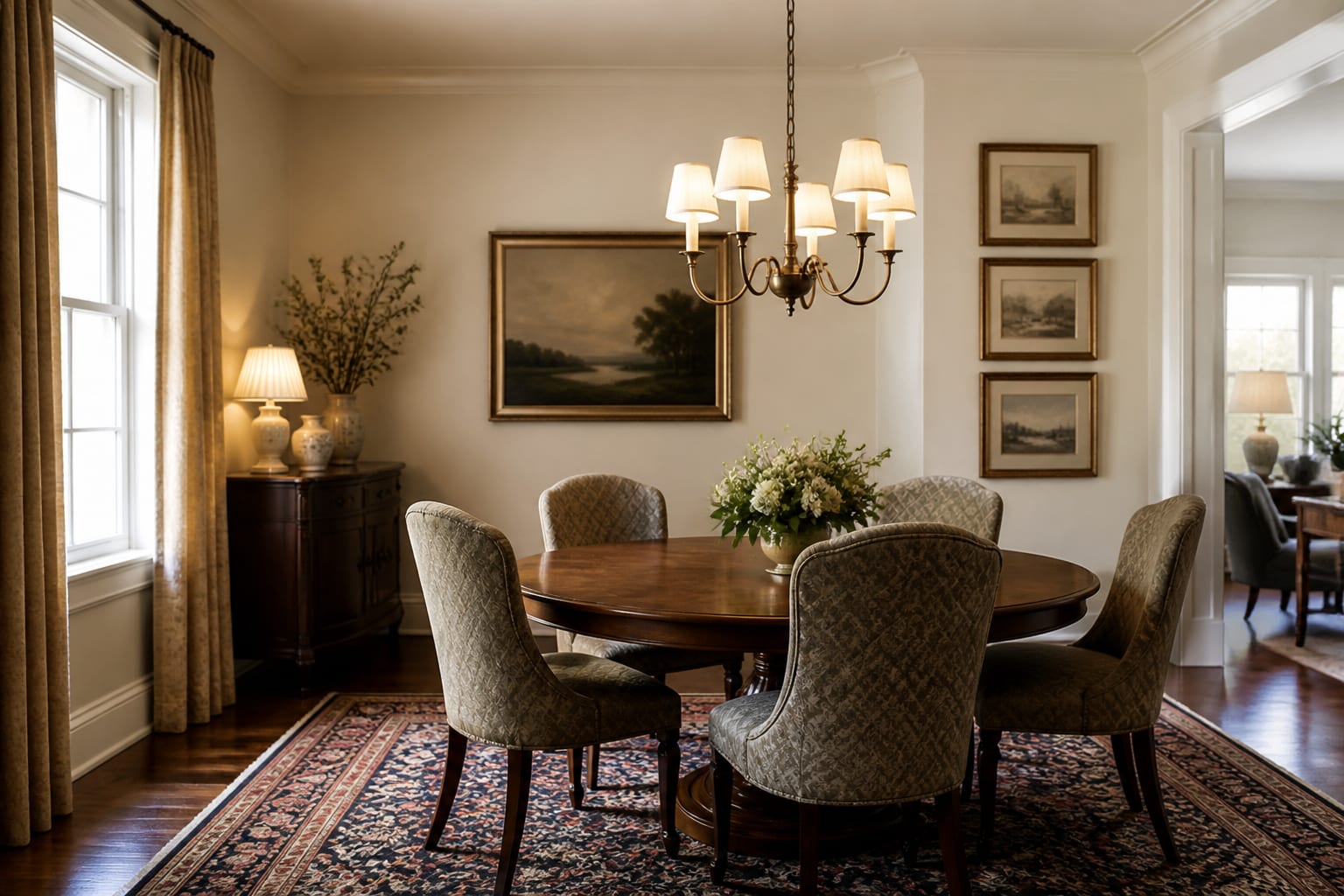
Start with the largest soft piece. An 84-90 inch sofa with a classic arm does more than a dozen accessories in a living room. A 52-58 inch headboard gives a bedroom wall presence without hotel-suite scale. In a dining room, a 42-48 inch round table suits compact spaces, while a 72-inch rectangular table needs pullback and sideboard clearance.
Add age through materials rather than clutter: walnut, mahogany, cherry, oak, wool, linen, aged brass, iron, ceramic, and framed paper art. One dark wood chest, one patterned rug, one pair of shaded lamps, and one strong art wall can carry the style.
Renters should focus on removable signals: larger rugs, plug-in sconces, proper curtains, secondhand wood tables, framed art, pleated shades, and warmer bulbs. Owners can test molding, built-in bookcases, or refinished floors, but let the AI preview prove the composition first.
Frequently Asked Questions
Can AI design a traditional room without making it look stiff?
Yes, if the prompt keeps symmetry in the major moves only. Pair the sofa and chairs or the bed and nightstands around a focal wall, then vary accessories like books, pillows, and small tables so the room reads lived-in rather than showroom-formal.
What's the difference between traditional and transitional AI prompts?
Traditional prompts call for heavier case goods, formal rugs, pleated shades, and visible symmetry. Transitional prompts edit those details down and mix them with cleaner silhouettes, producing a lighter, less overtly classic result even with similar colors.
What size rug works best in a traditional living room?
Start with an 8x10 rug for most rooms, sizing up to 9x12 for larger seating groups. Front furniture legs should sit on the rug by at least 6 inches so the seating area looks anchored rather than floating.
How do I keep AI from erasing my home's original details?
Name your existing architecture directly in the prompt, such as ceiling height, original trim, or picture rails, and instruct the tool not to invent new molding or windows. Compare results against AI design for period homes before approving changes.
What lighting makes a traditional room feel warm instead of flat?
Use shaded table lamps around 26-32 inches tall with bulbs in the 2700K-3000K range, placed in pairs or singles around the room. Avoid relying on one central ceiling fixture, which flattens the layered atmosphere traditional rooms need.