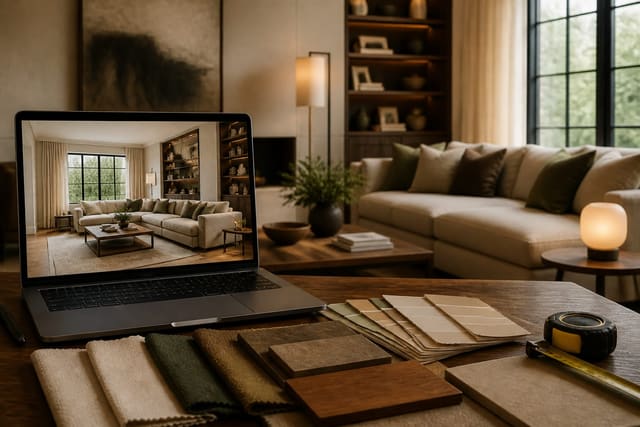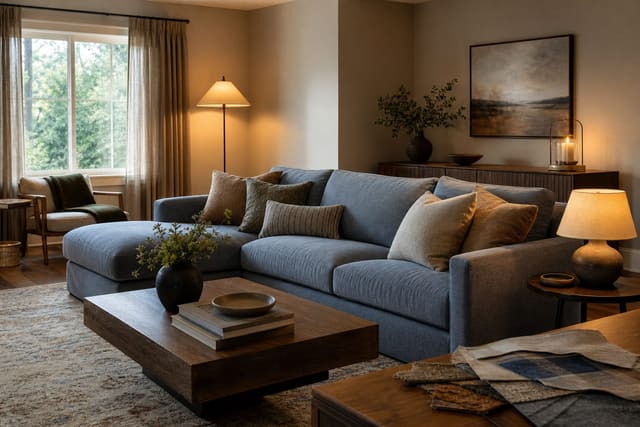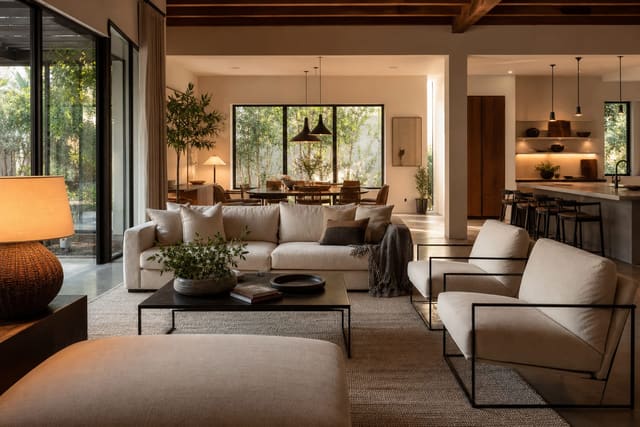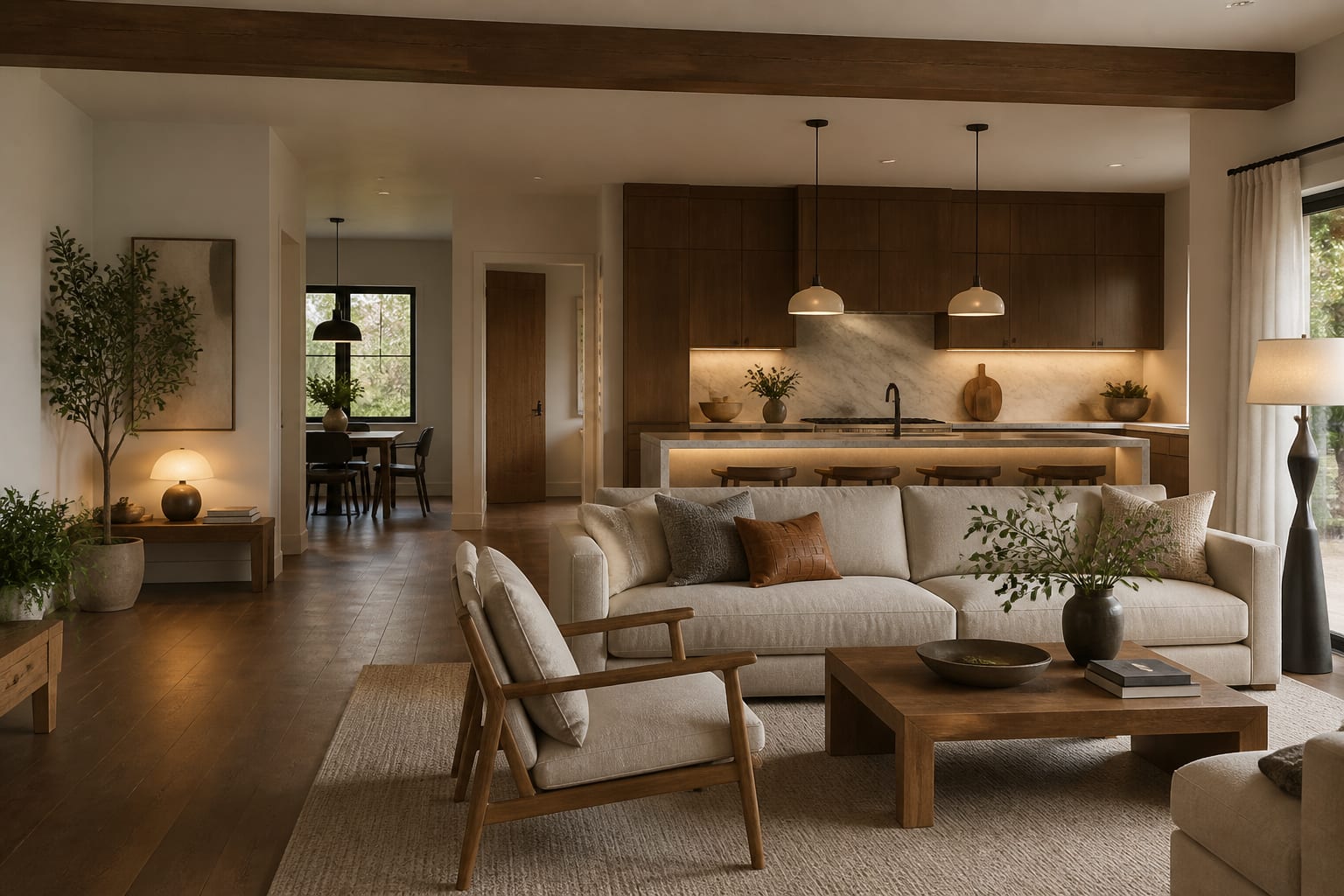
Yes, AI can plan an entire home at once, but the strongest results come from one shared style brief previewed room by room, not a single "cohesive house" prompt. AI design whole home planning works when you fix the palette, repeated materials, and non-negotiable furniture first, then let each room adapt that system to its own light and function.
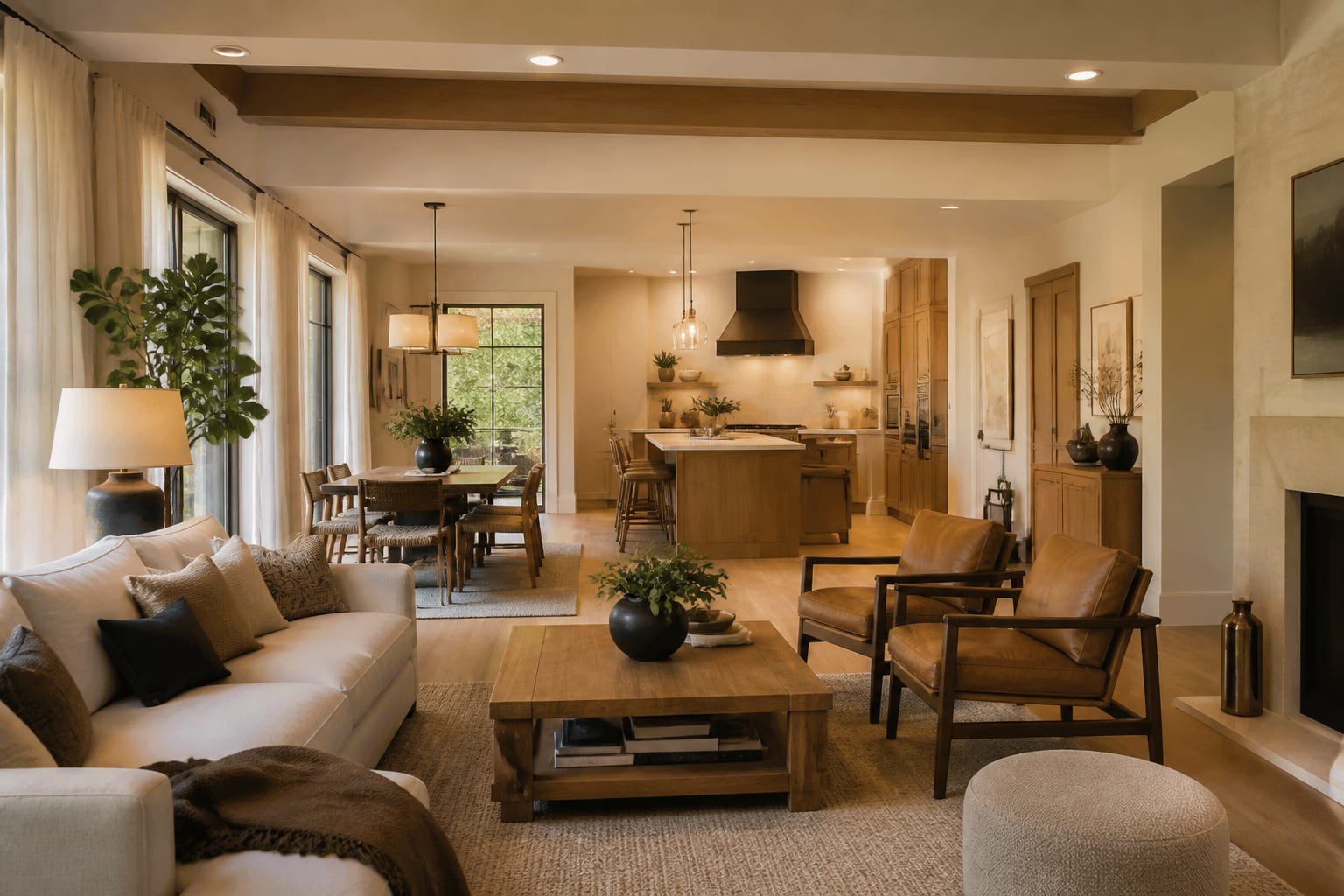
What makes a whole home feel consistent instead of copied?
A consistent home has a rhythm, not a matching set. The eye should catch familiar cues moving room to room: the same oak tone in furniture and frames, black or aged brass repeating on hardware, and wall colors sharing one temperature. Exact repetition often makes a home feel staged instead of collected.
Build a tight design kit before generating anything: one neutral wall family, one accent color family, a primary wood tone, a secondary wood tone if needed, one dominant metal, and one fabric story. That might mean warm white walls, muted olive accents, medium oak, aged brass, and linen textiles in one house, or gray-green walls, black metal, pale wood, and matte ceramic lighting in another.
Transition spaces expose clashes fastest. If the living room reads warm but the hallway turns icy gray, the house feels pieced together. A guide to fixing clashing undertones in a room helps explain why two "neutral" finishes fight.
Ground the system in numbers: keep walkways around 30-36 inches, center art near 57-60 inches from the floor, use 2700K-3000K bulbs in living spaces, and test paint on at least a 12x12 inch swatch on two walls before calling it whole-home safe.
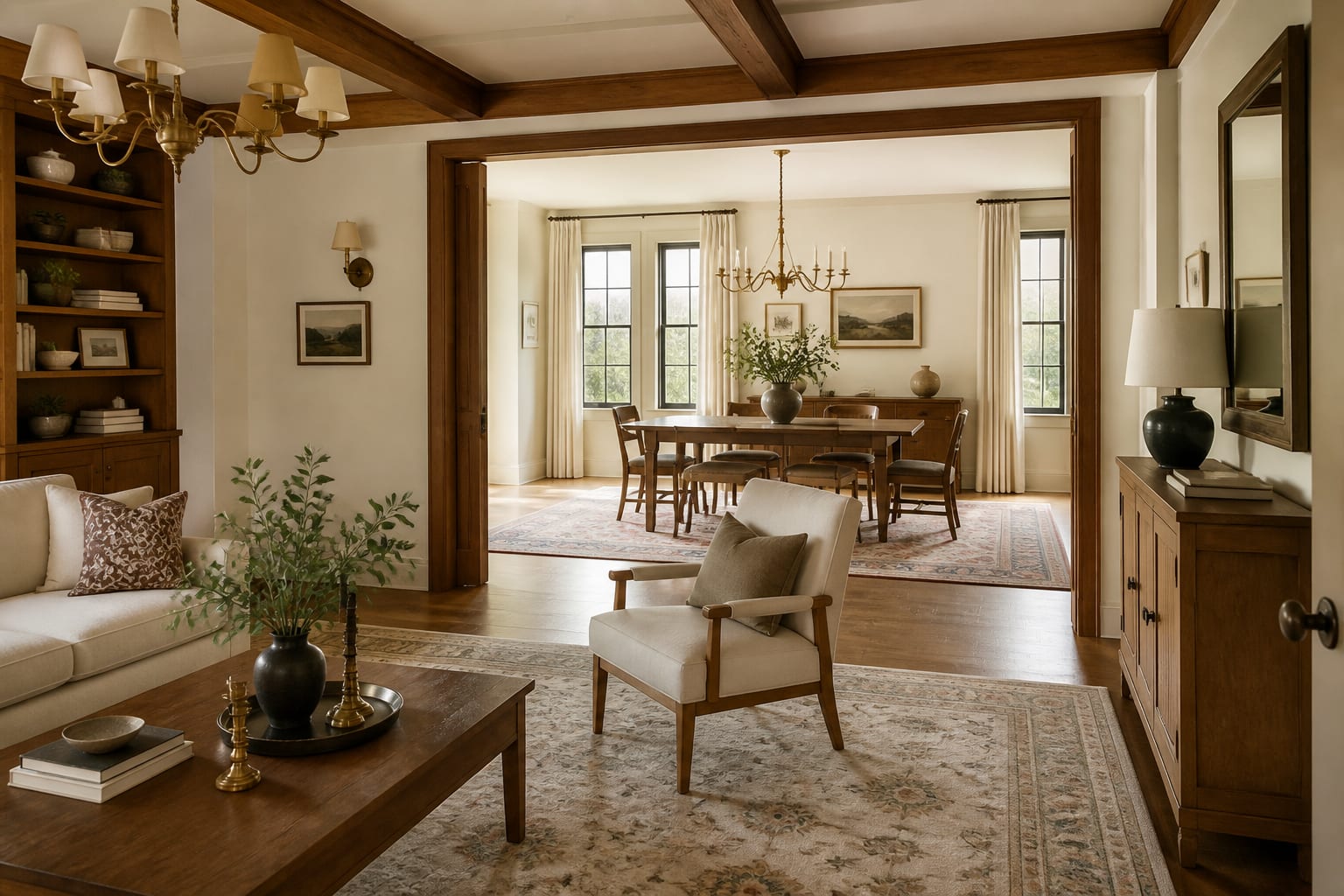
How do you sequence a room-by-room AI workflow?
Start wide, then get specific. One hero image can't predict how a north-facing bedroom, a sunny kitchen, and a dark hallway will each handle the same palette.
- Write the whole-home brief first. List 2-3 main colors, wood tones, one metal finish, flooring that stays, and fixed furniture with real dimensions (a 92-inch sofa, a six-seat table).
- Preview public rooms first. Entry, living room, dining room, and kitchen set the first impression; keep the same floor, trim, and window frames visible.
- Adjust private rooms next. Bedrooms and offices can go quieter or moodier while still repeating the house's metal finish and wood tone.
- Check transition views. Where hallway meets living room or kitchen meets dining room, preview both together so wall temperature and rug undertones stay related.
- Build a verification list. Record rug size, sofa width, table diameter, curtain height, paint family, and hardware finish before shopping.
If the first pass feels close but not right, change one variable at a time using the method in iterating AI room design results: warmer walls, darker wood, quieter rugs, or stronger art.
What mistakes ruin whole-home AI design?
The biggest mistake is treating consistency as sameness. A house needs connective cues, but each room still has to answer to its own light and function.
| Mistake | Why it fails | Fix |
|---|---|---|
| Redesigning every room from scratch | Result no longer resembles the home you own | Keep existing floors, trim, doors, cabinets visible in prompts |
| Picking paint from one sunny room | Color shifts across light conditions | Test the same color in a bright room, a dim hallway, and after dark |
| Repeating one accent everywhere | House starts to look themed | Vary the dose: a pillow here, a painted wall there, a small lamp base elsewhere |
| Ignoring floor transitions | Flooring is the strongest whole-home connector | Check the palette against oak, carpet, and concrete zones separately |
| Buying big items first | Expensive way to discover the palette is wrong | Sample paint and tape rug sizes before ordering sofas or drapery |
A guide to stained concrete floors at home is worth checking if concrete is part of your palette. A preview can also look polished while hiding daily friction: shoes by the entry, backpacks near the kitchen, cords in the office. If the design only works with life removed, it's too fragile.
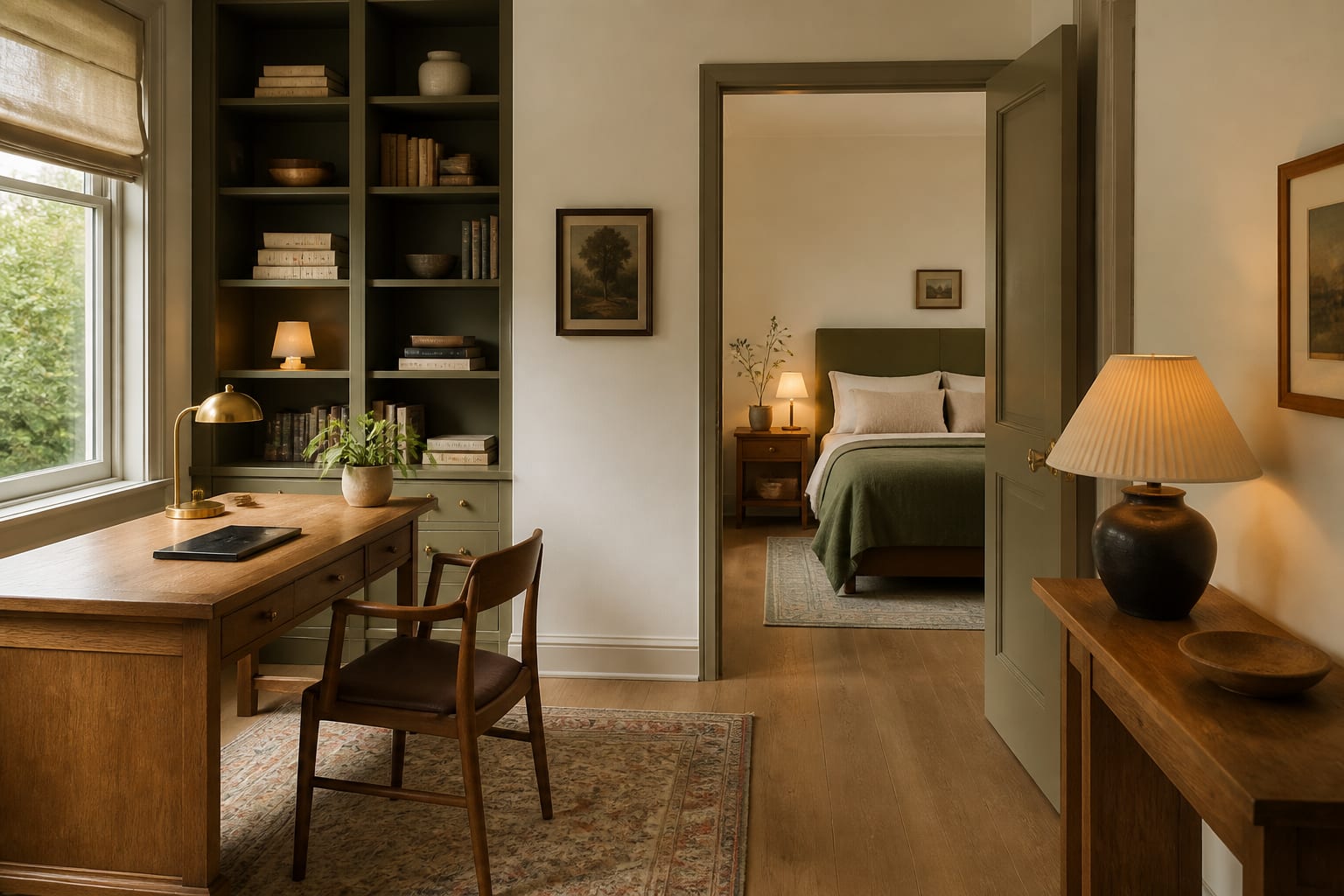
How does AI actually help keep rooms consistent?
AI makes the invisible pattern visible. Uploading room photos and previewing quick directions shows whether one warm white, oak tone, or brass fixture actually works across the home, not just in one flattering room.
Start with the room carrying the most constraints, often the kitchen (cabinets, counters, backsplash, flooring) or, in a rental, the living room (sofa, carpet, blinds). Once that room has a believable direction, carry its ingredients into the next preview. Ask AI to preserve the current floor, trim, and fixed furniture, then request three connected variations: lighter, warmer, and moodier.
If every room improves with warmer lamps, larger rugs, and fewer metal finishes, that's a real pattern worth buying into. If one room only works when AI changes the windows or floor, that room needs a stricter prompt, not a shopping cart.
What should you check before buying for the whole house?
Before placing orders, translate the strongest previews into a house-wide checklist: wall colors, trim color, rug sizes, sofa width, table size, bed sizes, curtain lengths, lamp temperature, hardware finish, wood tones, tile samples, and storage pieces. Confirm each item against the actual room, not just the AI image, before you buy.
Frequently Asked Questions
Can AI design an entire house in one prompt?
Not reliably. A single prompt tends to produce a generic "dream house" that ignores your existing floors, fixed furniture, and each room's light. A better approach is one style brief with repeated colors and materials, previewed room by room so the plan respects real constraints.
How many colors should a whole-home palette use?
Most consistent homes use 2-3 main wall colors, 1-2 wood tones, and one dominant metal finish. Rooms can vary the intensity of these choices, such as a deeper accent wall in an office, without introducing new families of color or material.
Should every room match exactly?
No. Matching every room exactly makes a home feel staged rather than lived in. Aim for repeated cues, like the same wood tone or metal finish, while letting each room adjust contrast and mood to its own light and function.
What should I check before buying furniture from an AI preview?
Verify rug size, sofa width, table dimensions, curtain length, paint samples, and hardware finish against the real room. AI previews establish direction and style, but only physical measurements and swatches confirm whether an item will actually fit and read correctly in the space.
Which room should I start designing first?
Start with the room carrying the most fixed constraints, often the kitchen due to cabinets and flooring, or the living room in a rental with a fixed sofa and carpet. Once that room's direction feels right, carry its palette and materials into the next room's preview.