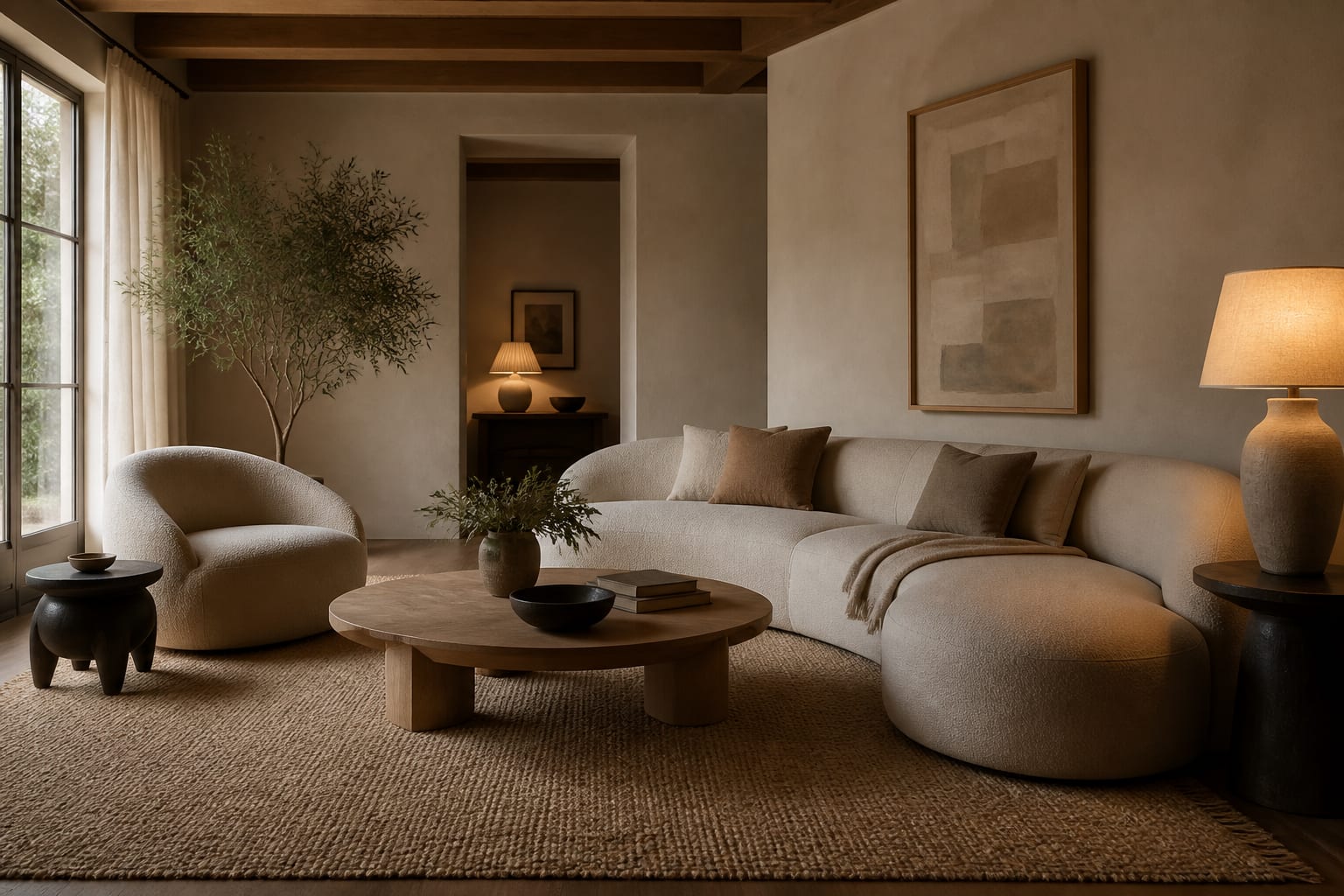
AI organic modern interior design succeeds when the prompt specifies real materials and physical scale, not just a soothing mood. Image tools handle curved sofas, arched mirrors, plaster walls, and stone tables well, but default to sameness: every surface pale, round, and unlived-in. Naming wood species, stone types, textiles, and one dark accent fixes this and produces a room with actual weight.
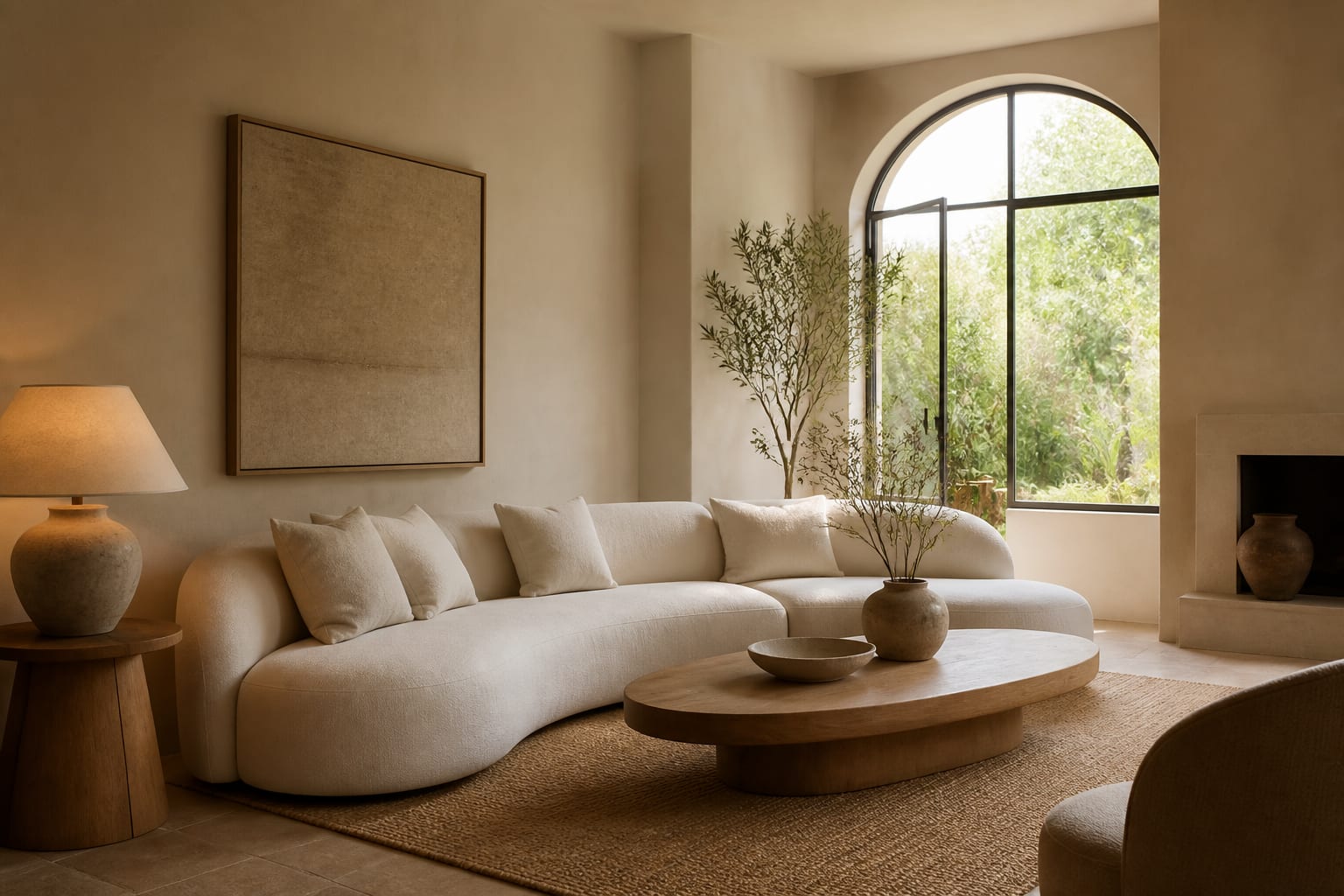
How well does AI reproduce organic modern interior design?
AI handles the style well once given a clear palette, believable scale, and a rule against empty minimalism. It understands arched mirrors, curved sofas, slatted wood, boucle, linen, and oversized pottery on sight. The common failure is a showroom effect: everything cream and soft, with no one's charger, dog bed, or book in sight.
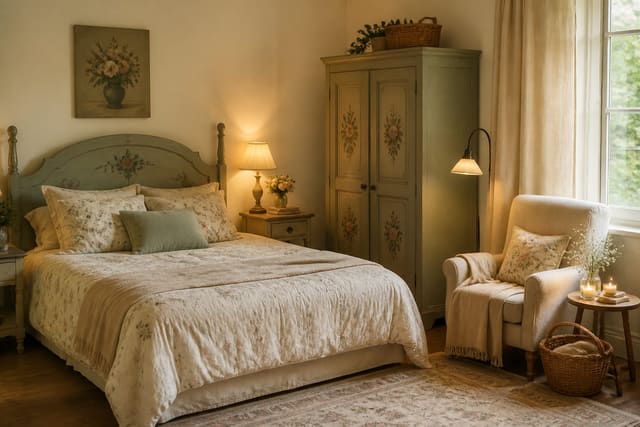
Strong renders create tension between smooth and rough — a clean sofa beside a raw-edge stool, a plaster wall behind a tailored bed, a veined stone lamp on a plain oak console. For the softer, more nostalgic end of natural design, compare results with lived-in cottagecore AI room design; cottagecore tolerates more pattern, while organic modern should stay edited and sculptural. Quiet asymmetry also matters: an off-center branch, a slightly irregular stone table, two unmatched lounge chairs — composed, not mirrored.
Which organic modern ideas are worth previewing first?
Start with choices that change the room from the doorway, not small accessories.
- One curved anchor. Test an 82–90" rounded sofa, a 30–34" barrel chair, or a 48–56" curved headboard before adding smaller sculptural pieces.
- A large textured rug. An 8x10 rug grounds most living rooms better than a 5x7; get the front seating legs on it by at least 6 inches.
- Stone in one visible zone. A travertine coffee table, honed marble lamp, or ceramic side table beats scattering five tiny stone accessories.
- Wood carrying the warmth. Put white oak, ash, or walnut into one substantial piece: a 60" console, 72" dining table, or 24" nightstands.
- Full-length, relaxed window treatments. Hang linen or woven panels 4–8 inches above the casing so they meet the floor cleanly.
- One darker note. A blackened bronze lamp, charcoal vessel, or tobacco leather chair keeps the neutral palette from going flat.
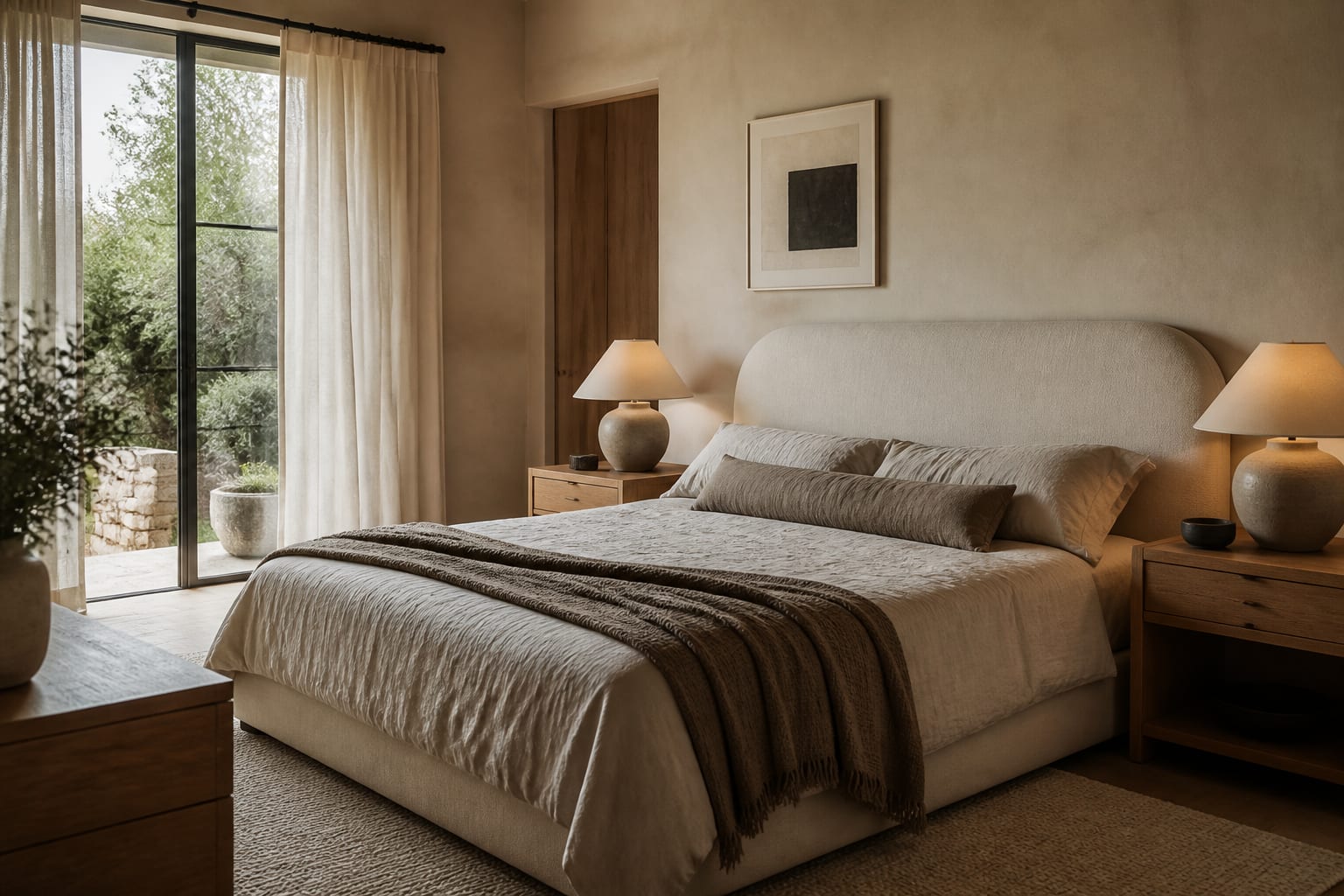
Beige isn't the mistake — asking beige to do every job (color, texture, warmth, contrast) is.
Where AI renders usually get organic modern wrong
Over-rounding. A crescent sofa, arched cabinet, blob table, round mirror, and scalloped rug together look like a showroom trying too hard. Pair one curve with straighter pieces, like a rectangular console or squared lounge chair.
Fake material richness. A render may show flawless plaster and hand-thrown ceramics in a rental with vinyl flooring. Translate the mood instead: limewash-effect paint, a woven shade, a stone-look lamp, a wool rug, a freestanding oak cabinet 14–18" deep.
Confusing organic modern with a spa. Homes need surfaces for keys, laptops, and pets. Leave a side table at least 16" wide near every seat rather than letting the render erase storage.
Cold lighting. Natural materials lose warmth under blue-white bulbs. Use 2700K in living rooms and bedrooms, and 3000K only where task light matters — kitchens, desks, vanities.
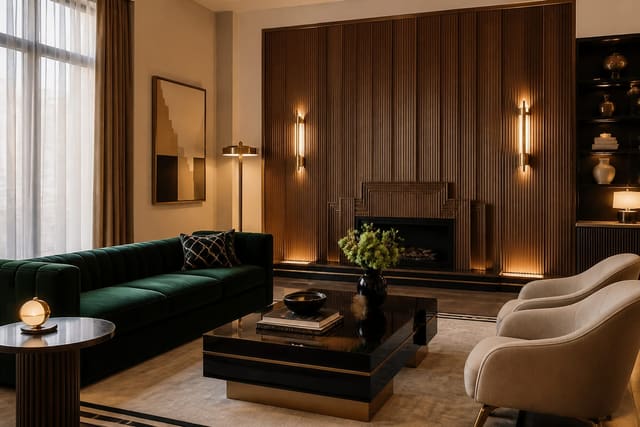
Wrong kind of glamour. Glossy black lacquer, fan motifs, and brass grids signal AI art deco interior design, not organic modern, which wants quiet mass over decorative shine.
How do I use AI to test natural materials before buying?
Upload a straight, well-lit photo showing floor, ceiling, windows, and doorways. Add a second angle if there's a fireplace, radiator, sloped ceiling, or off-center opening the AI could otherwise hide.
Try a living room prompt like: "Organic modern living room using the existing oak floor and 8-foot ceiling, curved 84-inch linen sofa, white oak coffee table, 8x10 wool rug, honed stone lamp, woven shades, warm 2700K lighting, one dark bronze accent, no fake fireplace." For a bedroom: "Organic modern bedroom, warm plaster-look walls, rounded 52-inch headboard, 26-inch oak nightstands, linen bedding, stone table lamps, full-length curtains, clay and mushroom palette."
Run separate versions — warm plaster, darker walnut, lighter coastal oak, clay-toned minimalism — instead of one overloaded prompt. If the best image only works because the AI invented taller windows or a wider room, keep the mood and reject the plan.
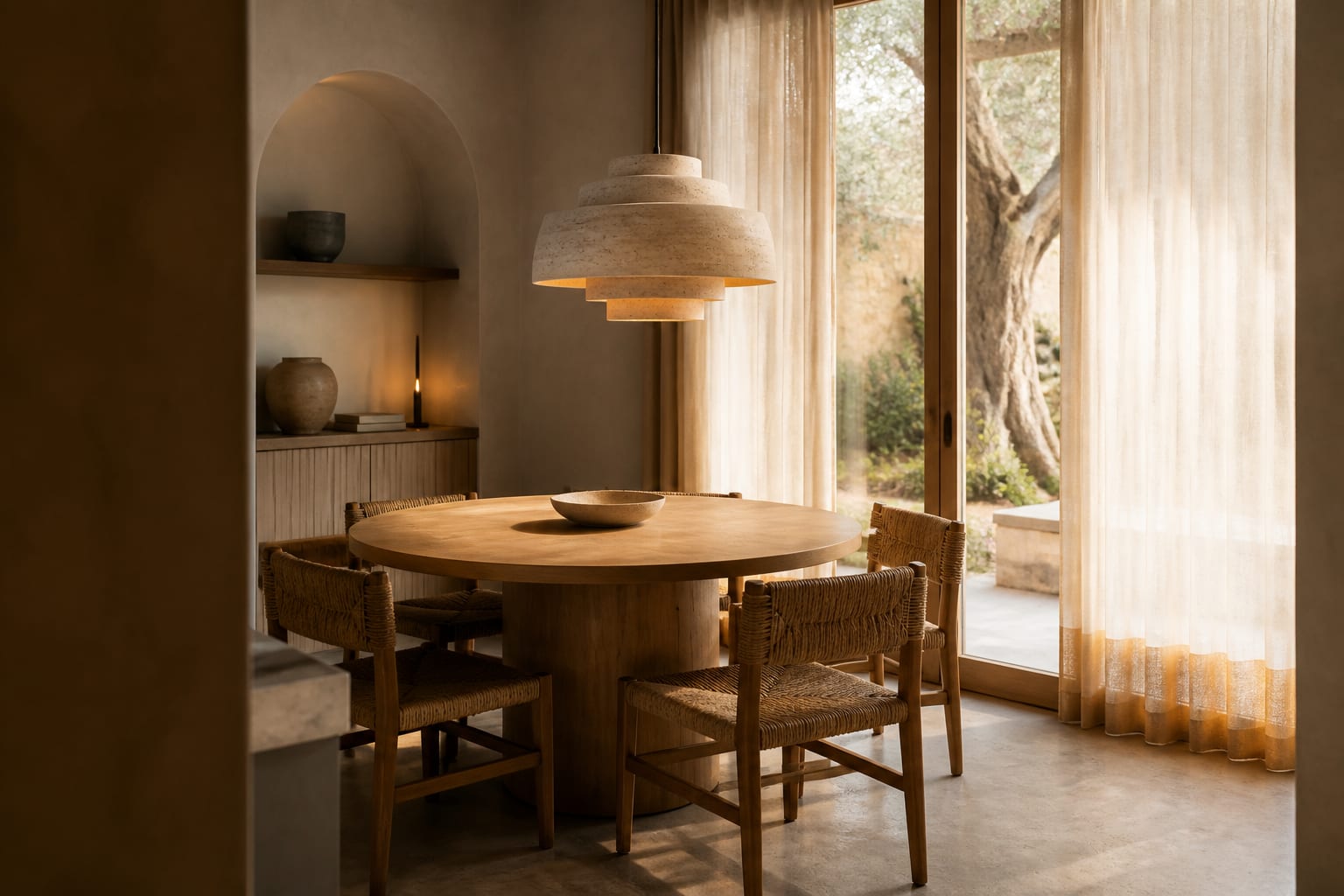
How do I turn the winning render into a real room?
Lock five decisions before shopping: anchor curve, wood tone, stone or ceramic moment, textile texture, and contrast note.
For a living room, start with the largest soft piece and the rug — choose linen weave, wool blend, or a fabric with visible slub instead of flat pale upholstery. Keep 16–18" between sofa and coffee table, with at least 30" clear for walking through.
For a bedroom, the headboard and lamps set the mood. A rounded 50–56" headboard softens a plain wall without an arched paint treatment behind it; pair it with 24–30" oak or walnut nightstands and stone or ceramic lamps.
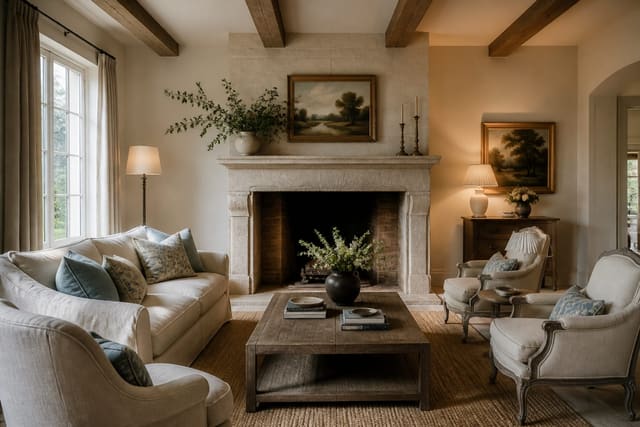
For dining spaces, table mass matters most. A 42–48" round table suits compact breakfast areas; a 72" rectangular table needs room for chairs to pull back freely. If the palette drifts rustic instead of sculptural, compare it against AI French country design ideas before buying carved wood or checked fabric.
The final test is ordinary life: does the room still look good with mail on the console or a laptop on the table? Organic modern should feel calm because the materials are strong, not because the render erased anything inconvenient.
Frequently Asked Questions
Does AI organic modern design always look too beige?
Only when the prompt asks for a mood instead of materials. Adding named woods (oak, walnut), stone (travertine, limestone), and one darker accent color like bronze or charcoal prevents the flat, beige-on-beige look that generic prompts produce.
How many curved pieces should an organic modern room have?
One or two major curved pieces — a rounded sofa or an arched headboard — is enough. Curving every chair, mirror, lamp, and cabinet at once makes the room look artificial and showroom-like rather than intentionally soft.
What's the difference between organic modern and cottagecore in AI renders?
Organic modern stays edited and sculptural with a limited palette and one curved anchor piece. Cottagecore tolerates more pattern, clutter, and nostalgic detail. See AI cottagecore room design for the softer, collected version.
Should I upload my actual room photo for an organic modern render?
Yes. A straight, well-lit photo showing your floor, ceiling, and windows keeps the AI honest about scale. Without it, renders often invent taller windows or wider rooms, which makes the design impossible to recreate in real life.
What light temperature works best for organic modern rooms?
Use 2700K bulbs in living rooms and bedrooms to keep natural materials looking warm. Save 3000K for task-heavy zones like kitchens, desks, or vanities where slightly clearer light is more useful.