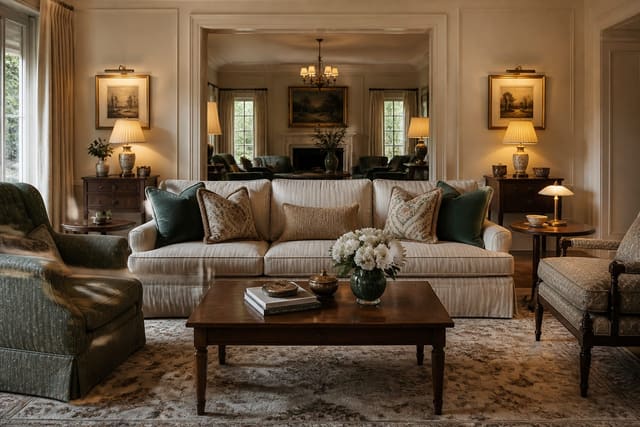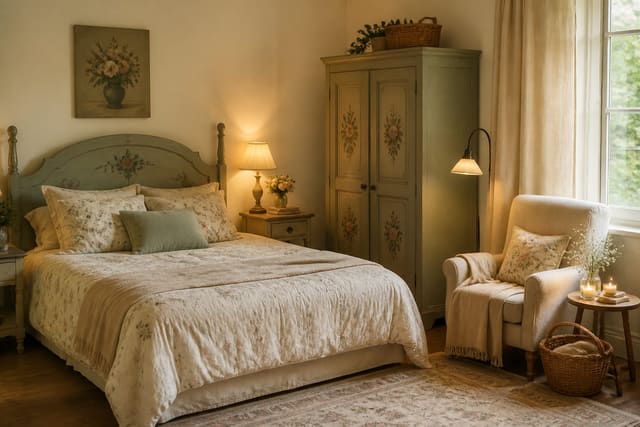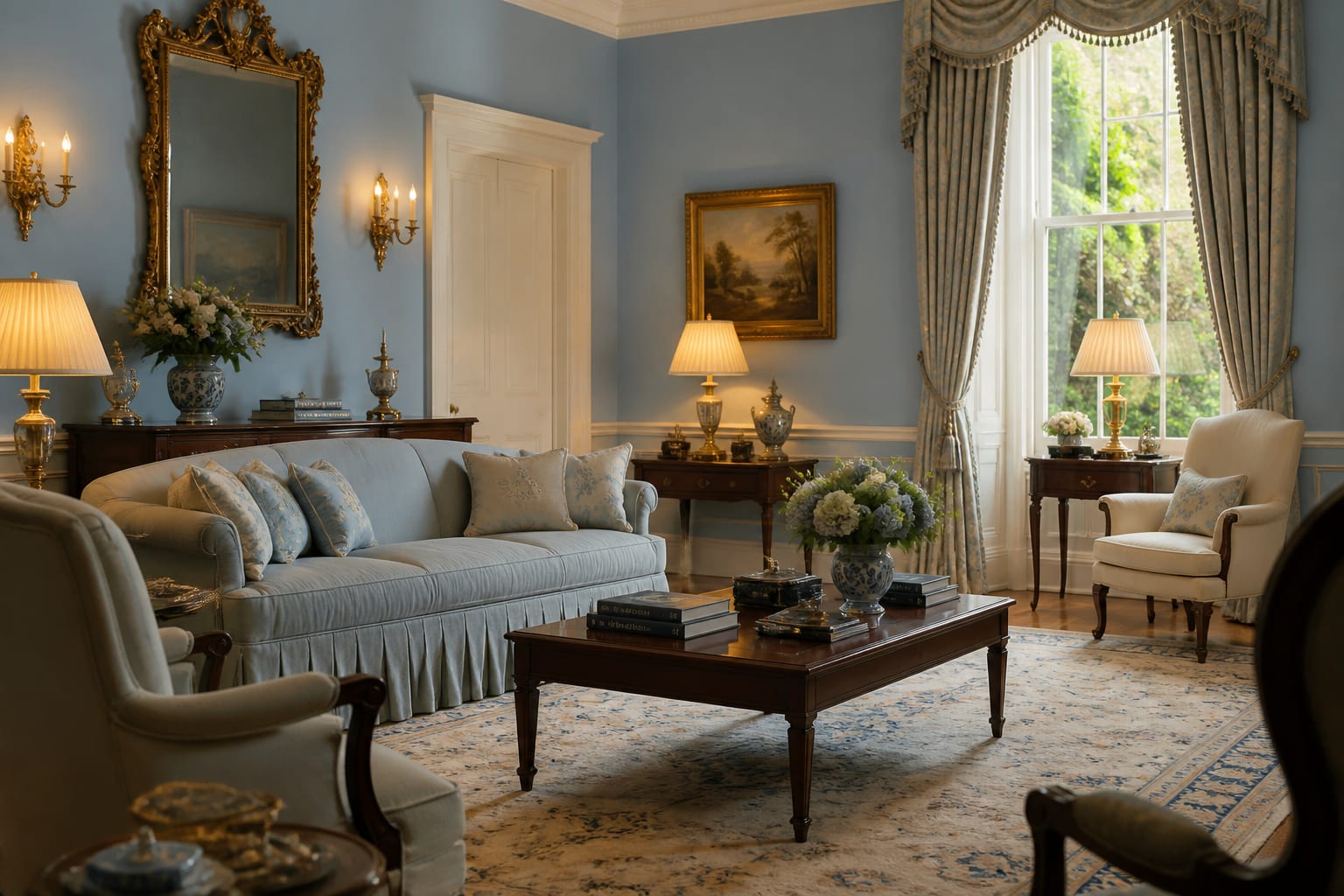
AI Regency-core room design succeeds when prompts call out symmetry, pale color, gilded accents, classical trim, and realistic furniture scale rather than vague "royal decor." Feed the tool a straight-on photo of your actual room, architecture and all, then test wall color, drapery height, rug size, and lighting temperature in separate passes. That process reveals whether your space can carry Bridgerton-inspired romance without turning into a costume set.
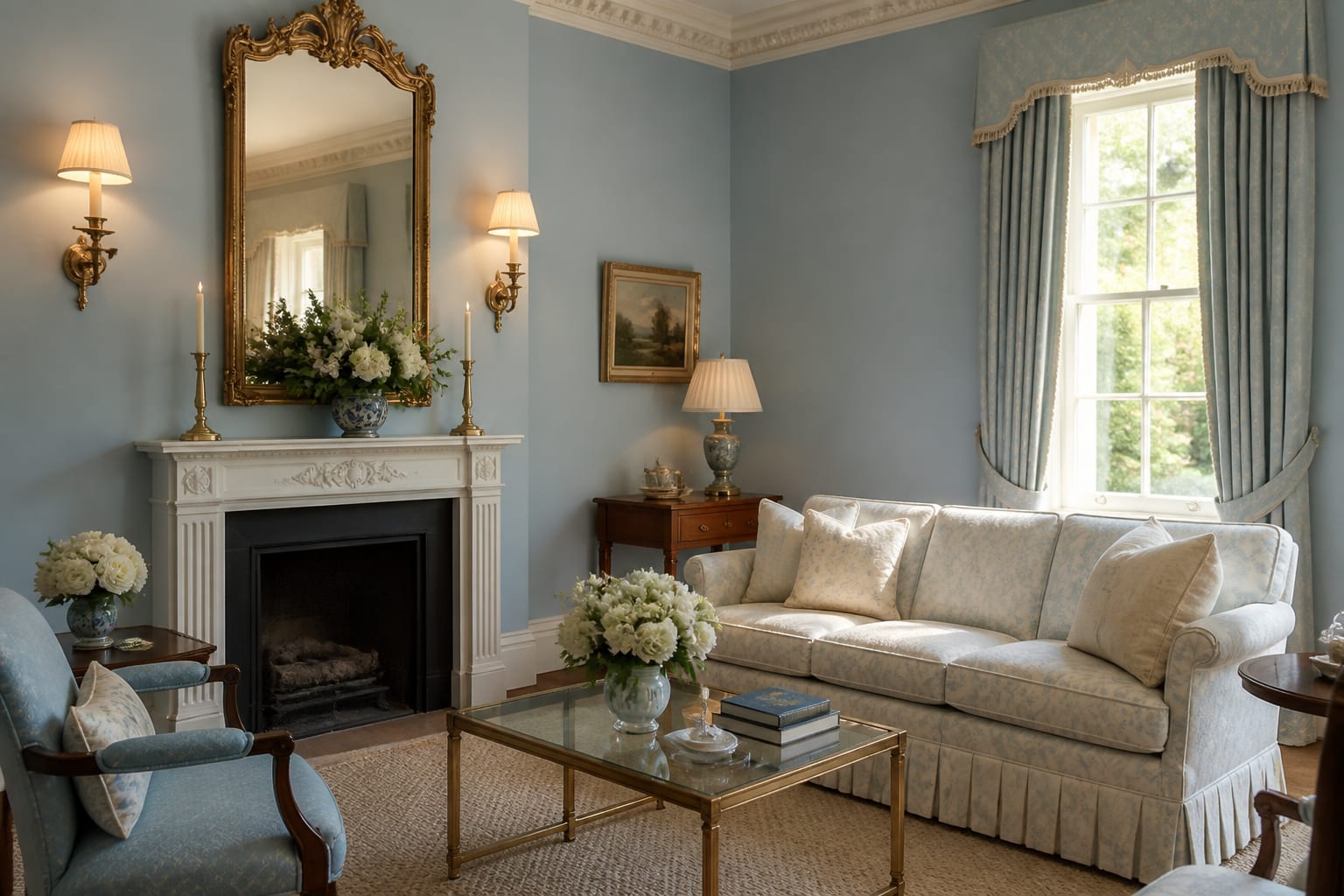
Can AI actually pull off a convincing Regency-core look?
Yes, if the image targets period-inspired composition instead of generic luxury. A useful preview shows whether pale walls, formal balance, upholstered seating, antique-look wood, brass light, and decorative trim can sit in your room without looking like a rental costume.
Real architecture matters. Tall windows, a fireplace, crown molding, or a central chandelier accept Regency drama more easily than a boxy rental with vinyl floors and a flush mount. A plainer room just needs more restraint in the prompt: removable picture-frame molding, a skirted sofa, a 2700K table lamp, one large classical mirror, and curtains hung 6 to 10 inches above the casing where hardware is allowed.
For deeper style background, see the Regency-core interior design guide. The AI image should test whether the room can hold romance and symmetry, not invent a new history for it.
Regency-core has a stricter backbone than cottagecore or casual traditional style: it favors pairs (two sconces, two chairs, two lamps) and a strong center line, usually a mantel, bed, sofa, or dining table. Without a center, the layout falls apart fast.
Which Bridgerton-inspired ideas are worth testing first?
Run each idea as its own AI preview instead of one giant makeover, changing one design move at a time so you can judge what actually helps.
- Pale wall color. Blush, celadon, buttercream, or warm ivory gives Regency-core its softness; test the paint next to your real floor and sofa since cool blue can turn icy under a 4000K bulb.
- One oversized mirror. A gilded or carved mirror 36 to 48 inches wide reads more convincing than several small ornate frames.
- Floor-length pleated drapery. Mount rods 6 to 10 inches above the casing for height, but don't cover trim just to chase length.
- A skirted sofa or camelback settee. Keep the silhouette period-correct and the fabric modern: performance linen or cotton velvet over silk if kids or pets live there.
- A classical rug sized to the furniture. Use 8x10 in compact rooms and 9x12 when the sofa and chairs need to sit on the rug.
- Brass lighting at eye level. A pair of sconces around 60 to 66 inches high or two 2700K table lamps beats one cold overhead fixture.
- One modern break. A plain linen shade, simple coffee table, or clean-lined cabinet keeps the ornate pieces from feeling airless.
For a softer comparison, see AI cottagecore room design; cottagecore tolerates looseness, Regency-core wants symmetry.
Which colors, trim, and textiles keep the room from feeling like a costume?
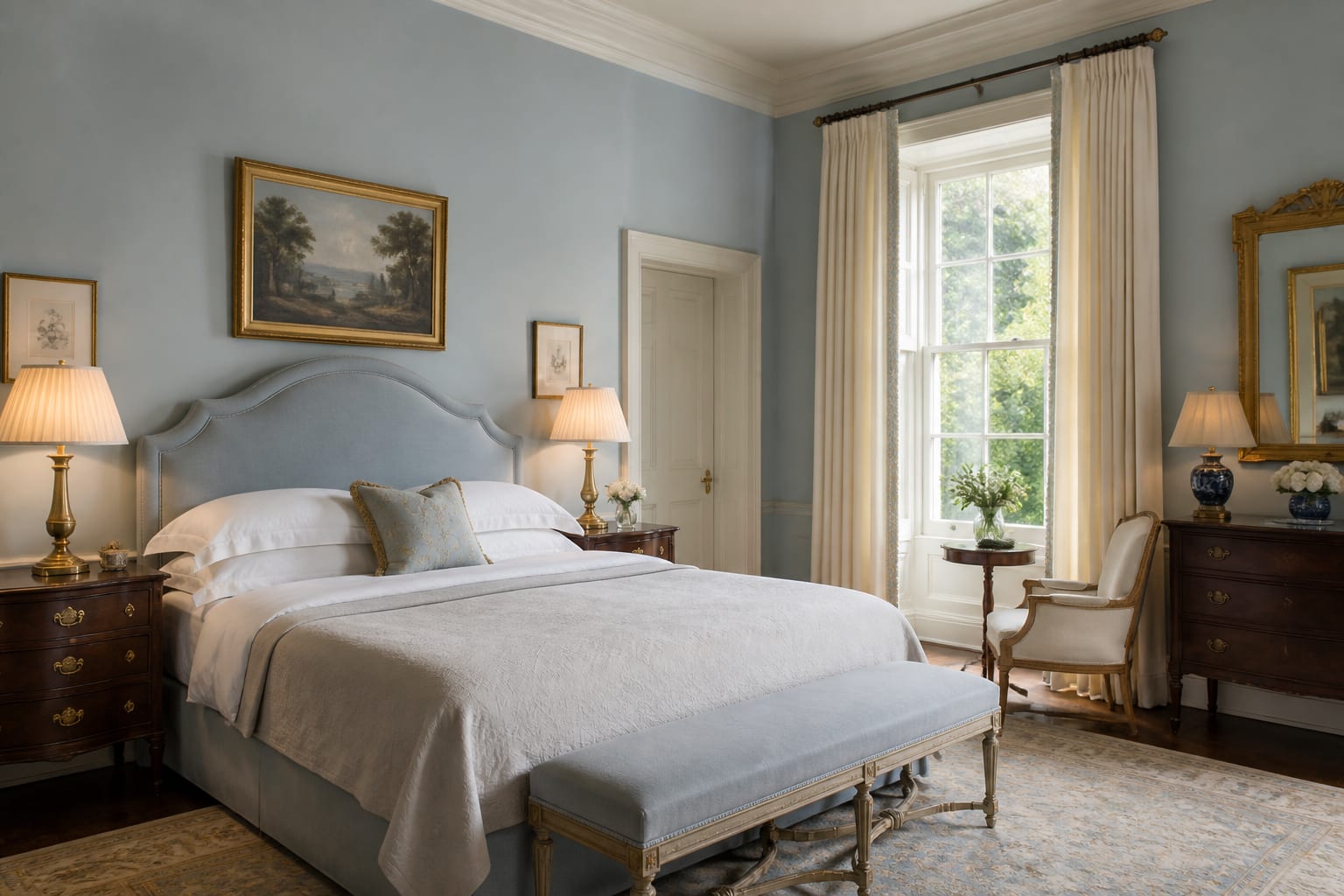
Edit the palette to one pale main color, one warm neutral, one metal finish, and one deeper accent, such as powder blue walls, ivory upholstery, brass, and burgundy or olive notes in art and pillows.
Trim should relate to wall size, not float like a sticker. On an 8-foot ceiling, narrow molding and modest spacing beat oversized panels copied from a palace. Renters can test removable molding, but keep the profile slim enough to clear baseboards and window casing.
Textiles decide whether the room feels romantic or theatrical. Save velvet for one chair, bench, or two pillows, and balance it with cotton, linen, wool, and cane; a room full of brocade reads staged. Furniture scale matters too: a carved 19-inch chair works next to a modern sofa but looks abandoned across from a deep sectional. If your home already leans traditional, AI traditional interior design can help blend inherited wood pieces with new upholstery.
How do you use AI to preview the drama before committing?
Upload a straight photo from the main doorway or seating position that shows windows, ceiling line, floor, largest furniture, and awkward corners. A close-up of the mantel won't tell you whether the sofa, rug, mirror, and curtains work together.
Try a prompt like: redesign this 12x14 foot living room in restrained Regency-core style with pale blue walls, removable picture-frame molding, an 84-inch skirted sofa, two carved side chairs, a 9x12 traditional rug, brass lamps at 2700K, tall ivory drapery, one gilded mirror, no new windows or fireplace changes, and 36-inch walking paths.
Generate three versions: pale and romantic, warmer with cream and walnut, and more dramatic with deep green or burgundy. Check the same details each time: does the rug fit, do drapes clear the radiator, does the mirror overwhelm the sofa, and does the room still look livable on a Tuesday. Reject any fantasy architecture AI adds, like a marble mantel or carved ceiling, and keep only the mood.
What mistakes make Regency-core look theatrical instead of elegant?
Quantity kills the style faster than anything else. A matching set of ornate furniture reads like a showroom; mix one or two period silhouettes with quieter modern pieces instead.
All-gold finishes flatten the effect, too. Brass and gilt need matte paint, aged wood, and shadow to look grounded, not shiny everywhere. Ignoring ceiling height also backfires: an 8-foot room needs slimmer drapery, lower-profile lighting, and wall sconces instead of oversized chandeliers.
An all-pastel palette can feel sweet rather than sophisticated, so add one grounding note like walnut, mahogany, olive, or charcoal. Finally, treat the AI preview as a measuring tool, not a shopping list. Confirm sofa length, chair depth, rug size, curtain rod width, mirror height, and outlet access before buying anything.
Frequently Asked Questions
Does Regency-core work in a small apartment?
Yes, if you scale back ornament rather than furniture size. Use one statement piece, like a mirror or chandelier, pale wall color, and a properly sized rug; avoid matching furniture sets and oversized drapery that overwhelm a small footprint.
How much velvet is too much for Regency-core?
Limit velvet to one chair, a bench, or two pillows. Covering a sofa, drapery, and multiple chairs in velvet at once tips a room from romantic into theatrical, especially under warm lighting.
Can renters do Regency-core without permanent changes?
Yes. Removable picture-frame molding, curtain rods that don't require drilling into trim, plug-in sconces, and a large freestanding mirror deliver most of the look without violating a lease.
What lighting temperature suits Regency-core rooms?
Use 2700K bulbs in brass or antique-gold fixtures. This warm temperature supports the pastel palette and gilded accents; cooler bulbs around 4000K can make pale blue or celadon walls look flat and clinical.
How do I keep Regency-core from looking like a costume set?
Mix only one or two period-inspired furniture silhouettes with modern, quieter pieces, cap velvet and gold at one or two accents, and add a grounding dark tone like walnut or oxblood so the pale palette has contrast.