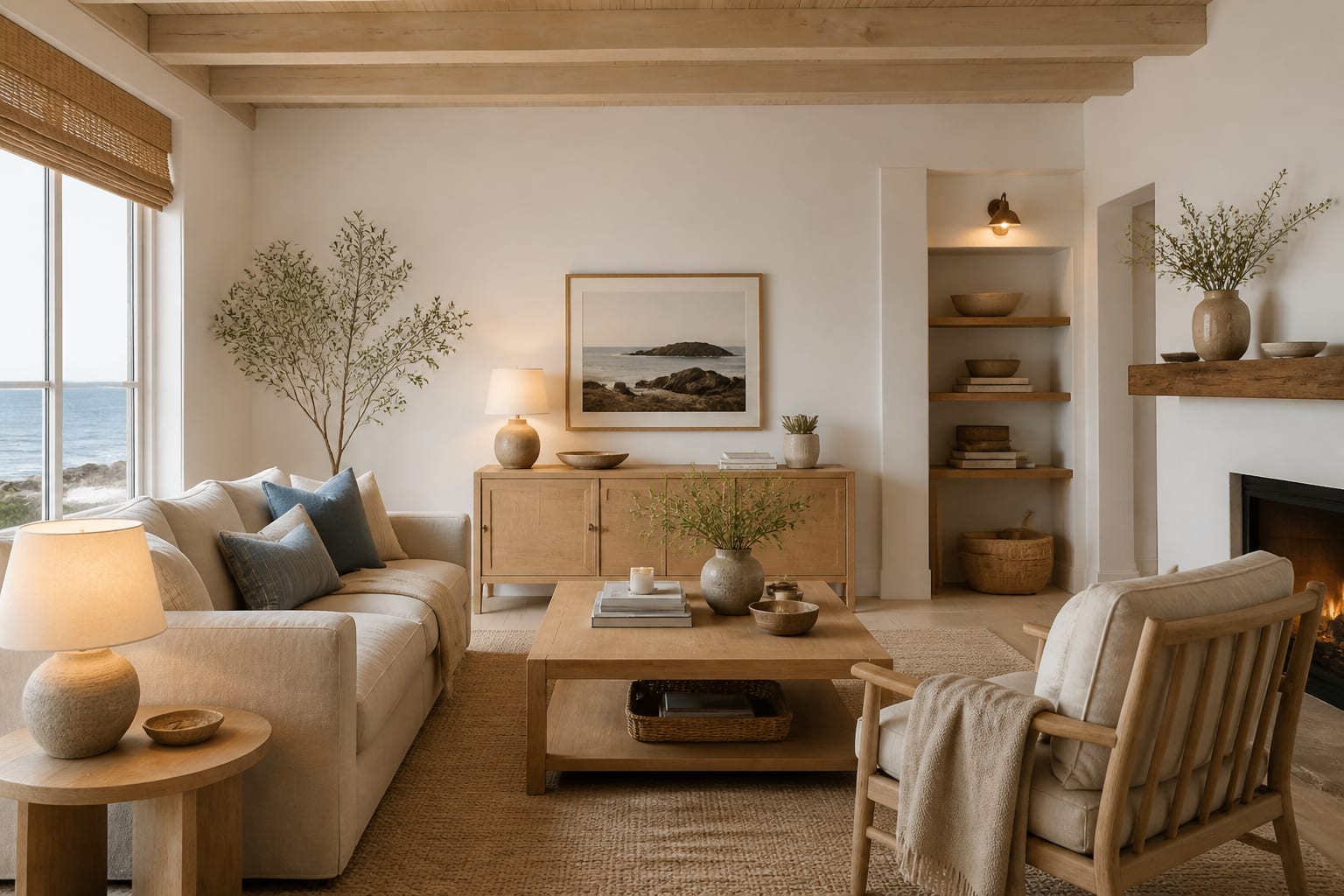
AI scandi coastal design works when the prompt leans about 70 percent Scandinavian discipline and 30 percent coastal looseness: pale oak furniture, linen and wool textiles, woven shades, and one restrained blue or sand color story. The best previews keep your room's real proportions intact, so the result reads as a livable home rather than a staged beach rental.
Can AI produce a Scandinavian-coastal fusion interior design?
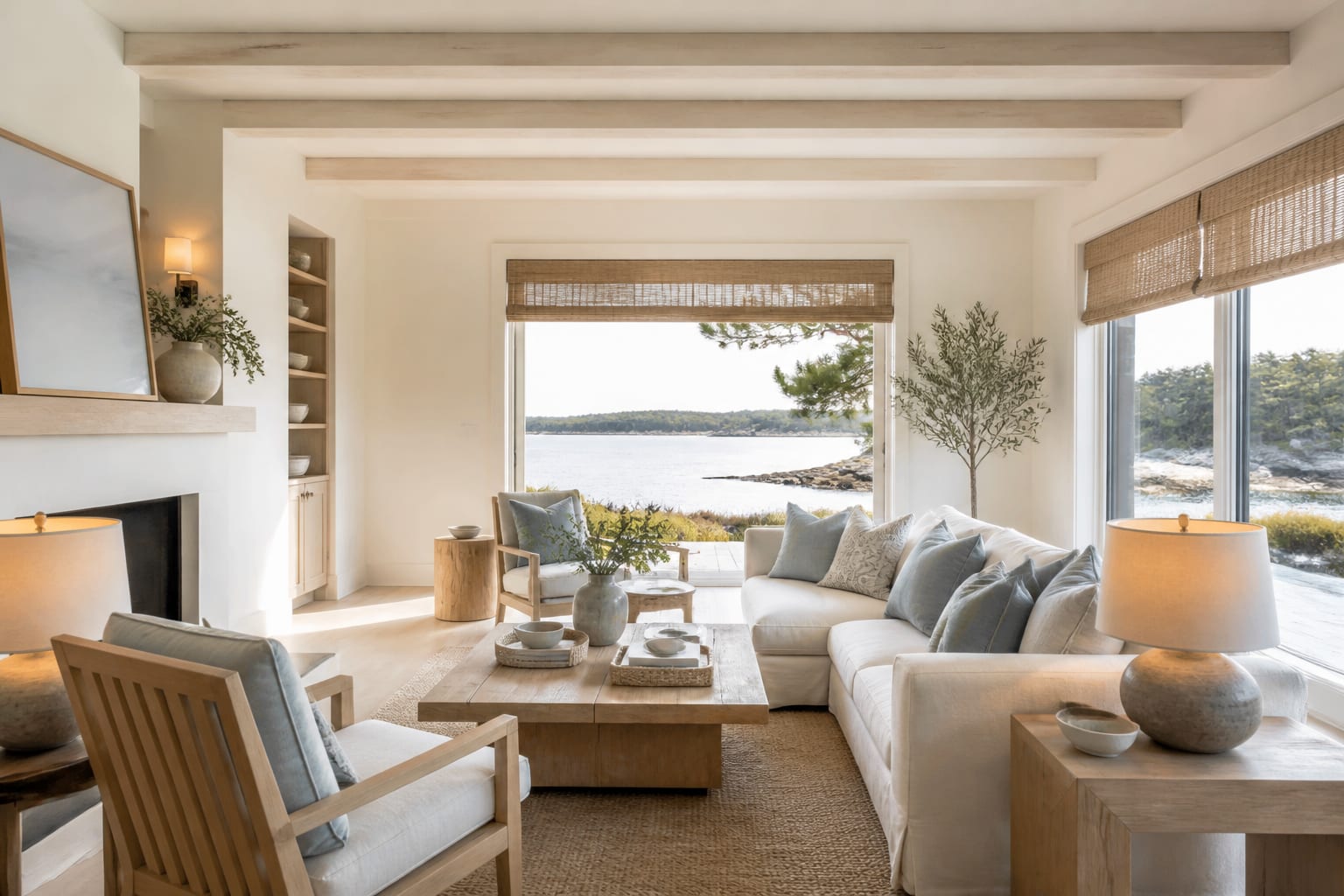
AI understands the visible ingredients of this fusion: white oak, pale walls, linen sofas, woven pendants, muted blue textiles, jute, rattan, and airy window treatments. What it doesn't grasp without guidance is restraint.
A vague prompt like "make it coastal Scandinavian" often produces stripes, rope mirrors, surf prints, and furniture too thin to feel permanent. A better prompt sets hierarchy: keep the room mostly Scandinavian through clean lines, light wood, and low clutter, then add coastal softness through linen, woven texture, and muted blue.
If your preview turns floral and storybook instead, compare it with AI cottagecore room design ideas. Cottagecore handles romance; Scandi-coastal needs air and light.
Which ideas should you preview first?
- Use pale wood as the main structure: an oak console, table, or 28-inch nightstands should land before baskets and ceramics.
- Choose linen upholstery for texture, not theme: an 84-inch linen sofa or slipcovered chair adds comfort without clutter.
- Add woven texture at the window or ceiling: bamboo shades or an 18 to 24 inch rattan pendant warm a plain white room.
- Use blue in one dose: a dusty blue pillow pair or slate-blue rug border beats navy stripes everywhere.
- Size the rug generously: an 8x10 rug outperforms a 5x7 when seating legs can sit on it by at least 6 inches.
- Keep one darker anchor, like a bronze lamp or charcoal bowl, so the palette doesn't float away.
The result should feel like sea air entered a Nordic room, not like a beach aisle opened inside a Scandinavian store.
Where should the style lean Nordic vs. coastal?
The shell should lean Nordic: clean furniture, calm walls, honest storage, uncluttered circulation. The coastal layer belongs in touchable pieces: curtains, rugs, shades, throws, and a few weathered finishes.
In living rooms, start with a clean sofa shape and simple storage 14 to 18 inches deep. Leave 16 to 18 inches between sofa and coffee table and keep about 30 inches clear for the main walking path. A pale sofa with a blue-gray rug, oak table, and ceramic lamp usually reads more expensive than a room full of coastal props.
Bedrooms take a softer balance: white oak bed, 52-inch linen headboard, 26 to 30 inch nightstands, cotton bedding, and curtains mounted 6 to 8 inches above the casing.
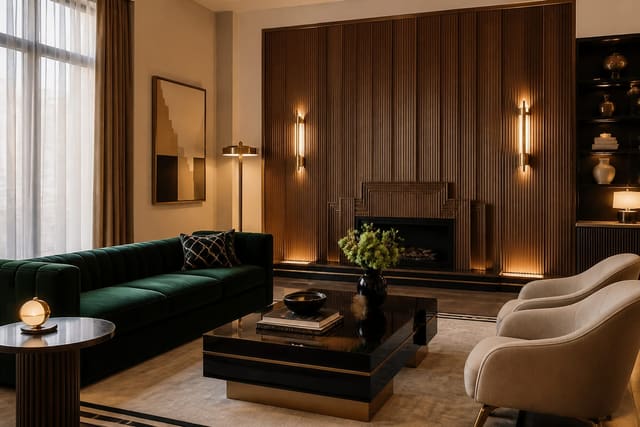
Dining spaces can lean Nordic through chair and table shape, then add ease with a woven pendant or pale blue cushions. If the AI adds glossy brass and theatrical symmetry instead, it has drifted into AI art deco room design concepts.
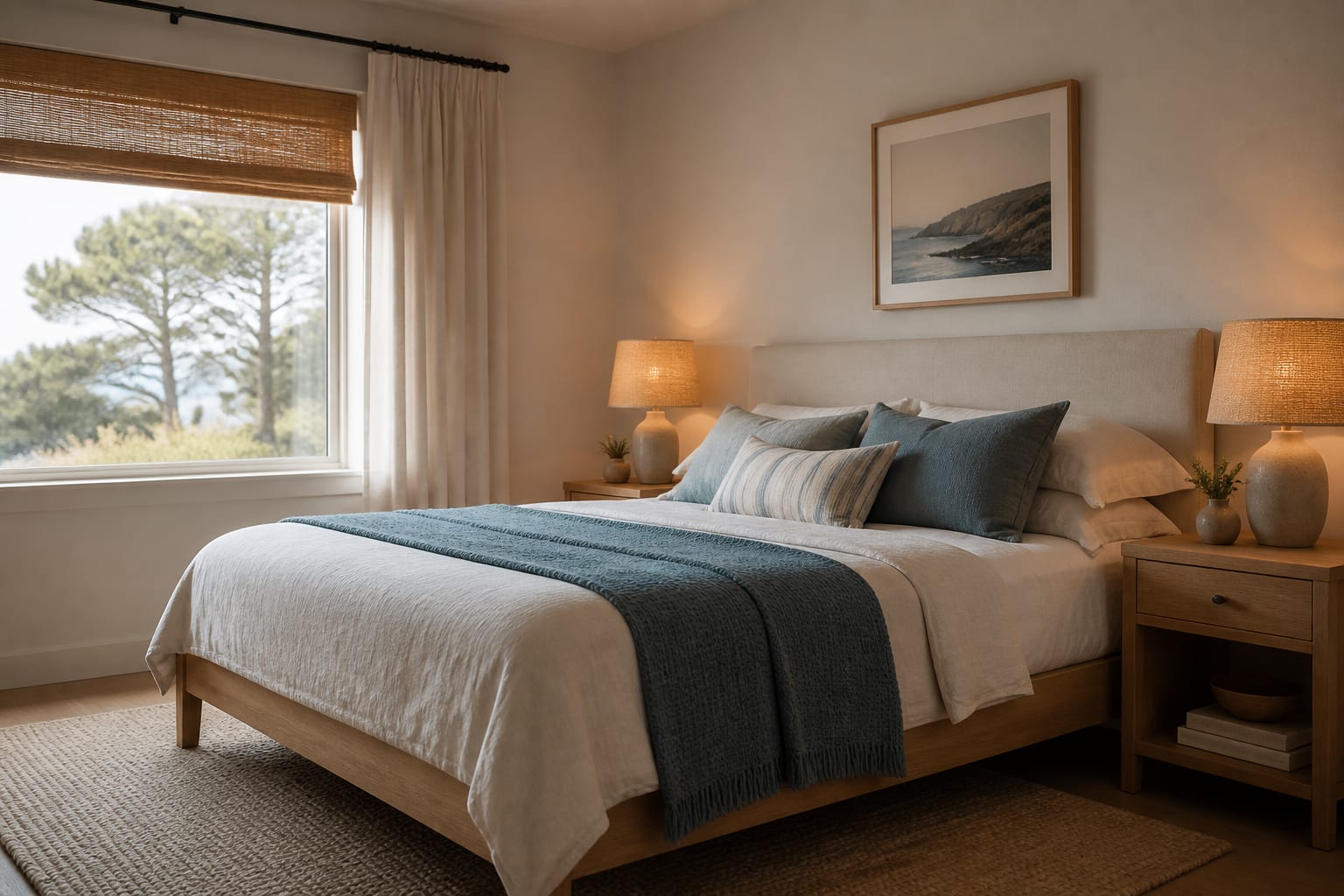
What mistakes make the room look thin?
- Confusing coastal with nautical. Rope, anchors, and shell decor turn a quiet room into a themed rental; use one sea reference and let material carry the rest.
- Making every surface pale. White walls, pale rug, and cream everything can vanish visually; ground it with smoked wood, dark bronze, or slate blue.
- Furniture too delicate for the room. A skinny coffee table and narrow chairs starve the space; anchor with an 84 to 90 inch sofa or a 72-inch dining table.
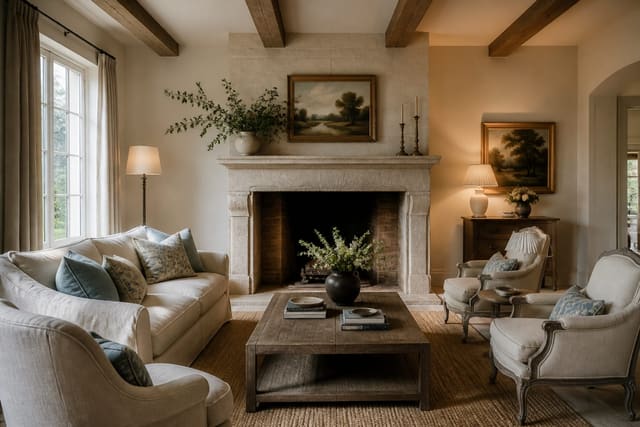
- Drifting into French country. Carved cream furniture, toile, and distressed chandeliers belong to a warmer, more ornate style; check AI French country design ideas if that's what's showing up.
How do you use AI to preview the fusion?
Photograph the room from the doorway with floor, ceiling, windows, trim, radiator, and existing furniture visible. A cropped shot won't teach the tool enough about proportion.
Run three versions from the same image: mostly Scandinavian (white oak, warm white walls, wool, quiet lighting), more coastal (linen, woven shades, sandy neutrals, dusty blue), and moodier (blue-gray, smoked oak, darker ceramics, warmer lamps).
A useful prompt: "Create a Scandi-coastal living room while keeping the existing 8-foot ceiling, oak floor, window size, and current sofa; add white oak storage, an 8x10 textured rug, linen curtains, woven shades, slate blue accents, ceramic lamps, warm 2700K lighting, and no nautical decor."
Judge previews by what repeats. If bigger rugs, paler wood, and softer window treatments keep working across versions, those are the real moves worth buying. If a preview only succeeds because it widened the room or replaced the floor, keep the mood but reject the plan.
How does the preview become a real room?
Translate the image into five decisions: wood tone, wall tone, lead textile, coastal color, and lighting temperature. Start with the biggest surface you're willing to change; rug, sofa cover, or storage cabinet in a living room, or headboard, bedding, and nightstands in a bedroom.
Don't buy a cart of small coastal objects before the architecture is settled. One woven shade line, one generous rug, one oak case piece, and one blue-gray accent will do more than a dozen decorative objects. Renters can get the mood with plug-in sconces, removable shades, and slipcovers; owners can test flooring or window replacements once the preview proves the balance.
A strong Scandi-coastal room should still work with shoes by the entry and a laptop on the table. If the AI result only looks good once ordinary life disappears, it is a vacation image, not a design direction.
Frequently Asked Questions
What's the right ratio of Scandinavian to coastal in this style?
Aim for roughly 70 percent Scandinavian structure to 30 percent coastal texture. Clean-lined oak furniture, calm walls, and simple storage should carry the room, while linen, woven shades, and one muted blue or sand accent add the seaside note. Equal parts of each style usually tips into a themed beach rental instead of a livable, calm home.
How do I stop AI from making the room too nautical?
Name what to avoid in the prompt: no rope, anchors, shells, or navy stripes. Ask for one sea reference at a time, carried through material like linen or woven rattan rather than decor objects. If stripes and beach art keep appearing, add "coastal atmosphere, not beach theme" directly to the prompt.
Can renters achieve this look?
Yes. Plug-in sconces, removable woven shades, freestanding oak storage, slipcovers, and a large rug deliver most of the Scandi-coastal effect without permanent changes. Test the look in an AI preview first so you know which pieces, like rug size, curtain color, or lamp tone, actually matter before buying anything.
Why does my pale Scandi-coastal room look washed out?
Too many pale surfaces at once, such as white walls, pale rug, pale oak, and cream accessories, flatten the room visually. Add one grounding note such as smoked oak, dark bronze, charcoal ceramic, or slate blue. A single darker anchor keeps the palette from floating away while still respecting the light, airy feel.
How is Scandi-coastal different from cottagecore or French country?
Scandi-coastal stays cleaner and more edited, using linen and pale oak instead of floral pattern or carved, ornate furniture. Cottagecore leans romantic and collected; French country is warmer and more pastoral with distressed finishes. Compare your AI preview against those styles if florals or gilded details start appearing instead of quiet texture.