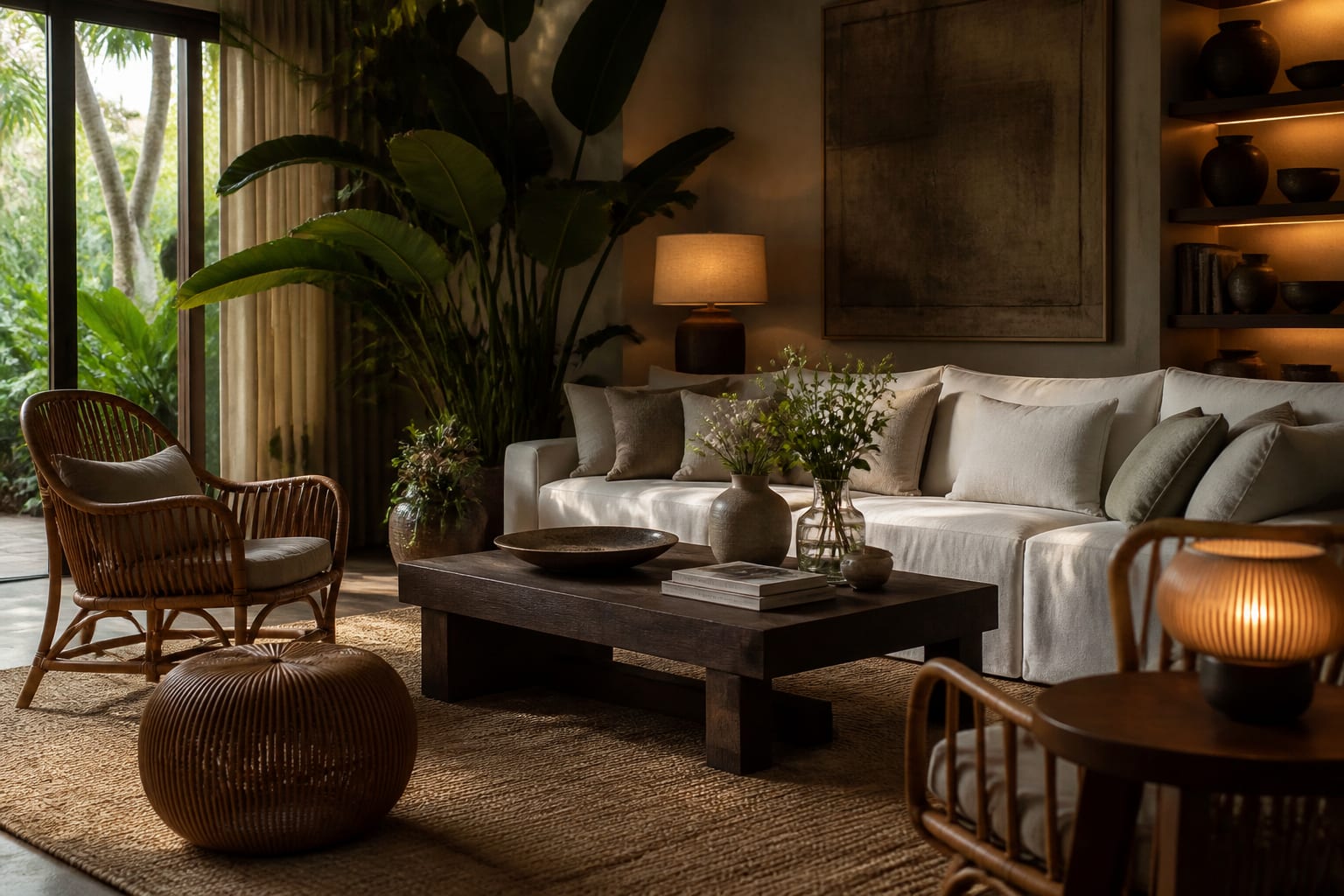
AI tropical interior design succeeds when you push the generator toward layered greens, natural texture, and restraint instead of resort clichés. The best results pair one large plant, warm wood, woven fiber, and warm 2700K lighting against a soft neutral palette. This guide shows how to get a lush, grown-up tropical room in any space.
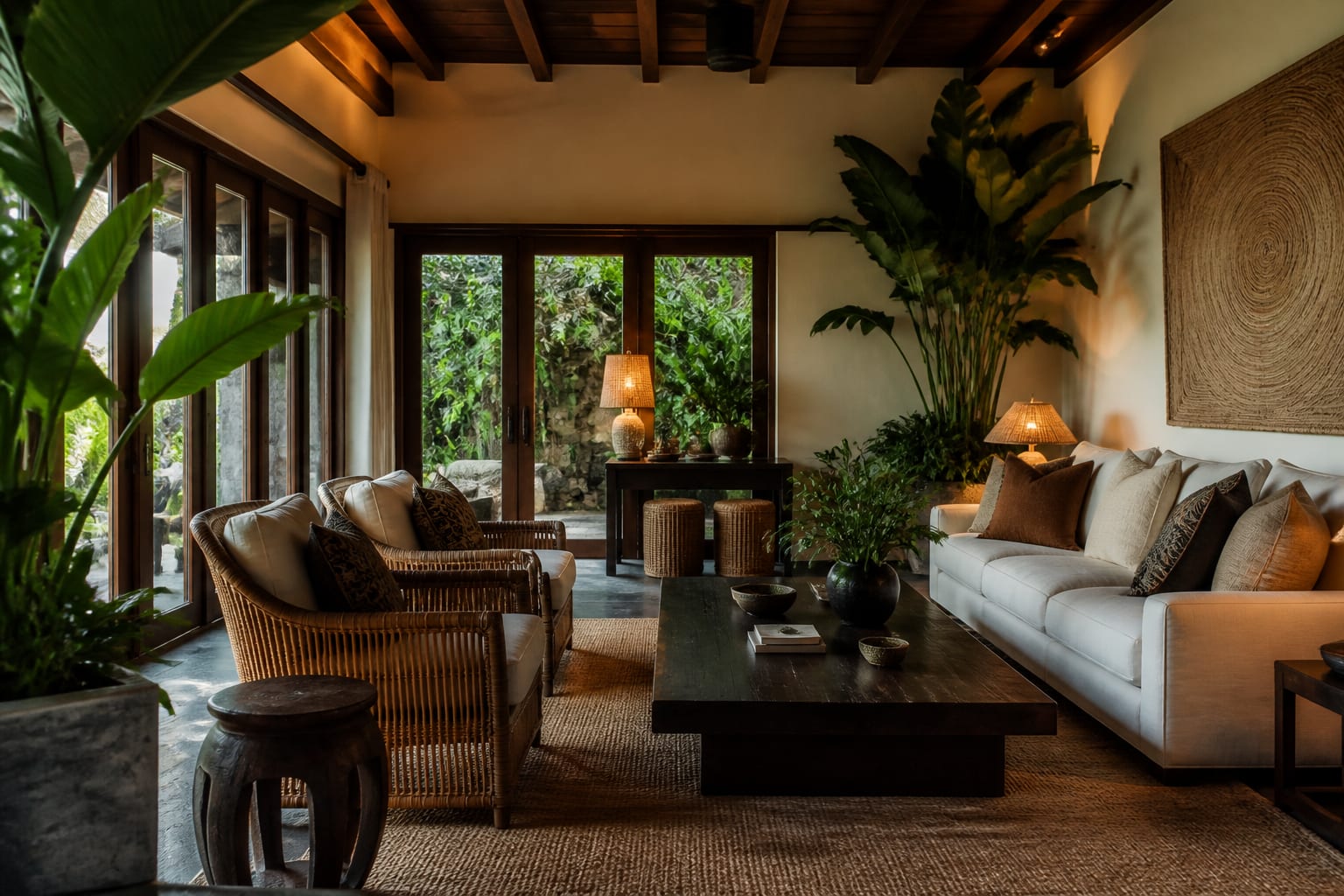
What Makes a Tropical Room Feel Lush Instead of Themed?
A tropical room feels lush when it suggests humidity, shade, texture, and growth rather than copying a hotel bar. Look for deep greens, tan or tobacco wood, woven fibers, linen, clay, and stone, with enough open space for each leaf shape to register.
Scale matters most: one 6-foot palm, fiddle leaf fig, bird of paradise, or monstera in a heavy planter beats eight scattered small pots. Texture carries the next layer—rattan, cane, bamboo, jute, sisal, seagrass, grasscloth, teak, mango wood, and linen—but let one or two lead rather than all competing at once.
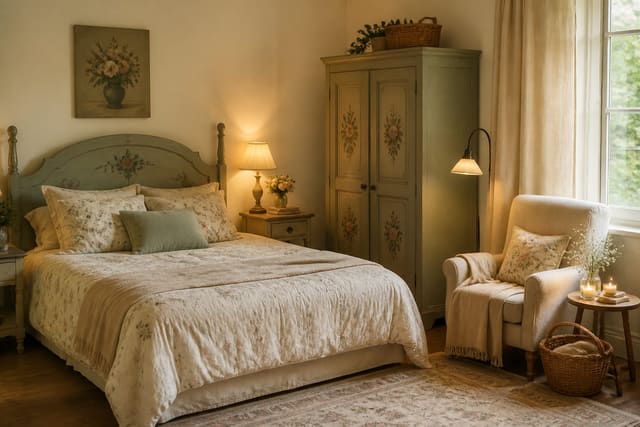
Color needs discipline too. The restraint that works in AI cottagecore room design applies here: abundance needs a frame, even when the palette shifts to green.
Seven Tropical Room Ideas Worth Testing First
- Anchor with one oversized plant. Choose something 5 to 7 feet tall near a bright window, in a planter roughly 14 to 18 inches wide.
- Warm the walls. Swap bright white for creamy plaster, sand, or pale clay so greens read warm, not harsh.
- Size the rug to the seating. Use an 8x10 for compact seating or a 9x12 so the whole group touches the textile.
- Add one dark wood piece. A teak table or walnut console gives weight against light linen sofas.
- Filter the light. Layer woven shades under linen panels mounted 6 to 10 inches above the casing.
- Limit pattern to one spot. One botanical pillow pair or print is enough; let plants and texture do the rest.
- Light warm and low. Use 2700K lamps and one accent light near a plant instead of relying on overhead brightness.
Which Palette Keeps Tropical Design Sophisticated?
Skip green-on-green. Pair deep leaf green with a sun-faded neutral and one earth tone—tobacco, terracotta, ochre, or dark olive.
In small or north-facing rooms, keep walls pale and let plants and wood carry the tropical note; a dark green wall can work in a dining nook but may feel heavy in a dim bedroom. Preview a green wall against green textiles before committing to paint.
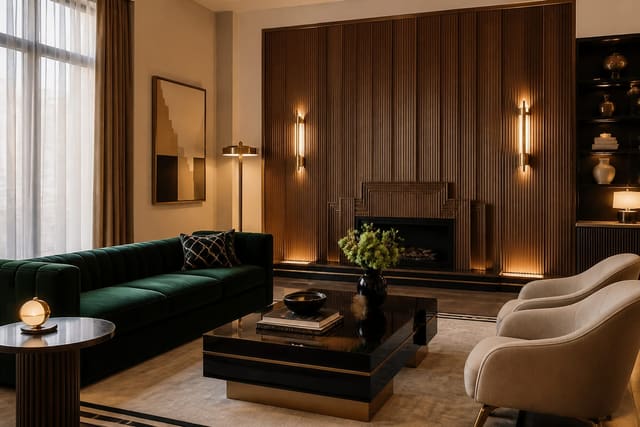
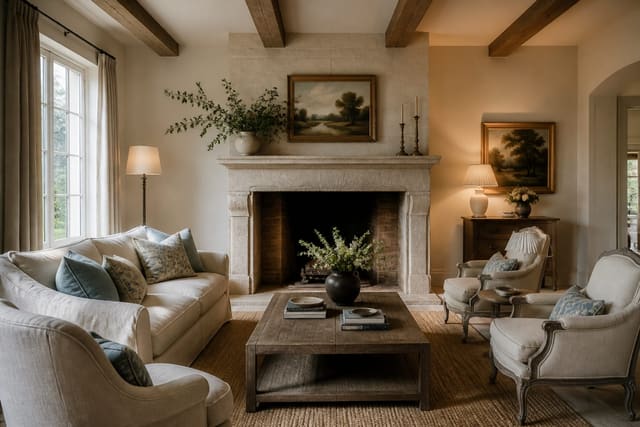
For a glamorous version, borrow the contrast logic from AI art deco room design but soften the shine—matte finishes and shaded lamps keep it from tipping into nightclub jungle. If you like antiques and linen, the quieter balance in AI French country design helps avoid over-decorating every surface.
How Do You Use AI to Test Tropical Restraint?
Upload a straight photo from the doorway or main seating position showing windows, floors, furniture, and ceiling height—cropped plant close-ups won't help the tool read the room.
A strong prompt: redesign this 12x15 foot living room in restrained tropical style with a cream linen sofa, one 6-foot bird of paradise, a cane cabinet, an 8x10 jute rug, warm wood coffee table, woven shades, 2700K lamps, no palm-print wallpaper, and 36-inch walking paths.
Generate three versions—leafy and dramatic, quiet and resort-like, warmer with darker wood—then judge the whole room: sofa depth, plant size, rug edge, curtain height, and lamp placement, not just the prettiest corner.
What Tropical Design Mistakes Make a Room Look Kitsch?
Confusing tropical with themed is the top mistake—palms, cane, and botanical art should not all come from the same vacation aisle.
Too many small plants read as clutter; use fewer, larger plants in good planters, with one or two trailing plants for shelves. Novelty pattern on every surface flattens the look—keep one obvious botanical print and leave the rest plain or woven.
Ignoring light and humidity creates dead corners; put needy plants near real windows and reserve faux greenery for the darkest spots. Flimsy rattan looks charming in photos but sags in daily use, so buy well-built pieces for anything load-bearing.
When Is a Tropical Room Ready to Buy For?
The room is ready when it still feels tropical after you remove the gimmicks—no banana-leaf wallpaper, no pineapple objects, no ten plants blocking the path.
Confirm the big pieces first: sofa size, rug size, planter diameter, curtain height, lamp spots, and a clear route from door to window. Keep 30 to 36 inches on main paths and room to water large plants without rearranging furniture weekly.
Buy in this order: seating, rug, large plant and planter, wood or cane storage, lighting, window treatment, then art and pillows.
Frequently Asked Questions
What makes AI tropical interior design look sophisticated instead of themed?
Sophisticated tropical design relies on scale, texture, and restraint rather than novelty prints. Use one large plant, a few natural materials like rattan and linen, and a limited palette of deep green, warm neutral, and one earth tone. Avoid palm-print everything, pineapple decor, and too many small plants competing for attention.
How many plants does a tropical room actually need?
One large plant, 5 to 7 feet tall, usually does more than eight small ones scattered on shelves. Add one or two smaller trailing plants only where they soften a shelf or window. Oversized planters, 14 to 18 inches wide, help the plant read as furniture rather than clutter.
What lighting works best for a tropical living room?
Use warm 2700K bulbs in table lamps and one shaded floor lamp instead of a single overhead fixture. Filtered daylight from woven shades under linen curtains keeps the room shaded rather than blasted open. Add one accent light near a plant or textured wall for evening depth.
What size rug should I use in a tropical living room?
An 8x10 rug works for compact seating, while a 9x12 rug lets a sofa and chairs all touch the textile. Natural fiber rugs like jute or sisal reinforce tropical texture better than smooth synthetic weaves. Undersized rugs make tropical furniture look temporary rather than grounded.
How do I test a tropical redesign before buying furniture?
Upload a straight photo from the doorway, then prompt for restrained tropical style with specific plant size, rug size, wood tone, and lighting temperature. Generate a few versions—leafy and dramatic, quiet and resort-like, warmer with dark wood—and compare clearances and furniture scale, not just style. Confirm walking paths stay 30 to 36 inches before shopping.