AI can produce genuine AI warm minimalist interior design, but only when the prompt defines restraint as a material strategy, not a color absence. Give it wood tone, texture, lighting temperature, furniture scale, and a hard clutter limit, and it stops generating beige furniture waiting for a person to arrive.
How well can AI handle warm minimalism?
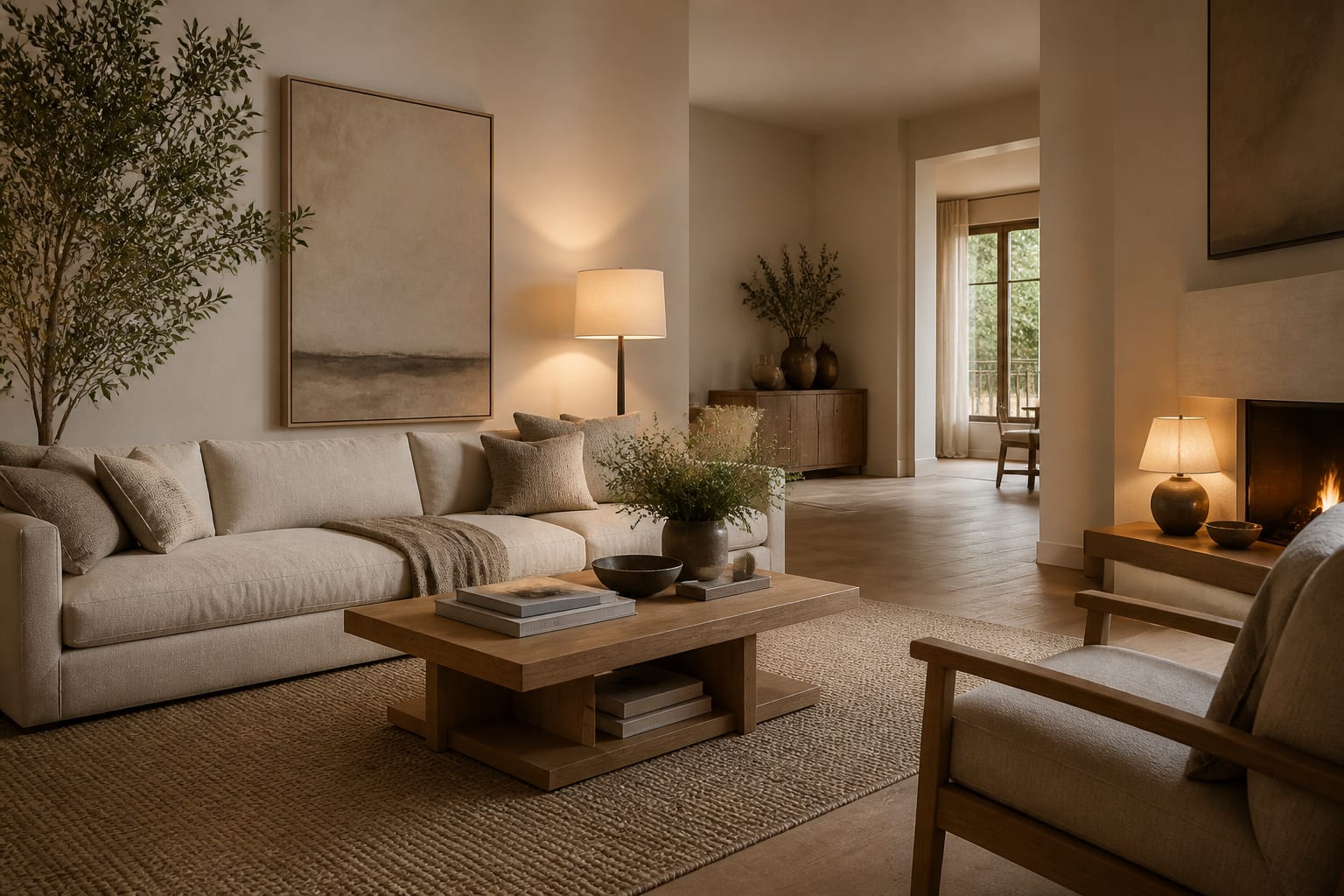
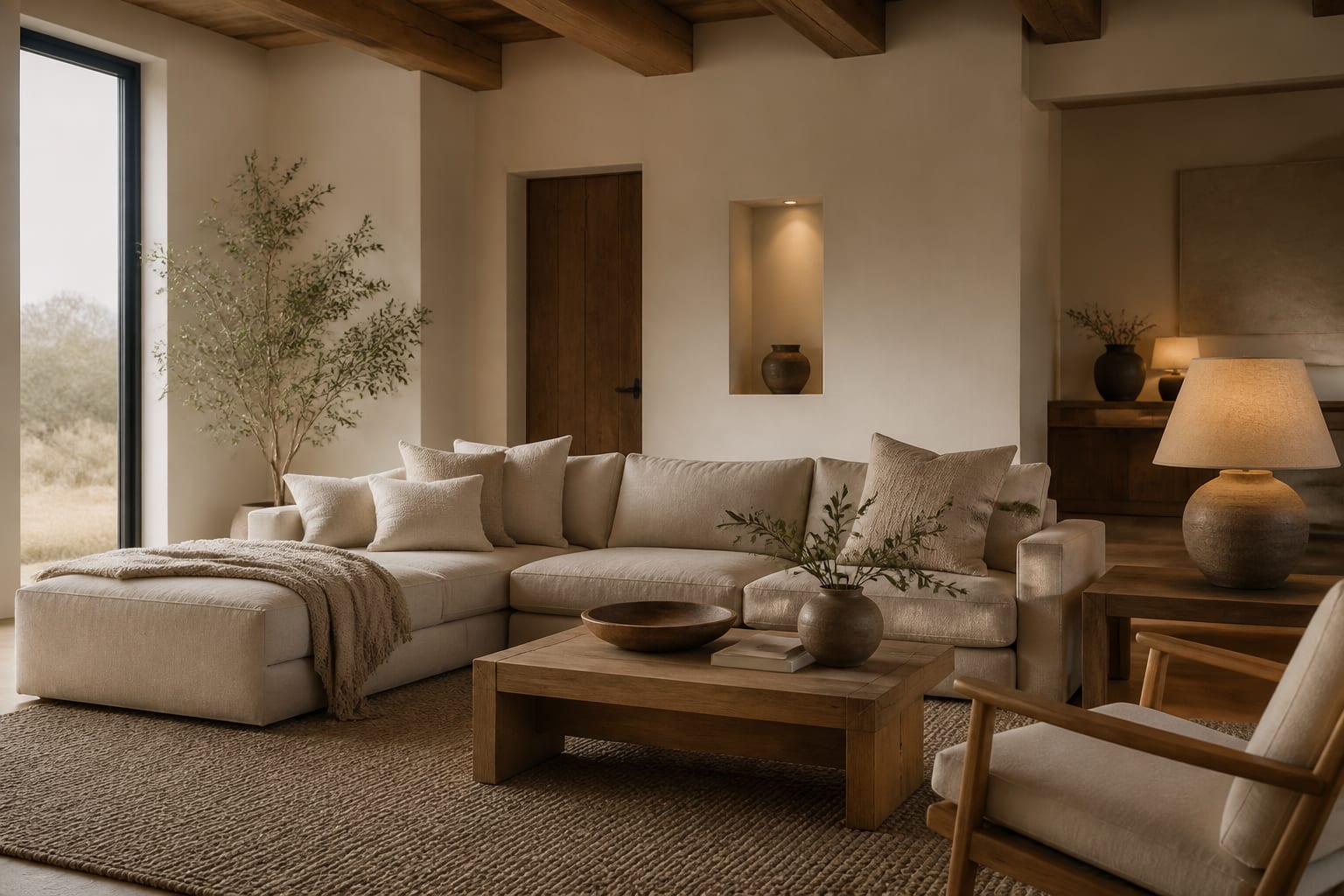
AI tools understand pale woods, linen sofas, rounded chairs, textured rugs, and quiet styling, but they often confuse warm minimalism with blank beige staging. A weak prompt says "make this room warm minimal and cozy." A strong one says: "keep the existing 8 foot ceiling, oak floor, and current sofa; create a warm minimalist living room with an 84 inch linen sofa, 8 by 10 wool rug, white oak coffee table, closed storage 16 inches deep, full length curtains, ceramic lamps, warm 2700k light, and no invented fireplace."
Warm minimalism sits near organic modern, Japandi, and soft Scandinavian design, but shouldn't become a catalog of pale round objects. If your room drifts romantic and patterned, compare it with cottagecore AI room design ideas; cottagecore allows more nostalgia, while warm minimalism needs stronger negative space.
Which warm minimalist moves should you preview first?
Accessories can support the style, but they can't rescue a room with cold bulbs, a tiny rug, or six competing wood tones.
- Pick one warm wood anchor. Test a 60 inch console, 72 inch dining table, or 28 inch nightstands in white oak, ash, walnut, or smoked oak.
- Size the rug generously. An 8x10 rug beats a 5x7 in most living rooms if seating front legs land on it by at least 6 inches.
- Add one upholstered curve. Try an 84 inch sofa with a rounded arm, a 30-34 inch lounge chair, or a 50-56 inch headboard.
- Swap cold bulbs for shaded lamps. Use 2700k in bedrooms and lounges, and reserve 3000k for desks, vanities, and kitchens.
- Keep storage closed. Cabinets 14-18 inches deep hide chargers, linens, and pet supplies without swallowing a walkway.
- Let one handmade object break the perfection. A matte ceramic lamp or hand-thrown vase reads warmer than a shelf of matching cream pieces.
What palette keeps warm minimalism from feeling cold?
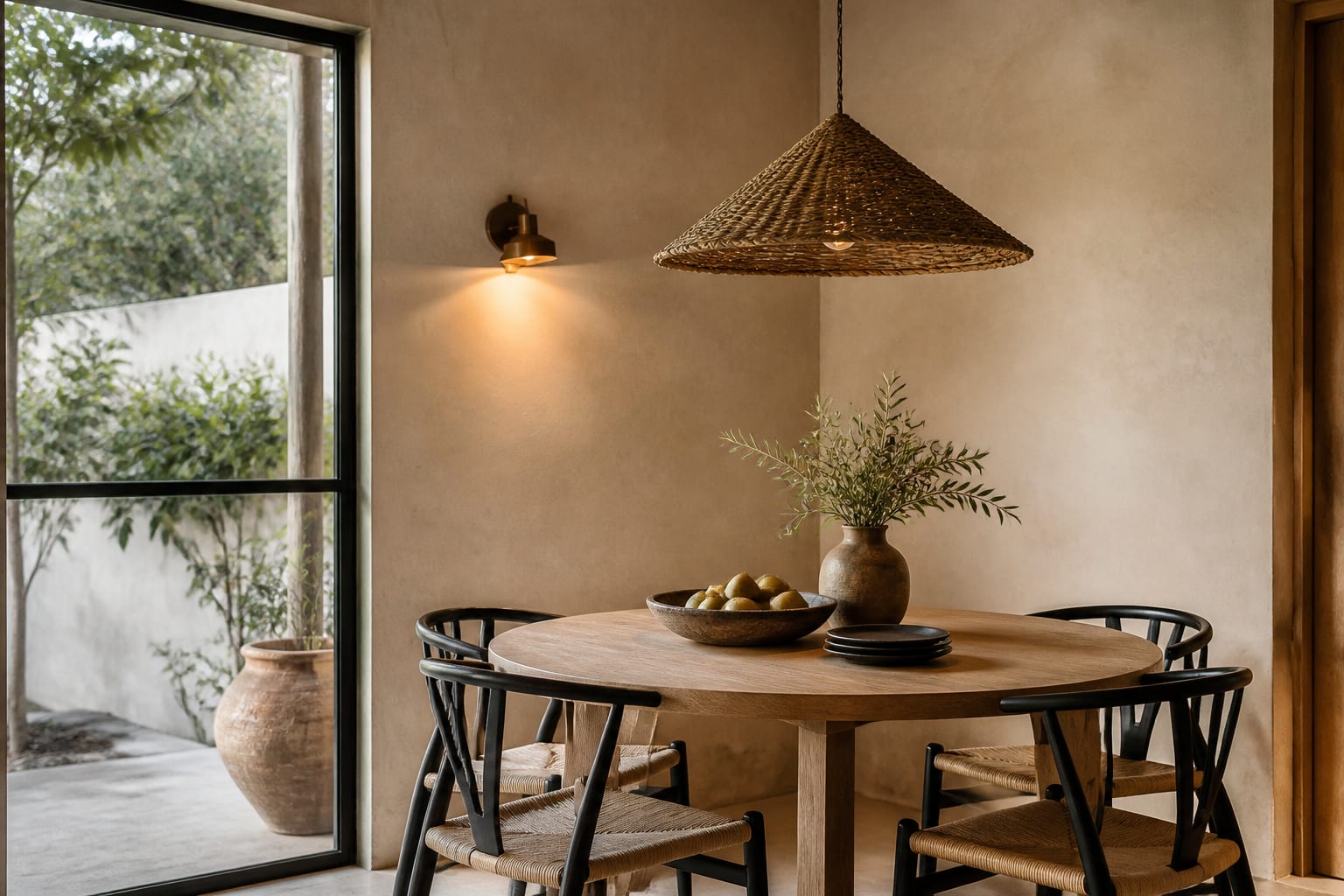
The best palettes aren't all beige; they use value, texture, and shadow for depth while staying calm. Try warm white with oak and bronze, mushroom with walnut and cream, sand with olive and blackened metal, or clay beige with smoked oak and ivory. Keep the largest surfaces quiet, then give the eye one grounded point, since a cream sofa on a cream rug against cream walls can disappear fast.
Add a dark wood coffee table, charcoal ceramic lamp, olive pillow, or tobacco leather stool so the softness has something to lean against. Curtains matter more than people expect: mount linen or cotton panels 4-8 inches above the casing and let them meet the floor cleanly, since short curtains read as accidental, especially in rentals with thin trim.
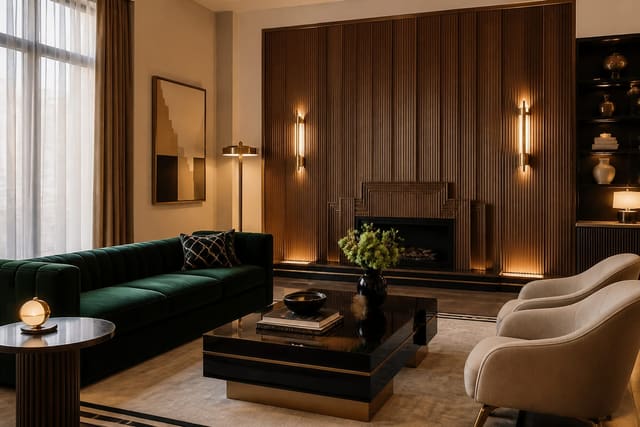
If the preview starts adding brass fans, black lacquer, and high-contrast symmetry, it's slipping toward AI art deco room design. Art deco wants polish and drama; warm minimalism wants softened edges and fewer declarations.
What are the most common warm minimalism mistakes?
- Treating beige as a full plan. Beige walls, sofa, rug, pillows, and art together read as nervous, not calm. Ask for specific materials instead: oatmeal linen, mushroom wool, white oak, matte ceramic, brushed bronze.
- Removing every sign of daily life. Keep a side table at least 16 inches wide near the main seat, a reachable lamp, and somewhere for a laptop or book.
- Ignoring scale. Leave about 30 inches for the main walking route and 16-18 inches between sofa and coffee table, and check that doors and drawers can still open.
- Choosing every piece in the same soft shape. AI defaults to rounded sofas, globe lamps, and blob rugs; mix in one or two straighter or squared pieces for structure.
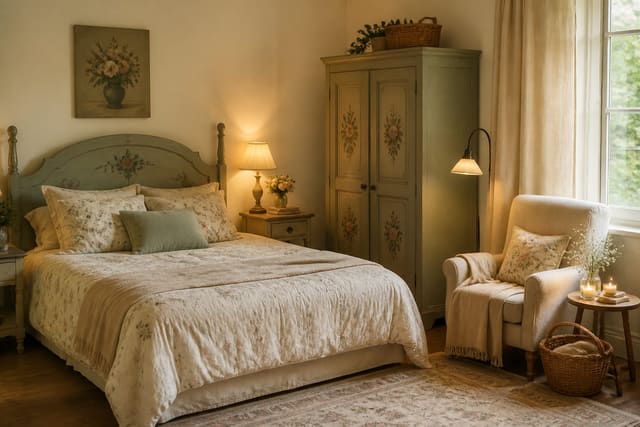
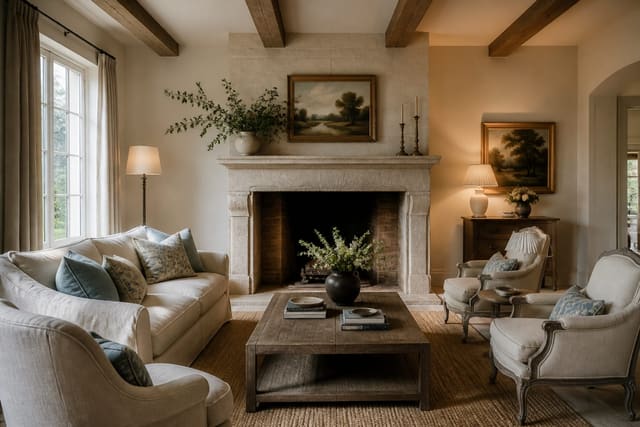
- Drifting into rustic romance. Carved cream furniture, faded toile, and antique chandeliers belong to AI French country design, which is more ornamented than warm minimalism should be.
How should you use AI to preview a warm minimal room?
Use the tool as a rehearsal for editing, not permission to erase the room you actually own. Photograph the space from the doorway with the floor, ceiling, windows, trim, outlets, and current furniture visible; a cropped sofa photo won't show how the room holds light.
Run three versions from the same image:
- Pale and airy: oak, linen, and warm white walls.
- Moodier: walnut, mushroom, bronze, and olive.
- Renter-safe: no paint or built-ins, plug-in sconces, a larger rug, closed freestanding storage, and curtains.
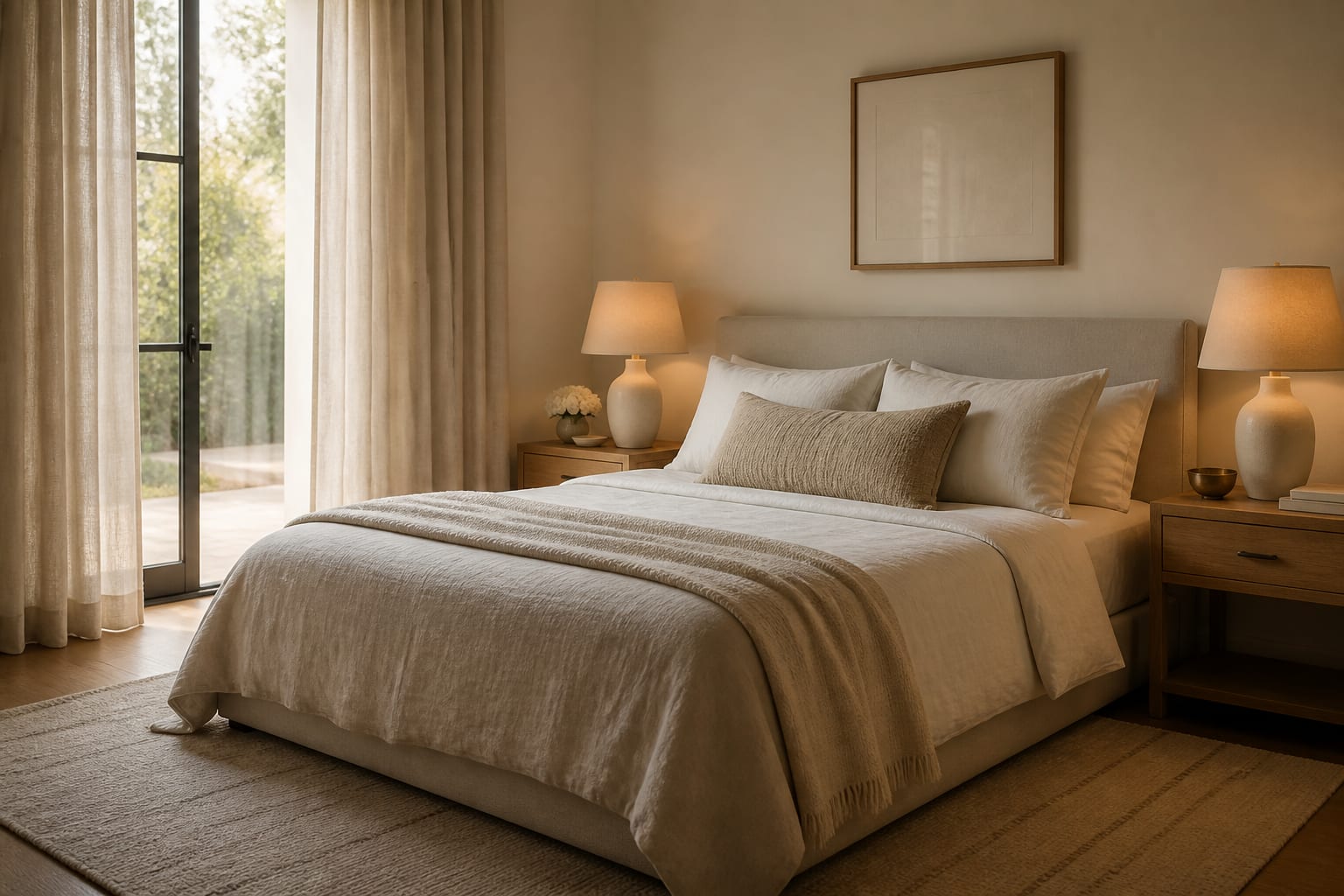
A useful bedroom prompt: "create a warm minimalist bedroom using the existing 8 foot ceiling and window location, with a 54 inch upholstered headboard, 28 inch oak nightstands, linen bedding, wool rug, full length curtains mounted 6 inches above the casing, ceramic lamps, 2700k bulbs, closed storage, and no change to the floor." For a living room, name sofa width, rug size, wood tone, lamp temperature, and storage depth explicitly.
Judge previews by what repeats. If a larger rug, warmer lamps, simpler curtains, and one darker accent keep working across versions, those are your real decisions. If a preview only succeeds because it widened the room or invented taller windows, keep the mood but rebuild the plan around your actual architecture.
Translate the winning preview into five choices before shopping: wall tone, wood finish, main textile, lighting temperature, and storage strategy. When those five agree, the room feels calm without going cold; when they don't, it usually turns into beige clutter with better photography.
Frequently Asked Questions
Is warm minimalism the same as beige decor?
No. Beige walls, sofa, rug, and pillows together read as flat and nervous rather than calm. Warm minimalism relies on specific materials, such as oatmeal linen, white oak, matte ceramic, and brushed bronze, plus one darker grounding tone to give the room depth.
What lighting temperature works best for warm minimalism?
Use 2700k bulbs in living rooms and bedrooms for a soft, warm glow, and reserve 3000k for task areas like kitchens, desks, and vanities. Shaded ceramic or linen lamps matter more than overhead fixtures for keeping the mood cozy rather than clinical.
How big should the rug be in a warm minimal living room?
An 8x10 rug generally works better than a 5x7 in most living rooms, since it lets seating front legs land on it by at least 6 inches. Larger rugs anchor the floor plane and make the space feel intentional rather than sparse.
How is warm minimalism different from Japandi or Scandinavian style?
Warm minimalism overlaps with Japandi and soft Scandinavian design in its use of pale wood and natural texture, but it demands stronger negative space and fewer catalog-style round objects. It should feel edited and tactile, not like a themed showroom.
Can warm minimalism work in a rental?
Yes. Focus on freestanding closed storage, plug-in sconces, a larger rug, full length curtains, and warm-toned lamps instead of paint or built-ins. These changes carry most of the visual impact without requiring permanent alterations.