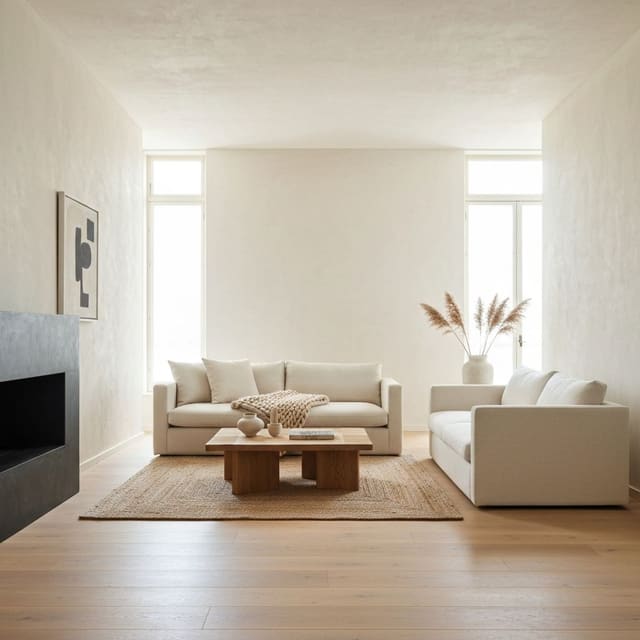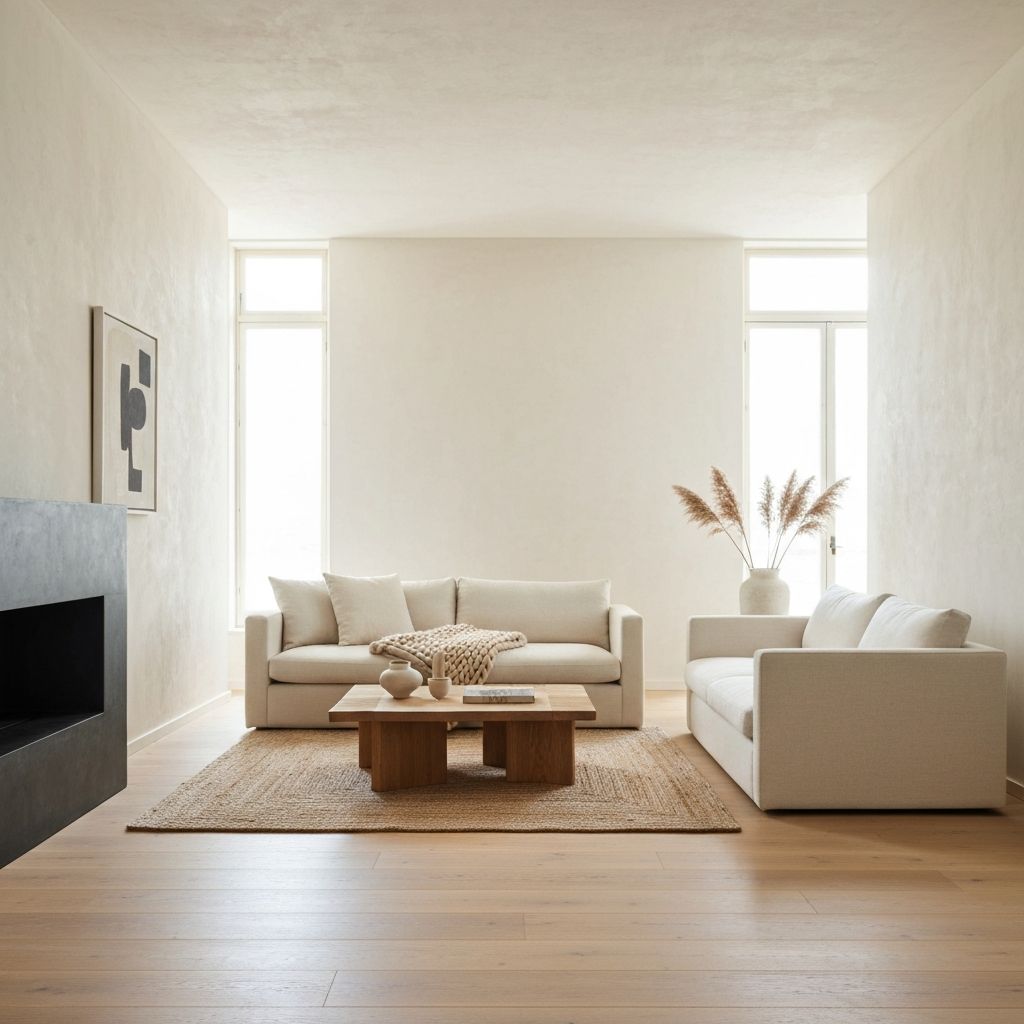
All-white rooms warm up when texture replaces color contrast — boucle and linen upholstery, oak or walnut wood, brass or aged-bronze metal, and one warm-toned rug (cream, oat, or terracotta) — and the room stays white but reads layered rather than sterile. An all-white room that feels cold is one of the most common design failures of the last fifteen years. Owners pull the trigger on white walls expecting bright and airy, then move in and discover the room reads like a dentist's waiting room. The fix isn't to abandon white. The fix is to recognize that "white" is at least twenty different colors, "warmth" comes from materials almost as much as paint, and most cold all-white rooms are also under-lit with the wrong bulb temperature. Fix those three things and the same white room reads serene and inviting.
How do you warm up an all-white room that feels too cold?
Switch any cool-white paint to a warm white, add at least two natural materials (wool, wood, linen, leather, terracotta), and replace cool-white bulbs with 2700K warm bulbs at three layers — overhead, lamp height, and accent. Most cold white rooms are fixable in a weekend without repainting if the bulbs and materials are right.
Diagnose which white you actually have
The single biggest reason an all-white room feels cold is the wrong undertone. Whites have undertones the same way grays and beiges do.
- Cool whites (Decorator's White, Chantilly Lace, Pure White) have blue or violet undertones. They read crisp in south-facing daylight and ice-cold in any other condition.
- Warm whites (Simply White, White Dove, Alabaster, Swiss Coffee) have yellow, pink, or cream undertones. They read warm and welcoming in almost any light.
- Neutral whites (China White, Atrium White) split the difference. Reliable but lean toward warm in cool-light rooms.
If your paint chip looks bright next to other paint chips in the store, it's a cool white. If it looks slightly cream or pink, it's a warm white. The chip that looks "just white" is usually a cool white reading correctly under cool retail fluorescents.
The fastest warming move: change the bulbs
Cool-white LEDs are the single most common cause of cold all-white rooms. Most homes installed 5000K daylight bulbs in 2018–2020 because they were the only cheap LEDs on the shelf. The fix:
- Replace every bulb with 2700K warm-white LEDs. Total cost for a typical living room: $40. Time: 15 minutes.
- In bedrooms, go to 2400K. The deepest warm tone available, closer to candlelight.
- Skip any bulb labeled "daylight," "cool white," or "5000K." They have legitimate uses (workshops, garages) but no place in a living room or bedroom.
- Add a dimmer to the main fixture. Dimming a 2700K bulb makes it warmer still — the same effect as the sun setting.
This one change alone fixes maybe half of "cold white room" complaints with no paint, no shopping, no contractors.
Test this on your own room photo with ReDesign before you choose the final direction; keep the doorway, walls, windows, main furniture, lighting, and awkward fixed features visible so the preview solves the room you actually have.
For a useful room-planning comparison, keep AI Interior Design: The Complete Guide to What It Does, What It Cannot Do, and When to Use It, Modern Minimalist Style: A Practical Guide That Doesn't Feel Cold, and Greige Room Warm Up Ideas: Add Warmth Without Replacing Furniture nearby so this retrofit stays connected to the adjacent lighting, storage, scale, and layout decisions in the same photo-led workflow.
Add three natural materials, not one
A single accent piece in a white room reads as one item floating in space. A coordinated set of three natural materials reads as a designed room. Pick three from this list and commit:
- A wool or jute rug. Wool absorbs cool light and reflects warm. A 8'x10' wool rug under the seating area is the single biggest warmth upgrade you can buy. Jute is the budget-friendly version.
- Linen curtains. Hung wide and high — rod 6"–10" above window, panels 6"–8" wider than window — they soften every hard line. Belgian linen if budget allows; Restoration Hardware or H&M Home knockoffs work fine.
- Visible wood tones. A wood coffee table, console, or floor adds warm undertone the eye reads as cozy. White oak, walnut, and warm rift oak are the woods designers reach for now. Painted-white wood doesn't count — needs to be the actual wood tone.
- Leather or velvet on at least one seat. A leather club chair, a velvet ottoman, or a single upholstered piece in caramel, terracotta, or cognac balances the cool palette.
- A terracotta vessel, ceramic lamp, or unglazed clay element. A single piece of clay or terracotta in a white room does enormous work for under $50.
- Live plants. Real plants, not faux. Bigger and fewer beats smaller and many.
You want at least three of these materials in any white room that's currently feeling cold. Four or five is even better. One is not enough.
Paint moves that warm without a full repaint
- Repaint the ceiling. Most ceilings are painted "ceiling white" — a stark cool flat white. Repaint the ceiling in a half-tint of your wall warm white. The room immediately feels enclosed and warm.
- Paint one wall a warm mid-tone. A single wall in greige, putty, soft sage, or warm plaster shifts the room from "white box" to "warm room with white." This is a one-weekend project.
- Paint the trim a warm white. If walls are warm white and trim is stark cool white, the trim fights the walls. Match trim to walls (or to a half-shade warmer) for visual continuity.
- Limewash or Roman clay one wall. Adds the subtle texture and tonal variation that flat white cannot. The wall reads almost like aged plaster — the warmest "white" available.
Lighting at three layers, not one
A cold white room is almost always also an under-lit room. The fix:
- Overhead at 2700K, on a dimmer.
- Two floor lamps or table lamps at lamp height (4–5 feet).
- One small accent lamp at low height (1–2 feet on a console or shelf).
The three-layer rule is the difference between "lit" and "warm." A single overhead light, no matter the bulb temperature, will always feel cold because the light source is in only one place.
Common cold-white-room mistakes
- Using cool-white or daylight bulbs. Single biggest cause. Almost always fixable in 15 minutes.
- Painting trim a different white than the walls. Creates visual fighting.
- Adding one accent pillow as the only warm element. One pillow can't lift an entire cold room.
- All-leather or all-velvet without other materials. Adds one warm thing on top of a cold base. Diversify.
- A glass coffee table and acrylic furniture. Adds reflectivity without warmth.
- Stark white ceiling above warm-white walls. Cuts the room visually at the top.
Use AI design to preview your warmer white room
Owners hesitate to commit to warming a white room because they can't picture the difference between Decorator's White and Simply White. AI design solves this in minutes — photograph the existing room and preview it with warm white paint, a wool rug, linen curtains, and a wood coffee table. Side-by-side, the warm version is unmistakably more inviting, and you walk into the change confident.
Frequently Asked Questions
Why does my all-white room feel cold?
White-on-white without texture or warm-toned partners reads sterile; the eye needs texture variation (smooth + soft + grain) and one warm-toned anchor to read inviting. Use the room photo to compare the visible layout and fixed constraints before committing, because door swings, windows, outlets, storage reach, circulation, and existing furniture decide whether the idea survives daily use.
How do I warm a white room without adding color?
Add texture — boucle sofa, linen drapes, woven jute or wool rug, oak wood case goods — and one warm metal (brass, aged bronze); this warms the room while staying white. Keep the preview honest by leaving the problem area visible in the frame, then compare one conservative version against one bolder version before you buy lighting, paint, furniture, or storage.
Should I add a warm wall paint?
Often no — change the trim, ceiling, or one wall to a warm white (White Dove, Alabaster) rather than the full repaint; the surrounding warm whites lift the cool whites without losing the all-white intent. Check the result against ordinary movement first: drawer clearance, chair pullout, walkway width, glare, switch access, and sightlines matter more than a perfect catalog angle.
What rug works in an all-white room?
A textured cream wool, oat-toned jute, or warm-cream berber — solid white rugs reinforce the cold; warm-cream texture warms the floor without losing the white scheme. Use the image to narrow priorities and measurements before ordering anything custom; final purchases still need real dimensions, outlet locations, installation limits, and product clearances.
Does AI preview the warm-up?
Yes — upload the white room photo and AI previews texture additions, warm wood, and brass accents before any change. If the preview invents architecture or hides the awkward feature you need solved, rerun it with stricter instructions so the result remains tied to your actual room.
> Try this: Ready to see this on your own room? Open ReDesign and run the preview.
Three transformations to try
1. Boucle sofa + jute rug in white room 2. Oak credenza + brass lamp warming white 3. Cream wool rug warming white seating