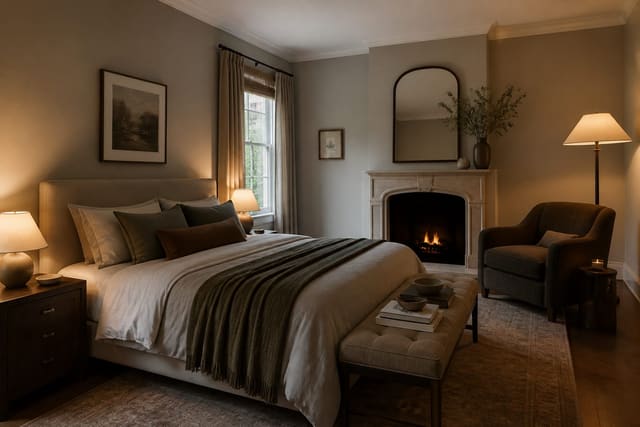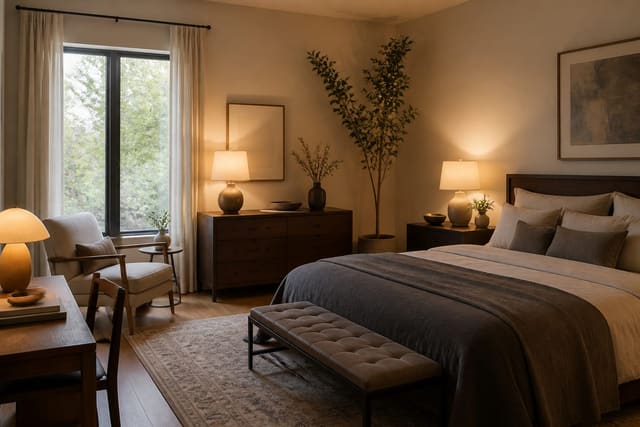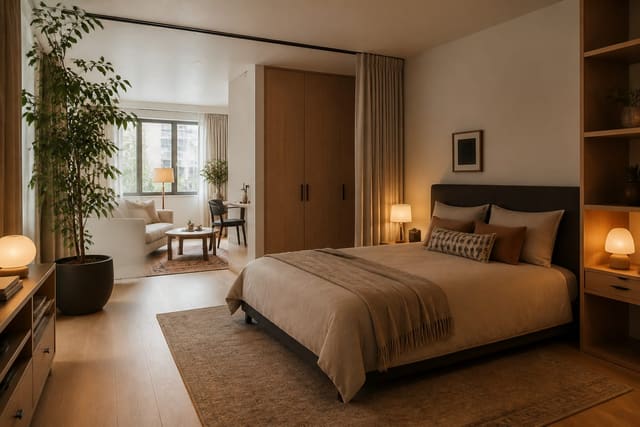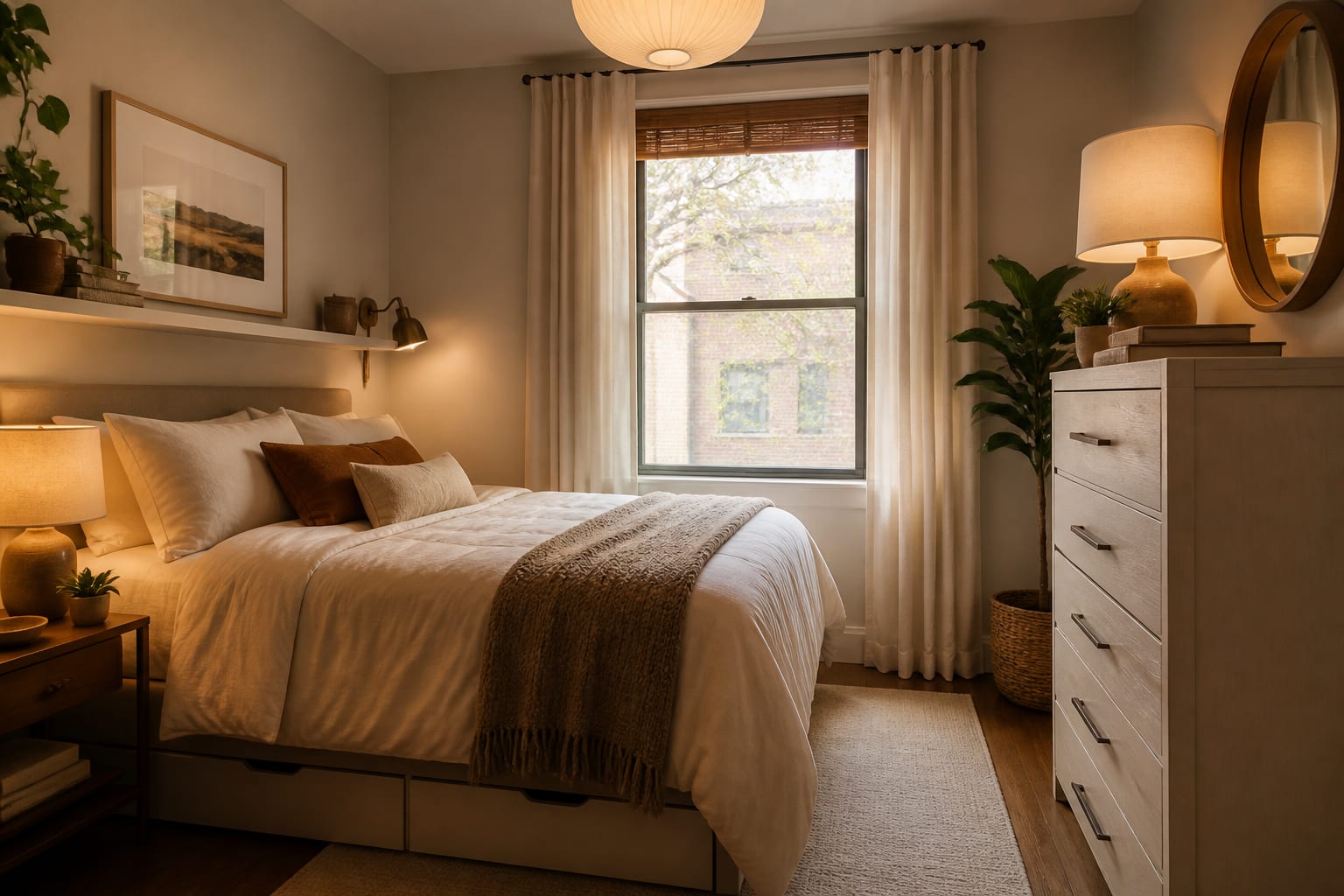
A small bedroom stuffed with furniture is a math problem before it is a style problem. The honest answer is that you almost certainly own one or two pieces too many for the square footage, and no clever arrangement will fix a room that is simply over capacity. The first move is editing, and only then does placement matter.
I think people resist this because the furniture is already paid for, so it feels wasteful to remove a perfectly good dresser. But a room you can barely walk through costs you every single day. Get the count right, place the bed first, then build storage upward instead of outward, and a cramped room starts breathing again.
Edit the furniture down to what fits
Before moving a single item, decide what leaves. A small bedroom, say 9 by 10 feet, physically cannot hold a queen bed, two nightstands, a tall dresser, a wide dresser, an armchair, and a desk without becoming an obstacle course. Pick the pieces that earn their footprint by daily use and relocate or sell the rest. A chair that only holds clothes is not furniture, it is a pile with legs.
Measure everything and measure the room, because eyeballing is how rooms get overstuffed. Sketch a simple plan to scale and you will see instantly that two bulky dressers do not fit beside a bed that needs walking room. If you want layout patterns to copy, the bedroom layout ideas guide shows arrangements that actually work in tight footprints. The goal after editing is roughly half the floor left clear, which is the difference between cozy and cramped.
A useful test for each piece is to ask what it does that nothing else in the room does. If the answer is nothing, it leaves. A bulky desk that holds a laptop you only use on the sofa is taking 6-8 square feet for no reason. A wide dresser that duplicates closet capacity you already have is the same. I find people keep furniture out of guilt about the purchase price, but the daily cost of a room you sidle through is far higher than the sunk cost of a dresser you sell secondhand. Once the surplus is gone, what remains can finally sit where it works rather than wherever it fit.
Place the bed first, then work outward
The bed is the largest object and the anchor, so it gets placed before anything else. In a small room, pushing the bed against a wall, or even into a corner, usually frees the most usable floor, even though designers love a floated bed. Reserve floating the bed for when you genuinely have the clearance, since you need at least 24 inches on any side you climb in from. Position the headboard on the longest unbroken wall when you can.
Once the bed is set, fit the rest around it in priority order. Here is the sequence I use:
- Bed against the best wall, with a clear 24-inch entry side
- One slim nightstand, or a wall-mounted shelf if a stand will not fit
- Storage that goes up the wall rather than out across the floor
- Any seating or desk only if a true walking path survives
Keep a continuous walking path of 30-36 inches from the door to the bed, because a path that forces you to sidestep is what makes a room feel jammed even after you have edited it.
Build storage up, not out
The single biggest small-bedroom win is moving storage onto the walls and into the bed itself. A tall, narrow wardrobe or a 12-15 inch deep shelving unit holds as much as a wide dresser while surrendering far less floor. Wall-mounted shelves above the bed or above a doorway use the dead air that low furniture never touches. The room feels larger the moment the floor is visible.
Dual-purpose pieces do heavy lifting in a tight space. A bed with drawers underneath or a lift-up storage base can swallow an entire dresser's contents, and a storage bench at the foot of the bed handles linens while doubling as a seat. Some of these double-duty tricks come from studio living, and studio apartment bedroom ideas translate well even when your bedroom is a separate room. Mirrors help too: a tall mirror on a wardrobe door bounces light and pushes the visual boundary outward without adding a single object to the floor.
The dead zones worth claiming are the wall above the bed, the back of the door, and the strip near the ceiling. A floating shelf 10-12 inches deep above the headboard replaces a pair of nightstands and frees the floor on both sides. Over-door organizers and hooks absorb the things that usually pile on a chair. A high shelf running the perimeter, about 12 inches below the ceiling, stores seldom-used items and draws the eye up so the room reads taller. Keeping the largest pieces in lighter colors and a single material palette also calms the visual noise, because a small room crammed with clashing wood tones and finishes feels busier and therefore smaller than it actually is.
Common mistakes to avoid
The most common mistake is skipping the edit and trying to arrange your way out of too much furniture. No layout beats removing the surplus piece. Another frequent error is choosing wide, low storage because it was cheap, when tall vertical storage holds the same volume on a third of the floor.
People also block the window or the door swing, which kills both light and flow in a room that needs all of it. Pushing every piece flat against the walls is another mistakes-to-avoid trap, because a ring of furniture around an empty center actually reads smaller than a thoughtfully grouped layout. Finally, do not over-light with a single harsh ceiling fixture; layered lamps make a small room feel calmer, and the bedroom lighting guide covers how to do that in a tight space.
Use AI design to preview arranging a small bedroom before you commit
Moving heavy furniture to test a layout is exhausting and often inconclusive, because by the time everything is shifted you are too tired to judge it fairly. Re-Design removes the heavy lifting. Upload a photo of the crowded bedroom and ask to see the bed in the corner with vertical storage, or with the wide dresser gone and a tall wardrobe in its place, and the AI shows the rearrangement in your actual room before you strain your back.
This is genuinely useful for the editing decision, the one people resist most. I will upload the room as it stands, then run a version with one dresser removed and a storage bed in, so I can see how much floor that single edit returns. Because the AI design preview respects your real walls, window, and door, the walking paths it shows are the paths you will actually have, which makes the call to part with a piece far easier to commit to.