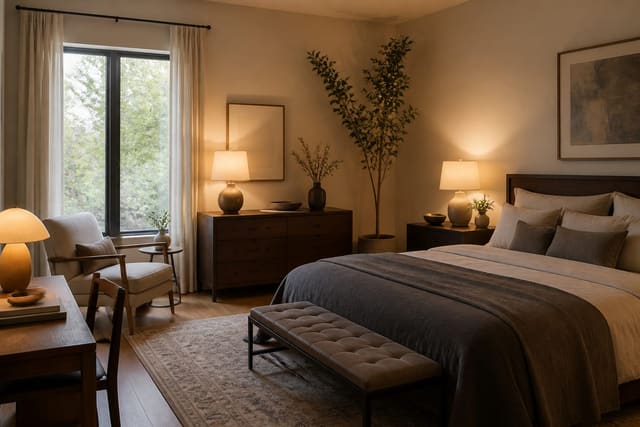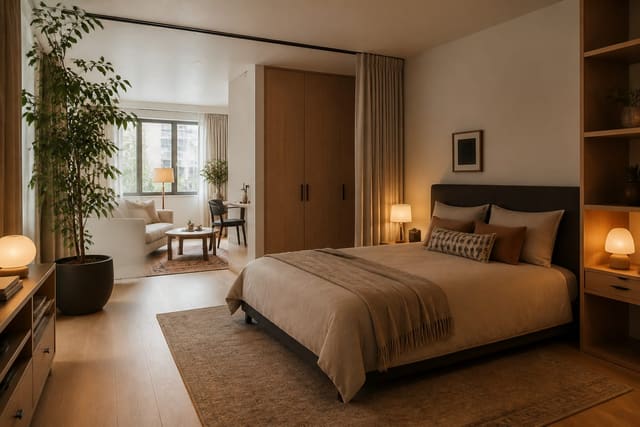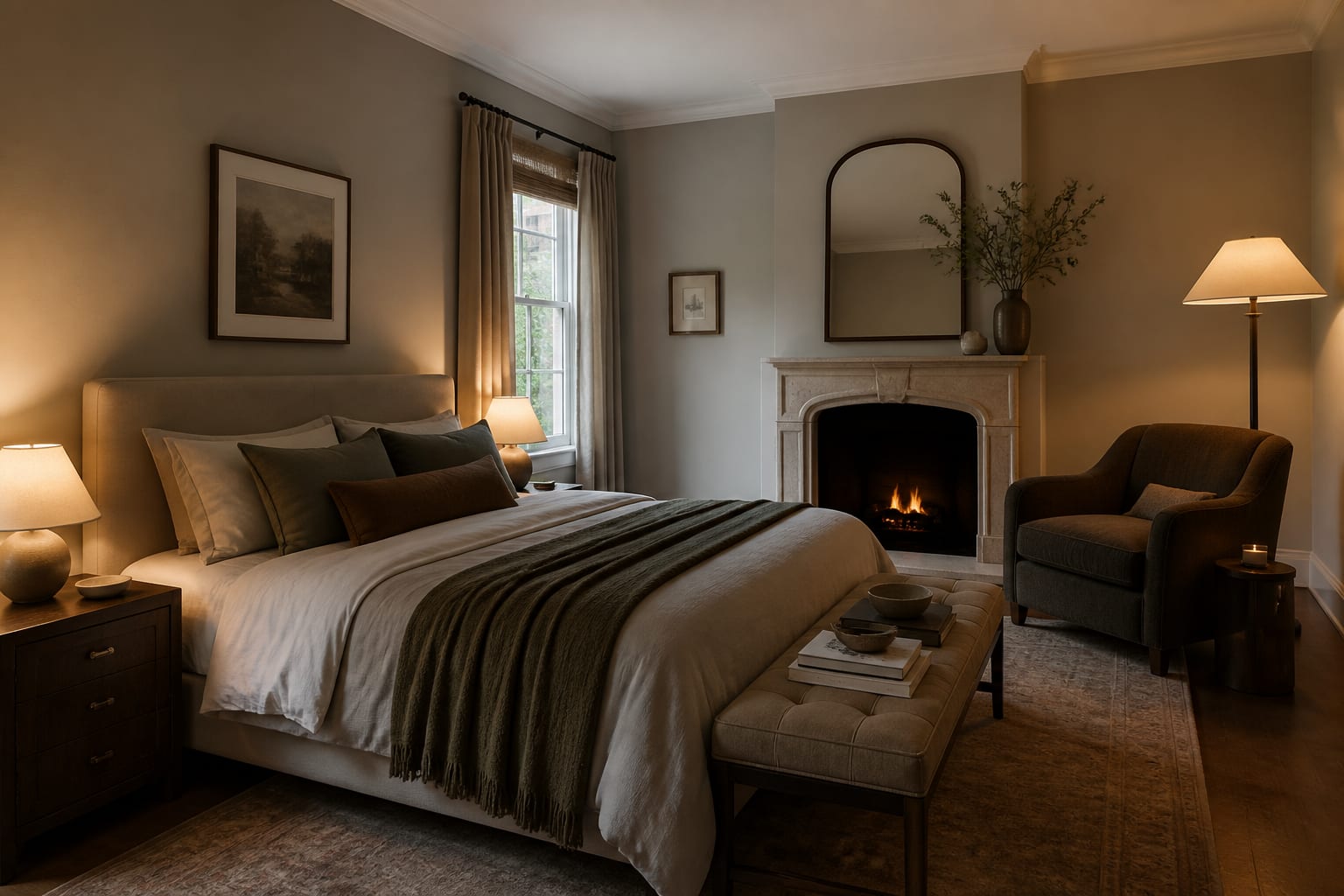
The bed is the one piece that dictates the entire room, so the smartest bedroom layout starts by deciding which wall it anchors before anything else moves. Most people make the opposite mistake, sliding the bed into the first corner that fits and then wedging furniture around it until the floor disappears. A room can be small and still feel generous if you protect the walking paths and give the headboard a wall that faces the door. These bedroom layout ideas work through clearances, nightstand spacing, and the focal-point decisions that separate a restful room from a crowded one.
Choosing the Bed Wall First
Every successful bedroom layout begins with one decision: which wall holds the bed. The strongest choice is the wall directly across from the door, so the headboard greets you as you enter and the bed becomes the obvious anchor. Designers call this the commanding position, and it works because you can see the doorway from the pillows without the bed sitting awkwardly in the line of traffic.
Avoid placing the headboard under a window if you can help it. Drafts, light leaks at dawn, and the hassle of layering curtains behind a tall headboard all argue against it. If the only logical wall has a window, a low headboard or a wall-mounted upholstered panel keeps the glass usable while still grounding the bed.
Center the bed on its chosen wall whenever the room allows, because symmetry reads as calm and gives you matching space for nightstands on both sides. A queen bed needs a wall span of at least 9 feet to center comfortably with two 22-inch nightstands flanking it; a king wants closer to 11 feet. When the wall is too short for that, shift the bed off-center on purpose and treat one side as the access side rather than forcing a cramped second nightstand. Settling the bed wall first turns the rest of the layout into a series of easy follow-on calls instead of a guessing game played one heavy piece at a time.
See also our guide to Bedroom Lighting Guide for more on bedroom layout ideas.
Walkways and Clearances That Keep the Room Breathing
Clearance is the quiet number that decides whether a bedroom feels serene or claustrophobic. Aim for 24 to 30 inches of open floor along each side of the bed and at its foot, enough for an adult to walk through and make the bed without turning sideways. Drop below 24 inches and the room starts to feel like an obstacle course every morning.
The path from the door to the bed matters just as much. Keep a clear lane of at least 36 inches so nothing snags a shoulder in the dark, and never let a swinging door collide with the corner of the mattress or a dresser. Map the door swing before you commit to placement; a door that opens into the bed steals usable floor and feels cheap.
Dresser drawers and closet doors need their own breathing room. Allow 36 inches in front of a dresser so a fully extended drawer still leaves space to stand, and the same in front of a reach-in closet. If the room is tight, a sliding or barn-style closet door reclaims the swing entirely. These numbers are not arbitrary; they are the difference between a room you move through without thinking and one that makes you angle past furniture every single day. Tape the clearances on the floor before you buy, and you will catch a too-large bed frame long before it arrives at the door.
For a related angle on bedroom layout ideas, read Studio Apartment Bedroom Ideas.
Nightstands, Dressers, and the Supporting Cast
Once the bed is set, the supporting furniture should reinforce the layout rather than fight it. Match the nightstand height to the top of the mattress within a couple of inches so a lamp and a glass of water sit at a natural reach. A nightstand between 18 and 28 inches wide suits most beds; go wider only if the wall span genuinely allows it without crowding the walkway.
The dresser wants the longest unbroken wall left after the bed claims its own. Placing it opposite the foot of the bed often works, but only if you still hold that 36-inch drawer clearance. In rooms short on floor, a tall five-drawer chest stores the same clothing as a wide dresser while eating far less wall, freeing the remaining length for a reading chair or a bench.
Do not forget the vertical plane. A pair of wall sconces flanking the bed frees both nightstand surfaces and throws light exactly where you read. Floating shelves above a low dresser pull the eye up and make the ceiling feel higher. The mistake to avoid is treating every piece as a separate problem; the nightstands, dresser, and lighting should read as one composed set that orbits the bed. When the supporting cast is scaled to the room and spaced with intent, even a modest 10-by-11-foot bedroom feels deliberate rather than packed.
Small Rooms, Large Rooms, and the Focal Point
Room size changes the playbook. In a small bedroom under about 10 by 10 feet, push the bed into a corner against two walls to free the maximum open floor, and accept a single nightstand on the accessible side. Build storage upward with tall shelving or an over-bed cabinet bridge so the footprint stays clear. Light, cool wall colors and a mirror opposite the window will visually stretch the space.
Large bedrooms have the opposite challenge: too much floor can feel hollow and hotel-like. Pull the bed away from the corner, center it on a feature wall, and use a rug that extends 18 to 24 inches beyond the bed on three sides to define a grounded sleeping zone. The leftover space becomes a seating nook, a small desk, or a dressing area, each given its own small rug or lighting to read as a distinct room within the room.
Whatever the size, commit to one focal point and let everything else recede. Usually that is the headboard wall, dressed with a bold paint color, paneling, or a single large artwork above the bed. Resist the urge to make the dresser wall and the window equally loud; competing focal points cancel each other out and the room reads busy. A clear hierarchy, anchored by the bed and supported by quiet edges, is what makes a layout feel intentional at any square footage.
Here are the common mistakes to avoid: - Shoving the bed into the first open corner before deciding which wall should actually anchor the room. - Leaving less than 24 inches beside the bed, so making it each morning means squeezing past furniture. - Placing a dresser where its open drawer blocks the walkway instead of holding 36 inches of clearance. - Letting a door swing into the bed or dresser because the swing path was never mapped first. - Centering a wide bed on a wall too short for two nightstands, leaving both sides cramped and uneven. - Creating three competing focal points so the eye never settles and the room reads cluttered.
Bring the look home with Re-Design
Floor tape only goes so far, so test the layout visually before furniture arrives. Upload a photo of your bedroom to Re-Design and preview different bed walls, clearances, and focal-point treatments rendered in your actual room. Seeing the headboard wall, the dresser placement, and the open walkways in context helps you confirm a layout that breathes, rather than buying a bed frame that turns out an inch too wide once it is standing in the doorway.
Frequently Asked Questions
Which wall should the bed go on?
Put the bed against the wall you see first from the doorway, usually the wall directly opposite the door, so the headboard anchors the room and you can see who enters. Avoid centering the bed under a window when possible, since it complicates curtains and lets in early light. Center the bed on its wall if the span allows symmetrical nightstands.
How much space should I leave around a bed?
Leave 24 to 30 inches of clear floor on each side of the bed and at its foot so two people can pass and make the bed comfortably. Keep at least 36 inches between the bed and a dresser whose drawers must open, and the same in front of a closet. Below 24 inches the room starts to feel cramped and hard to move through.
How do I lay out a very small bedroom?
Push the bed into a corner against two walls to free the most open floor, and use a single nightstand on the accessible side. Build storage upward with tall shelves or an over-bed bridge so the footprint stays clear. Light, cool wall colors and a mirror across from the window make a small room feel noticeably larger than its square footage suggests.