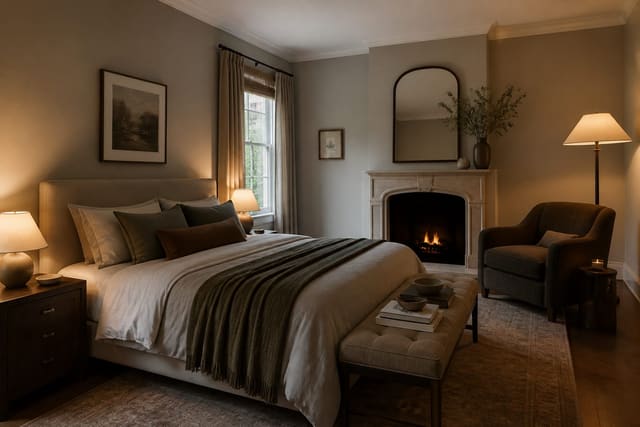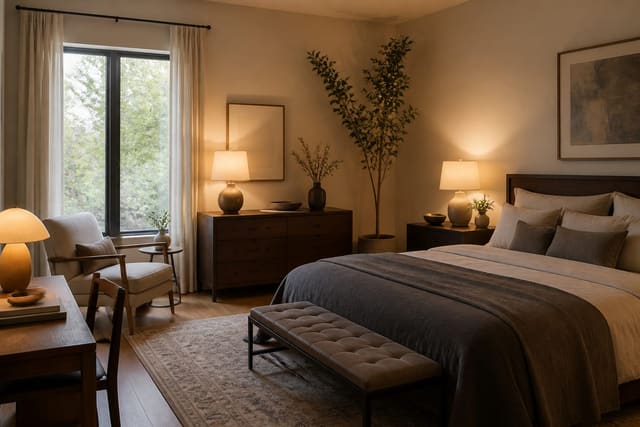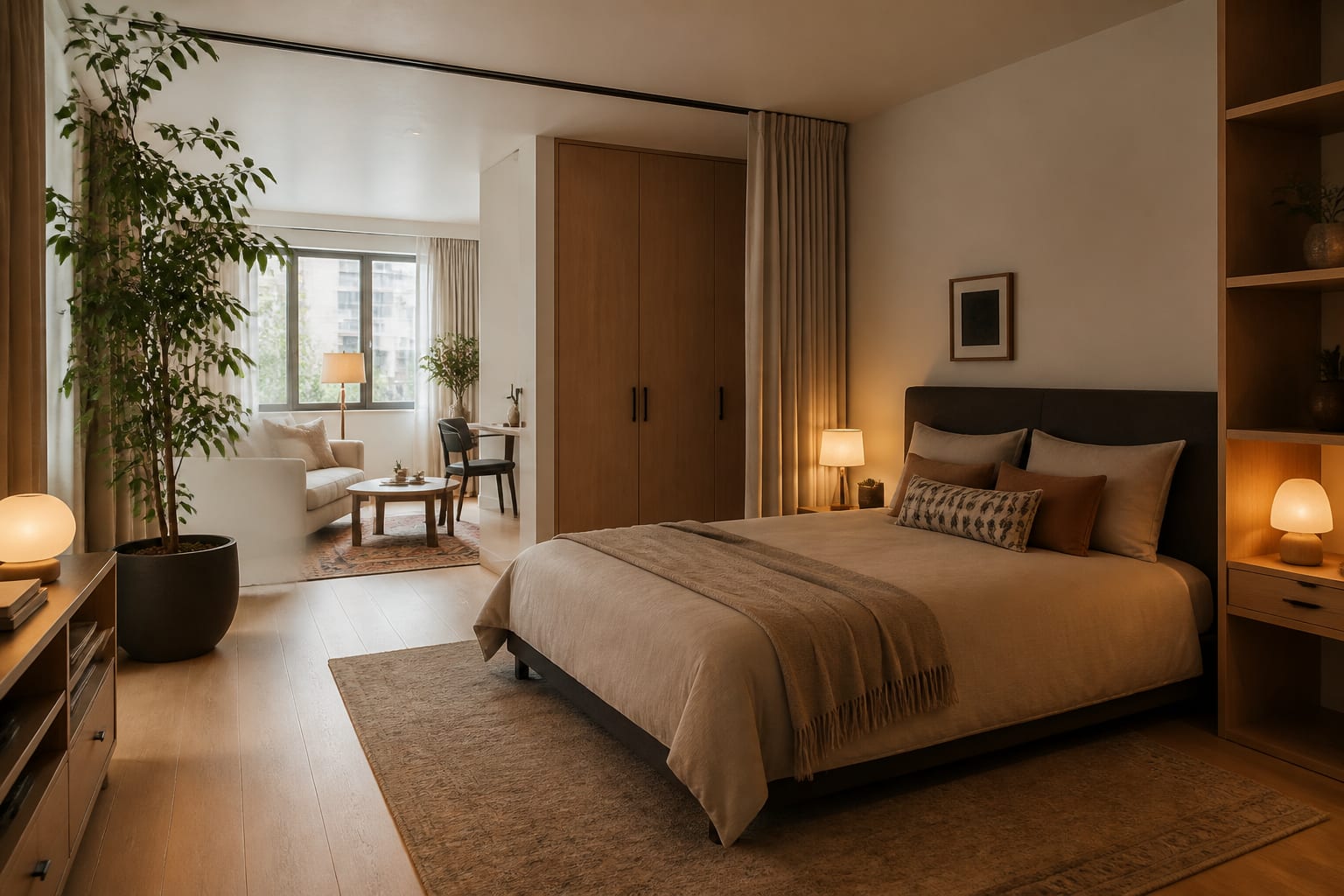
In a studio, the bedroom is not a room but a zone you have to define on purpose, and the apartments that feel calm are the ones that draw a clear line between sleeping and living. The bed should never be the first thing you see from the front door, and it should never block the path to the bathroom or kitchen. With a divider, smart placement, and a bed that earns its footprint through storage, even a 400-square-foot studio can feel like it has a genuine bedroom. The mistakes below are the ones that quietly ruin the layout.
Where should the bed go in a studio apartment?
Bed placement is the single decision that makes or breaks a studio, so resolve it before you buy anything else. The strongest position tucks the bed into the corner or alcove farthest from the entry, ideally out of the direct sightline when someone opens the front door. This creates psychological separation: guests see a living room, not your unmade bed. If the studio has any architectural break, like an L-shape or a wide nook, that recess is almost always the right home for the sleep zone.
Leave a clear walking path of at least 24 to 30 inches on the side of the bed people use to get in and out, and keep the route to the bathroom and kitchen unobstructed. Position the head of the bed against a solid wall rather than under a window when you can, since a wall gives you a place to mount sconces and anchor a headboard. If a window is unavoidable behind the bed, a tall upholstered headboard at roughly 48 to 54 inches buffers drafts and gives the arrangement a finished anchor.
See also our guide to Bedroom Layout Ideas for more on studio apartment bedroom ideas.
How do you divide the sleep zone from the living area?
A divider is what turns one open box into two purposeful spaces. The most flexible option is a ceiling-mounted curtain track that lets you pull a panel across at night and tuck it away by day, costing little and removing easily in a rental. For a more permanent feel without losing light, an open bookcase placed perpendicular to the wall separates the zones while letting daylight pass through the shelves; aim for a unit around 60 to 72 inches tall so it screens the bed without making either side feel boxed in.
Choose the divider based on how much privacy and light you are willing to trade. A solid bookcase gives the most separation but darkens the inner zone, while a slatted screen, a half-height shelf, or a row of tall plants suggests a boundary without sealing it off. In the smallest studios, a low storage bench or the back of a sofa at about 36 inches can mark the line between sleeping and living without any vertical bulk at all. Whatever you pick, keep the divider off the main walkway so it never forces an awkward detour.
For a related angle on studio apartment bedroom ideas, read Bedroom Lighting Guide.
What furniture saves the most space in a studio bedroom?
Every piece in a studio sleep zone should work two jobs, and the bed is where that pays off most. A platform bed with built-in drawers replaces a dresser, swallowing folded clothes and bedding in the space a normal bed wastes. Where ceilings reach 9 feet or more, a lofted bed frees the entire footprint below for a desk, a reading chair, or a clothing rack, effectively doubling the usable floor of the sleep zone.
Nightstands can shrink to wall-mounted shelves or a slim floating ledge so they do not eat your 24 to 30 inch path. Use the headboard wall vertically: floating shelves, a pegboard, or wall sconces keep surfaces off the floor. Under-bed bins on casters handle off-season storage and slide out only when needed. A storage ottoman at the foot of the bed, around 18 inches tall, doubles as seating, a luggage perch, and hidden storage. The discipline is consistent throughout the studio: if a piece cannot store something or fold away, it probably does not earn its share of your very limited floor.
How do you make a studio sleep zone feel intentional?
A studio reads as cramped when the sleep zone looks like an afterthought, so treat that corner as a deliberate room within the room. Define it with a rug sized to sit mostly under the bed, which visually frames the zone the way walls would in a larger apartment. A consistent palette that ties the bed area to the rest of the studio keeps the eye moving smoothly rather than snagging on a mismatched corner.
Make the headboard wall the focal point with a tall upholstered panel, a textile hanging, or a pair of plug-in sconces at about 60 inches that signal this is the bedroom. Lighting matters enormously here: a switch or smart bulb that dims the sleep zone independently of the living lights lets you signal nighttime without flooding the whole studio. Keep the bed made and the surfaces clear, because in a single open space a messy bed pulls down the entire apartment. When the sleep zone is styled with the same care as the living area, the studio finally feels like a home with rooms rather than one crowded space.
Here are the common mistakes to avoid: - Placing the bed in the direct sightline of the front door so it is the first thing every guest sees. - Blocking the path to the bathroom or kitchen, forcing an awkward squeeze past the bed. - Leaving less than 24 to 30 inches of walking space on the side you climb in and out of. - Choosing a solid floor-to-ceiling divider that seals off daylight and darkens the sleep zone. - Buying a standard bed and dresser instead of a platform storage bed that does both jobs at once. - Treating the sleep corner as an afterthought with no rug, focal wall, or independent lighting.
Bring the look home with Re-Design
Studios punish layout mistakes, so it helps to re-design the whole open space before you move a single piece of furniture. Upload a photo of your studio and preview where the bed, divider, and rug should land, testing whether the sleep zone stays out of the doorway sightline and keeps your walking path clear. Seeing a bookcase divider or a lofted bed in your real space tells you instantly whether it screens the bed or blocks the light. It is a quick way to settle the bed-placement question that decides how livable the whole studio feels.
Frequently Asked Questions
Where should the bed go in a studio apartment?
Tuck the bed into the corner or alcove farthest from the entry, out of the direct sightline when someone opens the front door. That placement makes guests see a living room rather than your bed. Keep the routes to the bathroom and kitchen unobstructed so the bed never forces an awkward squeeze past it.
How much space should I leave around a studio bed?
Leave a clear walking path of at least 24 to 30 inches on the side you climb in and out of, and keep traffic routes to other areas open. Skimping below that makes the whole studio feel cramped, while that modest margin keeps the sleep zone usable without eating the rest of your floor.
What is the best way to divide a studio sleep zone?
A ceiling-mounted curtain track is the most flexible and rental-friendly divider, pulling across at night and tucking away by day. For more permanence without losing light, place an open bookcase around 60 to 72 inches tall perpendicular to the wall so daylight passes through the shelves while the bed stays screened.
Should I get a platform or lofted bed in a studio?
Choose a platform bed with built-in drawers when ceilings are standard, since it replaces a dresser in the footprint a normal bed wastes. If ceilings reach 9 feet or more, a lofted bed frees the entire space below for a desk or reading chair, effectively doubling the usable floor of the sleep zone.