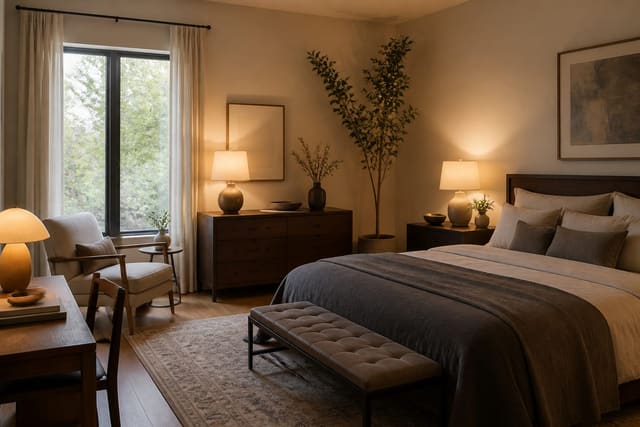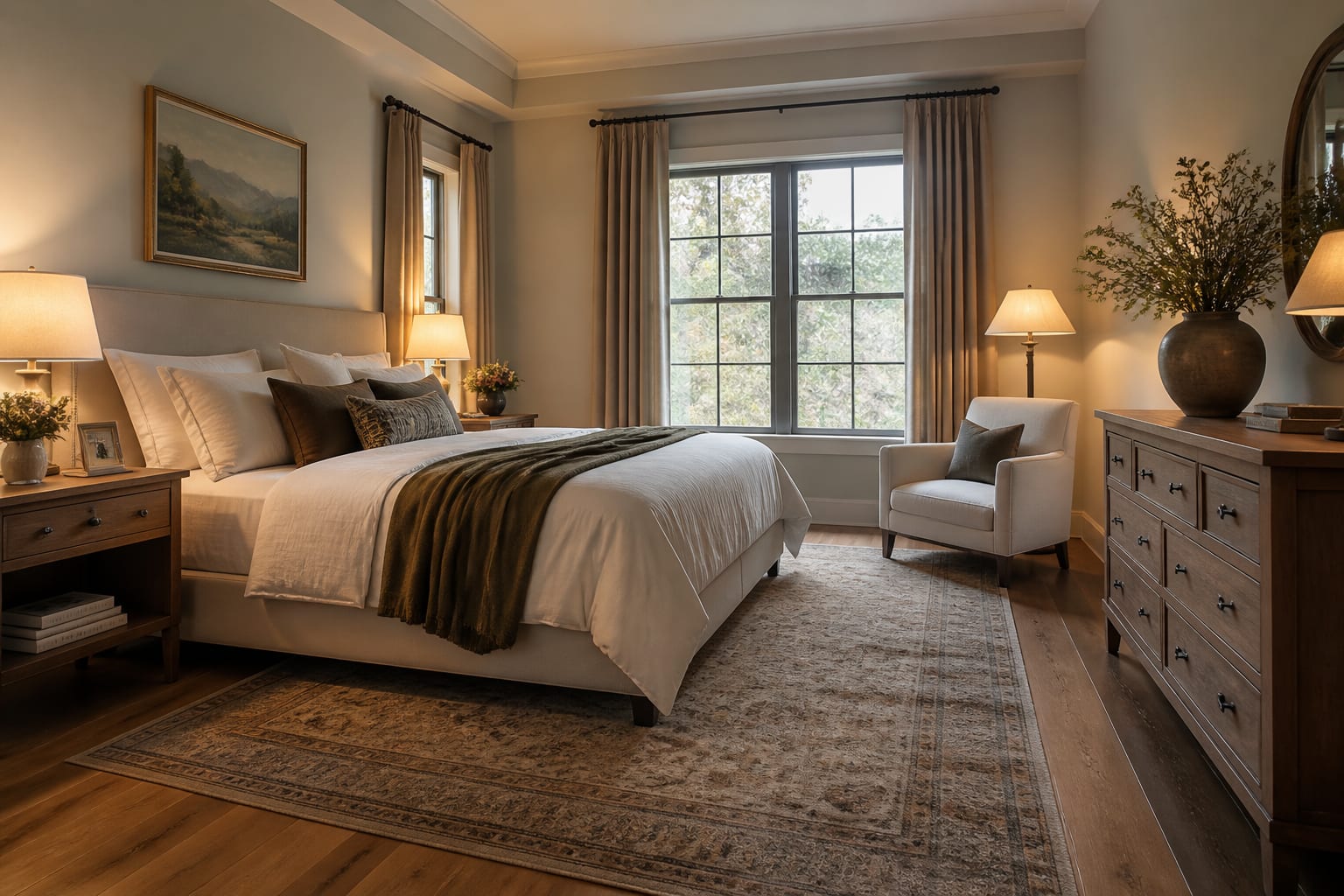
Most bedroom rugs are too small, and that single mistake makes an otherwise lovely room feel unfinished. A rug should ground the bed, not float like a bath mat in front of it, which means it needs to extend a generous border of soft surface on the sides where your feet land. The right size, placement, and pile turn cold floors into a warm landing every morning and pull the whole room together. Get the proportions right first, then think about texture and layering. The mistakes below are the ones that shrink a bedroom and cheapen an expensive rug.
What size rug do you need for your bed?
The reliable rule is to leave 18 to 24 inches of rug visible on the three accessible sides of the bed, the two long sides and the foot. That border is what makes the rug feel like it belongs to the bed rather than sitting awkwardly in front of it. To hit that border, slide the rug under the bed so it starts roughly even with the nightstands or a few inches in front of them, then extends out past the foot.
In practice the sizes work out cleanly. A queen bed, 60 by 80 inches, lands beautifully on an 8 by 10 foot rug, which gives you that 18 to 24 inch margin on the exposed sides. A king bed, 76 by 80 inches, generally needs a 9 by 12 foot rug to keep the same proportions, since an 8 by 10 leaves the borders looking pinched. A full or double bed can often work on a 6 by 9 if the room is tight. When in doubt, size up: a slightly oversized rug always reads better than one that stops short under the bed.
See also our guide to Bedroom Layout Ideas for more on bedroom rug ideas.
Where should the rug sit under the bed?
Placement matters as much as size, and the most common arrangement is to set the rug under the lower two-thirds of the bed. Position it so the top edge tucks under the bed just past the nightstands, leaving the nightstands themselves on the bare floor or only partly on the rug. This keeps the rug from disappearing entirely under furniture while still anchoring the bed.
Alternatively, you can pull the rug fully under the bed and nightstands so everything sits on a single soft plane, but that demands a larger rug, typically 9 by 12 or bigger, to maintain the border on the exposed sides. The look you are avoiding is the small rug centered in front of the footboard like a doormat, which makes the bed look like it is floating and the rug look like a mistake. Whichever placement you choose, make sure your feet land on the rug, not bare floor, when you sit on the edge of the bed each morning, because that warm first step is half the reason a bedroom rug exists.
For a related angle on bedroom rug ideas, read Bedroom Lighting Guide.
When do runners and layered rugs make sense?
A single large rug is not your only option, and sometimes it is not even the best one. When a room is too narrow for an 8 by 10 or your budget will not stretch to a large piece, a pair of matching runners, roughly 2.5 by 7 feet, placed along each side of the bed gives you that warm landing exactly where your feet touch down. A third runner at the foot completes the frame if you want symmetry on all three sides.
Layering is the other move worth knowing. Set a large, flat-weave jute or sisal rug as the base for structure, then center a smaller patterned or high-pile rug on top to add softness and a focal point. The base should extend 8 to 12 inches beyond the top rug on all sides so the layering looks deliberate. Layering also rescues a rug that turned out too small: a 5 by 8 that looks lost on its own suddenly works centered on a 9 by 12 jute base. Keep the two textures distinct so the eye reads two intentional layers rather than one confused pile.
How do you choose rug pile and material for a bedroom?
A bedroom is a low-traffic, barefoot space, which gives you freedom to prioritize softness over the bulletproof durability a hallway demands. A medium to high pile, anywhere from half an inch to an inch, feels plush underfoot first thing in the morning, and wool delivers that softness while resisting crushing and naturally repelling some stains. Wool costs more upfront but holds its look for years in a bedroom that sees light wear.
If the budget is tighter, a plush polyester or a viscose blend mimics that softness, though viscose stains easily and suits adults more than kids. For a layered look, jute and sisal make excellent flat-weave bases but are too scratchy to walk on barefoot, which is exactly why a softer rug goes on top. Always use a quality rug pad: it stops the rug from sliding, adds cushion, and protects the floor underneath. Lighter colors and subtle patterns hide less but feel calmer in a sleep space, while a low-contrast pattern forgives the occasional dropped coffee better than a solid cream ever will.
Here are the common mistakes to avoid: - Buying a rug too small, leaving it floating in front of the footboard like a doormat. - Forgetting the 18 to 24 inch border, so the rug stops short under the bed and looks pinched. - Choosing an 8 by 10 for a king bed when a 9 by 12 is needed to keep the proportions right. - Skipping the rug pad, so the rug slides, wrinkles, and offers no cushion underfoot. - Placing a high-pile rug as a layering base instead of a flat jute that grips the top rug. - Centering the rug in the room instead of anchoring it to the bed where your feet land.
Bring the look home with Re-Design
Rug size mistakes are easy to make on paper and expensive to return, so re-design the bedroom floor on screen before you buy. Upload a photo of your bedroom and preview an 8 by 10 under a queen or a 9 by 12 under a king, checking that 18 to 24 inch border on all three exposed sides. Seeing the rug under your actual bed and nightstands tells you immediately whether the proportions feel grounded or pinched. You can also test a layered jute base or flanking runners against your real floor so the rug you order is the right one the first time.
Frequently Asked Questions
What size rug goes under a queen bed?
An 8 by 10 foot rug suits most queen beds, leaving the 18 to 24 inches of visible border on the two long sides and the foot that makes a rug feel grounded. Slide it under the bed starting roughly even with the nightstands so it anchors the bed rather than floating in front of the footboard.
What size rug does a king bed need?
A king bed usually needs a 9 by 12 foot rug to keep the same generous border on the exposed sides. An 8 by 10 under a king tends to look pinched, with the margins shrinking until the rug seems too small for the bed. When you are unsure between two sizes, choose the larger one.
Can I use runners instead of one big bedroom rug?
Yes. A pair of runners about 2.5 by 7 feet placed along each side of the bed gives you a warm landing exactly where your feet touch down, and it costs less than a single large rug. Add a third runner at the foot if you want a symmetrical frame on all three accessible sides.
What pile and material work best for a bedroom rug?
A bedroom is low-traffic and barefoot, so prioritize softness. A medium to high pile of half an inch to an inch feels plush in the morning, and wool resists crushing while holding its look for years. Use jute or sisal only as a flat-weave layering base, never as the surface you walk on barefoot.