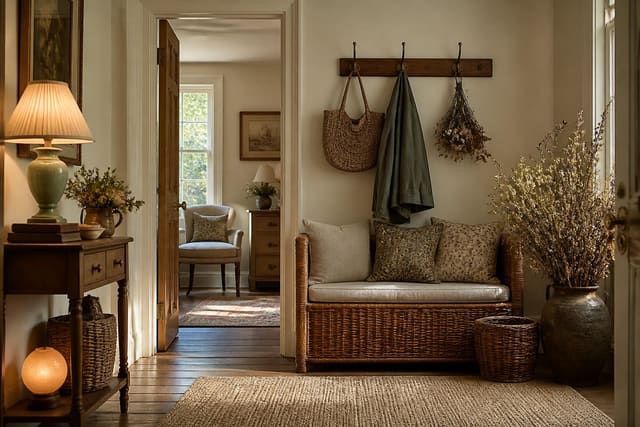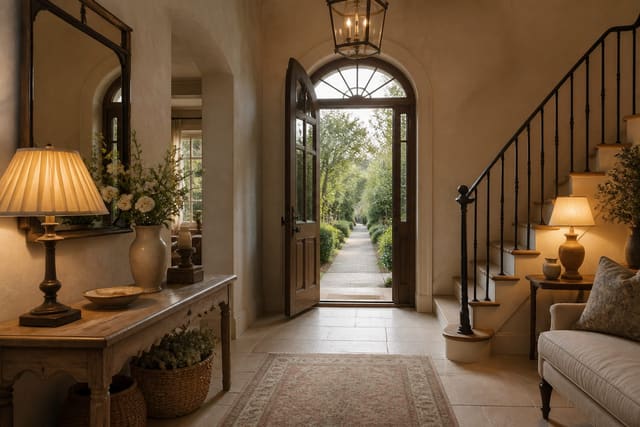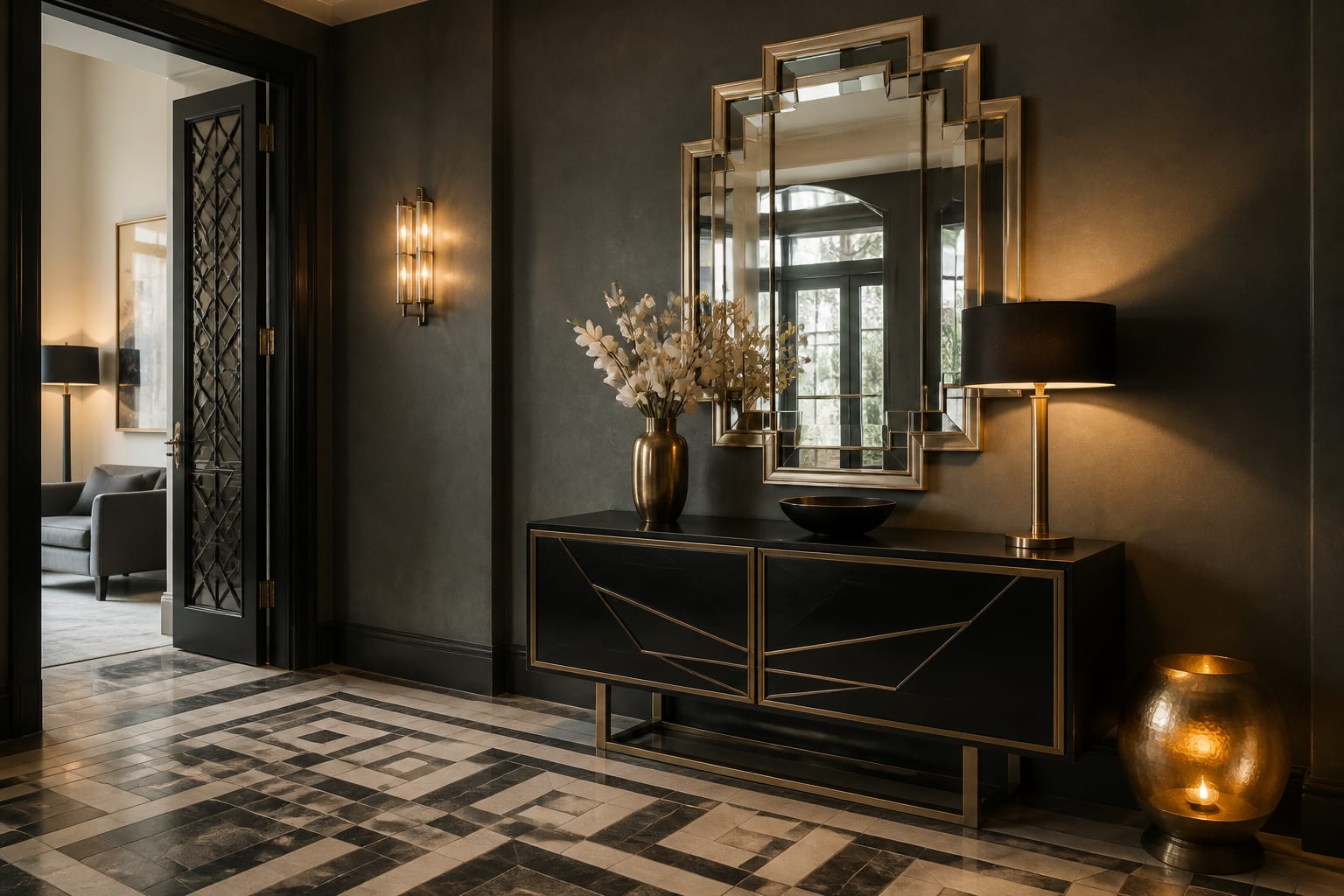
The fastest way to a glamorous art deco entryway is pairing one oversized brass sunburst mirror with a black-and-white checkerboard floor and a lacquered brass-leg console. Because a foyer is a pass-through space, it tolerates bolder pattern and shine than rooms you linger in, so a few high-impact pieces deliver period drama without overwhelming the rest of the home.
How do I make the sunburst mirror the hero?
A sunburst mirror hung above the console is the fastest way to signal art deco. Radiating brass or gilt rays catch light from the door and bounce it deep into the home, doubling as a last-look mirror before you leave. Scale it generously; a mirror spanning most of the wall above the console becomes the instant focal point.
If a literal sunburst feels too expected, try: - Stepped geometric mirror frames - Etched Vitrolite panels - Round mirrors banded in concentric brass rings
Center the mirror over the console and flank it with symmetrical sconces to reinforce the balance the period loved. Keep the wall behind it quiet, since busy wallpaper behind an ornate frame cancels out both. Match the frame's metal finish to your other hardware so console legs, sconces, and mirror read as one coordinated system.
See also our guide to Cottagecore Entryway Ideas for more on art deco entryway ideas.
What floor pattern grounds a deco entry?
Black-and-white marble checkerboard is the definitive choice, evoking period hotel lobbies. Set on the diagonal, it makes a narrow foyer feel wider and adds movement as you cross it.
| Floor option | Best for |
|---|---|
| Diagonal checkerboard | Widening a narrow entry |
| Fan-pattern mosaic | A distinctive, less-expected look |
| Bordered field design | Framing the threshold |
| Two-tone hexagonal tile | Subtle geometry with texture |
| Geometric runner or rug | Low-cost, no floor replacement |
Stone, encaustic cement, and porcelain that mimics marble all work; porcelain offers the durability a high-traffic entry needs. Keep the palette to two tones plus an optional metallic grout line, and echo the mirror or wallpaper angles so the whole entry speaks one visual language.
For a related angle, read French Country Entryway Ideas.
What console style fits art deco?
Choose clean, confident lines over fussy ornament, echoing the streamlined silhouettes of ocean liners and automobiles. A high-gloss lacquered top in black, deep green, or burgundy reflects light from any fixture above it. Slim brass or gilt legs and a fluted or reeded front add the ribbed texture and metallic thread the style demands.
Style the top symmetrically and restrained: - A pair of matched lamps or candlesticks - A low bowl or sculptural object at center - A single stack of books, no more
If storage matters, look for a single shallow drawer in matching lacquer with a knurled brass pull. Leave roughly even space on either side of the console and enough clearance below the mirror that the two pieces relate without crowding.
How do lighting, wallpaper, and a runner finish the look?
A foyer needs both presence and warmth. A tiered chandelier, frosted globe flush mount, or sculptural brass-and-opal pendant gives the ceiling a focal point, while matched sconces flanking the mirror bring the glow to face level. Warm bulbs keep metals looking rich rather than cold.
Wallpaper is the boldest optional layer, and an entry can handle more drama than most rooms since you move through it quickly: - Fan motif or sunburst repeat patterns - Stepped geometric or metallic-flecked designs - Limited to one feature wall or a defined panel
If full wallpaper feels like too much, a deep lacquered paint color with subtle sheen achieves a similar effect. A geometric or chevron runner in jewel tones ties the floor story together and softens the space underfoot. Keep runner, wallpaper, and tile palettes in conversation, and edit ruthlessly: one bold pattern, one strong light source, and one glamorous focal mirror reads more authentic than a room deploying every trick at once.
- Hang an oversized brass sunburst mirror centered above the console table.
- Install a black-and-white marble checkerboard floor, set on the diagonal.
- Choose a lacquered console with slim brass legs and a fluted front.
- Add a tiered chandelier plus matched sconces flanking the mirror.
- Wrap one feature wall in fan-motif or sunburst geometric wallpaper.
- Roll out a chevron or geometric runner in rich jewel-tone wool.
- Style the console symmetrically with paired lamps and minimal objects.
Bring the look home with Re-Design
An entryway is easy to over-decorate, so preview your plan before spending on a sunburst mirror or custom tile. Upload a photo of your foyer to Re-Design and try a checkerboard floor, a bold wallpaper wall, and a lacquered console in different finishes to see how they read in your actual light and proportions. Preview two or three directions, then buy the pieces for the version that genuinely feels right.
Frequently Asked Questions
How do I make a small entryway feel art deco?
Small foyers suit the style well, since a few bold moves register strongly in a tight space. Start with a large sunburst mirror to bounce light, add a geometric floor or runner underfoot, and choose a slim lacquered console with brass legs. Limit pattern to one surface so the room feels designed rather than crowded.
What flooring suits an art deco entryway?
Black-and-white marble checkerboard is the classic, especially set on the diagonal to widen a narrow entry. Hexagonal tile in two tones, a bordered field design, or a fan-pattern mosaic also fit the era. Durable porcelain that mimics marble handles heavy traffic well, and a geometric runner delivers similar drama if replacing the floor isn't an option.
Is bold wallpaper too much for a foyer?
Rarely, because an entry is a transitional space you pass through quickly, so it tolerates more drama than rooms where you linger. Confine the boldest fan or sunburst paper to a single feature wall or a defined panel, and keep surrounding surfaces quiet so the pattern reads as a deliberate showpiece rather than clutter.