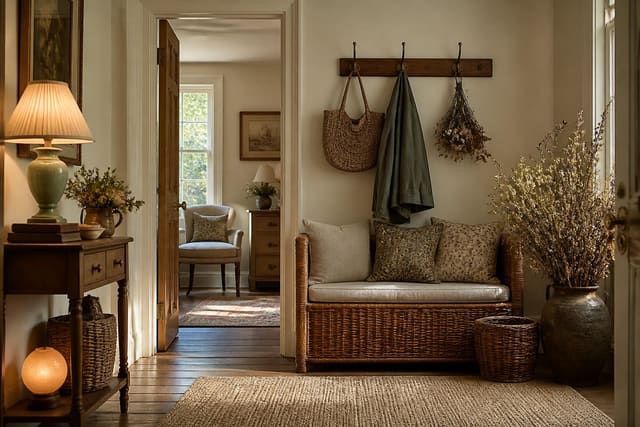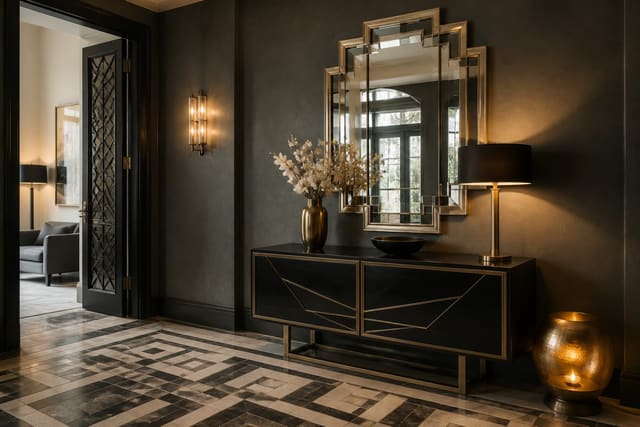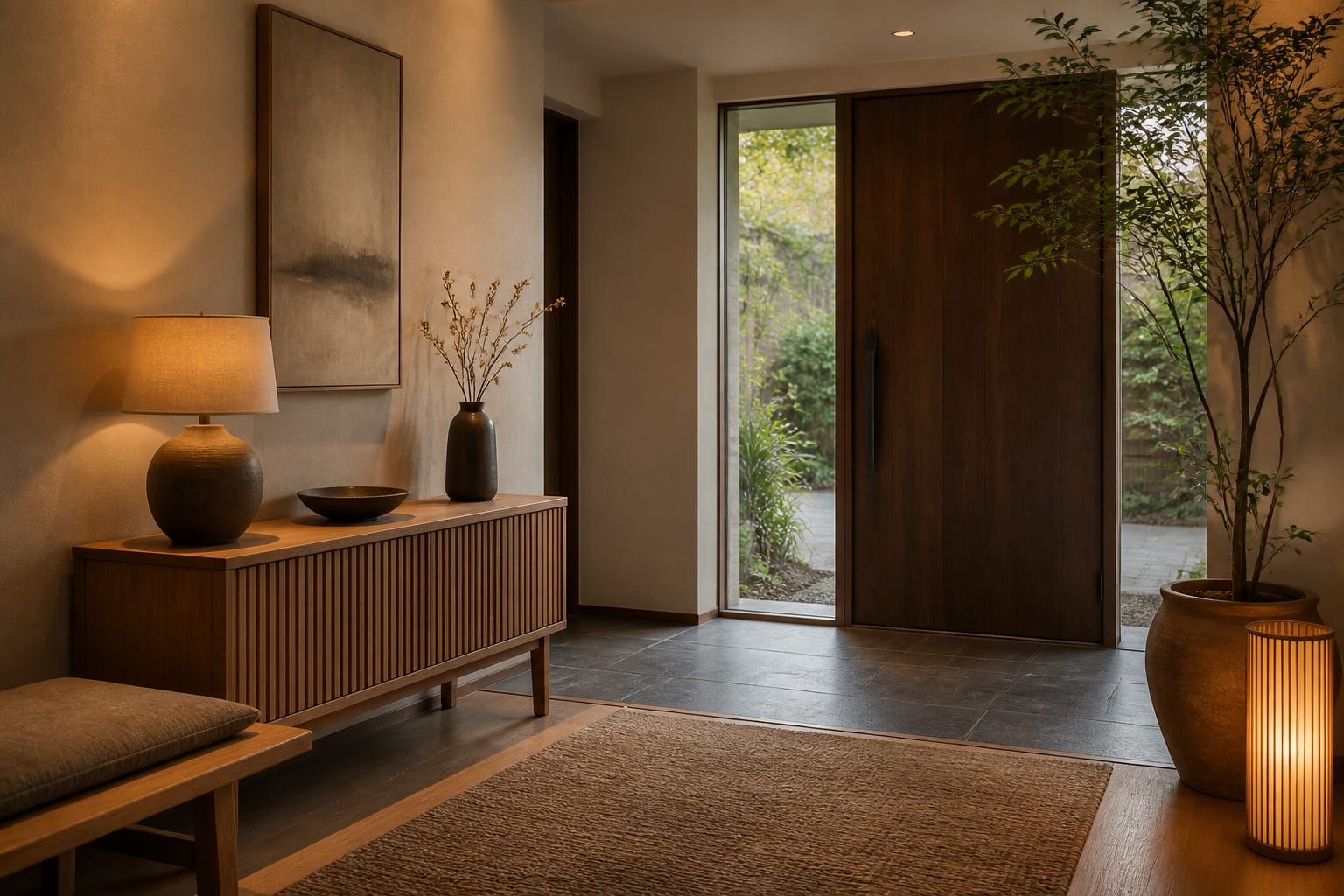
Japandi entryway ideas turn a small hallway into a calm arrival ritual by pairing a low wood bench and defined shoe-removal zone with closed storage, muted walls, and one focal object. The style blends the Japanese genkan with Scandinavian restraint, so clutter disappears and only a few honest, natural materials stay in view.
How Do You Create a Genkan-Style Shoe Zone?
The japandi entryway borrows its core idea from the Japanese genkan, a defined threshold where shoes come off and outside stays outside. Signal this transition with a flooring change, a tactile mat, or a low wooden bench that invites you to sit and slip off shoes. This small ritual keeps the home calmer and protects your floors from grit tracked in all year.
Choose a bench in pale oak or ash with simple, low lines and open cubbies or closed compartments beneath for tucking shoes away. A slatted design stays light rather than bulky, which matters in a narrow hallway where every inch counts. A flat-weave runner or a natural fiber mat in jute or wool marks where the entry begins and protects the floor from the worst of the dirt.
See also our guide to Cottagecore Entryway Ideas for more on japandi entryway ideas.
How Do You Store Shoes and Coats Without Clutter?
Storage separates a serene japandi entryway from a cluttered drop zone. Everything used daily should have a closed, dedicated home, while only one or two objects earn a spot on display. A slim shoe cabinet in natural timber, wall hooks for the coats you reach for most, and a lidded basket for hats and gloves cover the essentials.
In tight hallways, think vertically: a tall, narrow cabinet or a column of wall hooks uses height that would otherwise go to waste, leaving the floor clear. A small tray or bowl on a console catches keys and a wallet, but the bulk of your gear belongs behind doors. Choose handles and pulls in matte black or aged brass to match the restrained hardware seen elsewhere in the style.
For a related angle on japandi entryway ideas, read Art Deco Entryway Ideas.
What Colors and Materials Define a Japandi Entryway?
Wood should lead, appearing in the bench, a console, or wall paneling, ideally in pale oak, ash, or a richer walnut. The grain adds natural character a painted surface never could. A run of vertical wood slats on one wall adds texture and a nod to Japanese screens.
Walls work best in a muted, earthy tone: soft clay, warm taupe, sage, or a chalky off-white. A limewash or matte finish adds subtle depth without any sheen that would feel slick. Round out the layering with a wool runner, a linen cushion on the bench, and a chunky knit throw, mixing matte ceramic, raw wood, and woven natural fiber in one restrained color family.
How Do You Finish the Space With Light and One Focal Object?
Skip a glaring overhead fixture and add a warm wall sconce or a small table lamp for a gentle pool of light. A dimmable fixture feels cozy at night and bright enough to find your keys in the morning; warm bulbs make the wood glow.
A single sculptural plant, such as a slender olive tree, a snake plant, or a branch of foliage in a stoneware vase, adds organic shape against the wood. Keep it singular rather than abundant. Choose one focal object, a framed print, a handmade ceramic bowl, or a round mirror above the console, and let everything else stay quiet around it.
Bring the Look Home With Re-Design
Entryways are tricky to picture because every hallway is shaped differently. With Re-Design you can upload a photo of your own entry and preview a japandi scheme instantly, trying a low oak bench, a clay limewash wall, and a slim shoe cabinet against your real proportions. Seeing it in your actual space before you buy saves you from a bench that blocks the door or a tone that fights your floor.
Frequently Asked Questions
What furniture is essential for a japandi entryway?
A low wooden bench for removing shoes, a slim closed shoe cabinet, and a few wall hooks cover the basics. Add a small console with a tray for keys if space allows. Everything should favor natural timber and clean, low lines.
How do I keep a small entryway from feeling cramped?
Use vertical storage like tall cabinets and wall hooks to keep the floor clear, since visible floor reads as openness. Stick to a muted palette, hide daily clutter behind doors, and limit decoration to one plant and one focal object.
What is a genkan and how does it shape this style?
A genkan is the traditional Japanese entry where shoes are removed before stepping inside. Japandi entryways echo this with a defined shoe-removal zone, often marked by a bench, a mat, or a flooring change that signals leaving the outside behind.