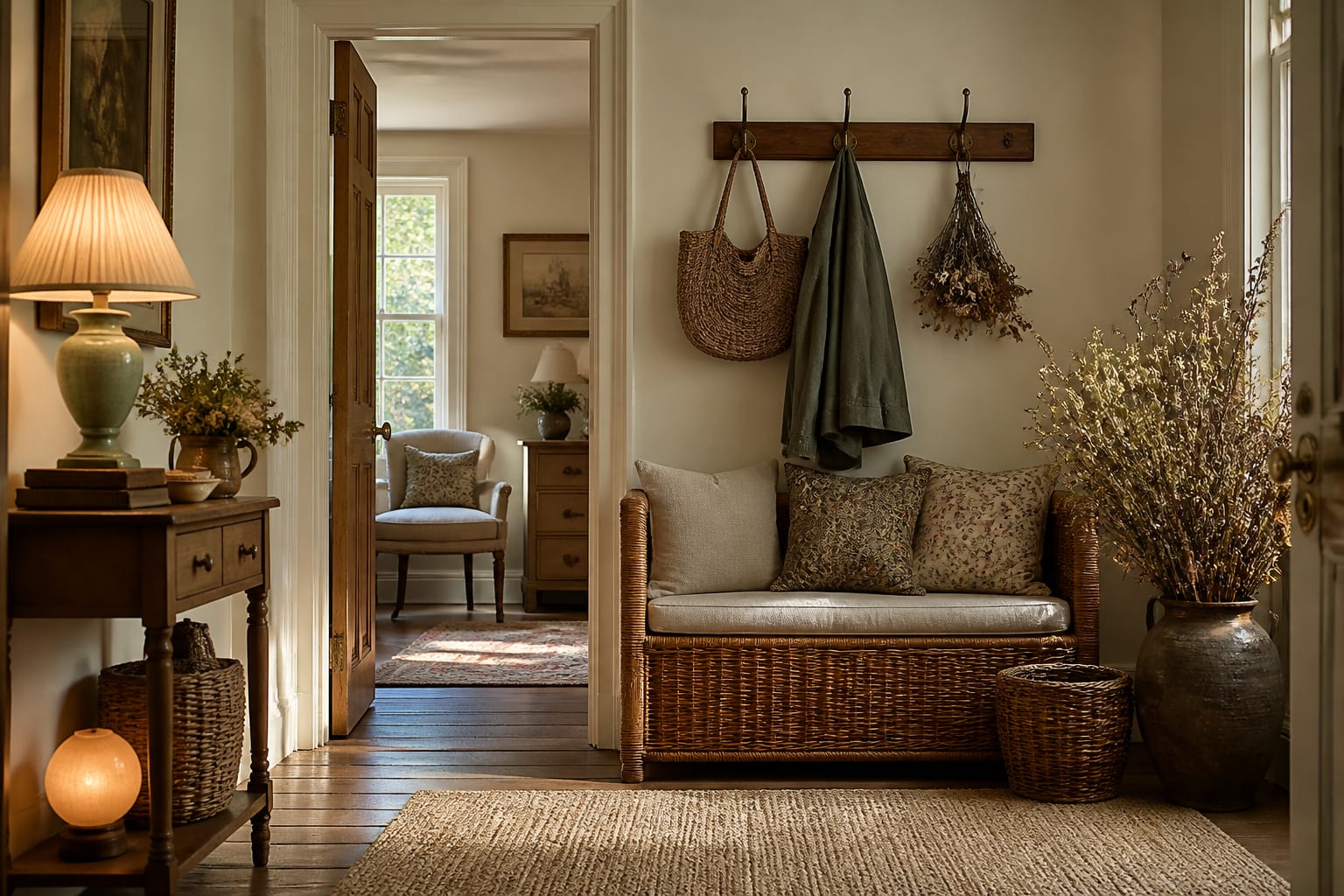
Cottagecore entryway ideas work best when natural texture, one dried floral arrangement, warm light, and real storage meet at the door. Wicker benches, rush runners, and vintage hooks bring softness, but the entry only feels welcoming if it still handles shoes, bags, keys, and wet umbrellas without looking cluttered.
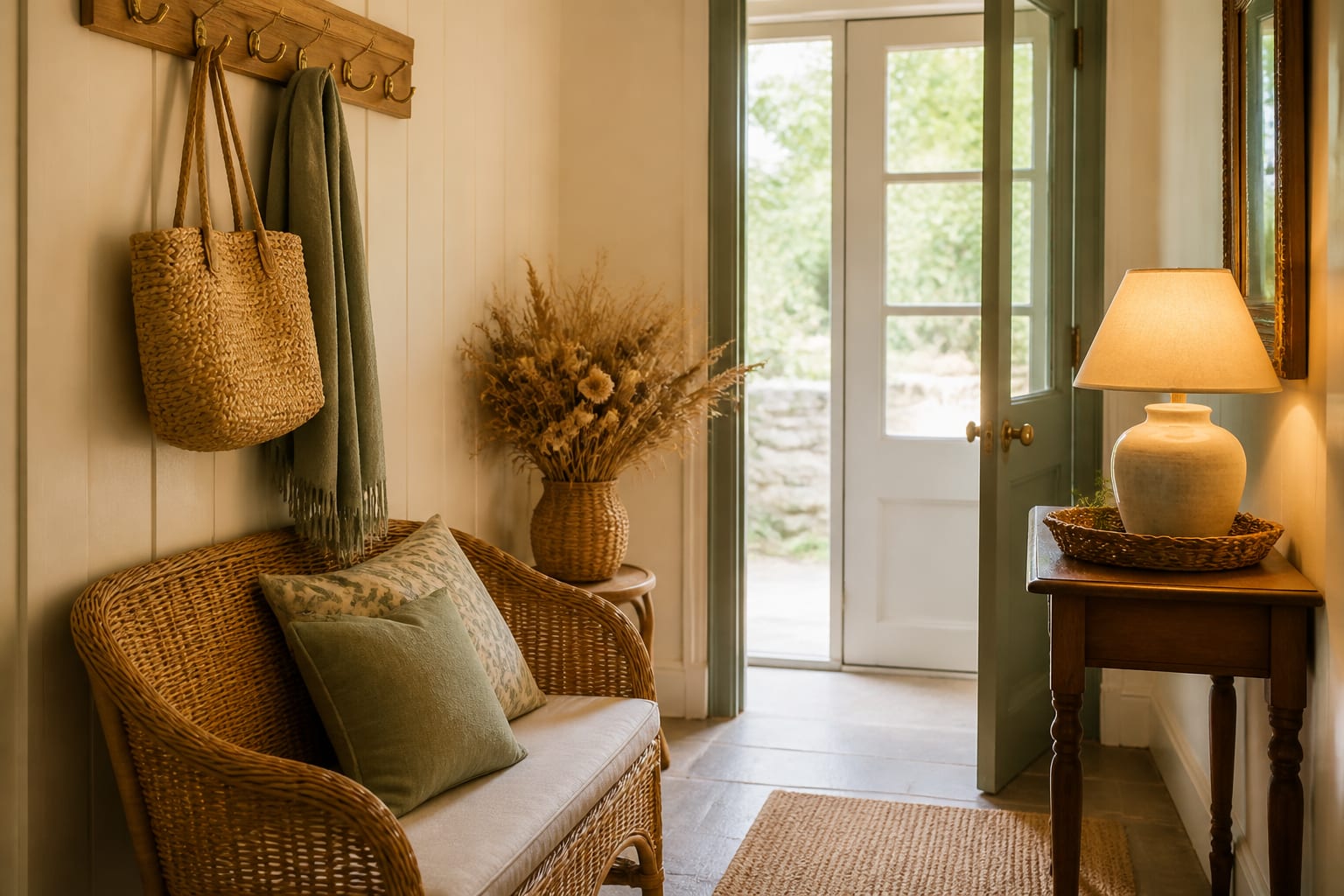
What makes an entryway feel cottagecore instead of crowded?
A cottagecore entryway feels nature-led and slightly timeworn: warm wood, woven texture, dried botanicals, and pieces that look collected rather than matched. Start with the fixed facts — door swing, stair rail, radiator, closet, shoe pile — before adding decor. A narrow entry may fit only a 30 in–36 in hook rail and an 8 in–12 in shelf; a larger foyer can take a 42 in–54 in bench with a mirror and basket beneath.
Keep colors earthy: cream, putty, sage, mushroom, faded blue, ochre, and old brass forgive scuffs better than bright white or pastel pink. If your entry already has dark tile or black hardware, repeat that tone in a frame, hook, or lamp base.
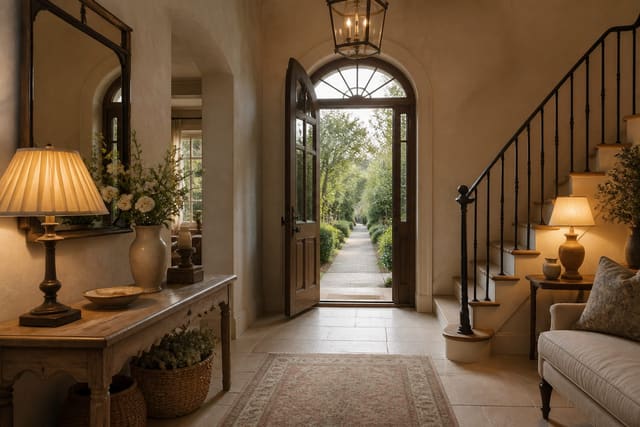
For a related look, see French country entryway ideas — similar aged wood and florals, but cottagecore should feel looser and more gathered.
Which cottagecore entryway ideas make the biggest difference?
Pick five or six moves suited to your square footage rather than layering in every idea at once.
- Mount a peg rail 48 in–60 in high with a real job per hook — coat, tote, leash — so it doesn't look overloaded.
- Use a wicker bench with a 17 in–19 in seat height if you sit to put on shoes.
- Place one dried arrangement (ceramic jug, wall basket, or glass demijohn) 10 in–16 in tall where it's visible from the door.
- Add a runner leaving 3 in–6 in of floor bare on each side; washable low-pile rugs handle mud better than pale flat mats.
- Hang a wood, brass, or iron-framed mirror with its center 57 in–60 in from the floor to add light.
- Store shoes in two lidded wicker baskets or a closed cabinet no deeper than 12 in–15 in.
- Swap harsh bulbs for warm ones around 2700K, or add a shaded console lamp.
- Hang one confident botanical print (16x20 in or 24x36 in) instead of several small frames.
How should wicker, dried flowers, and storage work together?
Use wicker where texture and air matter — baskets, bench seats, umbrella stands, trays — and give anything unattractive a closed home instead. Dried flowers (hydrangea, strawflower, lavender, eucalyptus, wheat, bunny tails, yarrow, preserved fern) work best away from the door swing and coat sleeves, since daily brushing sheds stems; a console corner or wall pocket is safer than a bench seat.
Storage works in tiers: a daily layer (hooks, key tray, boot mat, one basket) within easy reach; an occasional layer (spare umbrellas, seasonal gloves, totes) higher up or behind doors; and a small sentimental layer (one framed print, a travel dish, an inherited stool).
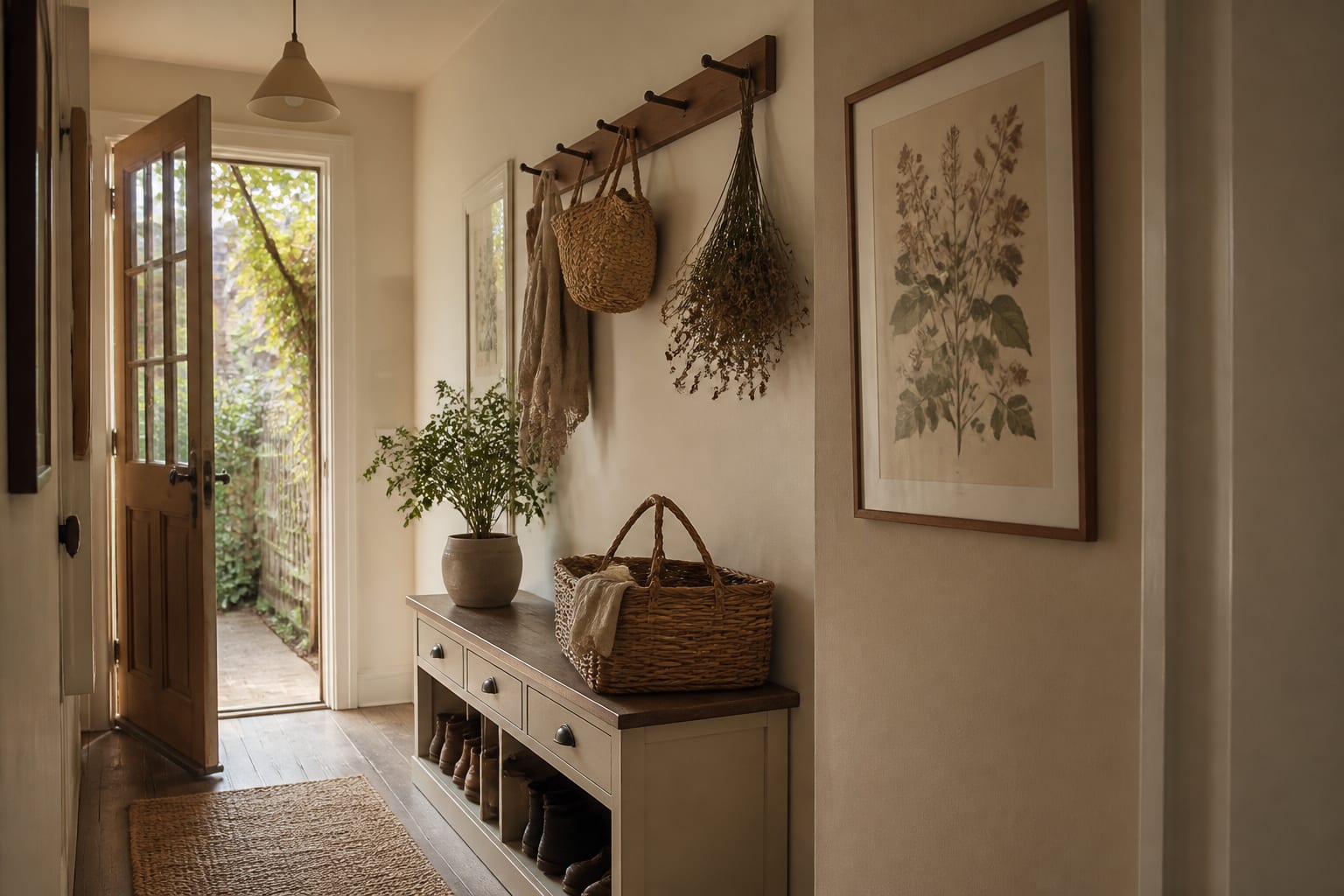
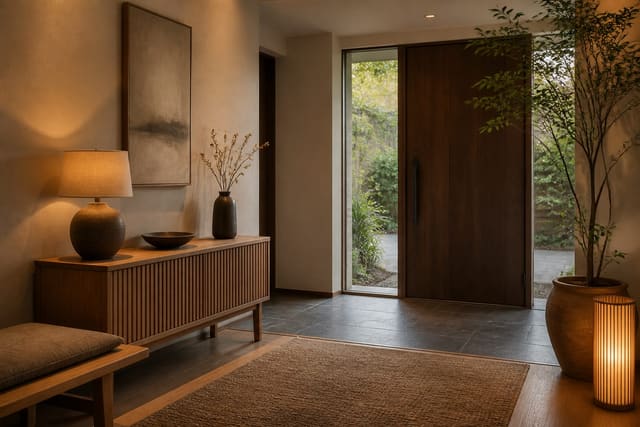
In a very narrow entry, borrow the restraint of Japandi entryway ideas — fewer objects, stronger silhouettes, more visible floor.
What mistakes make a cottagecore entryway look cluttered instead of cozy?
Most failures happen when the mood gets bought before the traffic pattern is solved.
- Too many small baskets read as restless; use one or two sized for the exact job, like a 14 in–18 in scarf basket.
- Dried flowers left in the traffic path shed fast; keep brittle stems above shoulder height or toward the far end of a console.
- An overly deep bench pinches a narrow hall; keep seating 12 in–15 in deep, or swap in a wall shelf and hooks.
- Skipping wet-weather storage makes the room feel staged; add a boot tray, washable runner, or umbrella stand.
- Mixing every rustic material at once feels like a craft stall; balance wicker with one smoother surface — painted wood, ceramic, glass, or aged metal.
- Dim lighting undercuts the mood; use a warm ceiling fixture bright enough for keys and shoes, then layer in a lamp for atmosphere.
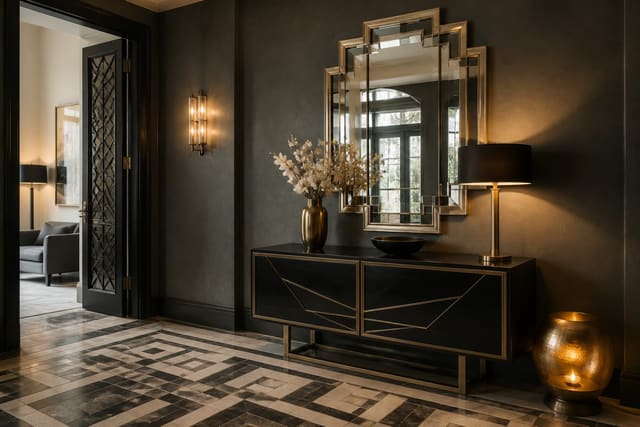
For contrast, art deco entryway ideas show the opposite approach — sharper geometry and glossier finishes — useful for gauging whether cottage softness is really the goal.
How can AI help you preview the design before buying anything?
A cottagecore entryway lives in relationships — wicker against flooring, dried florals beside wall color, a runner against tile — that are hard to judge from swatches alone. Upload a photo of your actual entry to Re-Design and test versions before ordering: one with a wicker bench and runner, one with a console and dried stems, one with a hook rail and closed shoe cabinet.
Shoot from the angle you actually experience — just outside or inside the door — keeping the door swing, closet, stair edge, and floor visible. The useful preview shows whether the bench blocks circulation and whether storage still leaves the doorway feeling open, not just which version looks prettiest.
What details make the entry feel personal instead of generic?
Add details tied to daily habits, not theme props: a ceramic dish for keys, a woven tray for one day's mail, a brass hook for a favorite tote, one framed landscape. A 4 in–6 in herb pot works in good light; otherwise dried lavender or a single branch is kinder and more convincing.
Keep scent subtle — beeswax, cedar, lavender, or plain soap reads more believable than a cluster of candles. If pets use the entry, choose washable runners and sturdy closed storage over delicate props. Stand outside the open door: if you see a clear landing spot, one woven texture, one botanical note, warm light, and hidden daily mess, the entryway is doing its job.
Frequently Asked Questions
What is a cottagecore entryway style?
A cottagecore entryway pairs natural, slightly timeworn materials — wicker, wood, dried florals, aged brass — with warm light and real storage so the space feels gathered rather than staged. It reads as nature-led and useful, with a landing zone for shoes and coats built into the softer, decorative choices.
How do I keep dried flowers from looking messy in an entryway?
Use one arrangement, roughly 10 in–16 in tall, in a spot away from the door swing and coat sleeves, since daily brushing sheds brittle stems. A console corner, wall pocket, or shelf above a hook rail holds up better over time than a bench seat or a spot right beside the traffic path.
What lighting works best for a cottagecore entry?
Warm bulbs around 2200K–2700K suit a cottagecore entryway best, since the style depends on glow rather than brightness. Use a ceiling fixture bright enough for finding keys and shoes safely, then add a small shaded lamp or lantern-style fixture on a console for atmosphere at night.
Can wicker furniture handle a high-traffic entryway?
Wicker works well for benches, baskets, trays, and umbrella stands, but it shouldn't be the only storage solving daily chaos. Pair it with closed cabinets or drawers for less attractive items like mail, chargers, and spare keys, and balance the woven texture with wood, ceramic, or metal so the entry doesn't feel flimsy.
How small can a cottagecore entryway be?
Even a narrow apartment entry can work with a 30 in–36 in hook rail and an 8 in–12 in deep shelf. Keep the palette earthy, use one dried arrangement, and lean on the calmer spacing of Japandi styling — fewer objects with stronger silhouettes — so a tight footprint doesn't feel crowded.
What colors work best for a cottagecore entryway?
Earthy tones like cream, putty, sage, mushroom, faded blue, ochre, and old brass work best because they forgive scuffs better than bright white or pastel pink. If the entry already has dark tile or black hardware, repeat that tone in a frame, hook, or lamp base to tie the space together.