Most attic conversions stall on the wrong question. People obsess over paint and furniture before checking whether the space is legally and physically habitable, then discover halfway through that the head height fails code or the stairs eat the room below. The better order is plain: confirm the bones first, then design. A good attic conversion is decided by head height, structure, insulation, and access long before it is decided by style. Get those four right and almost any aesthetic works. Get them wrong and the prettiest scheme is unusable. Start with the constraints, not the mood board.
Start with head height and structure
Before any design decision, get a tape measure into the attic. Most building codes require a finished ceiling height of at least 7 feet over a minimum of 50 percent of the usable floor area, and the usable area itself is typically measured only where the ceiling reaches 5 feet or higher. If your ridge sits at 7 feet 6 inches and the roof pitch is shallow, the genuinely usable footprint may be far smaller than the attic's total area. This is the single most common reason a conversion gets abandoned.
Structure comes next. Many attics were framed with ceiling joists sized only to hold up the ceiling below, often 2x6 lumber, not floor joists meant to carry people and furniture at 40 pounds per square foot of live load. Sistering new joists alongside the old ones or laying a new structural floor is frequently required, and that work is best confirmed by a structural engineer before you fall in love with a layout. If headroom is tight, a dormer or a raised section of roof can add the volume you need, though both are significant builds rather than weekend projects.
Light, insulation, and climate control
An attic without good insulation and ventilation is a season-limited room at best. Roofs collect heat, so a converted attic can run 15 to 25 degrees hotter than the rest of the house in summer unless you insulate the rafters properly and keep an air gap for the roof deck to breathe. Spray foam or well-detailed batts between and under the rafters, paired with a continuous ridge-and-soffit vent path, keep the space comfortable year-round. Skimping here produces a room that is freezing in January and unbearable by July.
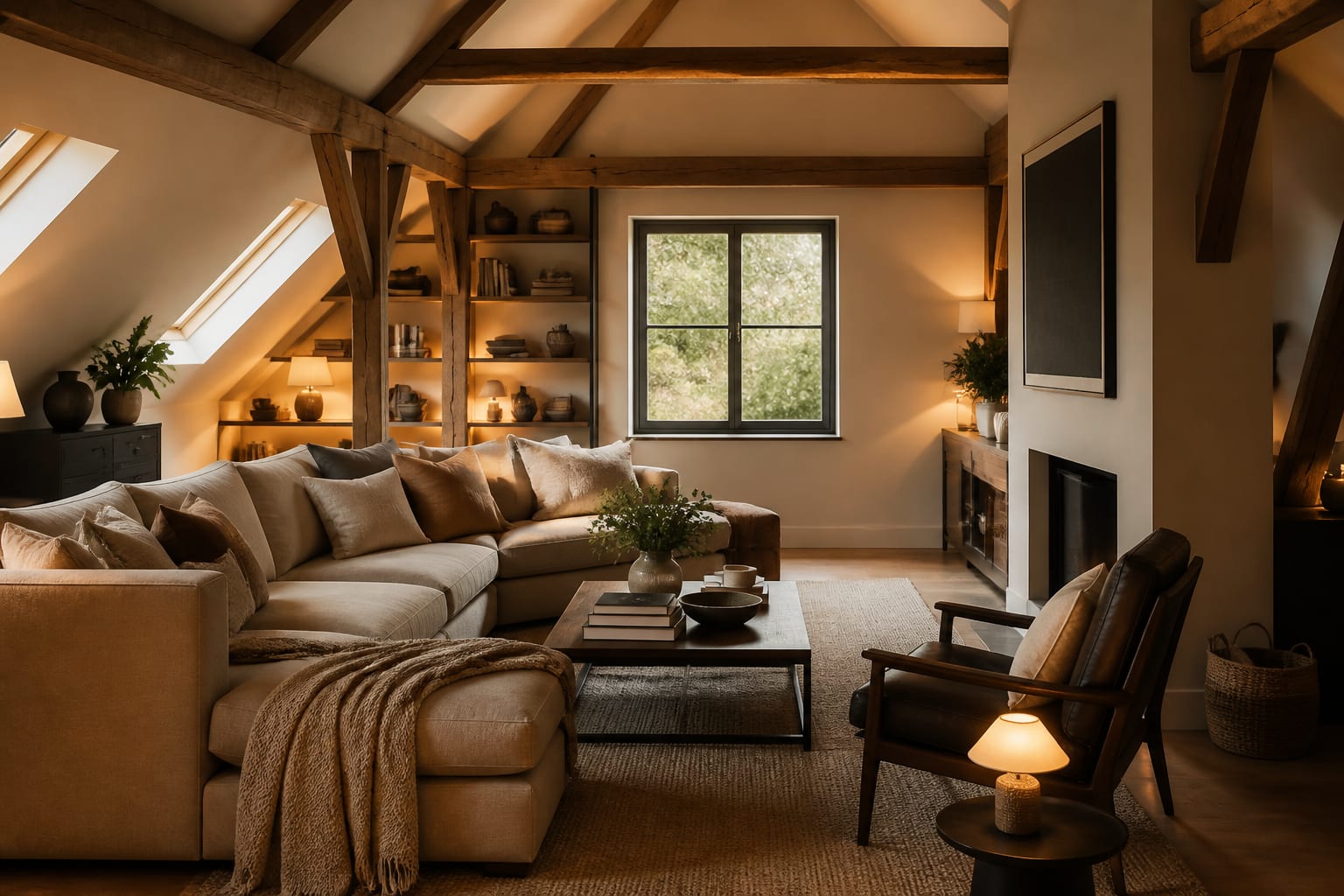
Light is the other half of comfort. Attics start dark, so skylights and dormer windows do the heavy lifting. A pair of roof skylights can flood a sloped ceiling with daylight that a wall window never could, and the rule of thumb of glazing equal to roughly 10 to 20 percent of floor area is a reasonable target. Where the slope allows, a dormer adds both head height and a vertical window for cross-ventilation. The same daylight discipline that makes small spaces feel larger with AI-driven design applies tenfold under a roof, where every lumen is fought for.
Make the layout earn its slopes
The charm and the curse of an attic is the sloped ceiling. Treat the low zones honestly: anything under about 4 feet of height is poor for standing furniture but excellent for built-in drawers, low bookcases, or a window seat tucked under the eaves. Push the bed, desk, or sofa into the tall central spine where you have full standing room, and line the knee walls with storage so nothing is wasted. A 3-foot-high knee wall with cabinetry behind it is far more useful than an awkward triangle of dead air.
Function should follow the shape. A guest bedroom, a home office, or a media room suits an attic well because they tolerate a lower-traffic, tucked-away feel. A primary suite works if you can fit a bathroom, which means routing plumbing up to the level, often the most expensive single line item at $5,000 to $15,000 depending on the run. If you are weighing whether the space could earn income, the staging logic in our AI home staging guide helps you picture how a finished attic reads to a renter or buyer rather than to you.
Common mistakes to avoid in an attic conversion
A handful of errors sink more attic projects than budget alone. Watch for these:
- Designing the room before confirming the 7-foot head height over half the floor, then discovering the space fails code.
- Ignoring the staircase, which typically consumes 30 to 40 square feet and a chunk of a room on the floor below.
- Skipping proper rafter insulation and ventilation, leaving a space that swings 30 degrees between summer and winter.
- Relying on a single small gable window so the finished room stays gloomy despite all the work.
- Treating the under-4-foot knee-wall zones as useless instead of filling them with built-in storage.
- Overloading original ceiling joists never rated for a 40-pound-per-square-foot live load, a real safety risk.
The access mistake is the quietest and most expensive. A pull-down ladder will never satisfy code for habitable space, so you need a permanent staircase, and fitting one means giving up floor area somewhere below. Decide where those stairs land before you commit, because retrofitting them later often forces a redesign of the whole project.
See it first in Re-Design
Sloped ceilings are notoriously hard to picture, which is exactly why a flat floor plan misleads you. Upload a photo of your attic to Re-Design and preview finishes, knee-wall built-ins, a dormer reading nook, or a bed placed along the tall central spine, all rendered against your real rafters and angles. You can test whether a light oak floor or a painted ceiling makes the slopes feel taller, and see how a skylight changes the room's brightness, before you spend a dollar on framing or order a single window. It turns an abstract triangle of space into something you can actually judge.
Frequently Asked Questions
How much head height do I need to convert an attic?
Most codes require at least 7 feet of finished ceiling height over a minimum of 50 percent of the usable floor area, and usable area is often counted only where the ceiling is 5 feet or taller. Measure to the underside of the ridge before planning. If you fall short, a dormer or raised roof section can add the volume, though both are major structural builds.
Do I need to reinforce the attic floor?
Usually yes. Many attics were framed with 2x6 ceiling joists meant only to hold the ceiling below, not a 40-pound-per-square-foot live load of people and furniture. Sistering new joists or adding a structural floor is common. A structural engineer should confirm the work before you finalize any layout.
How do I keep a converted attic comfortable year-round?
Insulate the rafters with spray foam or detailed batts and keep a continuous ridge-and-soffit ventilation path so the roof deck breathes. Without it, the space can run 15 to 25 degrees hotter than the rest of the house in summer. Good glazing, ideally 10 to 20 percent of floor area, handles light and cross-ventilation.
What is the best use for an attic conversion?
Guest bedrooms, home offices, and media rooms suit attics because they tolerate a tucked-away, lower-traffic feel. A primary suite works if you can route plumbing for a bathroom, often a $5,000 to $15,000 line item. Push standing furniture into the tall central spine and use the low knee-wall zones for built-in storage.