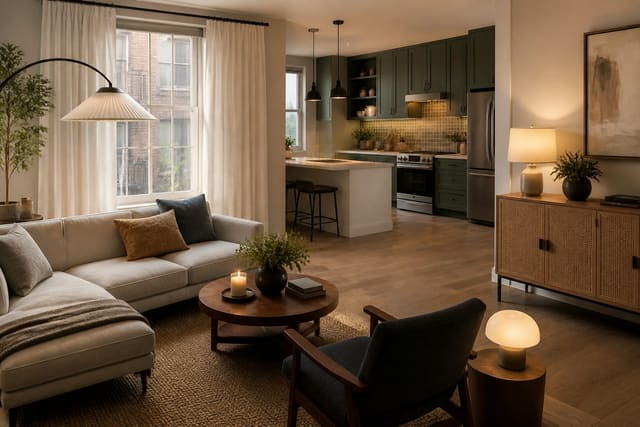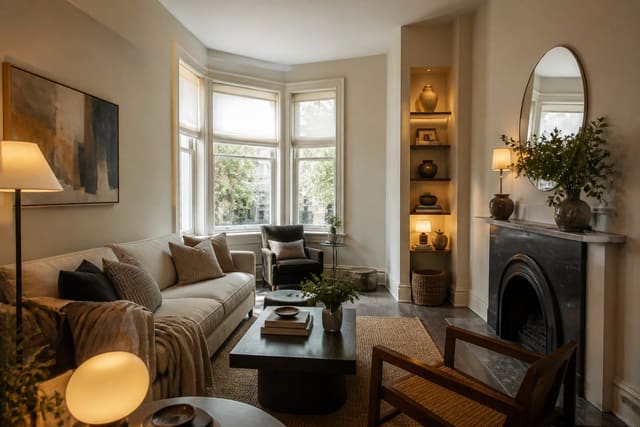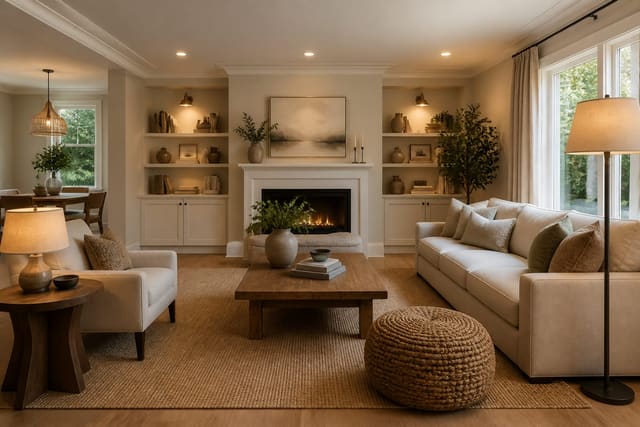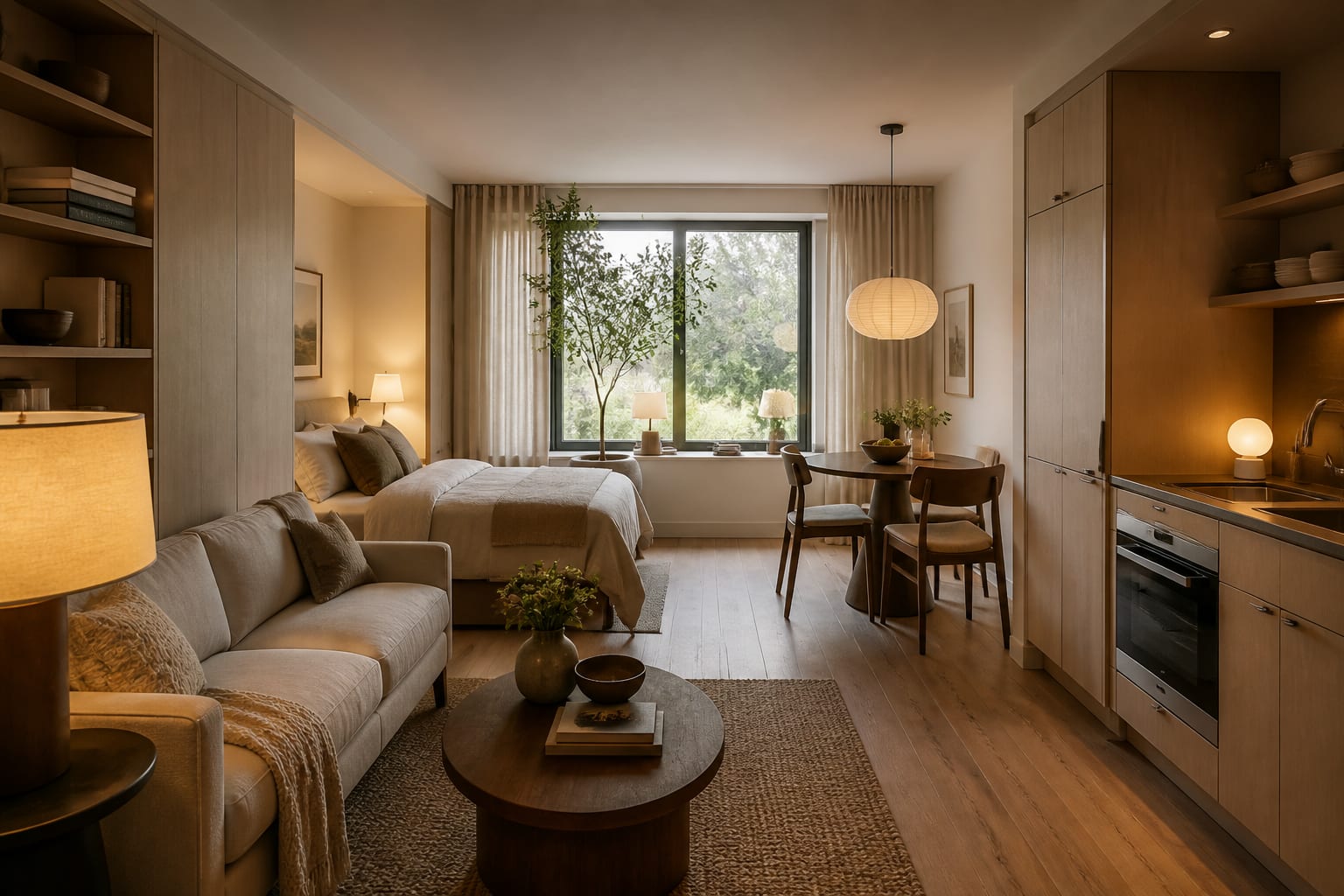
AI interior design for small spaces turns a photo of your actual room into visual options for layout, storage, lighting, and furniture scale before you buy or renovate anything. It reveals the tradeoff between an extra chair and the clear path you use daily, so a 420-square-foot studio or narrow rental living room gets a plan built around its real pinch points, not a generic Pinterest board.
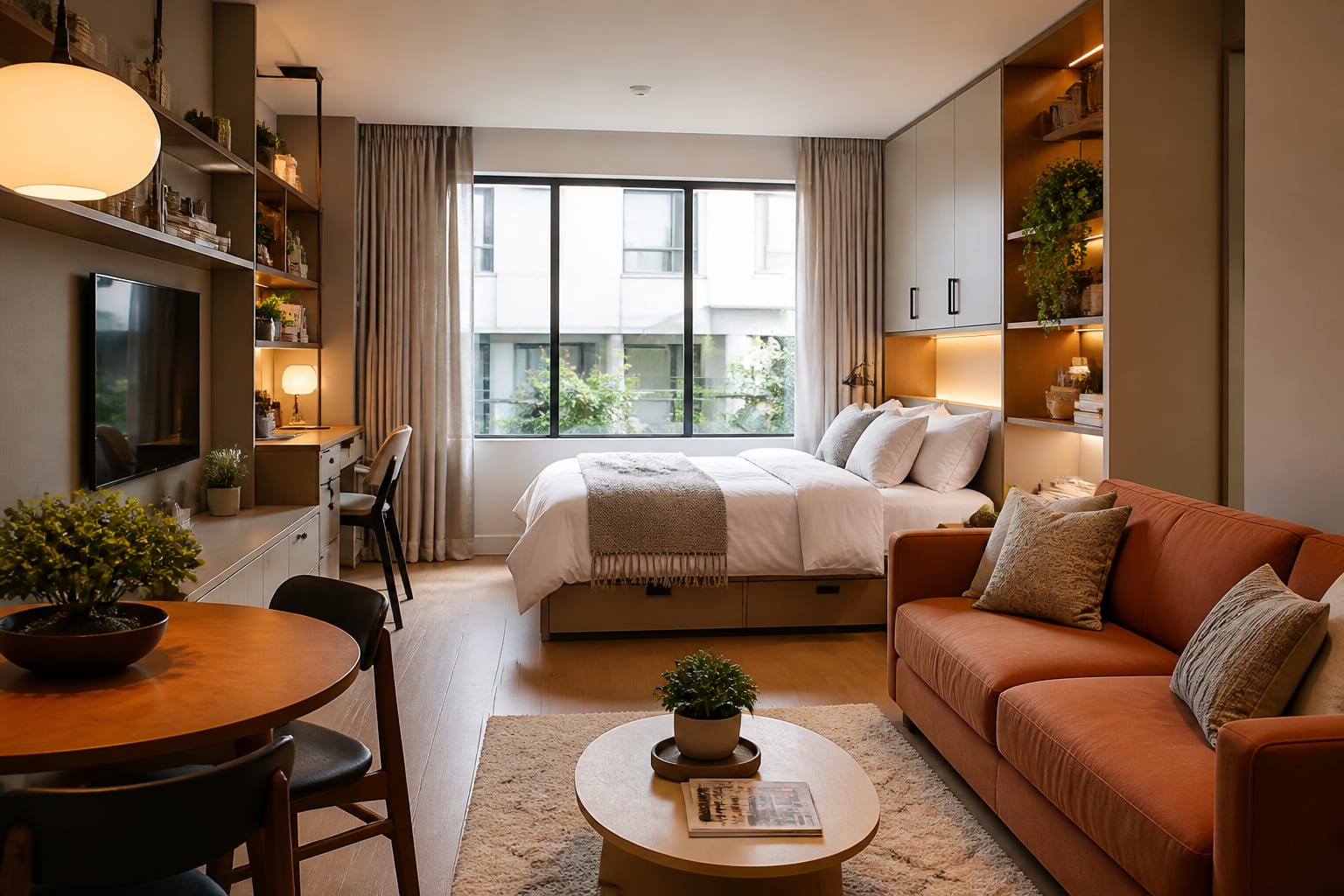
How does AI actually help design a small space?
Start with the room's fixed facts: windows, doors, radiators, closet openings, outlets, ceiling height, and pieces you cannot replace. If you rent, factor in rental apartment design constraints too. A preview that swaps your real sofa for a fantasy sectional isn't useful; one that shows your existing 78-inch sofa with a slimmer coffee table and a 36-inch path is.
AI is especially strong at revealing proportion. You may think the room needs more furniture, then see that one taller storage wall and one larger rug make it feel calmer than five small pieces scattered around the perimeter.
"A small room earns its calm by repeating itself — one main path, one anchor rug, one closed-storage strategy."
What layout decision saves the most square footage?
Protect the main path before styling anything. Draw the route from the entry to the kitchen, bathroom, closet, bed, and window. Most compact rooms need at least 30 inches of clear width, and 36 inches feels noticeably better where two people or a pet pass through.
Resist pushing every piece against the wall. A floating sofa with 4 to 6 inches behind it can feel more intentional than one jammed into a corner blocking a lamp cord. In a studio, placing the sofa perpendicular to the bed creates a soft division without building anything.
Size rugs honestly. A 5x8 can anchor a tiny seating area, but an 8x10 works better when the sofa and chair front legs sit on it. An undersized rug turns the floor into confetti and makes the room feel cheaper.
For odd corners, angled doors, or leftover alcoves, check awkward-space fixes before assuming the room is too small. A 14-inch-deep bookcase, a 12-inch wall shelf, or a 30-inch round table can solve what a full-size console never will.
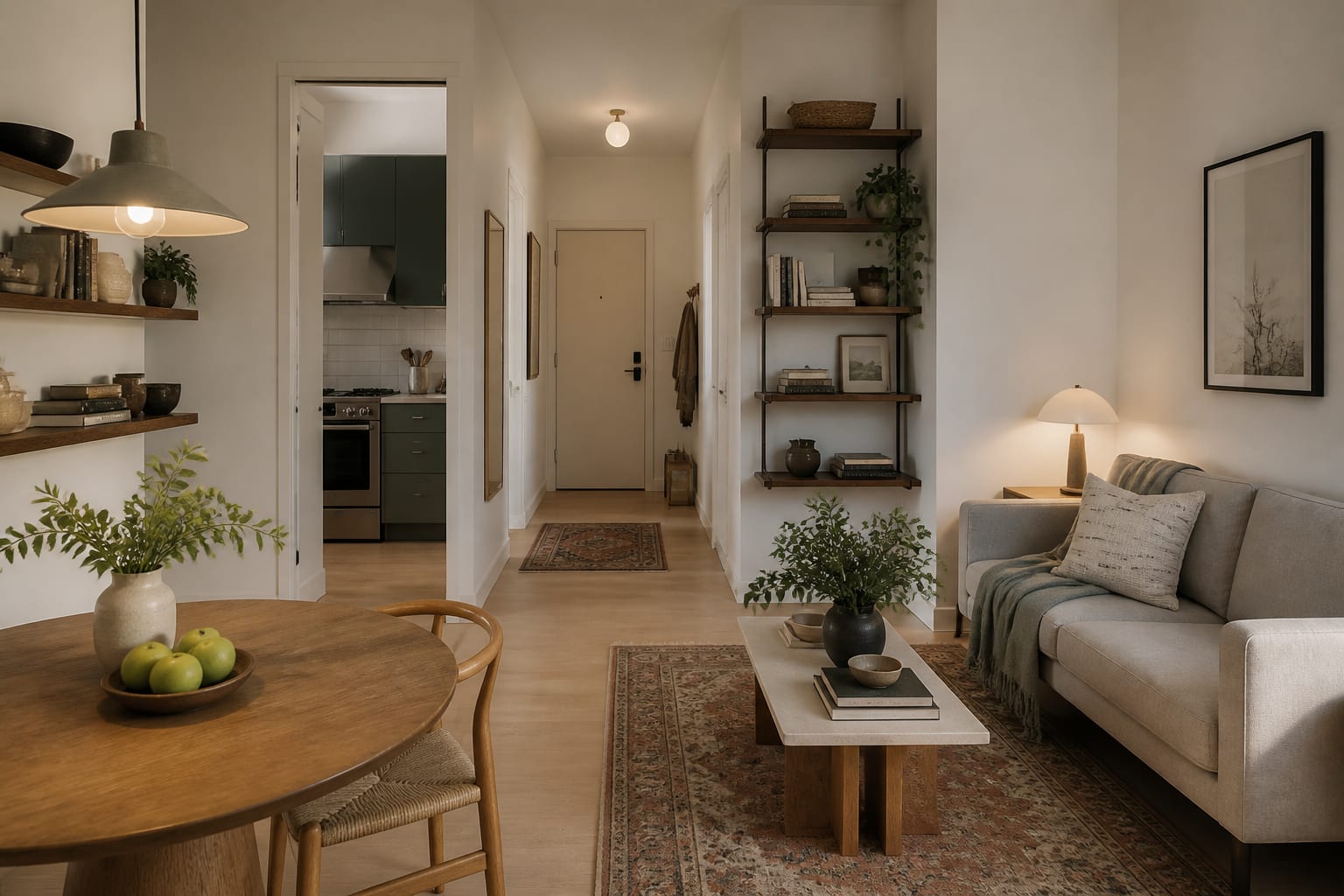
Which storage, light, and furniture choices earn their footprint?
Every item in a small home has to justify its shadow. The room needs correctly scaled furniture with visible floor, closed storage, and light placed where it's actually used.
- Closed storage for messy categories: shoes, cords, and paperwork are the room's loudest pattern; a 15-to-18-inch-deep cabinet holds more than open shelves styled with three bowls.
- Vertical storage where the wall is calmer than the floor: a 72-to-84-inch bookcase or wardrobe reads cleaner than three short pieces lined up under art.
- Furniture with visible legs: even 5 inches of floor clearance under a sofa or console keeps the eye moving in a heavy-feeling room.
- Narrow or nesting coffee tables: keep 16 to 18 inches between the seat edge and table so the daily walking lane survives.
- Light layered at seated height: use 2700K bulbs for living areas, 3000K for reading or cooking, and at least two lamps so corners don't disappear at night.
Color should support these choices, not distract from them. Warm white, mushroom, clay, olive, soft black, pale oak, walnut, and muted brass create contrast without chopping the room into pieces. High contrast can work if the dark finish repeats at least three times — curtain rod, lamp, cabinet pull.
Mirrors help only when they reflect something worth doubling. One facing a messy counter doubles the mess; one catching a window, lamp, or plant makes the room feel deeper without pretending it's larger.
What small-space mistakes should you avoid?
Most mistakes come from trying to make a room look bigger while making daily life harder. The better goal is a room that feels easy at its real size.
- Undersized furniture crowds the room with too many legs and seams; choose one 72-to-84-inch sofa instead of a loveseat, two tiny chairs, and three side tables.
- Open shelving as main storage lets small objects multiply visually; keep shelves for books and large baskets, and hide chargers, mail, and cleaning supplies behind doors.
- Ignoring door swings can collapse a pretty plan when a closet or fridge can't open; leave the swing arc clear and check drawers pull out at least 18 inches.
- No anchor for each zone makes studios feel temporary; add a rug under seating, sconces near the bed, or a pendant over the dining spot.
- A giant sectional for "maximum seating" erases flexibility; a compact sofa, one movable chair, and a 16-inch stool often host better because pieces can shift.
If preparing a small home for sale or rent, borrow the discipline of home staging principles: show the room's purpose fast, remove duplicate furniture, and make storage look believable.
How do you use AI to preview a small home before committing?
Choose the room's job and measure the nonnegotiables first. Upload a straight daylight photo from a doorway or corner, not a cropped beauty shot, showing the full floor line, ceiling line, windows, and any bulky furniture that must stay.
A useful studio prompt: "Redesign this 420-square-foot studio. Keep the existing wood floor, white walls, window, 60-inch dresser, and queen bed. Add a 78-inch sofa, 5x8 rug, slim round dining table for two, closed shoe storage near the entry, warm neutral palette, wall shelves over the desk, and 2700K lamps. Preserve a 30-inch path to the bathroom and no construction."
Run variations with different priorities — one maximizing storage, one protecting open floor, one dressed up for guests. That comparison shows whether the bed should turn, whether the desk fits by the window, and whether a dining table deserves space at all.
Then edit one variable at a time. If the palette works but the sofa is too large, keep the palette and correct the sofa length. Corrections that read like room instructions, not mood words, produce more accurate previews.
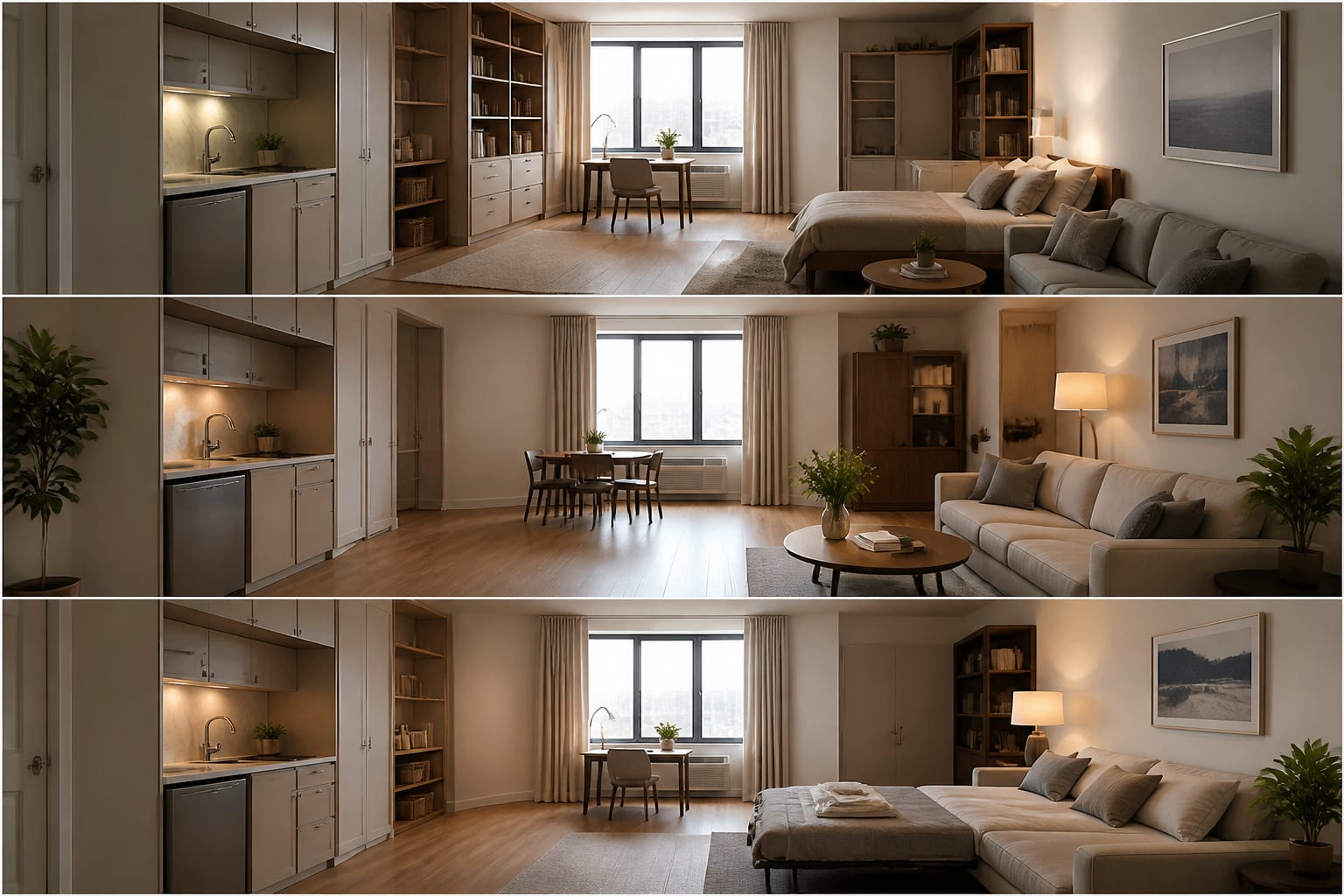
The final test is physical: tape the sofa, desk, table, and cabinet footprints on the floor, open the closet, pull out the dining chair, and walk the entry-to-bathroom path with a laundry basket. If the taped version feels sane, the preview has done its job.
Frequently Asked Questions
Can AI redesign a small apartment from one photo?
Yes. Upload a straight daylight photo from the doorway or corner showing the floor, ceiling, windows, doors, and any furniture that has to stay. Keep the prompt honest about constraints so the preview solves your real space rather than an idealized one.
How big should a rug be in a small living room?
Usually an 8x10 with the front legs of the sofa and chairs resting on it. A 5x7 floats and looks temporary, while an oversized rug can fight the room's walking path.
What sofa size works in a tight room?
Aim for 72 to 84 inches long and under 36 inches deep. A loveseat plus two accent chairs often looks busier than one correctly scaled sofa, and a 96-inch sectional usually eats the main path.
Should small-space furniture sit against the wall?
Not always. Floating the sofa with 4 to 6 inches behind it can feel more intentional than jamming it into a corner. The clearance on the back side matters less than keeping the main walking path open.
How many lamps does a small living room need?
At least two shaded lamps plus one wall sconce or floor lamp at 2700K. A single overhead fixture flattens the room and makes it feel like a hallway after dark.