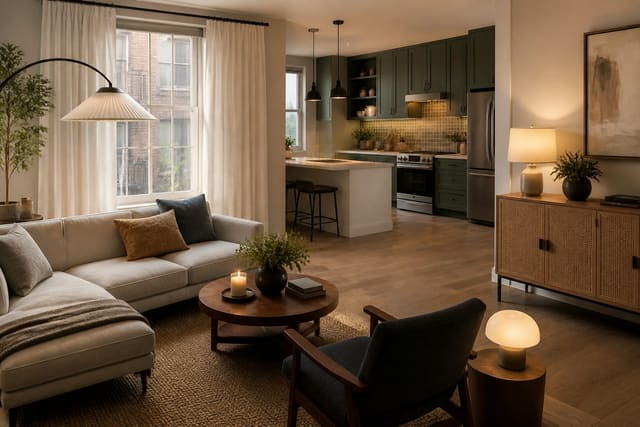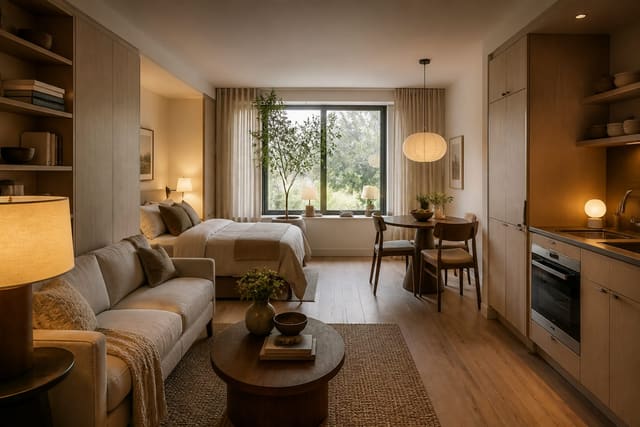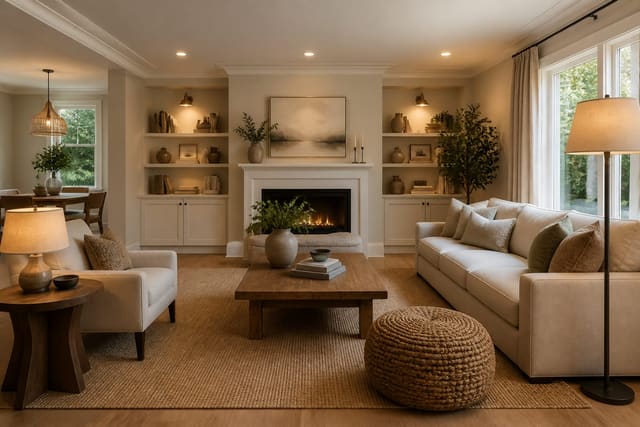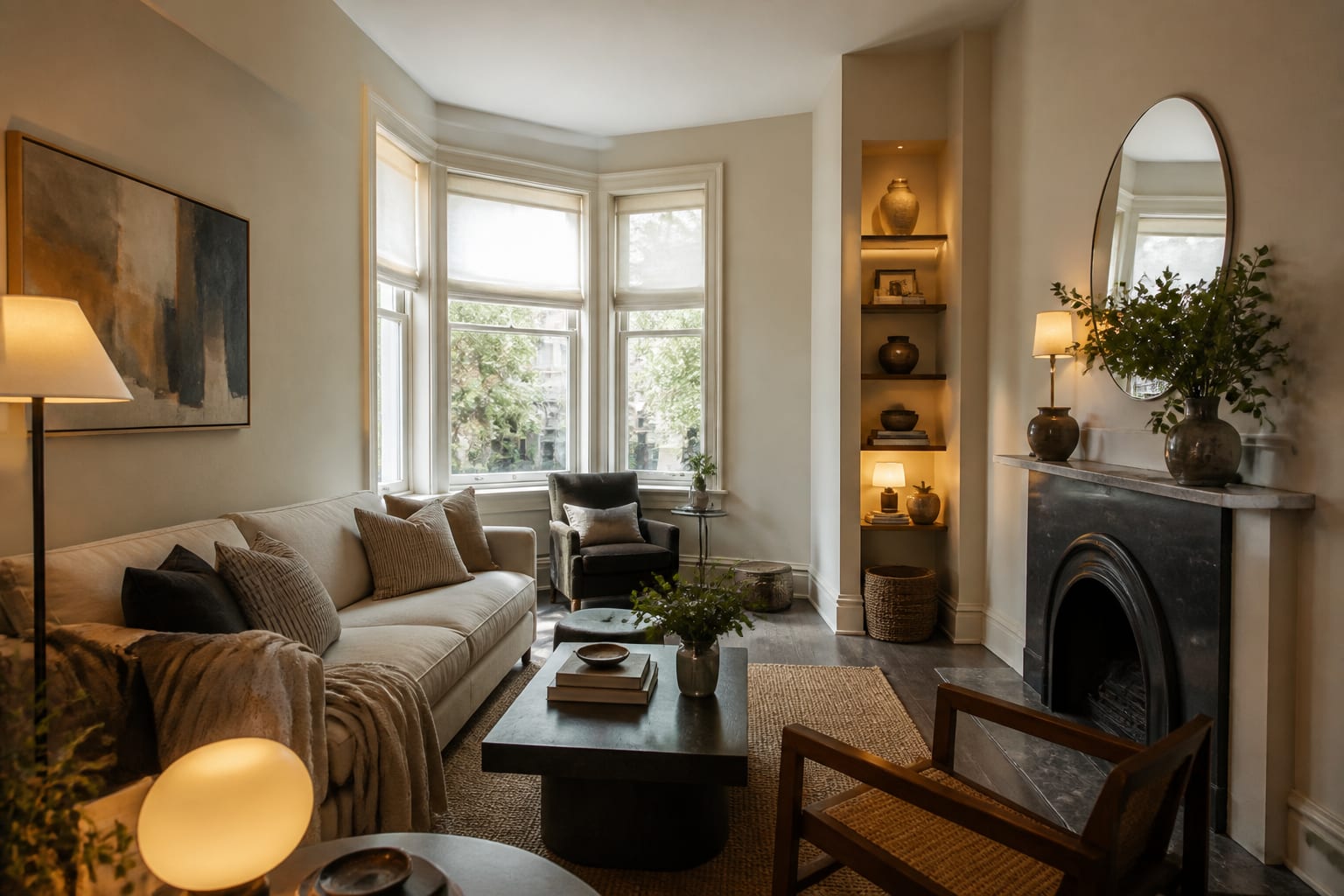
AI design awkward rooms works by turning a photo of your angled wall, alcove, sloped ceiling, or odd footprint into visual layout options before you move furniture or spend money. It's most useful when you can't tell whether a tricky spot wants storage, seating, art, or nothing at all.
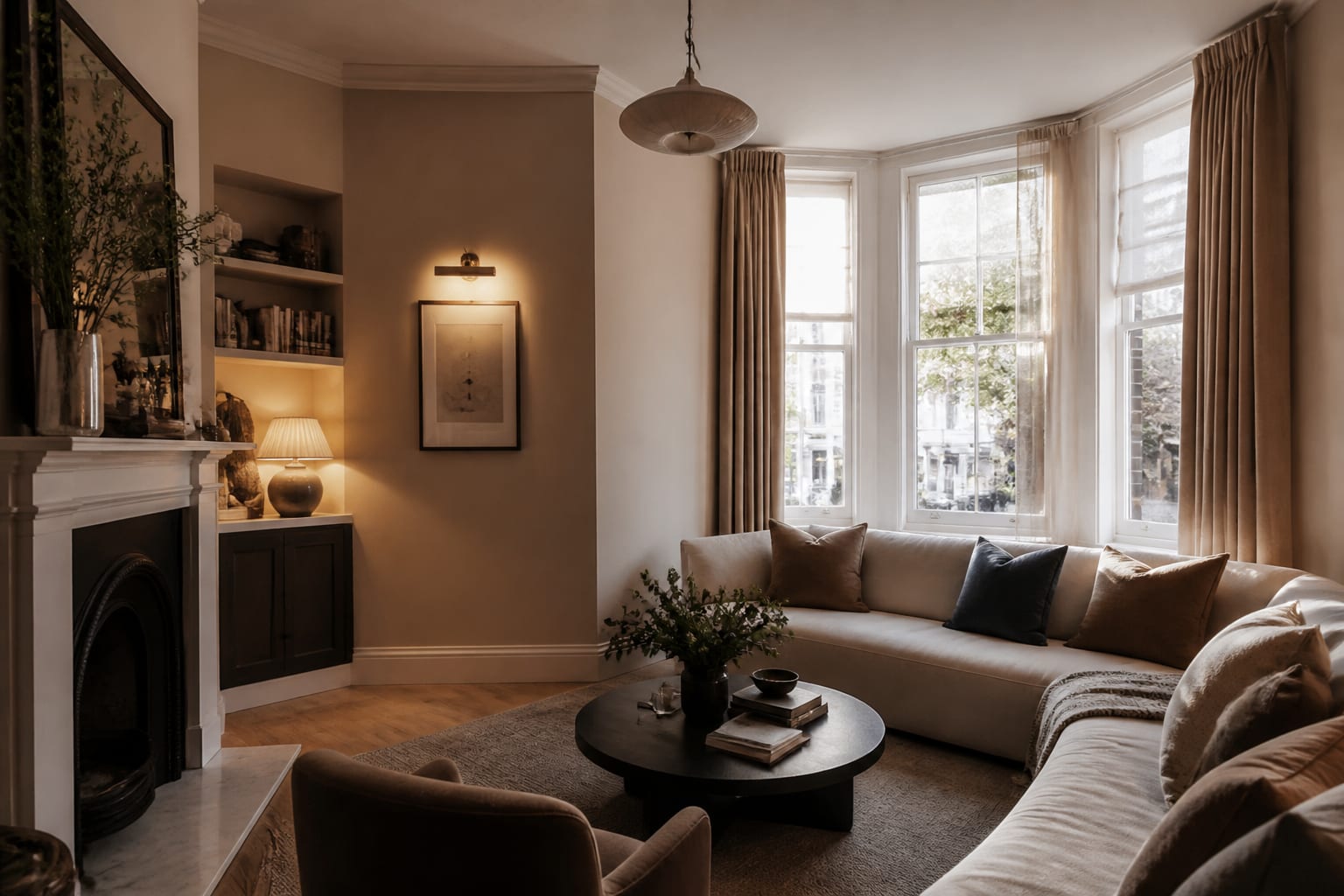
How does AI handle irregular room shapes?
The preview only works if the oddity stays in the photo. Don't crop out the diagonal wall, radiator, low window, off-center fireplace, or half-column. Tell the tool what must remain, then request realistic moves: a 72" sofa instead of a sectional, a 12"-14" deep alcove cabinet, or a 30" clear walking path.
If the awkward room is also small, borrow the discipline from AI interior design for small spaces before adding another piece. Small plus irregular means fewer, sharper decisions, not tinier furniture everywhere.
Which awkward feature is the real problem?
Decide first whether the feature interrupts movement, weakens the focal point, or throws off visual balance. A diagonal wall behind a sofa is a composition problem; a closet door that clips a chair is a circulation problem; a deep alcove beside a fireplace is often a hierarchy problem. Each needs a different fix.
Walk the room from the entry, then from your most-used seat. A blank niche, a messy console, or a stranded chair signals unfinished design. A table corner you squeeze past means the layout is wrong even if it photographs well.
Measure before shopping:
- Mark a 30" walking route in tight rooms, pushing to 36" where people pass each other.
- Leave 16"-18" between sofa and coffee table.
- Keep 24" clear in front of drawers or cabinet doors.
- Size a rug (an 8' x 10' works in many living areas) to the seating group, not the crooked wall line.
Renters should favor freestanding fixes. A narrow cabinet, plug-in sconce, removable wall panel, or tension-mounted curtain can activate an alcove without touching the lease. The limits covered in AI room design for rental apartments apply strongly here, since built-ins are tempting but not always allowed.
How should angles, alcoves, and dead corners earn their keep?
An irregular room starts working once every strange spot has a role. Don't fill an alcove just because it exists; decide whether it should disappear, frame something, store something, or create a pause.
- Shallow alcove storage: shelves 10"-12" deep suit books, baskets, and folded linens; cabinets 14"-18" deep handle shoes, games, or barware without protruding awkwardly.
- Angled wall as focal plane: one large artwork, a 12"-15" deep console, or sconces make the angle feel intentional. A tiny chair shoved there just advertises the problem.
- Sloped ceiling near the low edge: place a bed, low dresser, or reading cushion where standing height is poor, and keep tall storage on the full-height wall.
- Bay window with one job: a 30"-36" round table, a built-in bench, or two chairs work. Three unrelated plant stands read as a storage apology.
- Lighting to stitch geometry together: warm 2700k lamps in living areas and 3000k task light in work corners separate mood from function without more furniture.
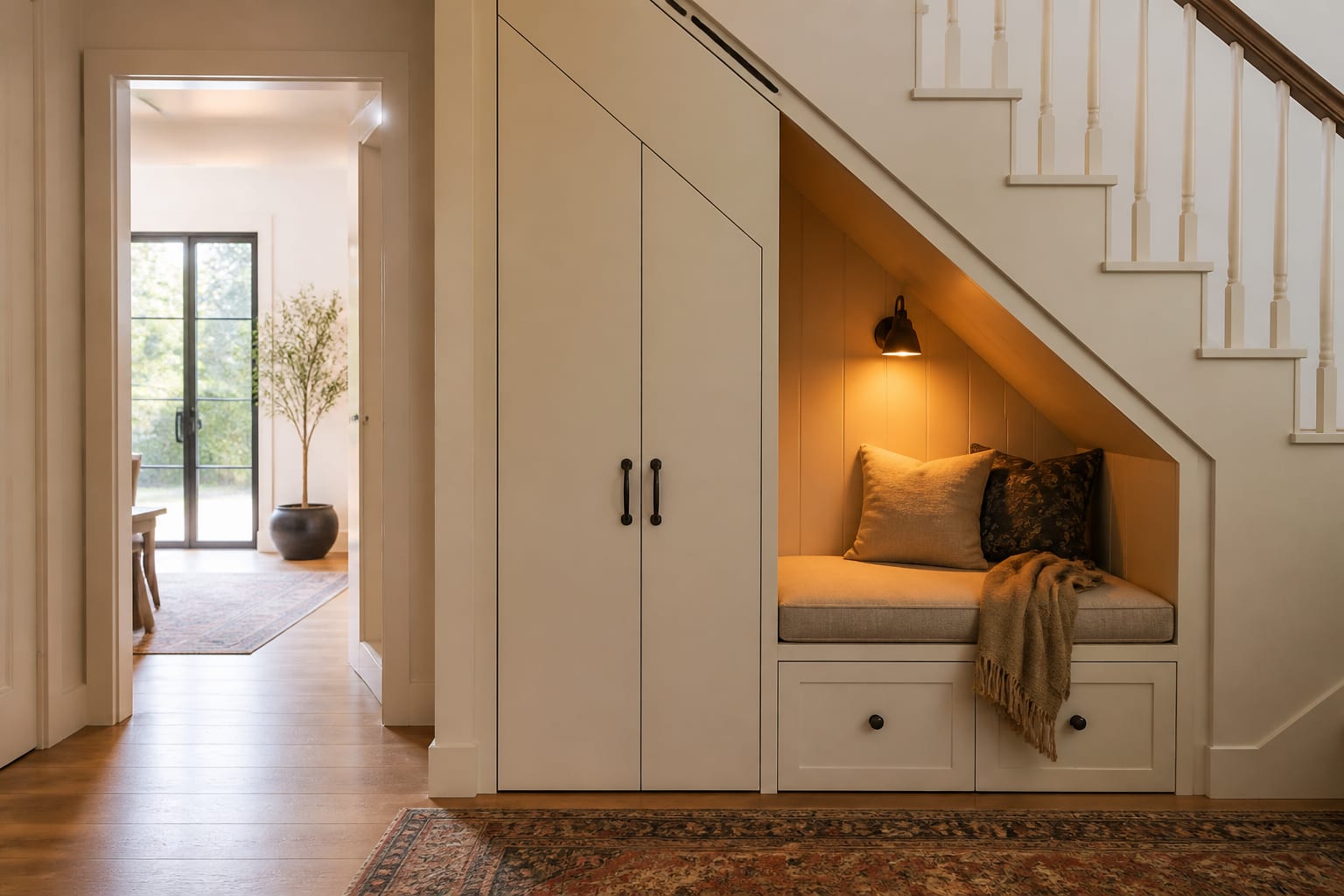
For resale photos, awkward spaces need an even clearer identity within seconds, which is why the staging logic in AI design home staging is useful even when you're not selling.
What mistakes should you avoid in awkward rooms?
Most mistakes come from hiding the irregularity instead of admitting it.
- Filling every recess ignores that negative space can make architecture readable. An 8" deep alcove may need paint or a wall light, not shelves that can't hold anything useful.
- Sectionals in angled rooms often block the natural route. Try a straight 72"-84" sofa with one swivel or armless chair first.
- Centering on the crooked wall makes furniture look accidentally rotated. Center seating on the activity, fireplace, or view, and let art address the odd plane.
- Open shelves in every niche create visual static in an already busy room. Closed lower storage plus a few larger display pieces reads calmer.
- Ignoring outlets and switches turns a clever alcove desk or bar cabinet into daily friction.
Custom built-ins can be the best answer, but they freeze the decision. Mock up the depth with cardboard or painter's tape first and confirm how doors, drawers, baseboards, vents, and outlets will behave.
How do you prompt AI to design an odd footprint?
Name the room's oddities in plain language first. A vague "make this awkward room beautiful" smooths over the exact architecture that needs solving. A useful prompt reads like a site note: "keep the angled fireplace wall, two low windows, radiator, 82 inch sofa, oak floor, and rental white walls; create a cozy living room with a 30 inch path to the hallway, closed storage in the left alcove, warm lamps, and no construction."
Run separate versions with different priorities: one protecting circulation, one maximizing storage, one turning the awkward feature into the focal point. Reject a stylish angled-wall version if it narrows the walkway; keep refining a storage version that makes the alcove useful without crowding the room.
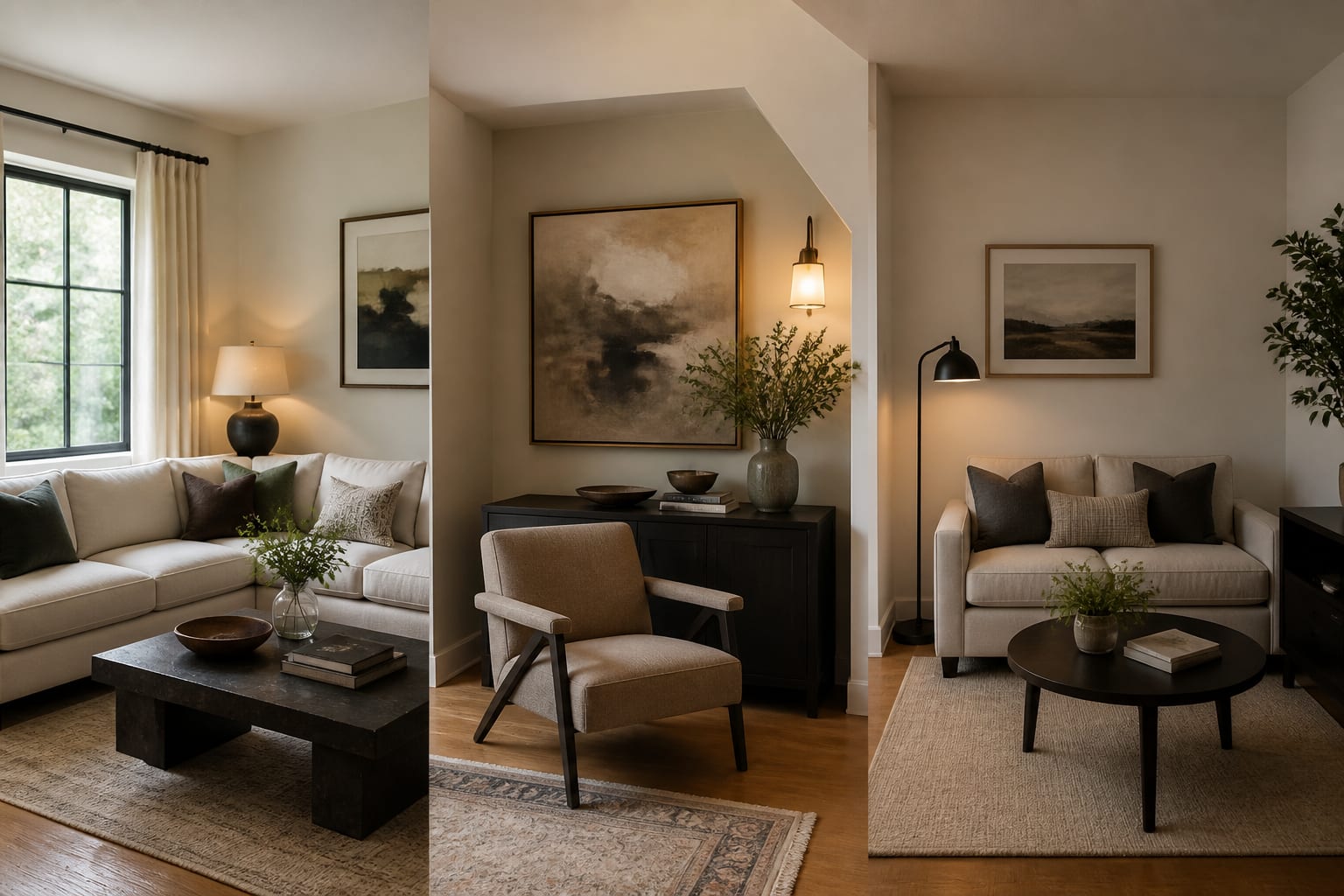
Be explicit about what must not change: don't widen the room, remove the sloped ceiling, erase the radiator, replace a rental floor, or invent recessed lighting you can't install. Then correct one variable at a time: keep the palette, change the sofa length; keep the layout, swap open shelves for closed cabinets; keep the alcove desk, request a 24" deep surface and a plug-in sconce.
What finishing touches make an irregular room feel intentional?
Repeat one material or color across the room so the eye has a pattern to follow: black in a curtain rod, frame, and lamp base; oak in a console, shelf, and chair leg. A warm neutral wall can connect an alcove and angled corner without forcing them to match.
Paint decides whether an odd feature recedes or becomes a statement. Paint an alcove the wall color to quiet it, or a deeper shade to add depth. Avoid high-contrast trim on every broken plane unless the architecture is genuinely worth outlining.
Scale accessories up. One 30"-36" piece of art often beats four small frames on a slanted wall. A 58"-64" floor lamp gives a dead corner height, while a tiny accent table makes it look more leftover. In an alcove, two large baskets read cleaner than six small bins.
The final test: can you describe the awkward feature without apologizing for it? "That alcove is our bar cabinet." "The sloped wall is the reading corner." A confident sentence usually means a confident design.
Frequently Asked Questions
Can AI actually design around angled walls and alcoves?
Yes. AI tools can turn a photo of an angled wall, alcove, or sloped ceiling into layout previews that keep the irregularity in place while testing furniture, storage, and lighting options. The key is photographing the entire footprint and specifying real measurements so the preview stays realistic and usable.
Should I hide an awkward feature or highlight it?
Highlight it. Alcoves, angled walls, and sloped ceilings usually look more intentional when given a clear job, such as storage, a focal point, or seating, rather than being shrunk around with undersized furniture. Hiding the feature often makes the room look like it's apologizing for its own architecture.
What size furniture works best in irregular rooms?
Use real clearances: 30"-36" walking paths, 16"-18" between sofa and coffee table, 24" in front of drawers, and alcove shelves or cabinets around 10"-18" deep depending on contents. A straight 72"-84" sofa often fits angled living rooms better than a sectional.
Can renters fix awkward alcoves without built-ins?
Yes. Freestanding cabinets, plug-in sconces, removable wall panels, and tension-mounted curtains can activate an alcove or dead corner without violating a lease. These options give the space a job while staying fully reversible when you move out.
How do I write a good AI prompt for an odd-shaped room?
Describe the room like a site note: name what must stay (angled walls, windows, radiators, existing furniture, floor type) and what you need (a clear path width, storage location, lighting warmth, no construction). Vague prompts like "make this room beautiful" tend to erase the exact architecture you're trying to solve.