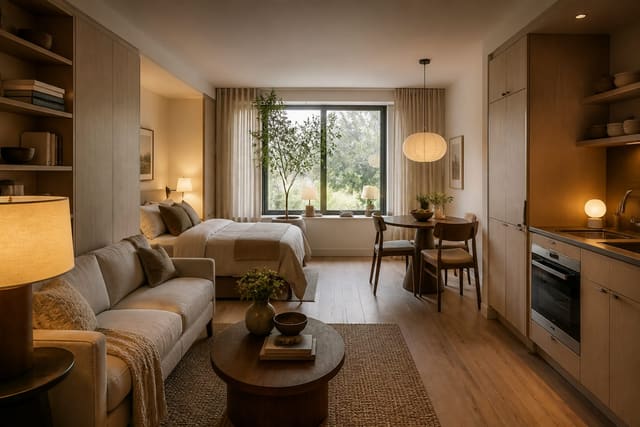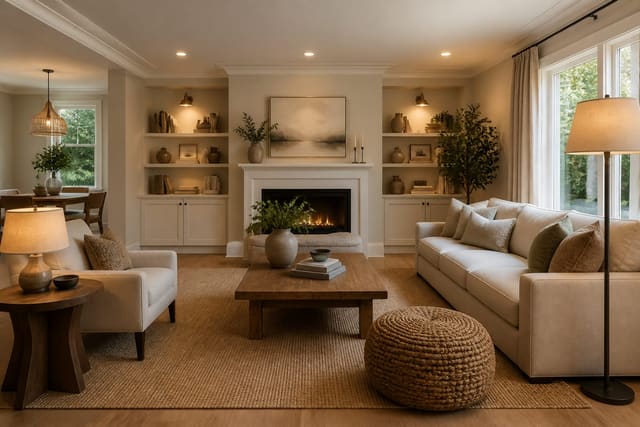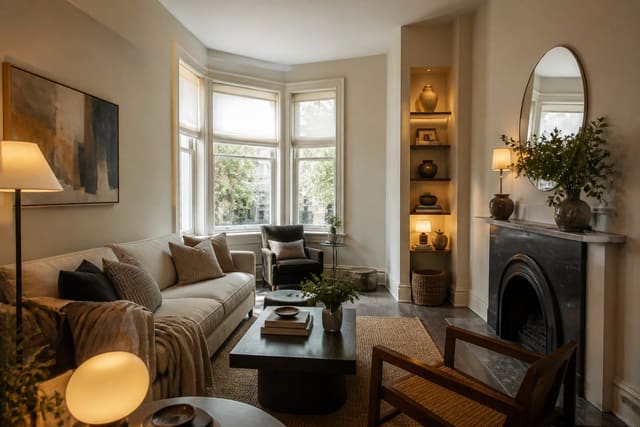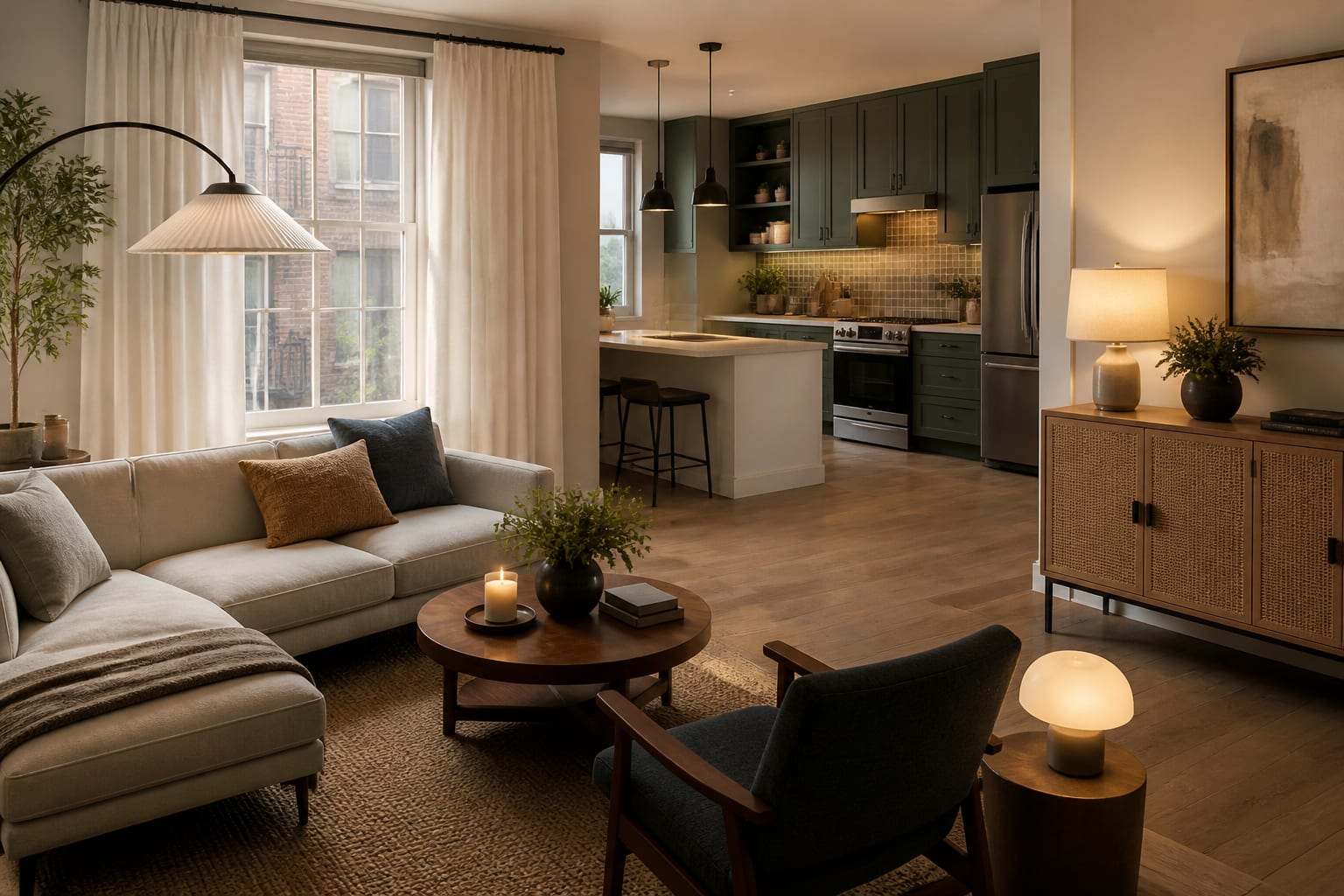
AI room design for rental apartments works by previewing layout, furniture scale, lighting, storage, and removable upgrades directly inside photos of your actual space, without pretending you can move plumbing, replace floors, or drill into every wall. Test each idea against the lease, your furniture dimensions, and the real photo before spending money, so the finished room looks intentional instead of temporary.
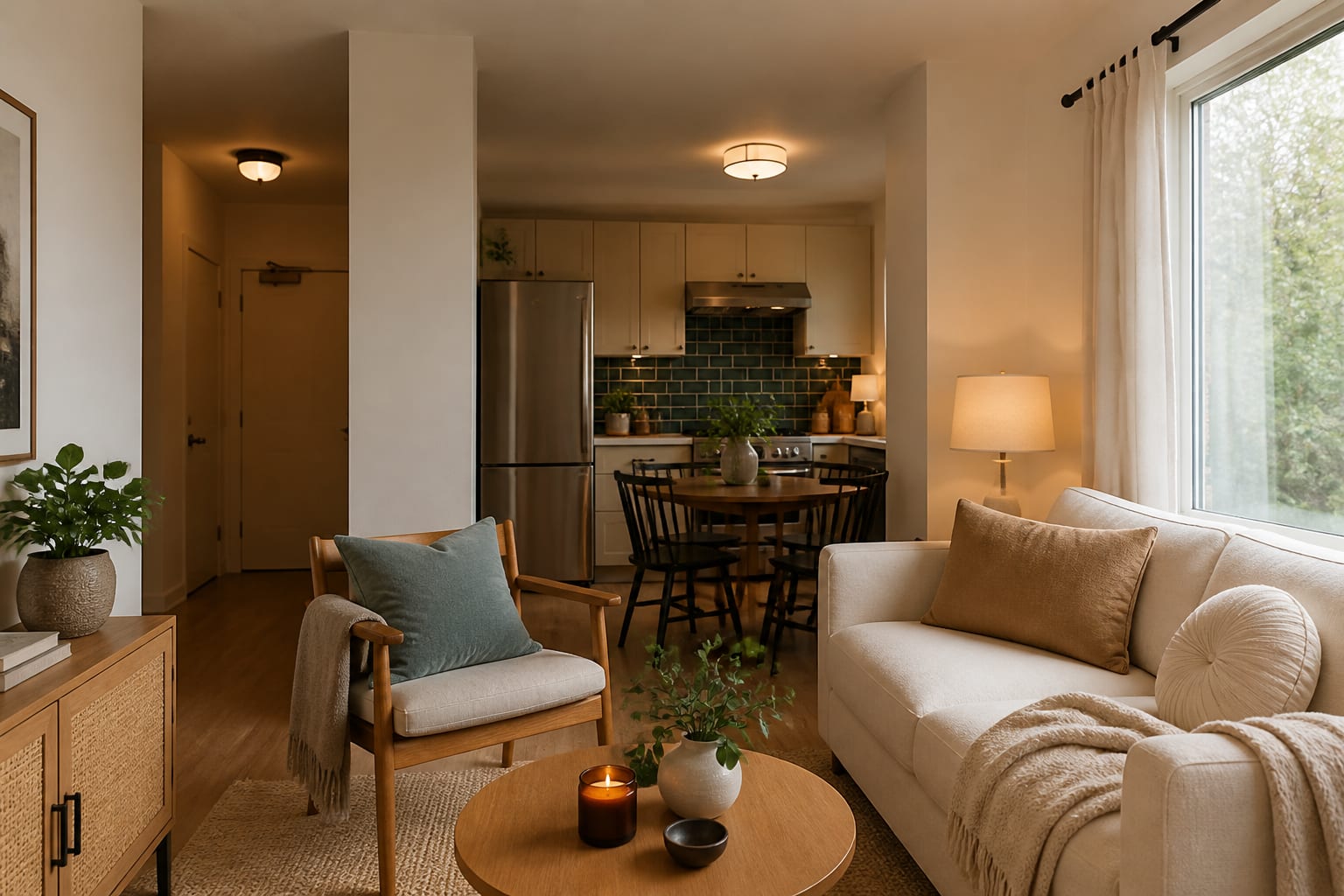
Can AI design a rental apartment without permanent changes?
Yes. AI can preview layouts, furniture fit, lighting, storage, color, and removable upgrades while keeping walls, windows, cabinets, radiators, and lease rules untouched. The value for renters is speed plus restraint: a preview can show whether a 78 inch sofa beats an 86 inch one, whether a 5 by 7 rug looks skimpy, or whether a plug-in sconce adds polish without an electrician.
If the apartment is compact, cross-check the preview against AI interior design for small spaces so it's judged on clear paths and usable storage, not just style.
Which rental limits should shape the AI prompt first?
The lease is part of the brief, not a surprise after the image looks good. Fixed facts matter more than style: wall material, outlet locations, heating units, window depth, cabinet color, balcony rules, elevator size, and how much patching is allowed.
Start with kitchens and bathrooms, where tile, laminate, plumbing, and ventilation shouldn't be disturbed. Only preview peel-and-stick backsplash ideas if the surface allows it and the product removes cleanly. In a bathroom, test a larger mirror, shower curtain height, washable runner, storage cart, and 2700K or 3000K bulbs before imagining a new vanity.
Living rooms and bedrooms allow more freedom, but scale still decides the outcome. A queen bed is 60 inches wide before the frame, so two full nightstands may not fit a narrow bedroom. A sofa blocking 8 inches of a balcony door path will annoy you constantly. For chopped-up rooms or awkward corners, use the approach in AI design for awkward spaces: show the problem clearly and ask the tool to solve it, not hide it.
Which renter-friendly upgrades are worth previewing?
Test the changes that make a rental feel intentional while still leaving cleanly at move-out.
- Size the rug correctly. An 8 by 10 rug reads stronger than a 5 by 7 in most living rooms if the front sofa legs and one chair sit on it, while keeping a 30 inch path to the kitchen or balcony.
- Layer lighting at three heights. Use 2700K bulbs, add a table lamp near seating, and mount a plug-in sconce around 60 to 66 inches high where a bed or sofa needs structure.
- Add freestanding storage. A cabinet 15 to 18 inches deep hides shoes, cables, and mail in an entry or living room without blocking the walkway.
- Test removable surfaces small first. Try a peel-and-stick backsplash, contact-paper panel, or removable wallpaper behind a shelf or on one short wall before covering a whole kitchen.
- Hang curtains for proportion. If allowed, mount rods 6 to 10 inches above the casing with panels ending near the floor; if drilling is banned, use tension rods or no-drill tracks.
- Use art and mirrors to fix blank walls. One large piece over a 72 to 84 inch sofa beats scattered small frames, and a mirror should reflect light, not a cluttered corner.
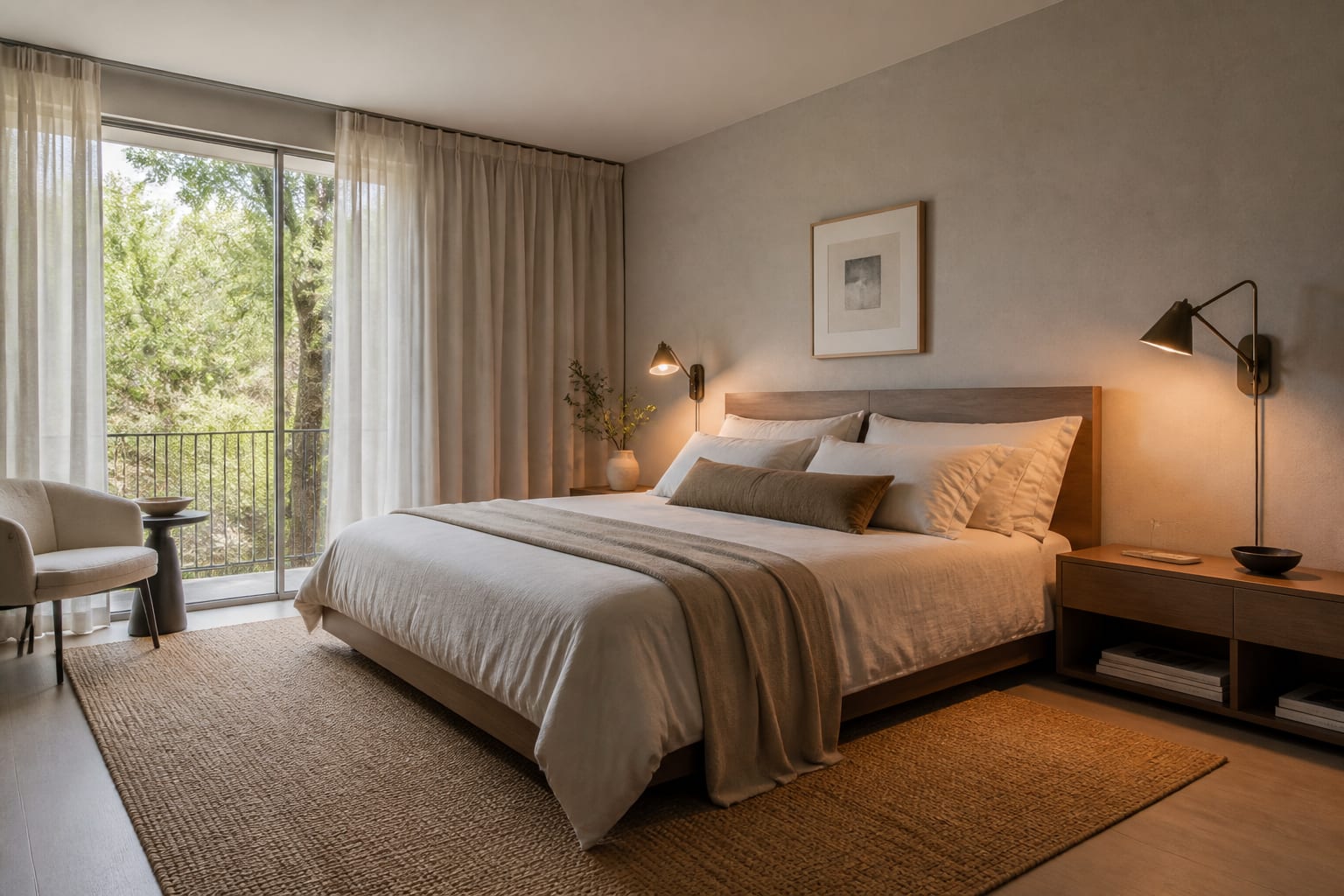
How do you use AI design to preview your apartment before buying?
Upload a straight photo from the doorway or farthest corner at chest height, with floor, ceiling, windows, doors, heating units, outlets, and largest furniture visible. Turn on lamps and open window coverings first so the tool reads the walls instead of shadows.
Write a specific prompt: design a 620 square foot rental living room with an 80 inch sofa maximum, 8 by 10 washable rug, 30 inch path to the balcony, closed storage under 18 inches deep, warm 2700K lamps, removable curtains, no new flooring, no wall demolition, no hardwired fixtures, and no drilling into tile. Boundaries like these protect your lease.
Run separate previews for layout, lighting, and finishes so you know exactly which change drove the improvement. Renters who may move soon can borrow the same discipline used in AI home staging logic: favor changes that photograph well and travel well.
Before shopping, check the preview against real measurements. Did the tool shrink the sofa, erase the radiator, hide the air conditioner, or add ceiling lights where no junction box exists? Keep the useful mood, reject the fake architecture.
What mistakes should renters avoid with AI design?
- Requesting a renovation instead of a rental plan. Words like built-in, new tile, recessed lighting, or wall removal push toward construction you can't do; ask for freestanding, plug-in, removable, and no-damage alternatives.
- Buying before checking the route. A 96 inch sofa may look calm in a wide preview but leave only 24 inches to the balcony; measure the wall, doorway, elevator, and delivery path first.
- Covering fixed finishes instead of coordinating with them. Beige carpet, gray vinyl plank, or cherry cabinets have color direction; hiding them under fantasy flooring wastes the chance to make the real space look deliberate.
- Drilling before checking the rules. Curtain rods, shelves, and wall lamps can be renter-friendly in one building and forbidden in another; confirm wall type and weight limits first.
- Buying decor before solving storage and light. Pillows can't fix a room with one overhead bulb and no storage; spend on lamps, a real rug, closed storage, and window treatments first.
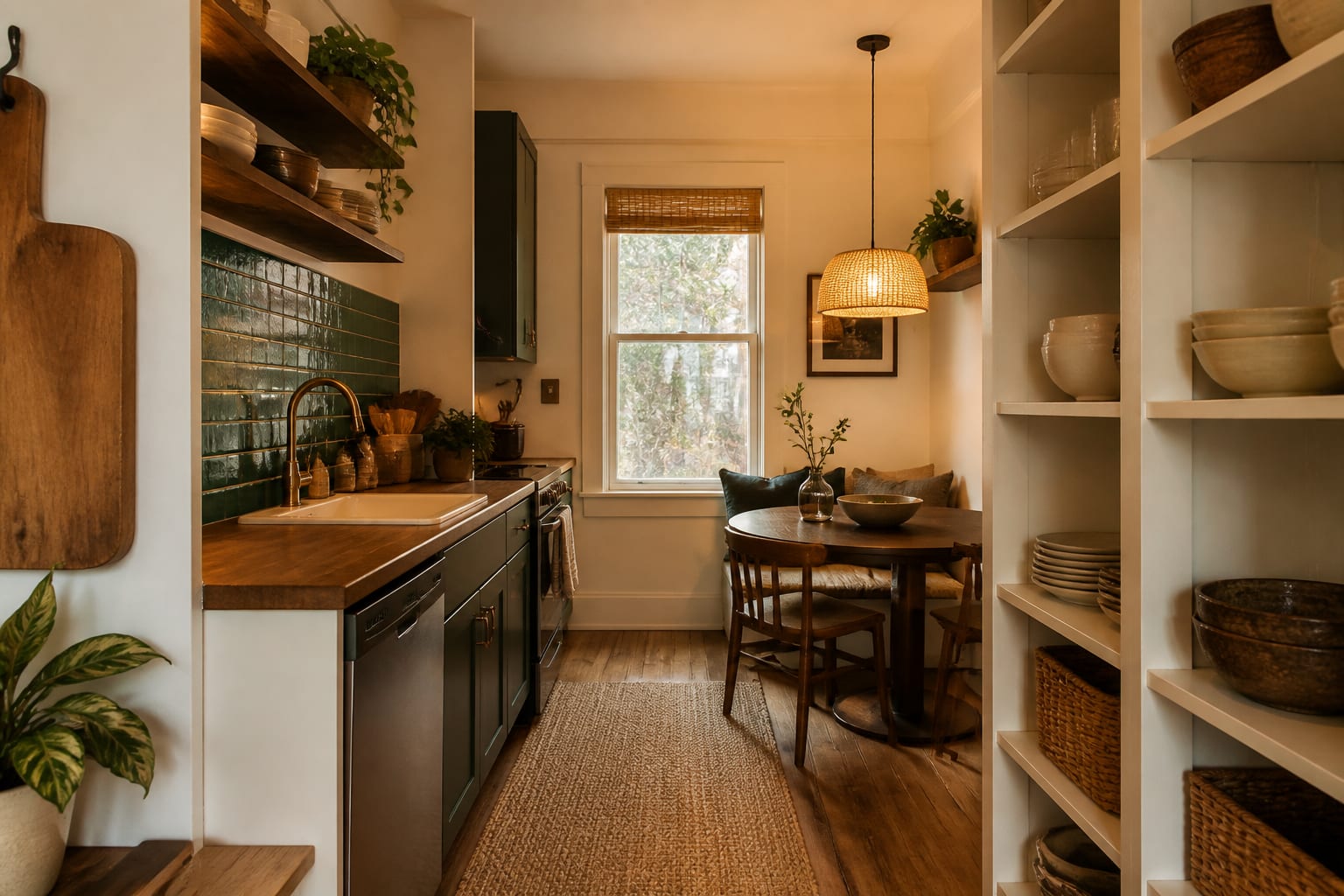
When is a no-damage apartment plan ready to shop?
A plan is ready when it survives four checks: the lease allows it, the measurements work, the fixed finishes look better, and the move-out repair is manageable. A beautiful plan that depends on forbidden adhesive, blocked ventilation, or a sofa that can't fit the stairwell isn't a plan yet.
Before ordering, confirm sofa length and depth, rug size, cabinet depth, bed clearance, curtain height, lamp locations, outlet access, radiator clearance, balcony path, closet swing, and elevator dimensions. Keep main routes near 30 to 36 inches wide and about 18 inches between sofa and coffee table.
Shop in order: largest furniture first, storage second, lighting third, rugs and window treatments fourth, art and accessories last. If a purchase can't move with you or be removed cleanly, the preview should prove it's worth the risk.
Frequently Asked Questions
Can I use AI room design if my lease bans wall changes?
Yes. State the ban directly in your prompt (no drilling, no paint, no hardwired fixtures) and ask for freestanding storage, plug-in lighting, tension rods, and removable adhesive products instead. The AI preview should then focus on furniture, layering, and textiles rather than construction.
What furniture dimensions matter most in a rental preview?
Sofa length versus room width, rug size relative to seating, cabinet depth in walkways, and clearance around doors and balconies matter most. Keep main paths 30 to 36 inches wide and about 18 inches between a sofa and coffee table so the preview reflects real movement, not just style.
Are peel-and-stick backsplashes and wallpaper safe for rentals?
It depends on the wall or tile surface, humidity, and paint quality, so test a small hidden area like behind a shelf before covering an entire wall. Confirm with your lease or landlord that the product removes cleanly before committing to a full installation.
How do I know if an AI preview is unrealistic for my apartment?
Compare it against your actual measurements and fixed features. If the tool shrinks furniture, erases a radiator, hides an air conditioner, or adds lighting where no wiring exists, the image has drifted into fantasy and should be rejected before shopping.
What should I buy first when redesigning a rental?
Buy in this order: largest furniture, then freestanding storage, then lighting, then rugs and window treatments, then art and accessories. This sequence protects your budget because storage and light fix more problems than decorative objects.