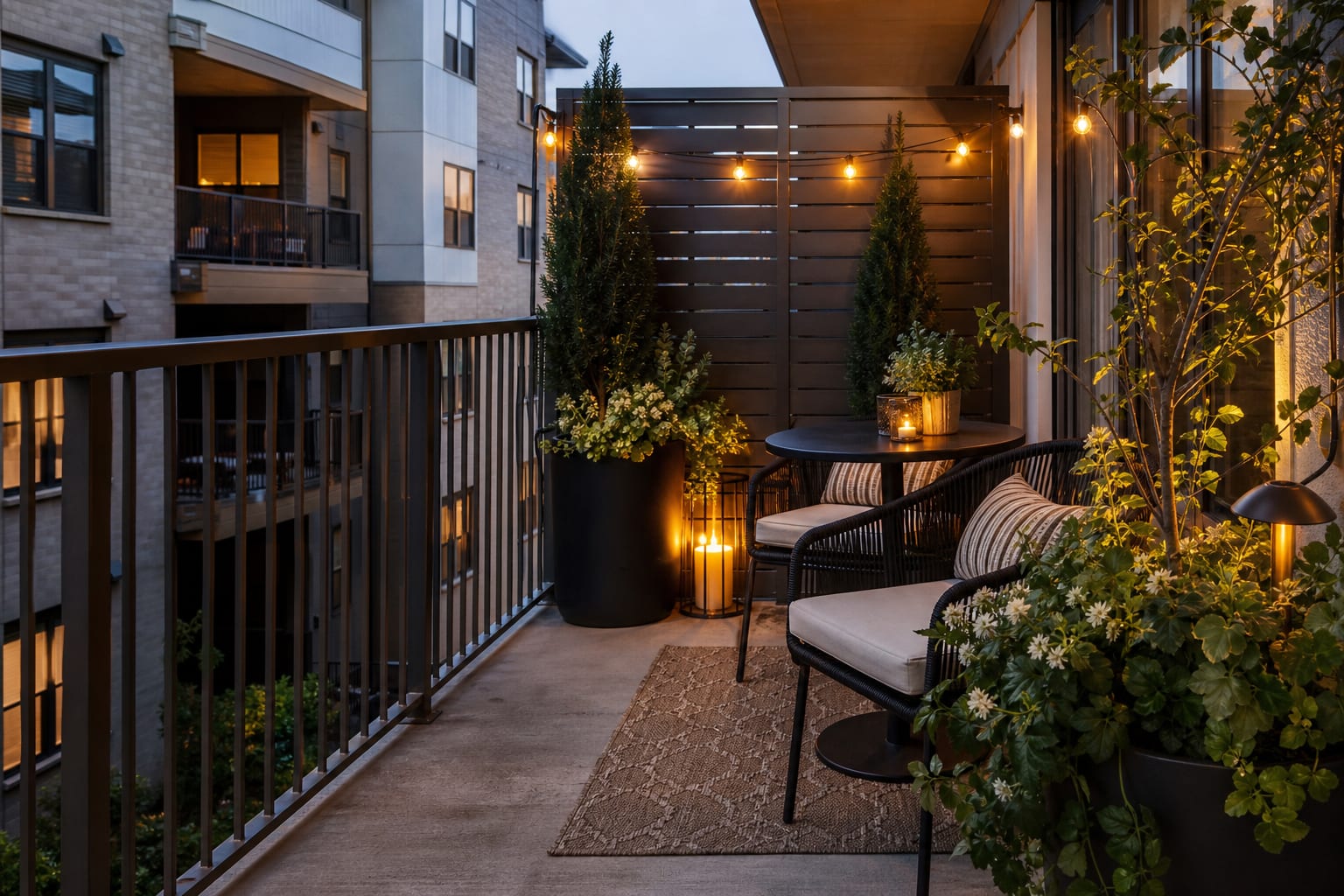
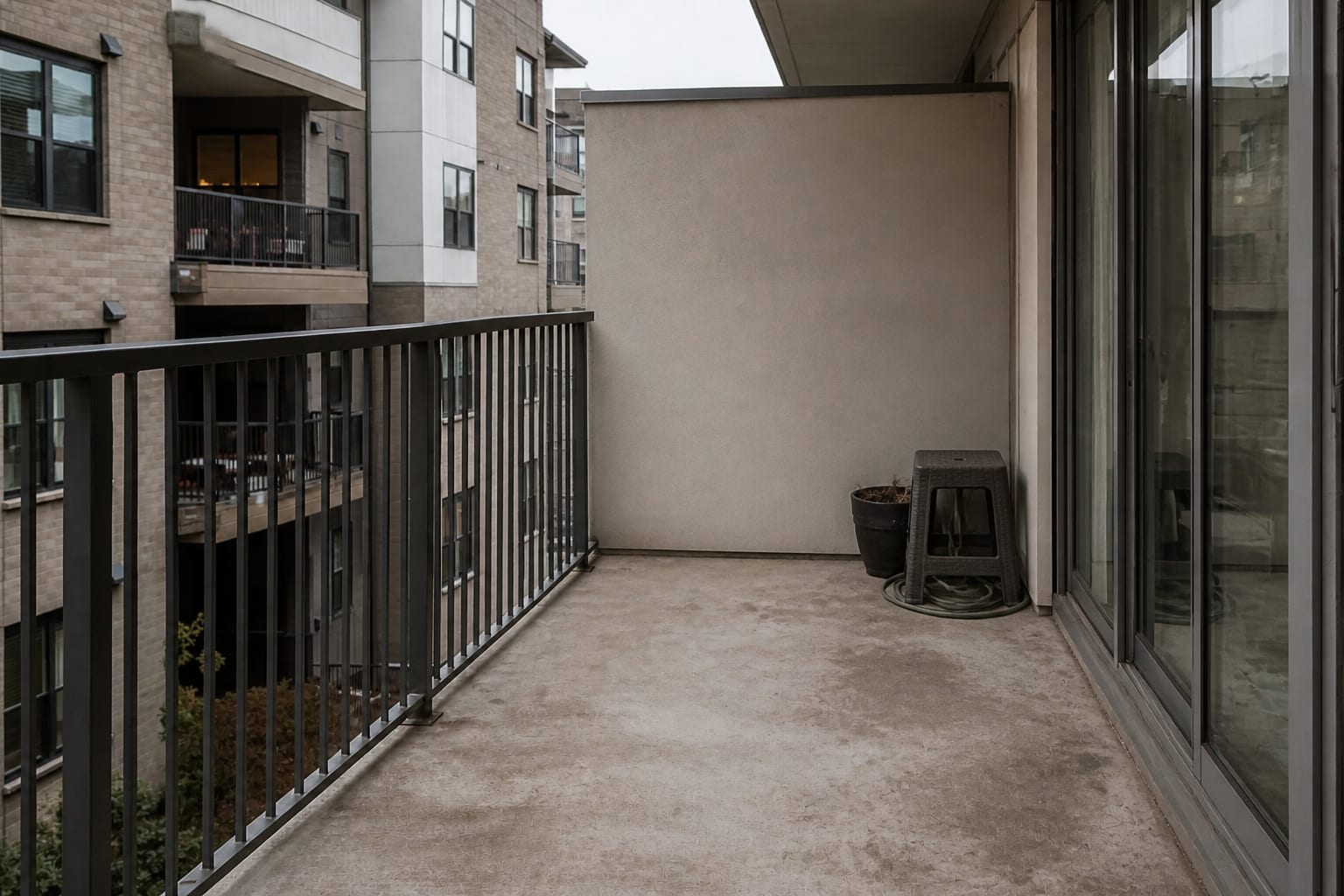
The best balcony privacy screen ideas use a 5–6ft screen on the open side, anchored without drilling for renters, made of bamboo, reed, slatted cedar, or fabric. Target the exact sightline a neighbor sees rather than wrapping the whole rail, and pair one hard screen with a soft planting layer to keep air and light moving.
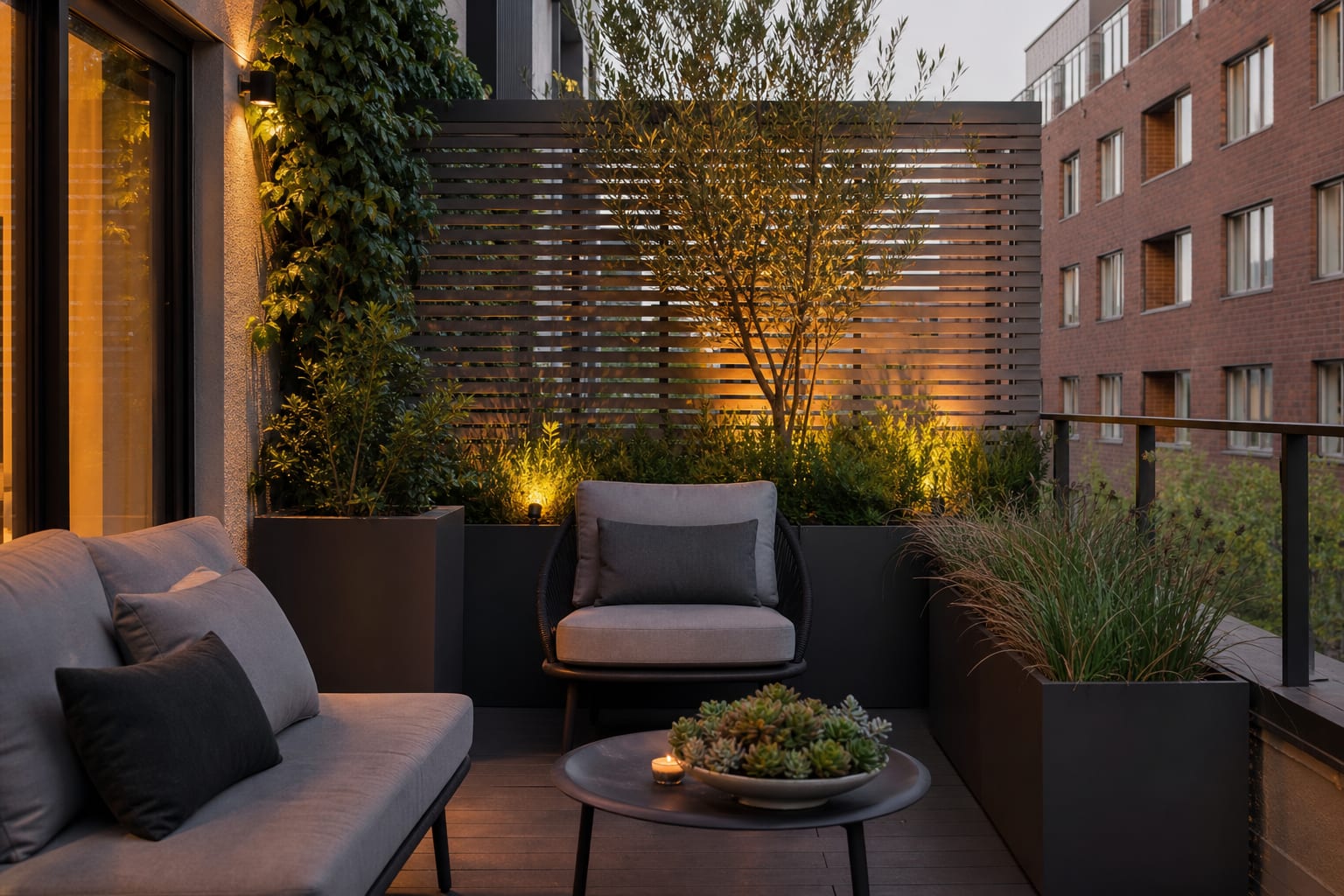
How do I add privacy to a balcony without making it feel boxed in?
Stand inside the apartment and mark exactly what you can see: the building across the street, a side neighbor, the sidewalk below, or the balcony directly opposite. A full wraparound screen usually backfires — it darkens the apartment and shrinks the balcony. Solve one sightline at a time.
Most privacy problems live between seated and standing eye height, roughly 42–72in above the floor. A 36in railing cover does little against a neighbor across a courtyard; you need height above the rail itself. For sidewalk visibility from below, a woven rail panel or fabric fixed inside the guardrail is usually enough.
Keep the floor honest: a 4ft-deep balcony can't fit a 20in planter, a lounge chair, and a storage box on the same path. Use the narrowest fix that solves the view — a 12in planter trough, a folding screen that stores flat, or a slatted panel mounted inside the rail where rules allow. For planting-based screening, see railing planter ideas for compact balconies, and keep loaded planters inside the railing unless your building permits exterior brackets.
The privacy decision that changes every balcony
The real choice is whether privacy should be attached, planted, or freestanding. Attached panels look cleanest where allowed, planted screens feel softer but need depth and watering, and freestanding screens suit renters but can tip if too tall or too light.
| Privacy move | Best when | Watch the tradeoff |
|---|---|---|
| Slatted panel | View comes from one side or a facing unit | Needs secure attachment and wind gaps |
| Reed/willow/mesh rail cover | Problem is visibility through the railing | Usually stops below seated eye level |
| Tall planter screen | You want greenery and privacy together | 16–24in container adds weight, steals floor depth |
| Outdoor curtain | Balcony has a ceiling, beam, or tension rod spot | Flaps in wind, must stay off wet floors |
| Folding screen | Renting, can't attach hardware | Needs ballast, storage, wind-conscious placement |
For a side-facing neighbor, a vertical slat panel or paired tall planters usually beats a curtain — curtains flap, stain, and block half the view when tied back in wind. A slatted panel with 1/2–1in gaps interrupts the gaze without turning the edge into a wall.
Choose furniture after the privacy layer, not before. A 24in round table and two slim chairs can share space with a planted screen, while a deep lounge chair may make the same balcony feel trapped. See small balcony furniture ideas for tight outdoor spaces for layouts that respect door swing and planter depth.
Five balcony privacy screen ideas that still let air move
- Side slat panel for a direct neighbor view. Size it to just cover the seated sightline (often 24–48in wide) with small gaps so wind passes through instead of pushing it loose.
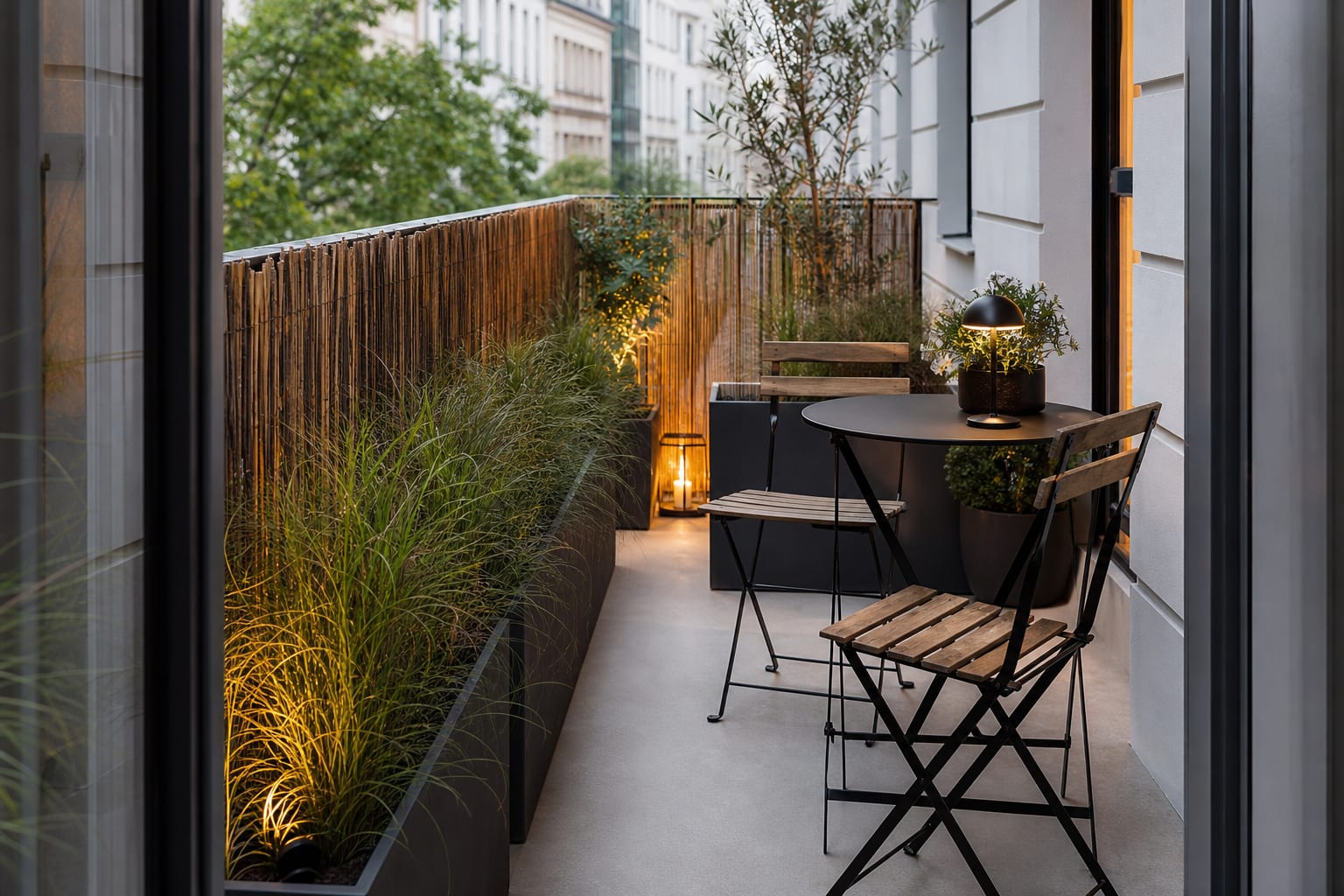
- Woven rail screen — reed, willow, bamboo roll, or mesh — for street-level visibility. Tie it every 8–12in and trim to rail height so it doesn't sag below the bottom bar.
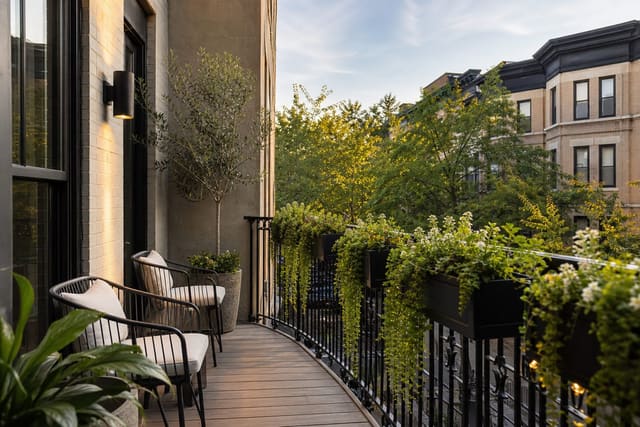
- Planter screen with height at back, softness at front. A 16–20in trough holds clumping grasses, compact bamboo, or upright evergreens; add trailing thyme, ivy geranium, or seasonal flowers at the edge.
- Outdoor curtain only where there's a real overhead line — a ceiling track, tension rod between solid walls, or pergola frame. Keep the hem 1/2in above the floor so it doesn't wick rainwater.
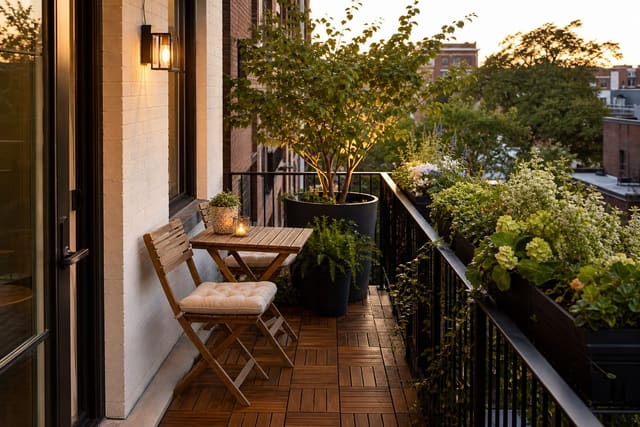
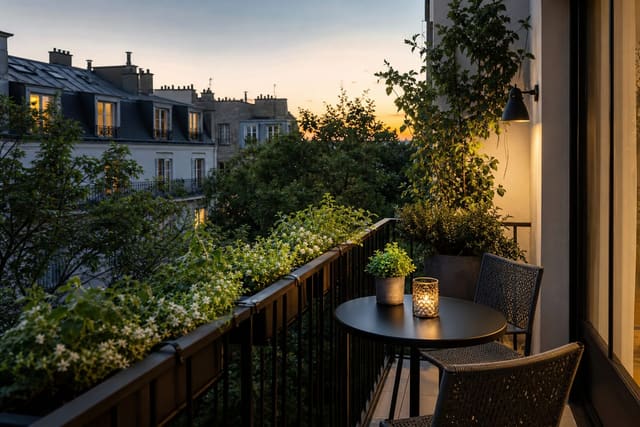
- One screen behind a bistro set instead of screening the whole perimeter. A pair of chairs and a 24–28in table feels more usable when the screen sits behind the seated person; see balcony bistro set ideas for small outdoor dining.
Common balcony privacy screen mistakes
- Covering every rail. This turns a balcony into a storage bin. Screen only the side, corner, or lower rail causing the problem, then stop.
- Using solid panels in windy spots. Upper-floor balconies need breathable materials and low, secure weight. If a screen flexes by hand, a storm will tear it loose — choose slats, mesh, or wide-based planters instead.
- Skipping maintenance. Reed fades, fabric mildews, faux greenery collects dust, and wood needs exterior finish. Powder-coated metal, composite slats, or washable mesh suit low-maintenance setups.
- Blocking the door with plants. Tall containers need room for mature width, saucers, and watering access — keep them clear of the hinge side.
- Skipping the inside-view test. Sit on the sofa and check whether the privacy layer looks like part of the room beyond the glass. Repeating one screen material and finish across the balcony reads calmer than five unrelated fixes.
Use AI design to preview your balcony privacy before you commit
AI previewing helps because proportion is the risky part. Upload a straight photo of the balcony to Re-Design and test a slatted side screen, a planted privacy wall, and a lower woven rail cover with compact seating — a balcony has no spare inches to forgive a vague prompt.
Specify a 30in clear path from the door, a 36in side panel, two 18in planters, a 24in bistro table, breathable materials, and no drilling if you rent. Note the balcony's orientation (a west-facing balcony needs shade and glare shown accurately) and its rail material, since metal, glass, and concrete each change the attachment strategy.
A preview won't replace your lease, building manager, or a contractor once hardware is involved. It will show you the crowded version before you buy a 6ft screen that traps the door, or planters that leave no room for your feet. The goal isn't maximum privacy — it's a balcony that feels protected enough to actually use.
Frequently Asked Questions
What is the tallest balcony privacy screen allowed?
Most building rules cap balcony privacy at 6ft above the floor or 1ft above the existing rail, whichever is shorter. Check your HOA or lease before ordering, since limits vary by building and unit orientation.
Are bamboo balcony screens weatherproof?
Natural bamboo lasts 2–3 seasons outdoors before splitting. Treated bamboo and synthetic bamboo lookalikes last 5–7 years, and both shed fewer fibers if stored indoors during winter.
Can I install a privacy screen without drilling?
Yes. Spring-loaded tension rods between balcony rail posts, weighted planter walls, and strap-anchored fabric panels all work without hardware, and each removes cleanly at move-out.
Does a fabric privacy screen block wind?
Solid fabric panels create a wind tunnel below and can lift the screen out of brackets in gusts above 25mph. Mesh, slatted, or perforated panels diffuse wind more safely on most urban balconies.
How do I keep a privacy screen from making the balcony feel dark?
Use slats with 1/2in gaps, half-height screens that leave the top open, or a single screen on only the most exposed side. A fully enclosed balcony loses both light and breeze, so leave at least one open view.
Three transformations to try
- Bamboo balcony privacy screen
- Slatted cedar privacy panel on a balcony
- Planter-wall privacy screen on a balcony