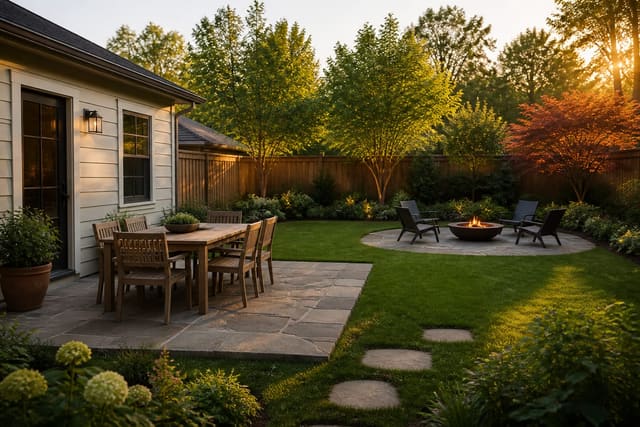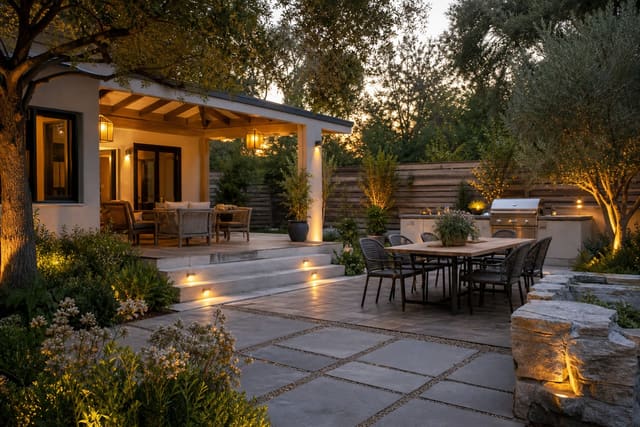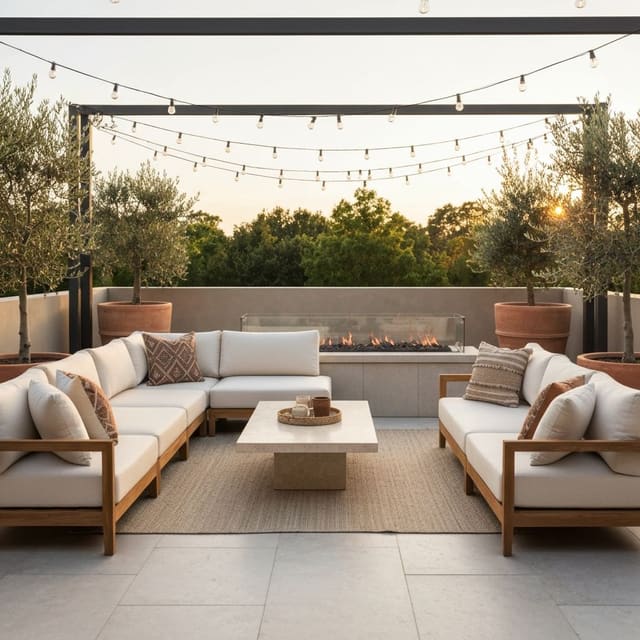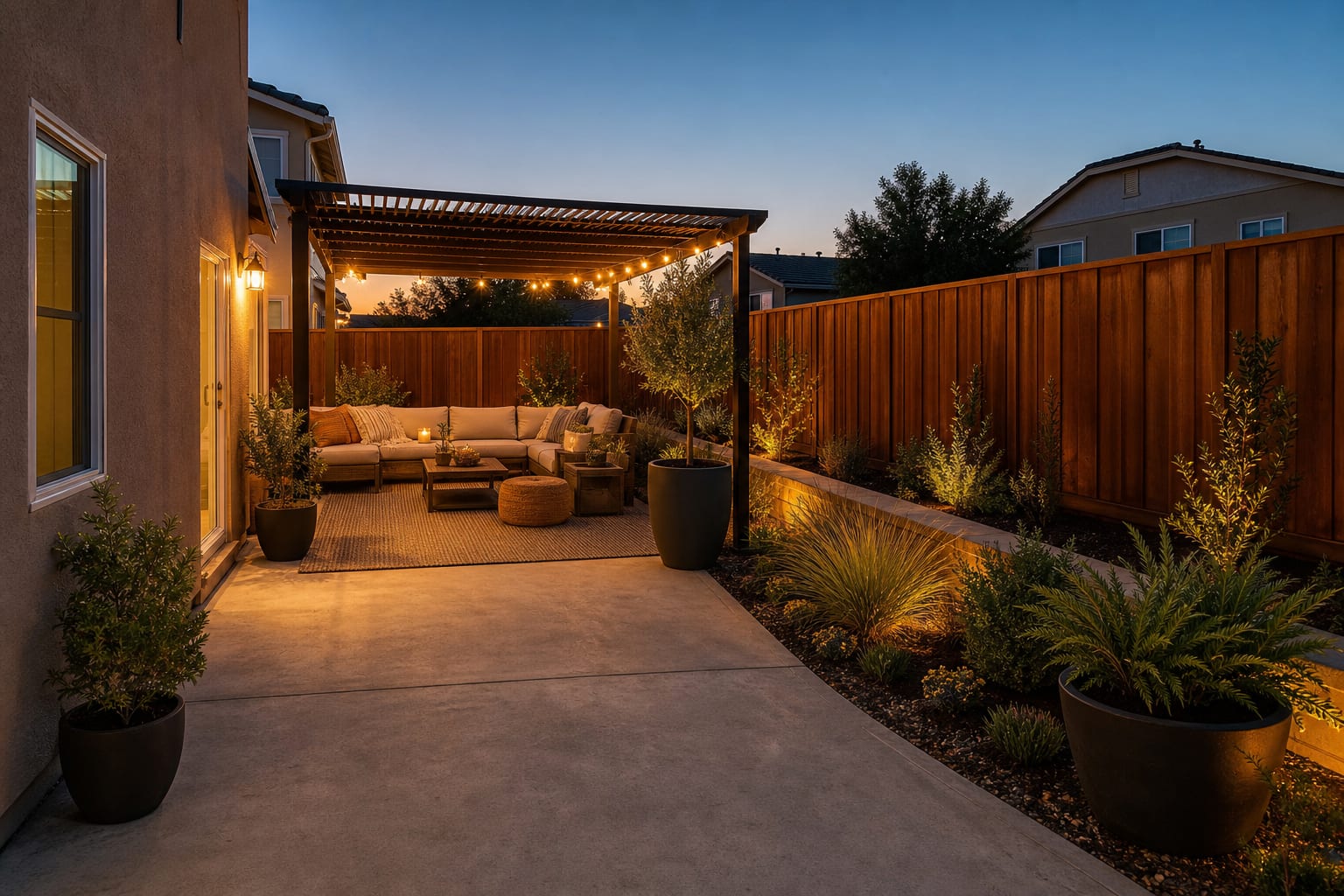
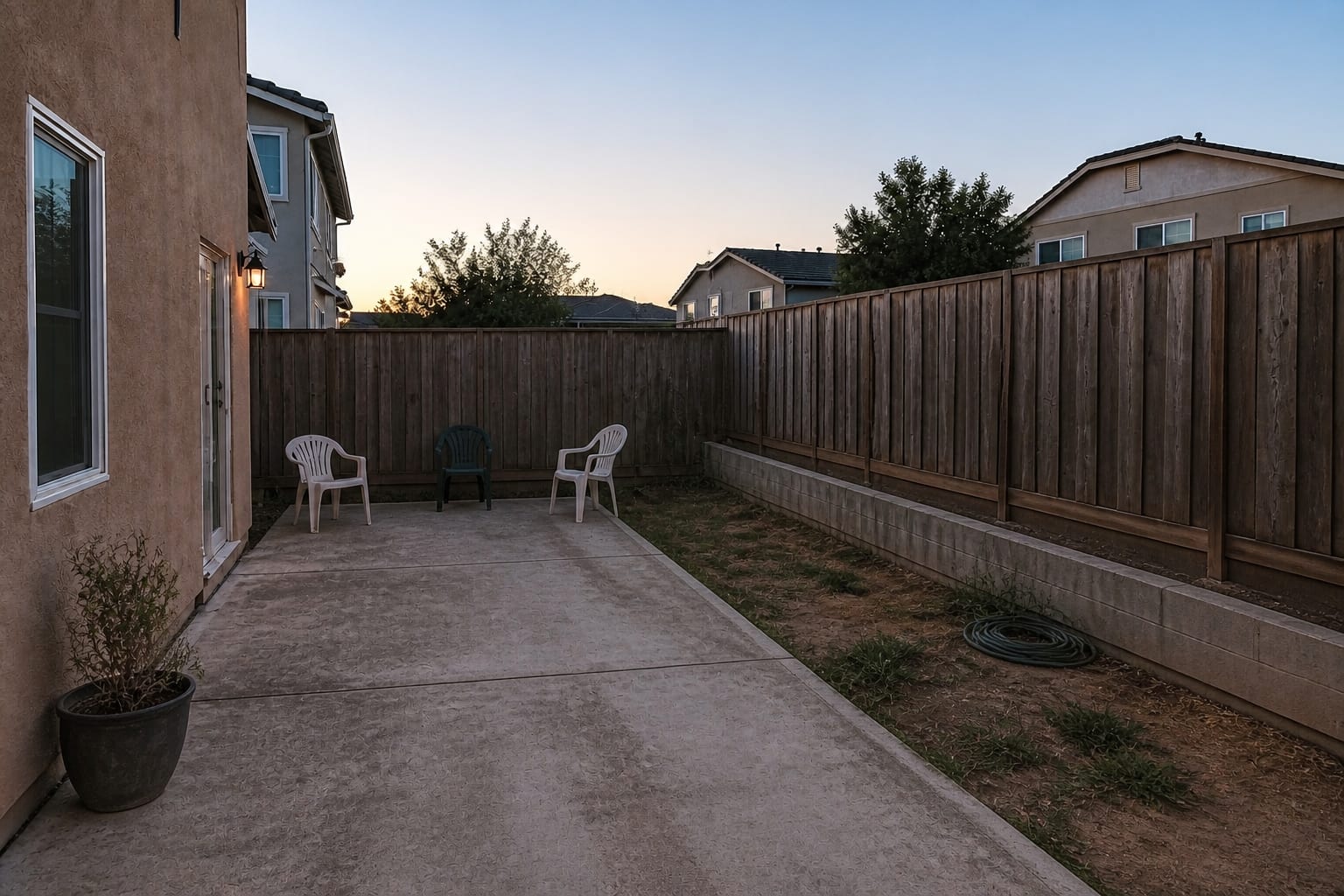
An outdoor living room reads like a room when it has a defined floor, weatherproof seating anchored on a rug, overhead shade instead of open sky, and at least one enclosed side. To build one, design the patio like an indoor lounge: fix the layout, choose comfortable seating, block the sun, and add layered evening lighting so people stay after dinner.
What makes a patio feel like a room instead of a furniture dump?
A patio feels like an outdoor living room when it has an implied floor, walls, ceiling, and focal point. The floor can be pavers with a large rug, the walls can be tall planters or a low wall, and the ceiling can be tree canopy or a pergola.
- Protect a 30-36 inch walking route before choosing furniture or lighting.
- Repeat one visual cue three times, such as a metal finish or planter shape, to unify the scene.
- Solve the layout problem with the first upgrade; let accessories support the plan instead of covering for weak planning.
A sofa on a bare slab can still feel stranded without a backdrop. Pull seating toward a wall, fence, or planter line so the arrangement has a back edge; if the patio is fully open, use two 24 inch planters or a long planter box behind the sofa.
Scale the rug like you would indoors: an 8x10 rug suits a loveseat and two chairs, a 9x12 rug suits a sectional, and a 5x7 is usually too small. Keep at least the front legs of every main seat on the rug so the group reads as one lounge.
This is where patio layout logic matters more than a matching furniture set. The patio should answer where people enter, sit, land their drinks, and look — if those are unclear, even expensive furniture will feel temporary.
Which layout works best for an outdoor lounge?
Start with the movement path from the door to the yard, grill, or gate, and keep it at least 36 inches wide before sizing furniture. A sofa-facing-chairs layout is the most flexible: back the sofa to the house or a planted edge, face two chairs across a coffee table, and leave 14-18 inches of clearance around the table.
If a lounge sits beside a dining area, separate the zones with a rug under the seating and a different paver direction under the table rather than building a wall. For patios handling both meals and lounging often, weigh the space against outdoor dining layout needs before committing every square foot to deep cushions.
Small patios need discipline. A 6x9 ft balcony can still work as a lounge with one loveseat, one slim chair, and nesting tables — see small patio furniture arrangements for keeping the longest seat against the longest wall and the door swing clear.
Test your own patio photo with ReDesign before committing, keeping the house edge, horizon, hardscape, and main path visible so the preview solves the space you actually have.
Five outdoor living room ideas worth copying
- One oversized coffee table. A 24x48 inch table anchors a sofa-and-chair group better than scattered side tables.
- A properly sized rug. Use polypropylene or recycled PET flatweave, leaving 6-12 inches of visible paving around the edges.
- Planters as soft walls. Two 36-48 inch planters behind a sofa can block a fence gap; use grasses, rosemary, dwarf olive, or compact evergreens for your climate.
- Shade over the longest sitting time. Test the shadow path before buying a base; a cantilever umbrella works only if the base won't block the walkway.
- A house wall as focal point. Sconces, a vine grid, or a weatherproof art panel turn a blank wall into a feature without a screen.
- One weather-honest indoor cue. Outdoor fabric pillows or a throw stored in a deck box add comfort without the mildew risk of indoor cotton.
What mistakes make a patio feel separate from the house?
Buying a matching furniture set is the most common error — sets often have upright chairs, small tables, and shallow cushions unsuited for long evenings outside. Build the plan around comfort first, then let finishes coordinate loosely.
Ignoring the threshold from the house is another mistake. Keep the first 36 inches outside the door clear, and angle seating so the view from inside shows cushions, plants, and light rather than furniture backs.
Underlighting is common too: a single door fixture creates a bright spot at the house and darkness at the seating. Use three layers — a door light, low lanterns at the seating, and downward path lights at level changes.
Don't skip drainage: hardscape should pitch around 2 percent away from the house, and rugs and cushions need to dry and unzip easily. Finally, match the patio's style to the interior — pick up one color, metal finish, or wood tone so the two spaces feel connected.
How do I use AI to test an outdoor living room before buying?
Upload a straight, well-lit photo of the patio and test layout, shade, lighting, and furniture scale on the same view before buying bulky pieces. Keep prompts concrete: specify a low outdoor sectional, 8x10 rug, black metal sconces, olive trees in 22 inch planters, and a slatted pergola rather than a generic backyard refresh.
Shoot from the door that connects to the interior, since that view determines whether the patio reads as an extension of the home. For deep patios, add a second photo from the far corner looking back to check whether furniture blocks the path. This catches scale mistakes early — a too-small rug, an oversized sectional, or a shade sail fighting the roofline.
Test three versions: light-touch (rug, lighting, planters), mid-level (new seating and shade), and built-in (pergola, fire feature, masonry wall). The winning option should still look practical with sandals by the door, a dog crossing the patio, and cushions that survive summer weather.
Frequently Asked Questions
What size rug works for an outdoor living room?
A 9ft x 12ft rug anchors a standard three-piece outdoor seating set, with all four legs of the sofa and chairs resting on it. An 8ft x 10ft rug is the minimum size before front feet start floating uncomfortably off the edge.
How do I create privacy in an outdoor living room?
A 6ft cedar slatted screen or evergreen hedge on the two sides visible from neighbors creates a three-wall enclosure while keeping the fourth side open for airflow and yard access.
What is the best outdoor sofa material?
Powder-coated aluminum frames are the lightest and most rust-proof option. Sunbrella or Olefin cushion fabric is the outdoor upholstery that best resists mold, UV fading, and staining over time.
Do I need overhead coverage for an outdoor living room?
Yes. A pergola, shade sail, or louvered roof over the seating zone can reduce surface temperature by 10-15°F on summer afternoons and is what defines the space as a room rather than an open patio.
How do I arrange furniture in an outdoor living room?
Anchor a sofa against a wall or planting screen, face two chairs at a right angle across a coffee table, leave 18 inches between sofa and table, and keep a 3ft circulation path open on at least two sides of the grouping.
> Try this: Ready to see this on your own outdoor space? Open ReDesign and run the preview before you buy materials, plant, drill, or move furniture.
Three transformations to try
1. Sofa grouping on rug under pergola 2. Cedar screen backdrop with lounge chairs 3. Outdoor living room with side table and planters
Related Articles
Outdoor guide map
Plan the whole outdoor room
Use this pillar as the starting point, then move into the specific outdoor system you need to solve next.
Cooking & Entertaining
- Outdoor KitchensOutdoor Kitchen Ideas: How to Design a Backyard Cooking Space
- Fire Pit Gathering AreasFire Pit Ideas: The Outdoor Feature That Extends Your Season
- Pergola-Covered PatiosPergola Ideas: The Outdoor Structure That Does Everything
- Wellness CornersBackyard Wellness Space Ideas: Design a Recovery Corner (2026 Guide)
- Indoor-Outdoor TransitionsIndoor-Outdoor Living Ideas: Designs, Costs & What to Know in 2026
- Outdoor Dining RoomsOutdoor Dining Area Ideas: Beyond the Basic Table and Four Chairs
- Outdoor BarsOutdoor Bar Ideas: Counter, Seating, and Shade for Entertaining
- Pizza Oven StationsPizza Oven Outdoor Ideas: Wood-Fired Cooking in the Backyard
- Outdoor Entertainment HubsBackyard Entertainment Hub Ideas: Outdoor AV, Layouts & Costs (2026 Guide)
Wellness & Recovery
- Outdoor SaunasOutdoor Sauna Ideas: Designs, Costs & Placement (2026 Guide)
- Cold Plunge SetupsCold Plunge Backyard Ideas: Setup, Costs & Design Tips (2026 Guide)
- Hot Tub & Spa ZonesHot Tub Landscaping Ideas: How to Integrate a Spa Into Your Yard
- Plunge & Compact PoolsPlunge Pool Ideas: Small, Elegant Pools for Cooling Off and Relaxing
- Swimming Pool + Lounge DecksPool Landscaping Ideas: Designing the Area Around Your Pool
- Outdoor ShowersOutdoor Shower Ideas: The Backyard Upgrade Worth Installing
- Meditation & Prayer GardensOutdoor Meditation Space Ideas: Quiet Garden Corners for Calm
Recreation & Play
- Pickleball CourtsBackyard Pickleball Court Ideas: Designs, Costs & What to Know in 2026
- Sport Courts & Game CourtsBackyard Sports Court Ideas: Pickleball, Basketball, and Multi-Sport Designs
- Putting GreensBackyard Putting Green Ideas: Designs, Costs & What to Know in 2026
- Kids' Play ZonesOutdoor Play Area Ideas: Beyond the Basic Plastic Playset
- Backyard GymsOutdoor Gym Ideas: Designs, Costs & What to Know in 2026
- Movie Night LawnsOutdoor Movie Night Ideas: DIY Screen and Projection Setup
- Dog Runs & Pet ZonesDog Friendly Backyard Ideas: Design That Works for Pets and People
Structures & Destinations
- Covered Outdoor Living RoomsCovered Patio Ideas: Pergolas, Awnings, and Shade Solutions
- Outdoor FireplacesOutdoor Fireplace Ideas: Masonry, Steel, and Gas Options
- Deck Rebuilds & ExpansionsDeck Design Ideas: Wood, Composite, and Multi-Level Configurations
- Pool Houses & CabanasPool House Design Ideas: Structures That Serve the Pool Area
- Outdoor Offices & Studio ShedsBackyard Office Shed Ideas: Work-From-Garden Setups
- GazebosGazebo Ideas: Designs, Costs & Gazebo vs Pergola vs Pavilion (2026 Guide)
- CourtyardsCourtyard Ideas: Designs, Costs & What to Know in 2026
- Front Porch MakeoversFront Porch Design Ideas: From Front Stoop to Full Wrap-Around
- Balcony TransformationsBalcony Design Ideas: Small Outdoor Spaces That Pack a Punch
- Rooftop DecksUrban Rooftop Deck Ideas: Hardscape Design for City Roof Spaces
- GreenhousesGreenhouse Ideas: From Small Cold Frame to Full Structure
Gardens & Growing
- Raised-Bed Edible GardensRaised Garden Bed Ideas: Layout, Materials, and Planting Plans
- Container GardensContainer Gardening Ideas: Big Impact From Pots on Patios and Balconies
- Cutting & Flower GardensCutting Garden Design Ideas: Layouts, Flowers & What to Know in 2026
- Pollinator & Wildlife GardensPollinator Garden Ideas: Plants That Bring Butterflies and Bees
- Sensory & Cottage-Style GardensCottage Garden Ideas: Romantic, Tumbling, and Wildly Beautiful
- Vertical Gardens & Living WallsVertical Garden Ideas: Living Walls, Trellises & DIY Systems in 2026
Landscape & Hardscape Systems
- Water FeaturesWater Feature Ideas Backyard: Fountains, Ponds, and Streams
- Landscape Lighting DesignOutdoor Lighting Ideas: How to Light a Garden, Path, and Patio
- Native & Drought-Tolerant LandscapingDrought Tolerant Landscaping Ideas: Beautiful Without Constant Watering
- Pathways & Hardscape DesignGarden Path Ideas: Gravel, Stepping Stone, and Brick Designs
- Retaining Walls & Terraced YardsRetaining Wall Ideas: Slope Solutions That Double as Design Features
- Privacy Screening & Fencing DesignBackyard Privacy Landscaping Ideas: Plants and Structures That Screen
- Driveway & Entry LandscapingDriveway Design Ideas: Pavers, Patterns, and Curb Appeal from the Street
- Hammock & Lounge GrovesHammock Ideas: Backyard Hammock Ideas for Hanging and Decorating Around a Hammock
- Four-Season PatiosFour Season Outdoor Space Ideas: Using the Patio, Deck, and Garden All Year