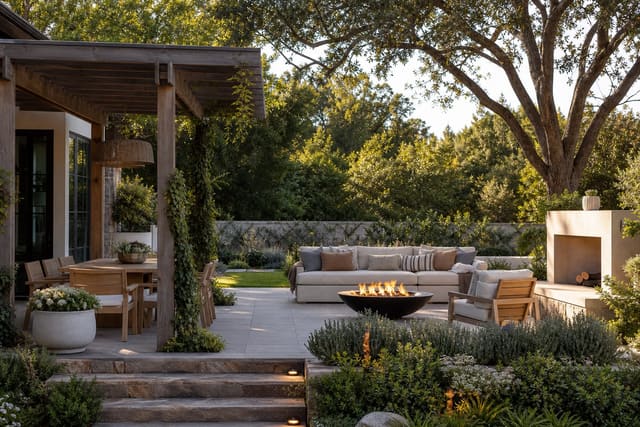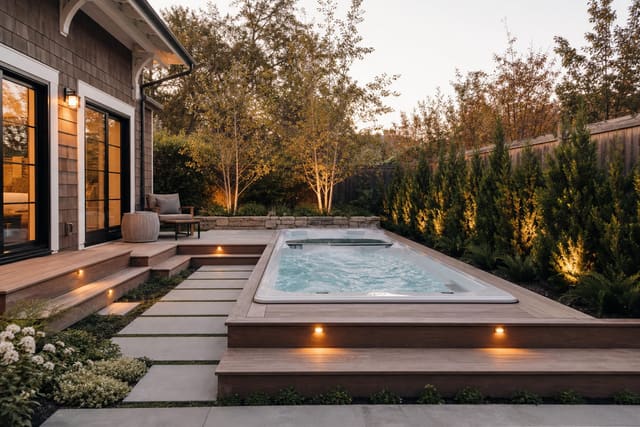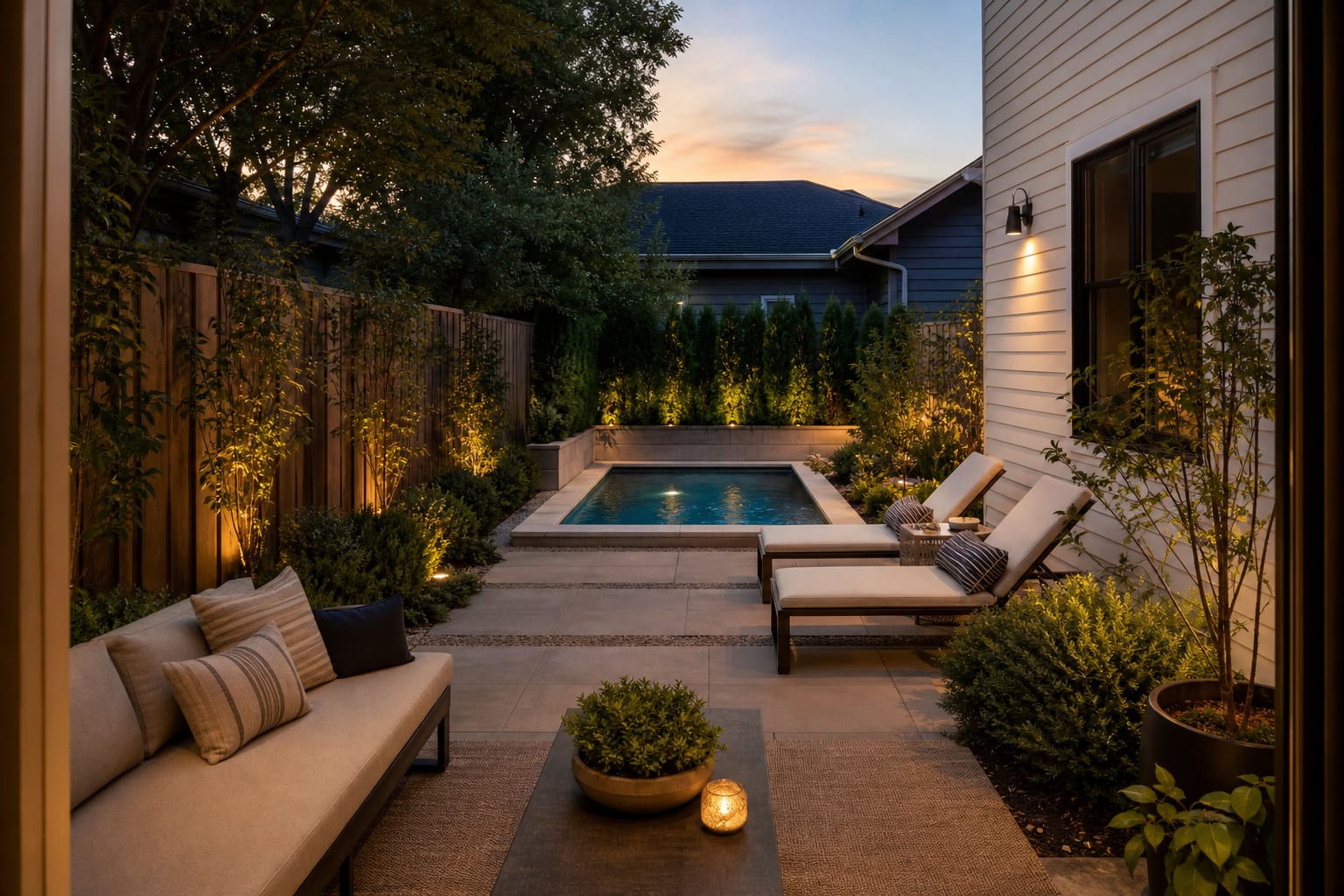
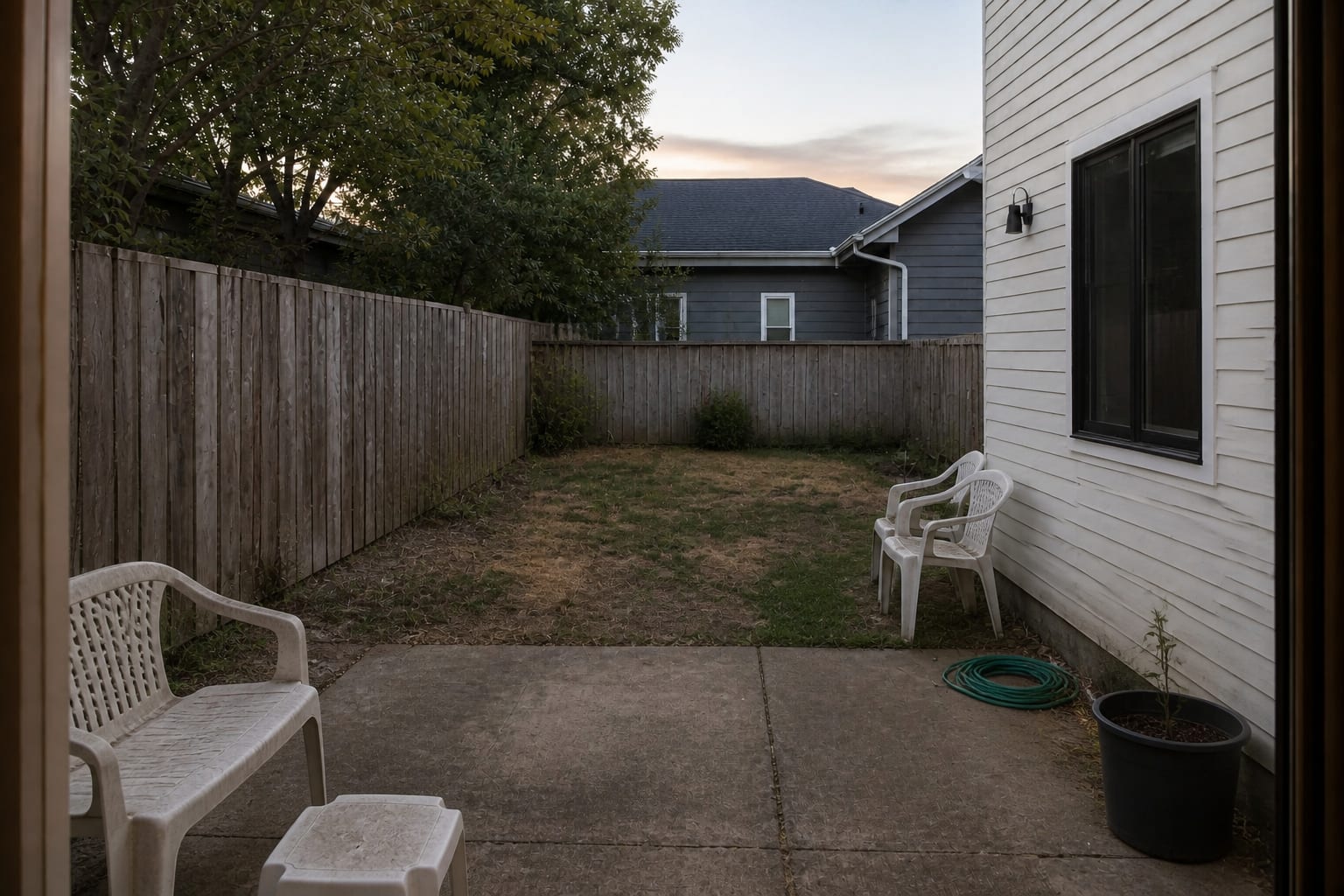
A plunge pool works when your yard is under 1,500 sqft, the goal is cooling and soaking rather than lap swimming, and you can fit a 6×12ft to 8×14ft basin with 36 inches of deck on all sides. Treat it as a compact outdoor room: keep the shape simple and prioritize access, shade, privacy, and lighting over shell size.
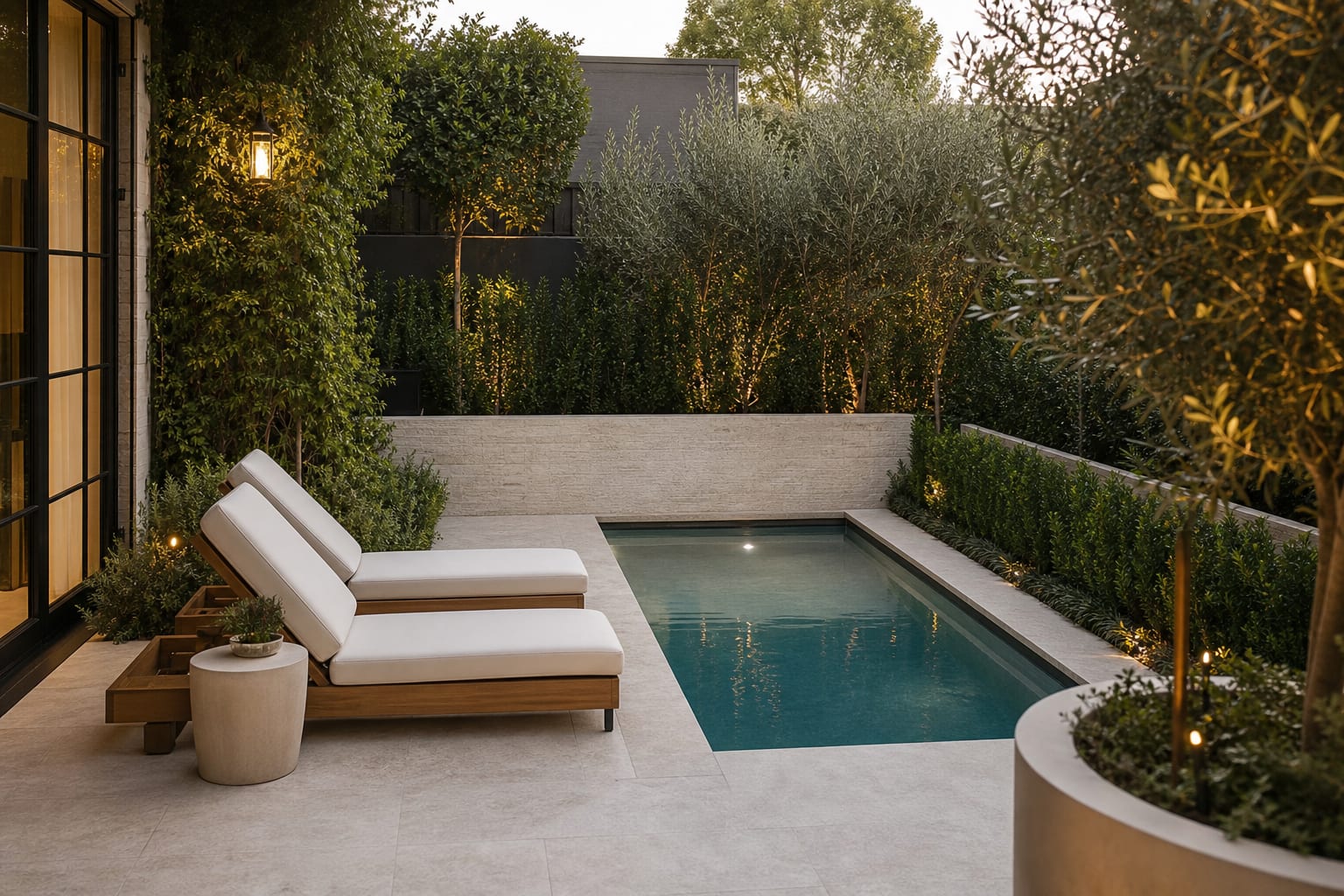
What is a plunge pool, and how do you design one?
Most residential plunge pools measure 6 to 10 feet wide, 10 to 16 feet long, and 4 to 6 feet deep, though soil, equipment, and setbacks decide the final footprint. A rectangle, square, or softened oval is the easiest shape to pave around and make look intentional in a tight yard — curvy shells often leave unusable slivers of paving. Test the layout from the house door and the main seat before you buy anything; those two viewpoints decide whether the pool feels planned or leftover.
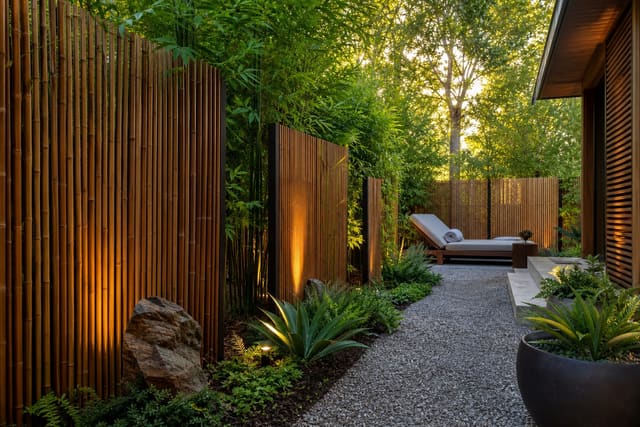
Plan for real circulation: 30 inches for a walking path, 36 inches where people pass behind seated furniture, and 60 to 72 inches for a pair of loungers. Keep the material palette to three finishes — one floor, one vertical edge, one accent — since more than that reads as clutter in a small space. If the pool sits near a fence line, screen the view with layered planting or a built structure; bamboo privacy screen ideas add height without stealing patio space.
The decision that haunts every plunge pool project
The hardest choice isn't fiberglass versus concrete — it's how much yard you give to the water. A slightly smaller pool with a generous edge beats a bigger shell jammed against every boundary; without a dry landing zone, a plunge pool becomes a maintenance object instead of a place you actually use.
| Choice | Best when | Watch the tradeoff |
|---|---|---|
| Plunge pool | Compact yard, cooling and soaking, focal point | No true lap swimming |
| Full pool | Large lot, games, continuous swimming | Can dominate patio and budget |
| Swim spa | Want jets, exercise, year-round heat | Raised shell needs careful screening |
If exercise is the real goal, compare a plunge pool with backyard swim spa ideas before you dig. A swim spa can run 7 to 8 feet wide and 12 to 19 feet long with a taller above-grade profile, while a plunge pool sinks more gracefully into paving.
Coping thickness changes how the edge functions: 12 inches gives a crisp frame, while 18 to 24 inches doubles as a perch for towels and feet. Use slip-resistant stone, textured porcelain, or broom-finished concrete on the main sitting side — glossy tile belongs on a mood board, not under wet feet.
Shade belongs in the first drawing, not as an umbrella added later. A west-facing pool may need a pergola, sail shade, or tree canopy, since late-afternoon sun can make paving punishing. Keep tree trunks several feet beyond the coping and check mature canopy width before planting.
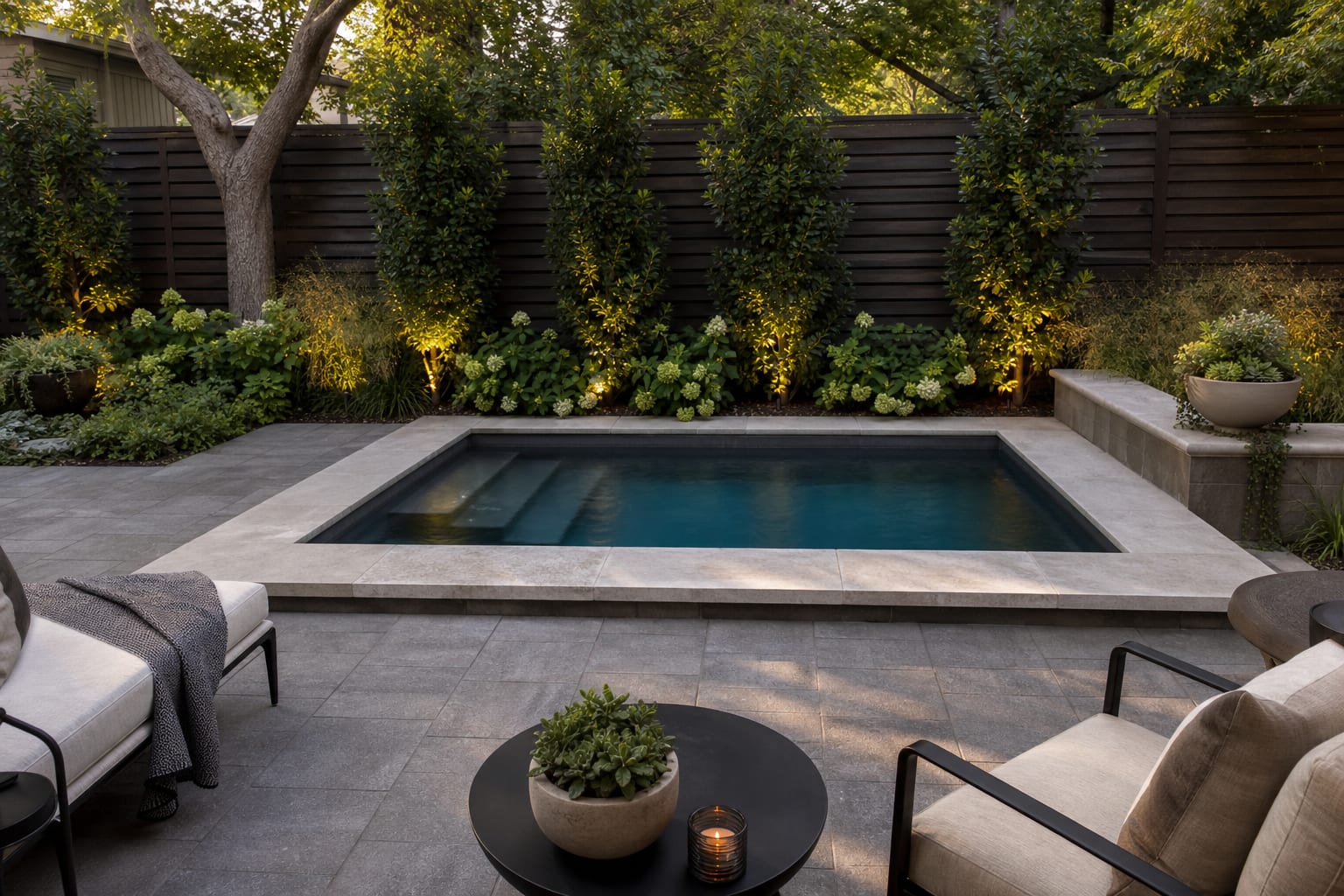
Common plunge pool mistakes to avoid
- Maxing out the shell size. Keep at least one edge 5 to 6 feet wide for loungers or a bistro table so the pool supports outdoor living instead of erasing it.
- Ignoring equipment placement. Pumps, filters, heaters, and covers need service access — tuck them behind a gate or planting mass, not beside the best chair.
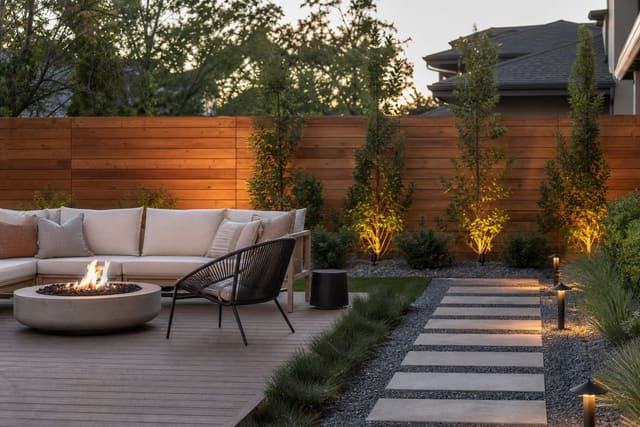
- Screening only at fence height. If neighboring decks or upper windows overlook the yard, pair a 6-foot fence with tall planting, a slatted screen, or a pergola rafter line; see cedar fence design ideas for board-spacing options.
- Using cool white lighting. Stick to roughly 2700K, aim fixtures down, and separate step lights from decorative glow so the pool doesn't feel like a commercial facility at night.
- Treating the cover as an afterthought. Automatic covers need tracks and housing; manual covers need a dry, reachable storage spot, so decide early rather than ending up with a tarp folded beside your best planter.
Every compromise in a small pool sits close to your chair. Build a narrow storage bench, add towel hooks, and leave one planting bed at least 36 inches deep for shrubs and a drip line.
Use AI design to preview your plunge pool before you commit
Photograph the yard from the door you use most, plus one shot from the far corner looking back at the house and one that shows the fence or neighbor-facing side. Include a tape measure, chair, or planter of known size to ground the preview.
Ask for variations with specific constraints — an 8×14ft plunge pool, 36 inches of clear walking space, two lounge chairs, a 6-foot privacy fence, warm path lighting — then test materials separately. Pale limestone-look pavers, charcoal porcelain, cedar screening, and concrete coping change the yard's temperature long before you touch the waterline.
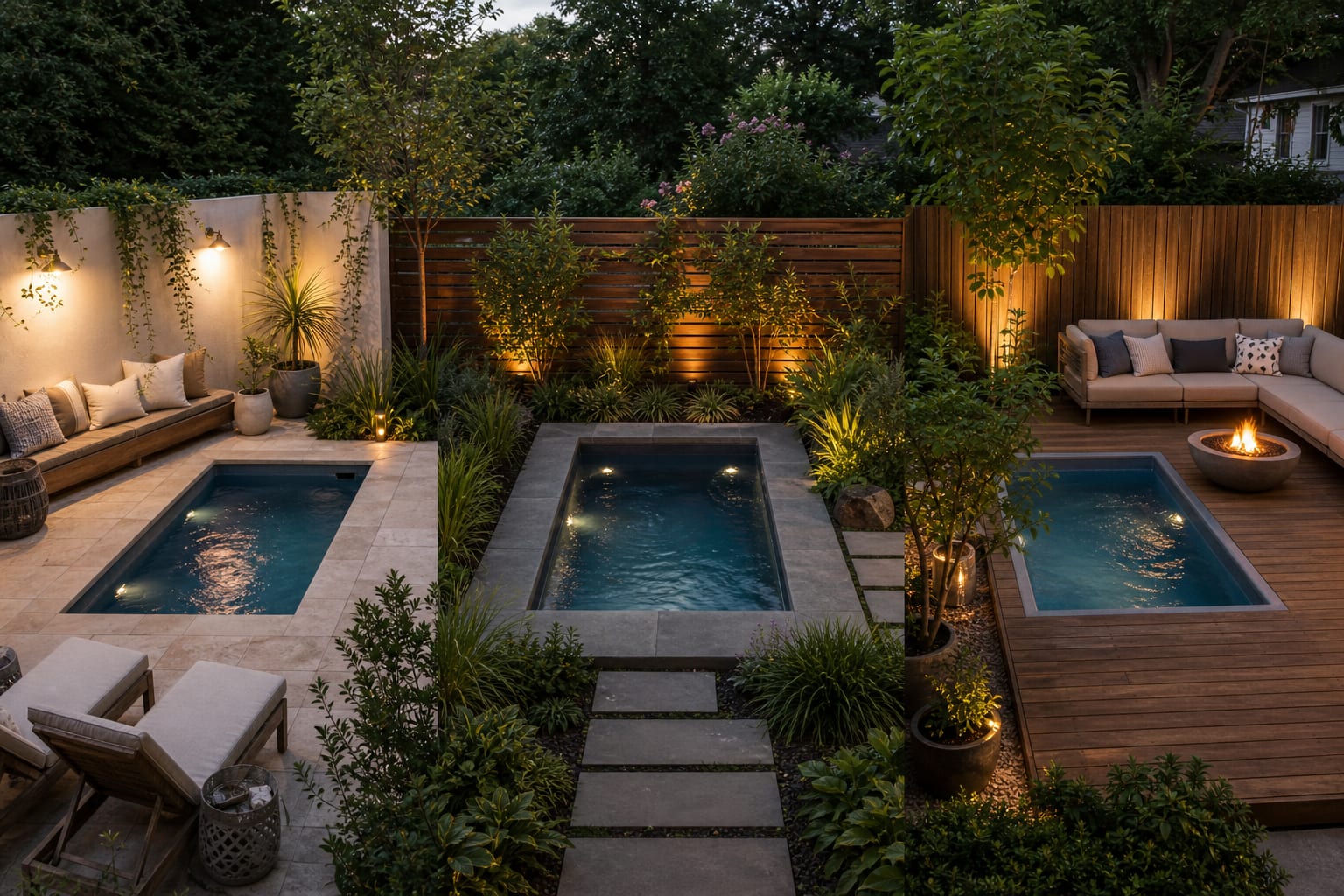
A framework that fixes nearly every small plunge pool layout
Align one long edge of the pool with an existing architectural line — the patio door, fence, or deck step — so it reads as built-in rather than added on, especially if it's visible from inside the house.
Give every side a job: an entry side with steps or a bench, a lounging side with 60 or more inches for reclining chairs, a planted or screened side with at least 36 inches of bed depth, and a service side that still looks intentional from the house.
Match the waterline detail to the house style — a knife-edge coping line for modern homes, tumbled stone or brick for cottages — and keep the palette to one coping material, one field paver, one screen material, and two or three plant forms.
Design for winter too: evergreen shrubs, grasses with structure, and a clean fence line keep a closed pool looking composed rather than abandoned. Bring in a pool builder or landscape architect once the concept is set, since setbacks, barriers, bonding, drainage, and permits can reshape the layout before aesthetics get a vote.
Frequently Asked Questions
What is the smallest a plunge pool can be?
6×8ft is the practical floor for two adults to sit, and 6×12ft is the comfortable minimum for a small family. Anything smaller starts to feel like a tub rather than a pool.
How deep is a plunge pool?
4 to 5 feet is standard for cooling and soaking, 6 feet lets you bob without touching bottom, and 7 feet supports diving — though most plunge pools skip diving depth in favor of bench seating.
Can a plunge pool be heated for year-round use?
Yes. A 75,000 to 115,000 BTU heater warms a typical plunge pool to 90°F in 4 to 6 hours. Pair it with an insulated cover to hold heat between sessions in cool climates.
How much does a plunge pool cost?
Concrete plunge pools run $35,000 to $65,000 installed in most US markets, fiberglass shells run $20,000 to $40,000, and above-ground or container conversions can come in under $15,000 in some markets.
Do I need a permit for a plunge pool?
Almost always. Most municipalities require a permit for any in-ground basin over 24 inches deep regardless of footprint, and fencing or pool-cover requirements typically apply at that same threshold.
Three transformations to try
- Concrete plunge pool with deck seating
- Fiberglass plunge pool with paver surround
- Plunge pool with pergola shade