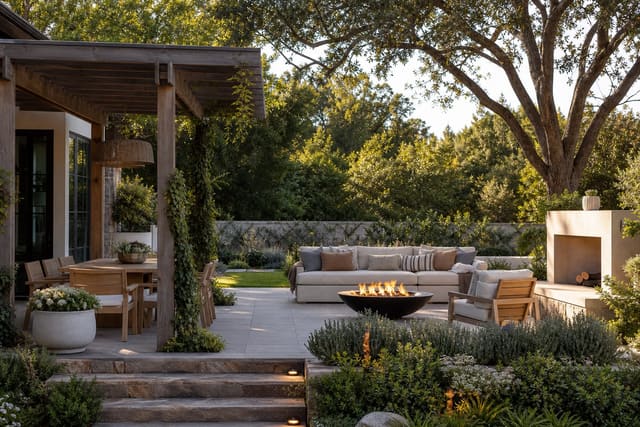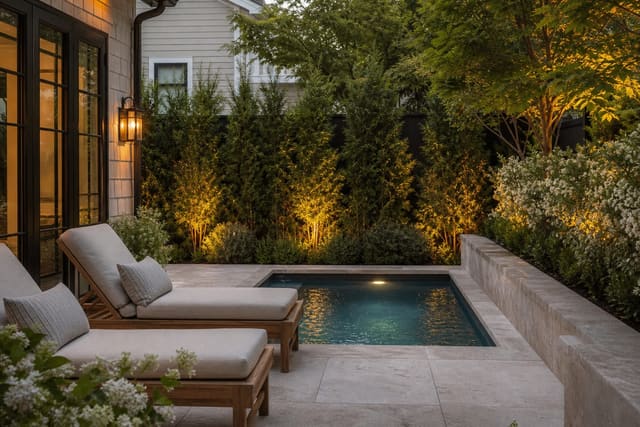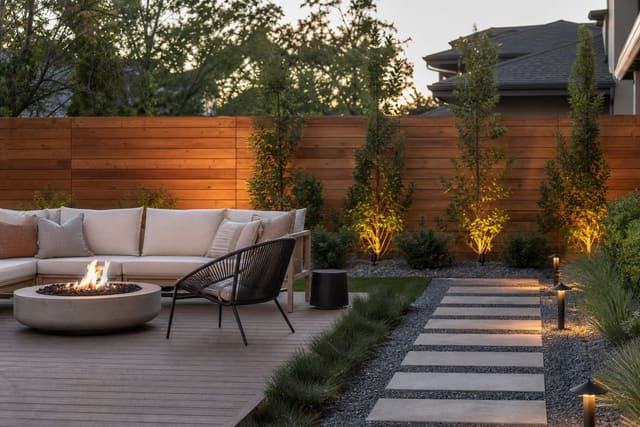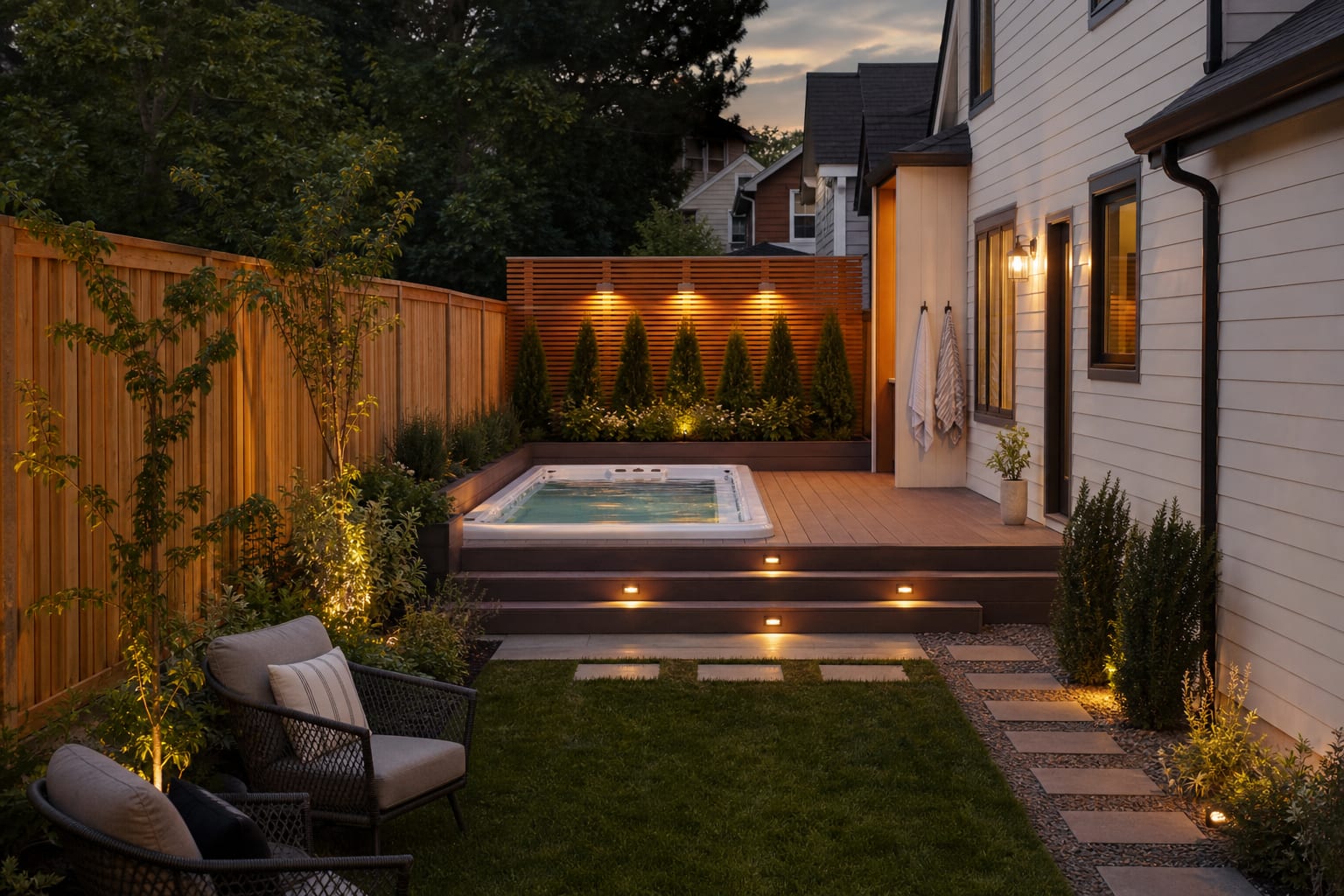
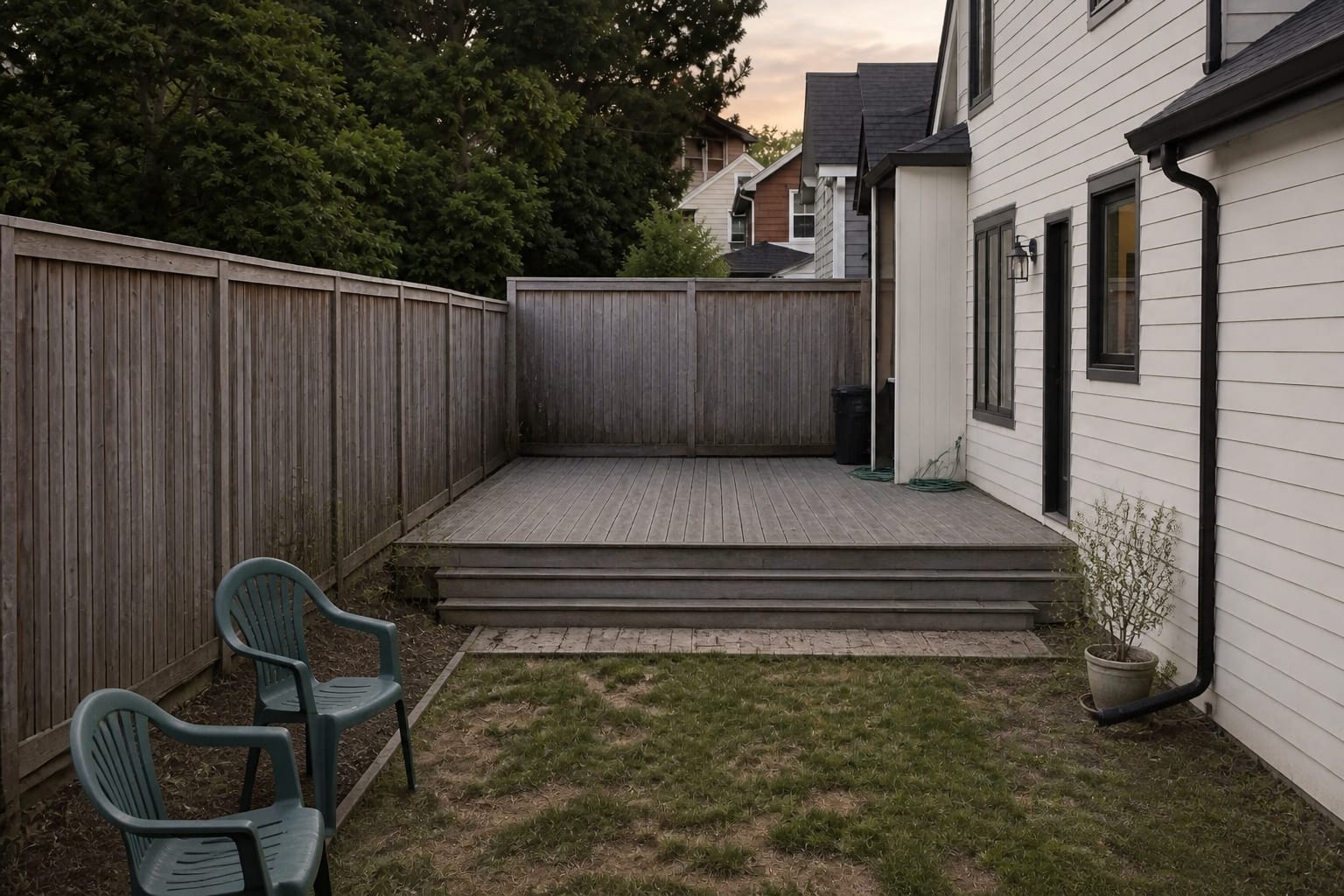
The best swim spa ideas start with sizing: a compact pool-spa hybrid delivers 12-19ft of swim length in a 7-8ft wide shell, fits yards too small or too cold for a full pool, runs year-round with an insulated cover and dedicated heater, and installs in roughly a third of the footprint of a lap pool.
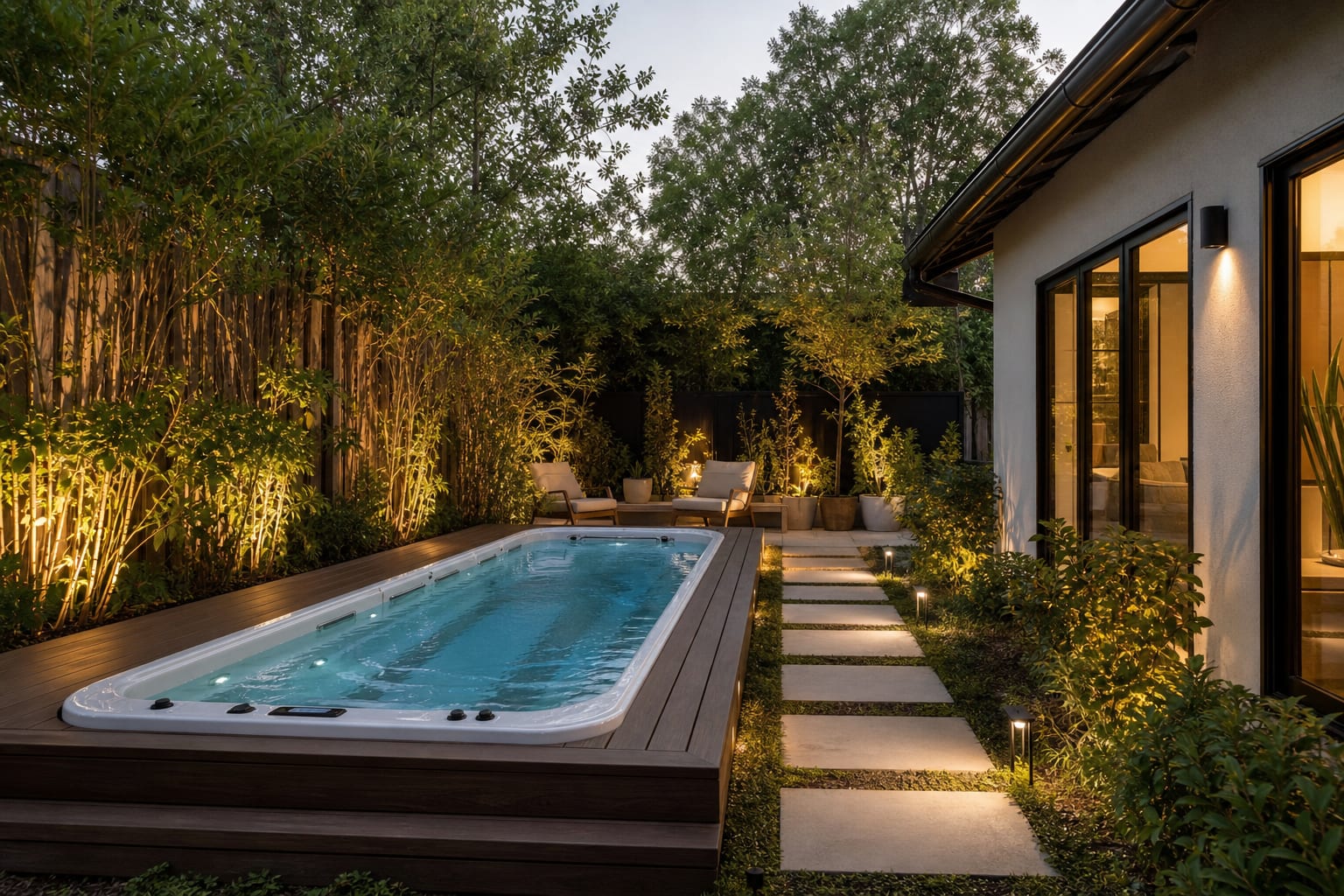
What is a swim spa, and when is it worth it?
Most residential models are long enough for resistance swimming but small enough to fit where a lap pool would be unrealistic. The design challenge is scale: a 12- to 19-foot vessel still carries serious visual weight in a small backyard. A swim spa is not a tiny pool in disguise; it has equipment access, an insulated shell, a cover, steps, a service side, and usually a taller wall than homeowners expect.
Plan at least 36 inches of clear working room on the service side, and don't bury panels behind permanent planters or masonry. If the spa is partially recessed, leave a route for cover operation, drainage, and future repairs.
Swim spa vs. pool is really a lifestyle question. A pool gives visual openness and play space; a swim spa gives controlled exercise, warmer water, and a smaller footprint. For cannonballs and summer parties, see plunge pool ideas for compact yards. For swimming resistance and easier heating, the swim spa wins.
| Choice | Best backyard fit | Design trade-off |
|---|---|---|
| Swim spa | Exercise, soaking, small lots, shoulder-season use | Taller shell, cover storage, equipment access |
| Plunge pool | Cooling off, lounging, visual water feature | Less exercise value, more hardscape integration |
| Full pool | Families, entertaining, broad swimming space | Larger footprint, more site disruption, more fencing impact |
Which installation choices make a swim spa feel built in?
The best move is usually a partial recess, not a full burial. Dropping the unit 18-30 inches into a deck or terrace reduces exposed wall and keeps entry manageable while still allowing service access. A full inground look can be beautiful but demands drainage, ventilation, and access panels that many small yards can't spare.
Put the long side parallel to the strongest line in the yard: the house wall, fence, or patio joint. Angled installs look dynamic in a rendering and chaotic in real life once the cover, steps, and furniture have to fit around the diagonal. In a narrow yard, a linear layout with a 4-foot walking lane on one side usually works best.
The surrounding surface needs grip, drainage, and comfort underfoot. Composite decking, textured porcelain pavers, broom-finished concrete, and dense stone all work when detailed for exterior use. Avoid glossy tile near the waterline; it can look expensive but turn slippery and glaring outdoors.
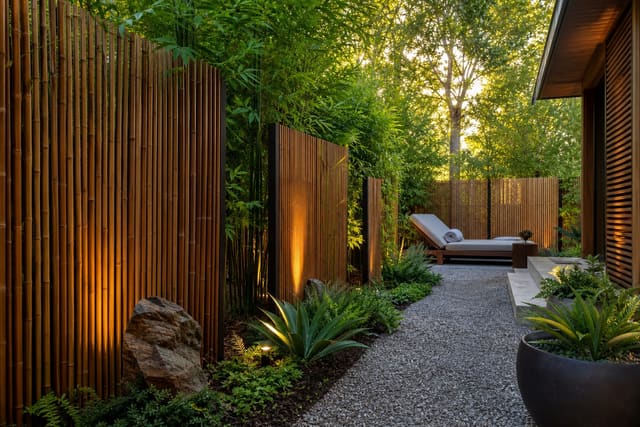
Design privacy as a layered edge rather than one tall wall. A cedar screen, upright grasses, and a small canopy tree block views while keeping the yard breathable. If your fence needs work, cedar fence design ideas for privacy can help you pick a screen pattern that suits water and low evening light.
Lighting should serve movement first. Use low-voltage step lights or shielded sconces around 2700K so the route from house to spa reads clearly. Put light near steps, cover handles, and towel hooks; underwater glow alone won't help someone carry a drink across wet paving.
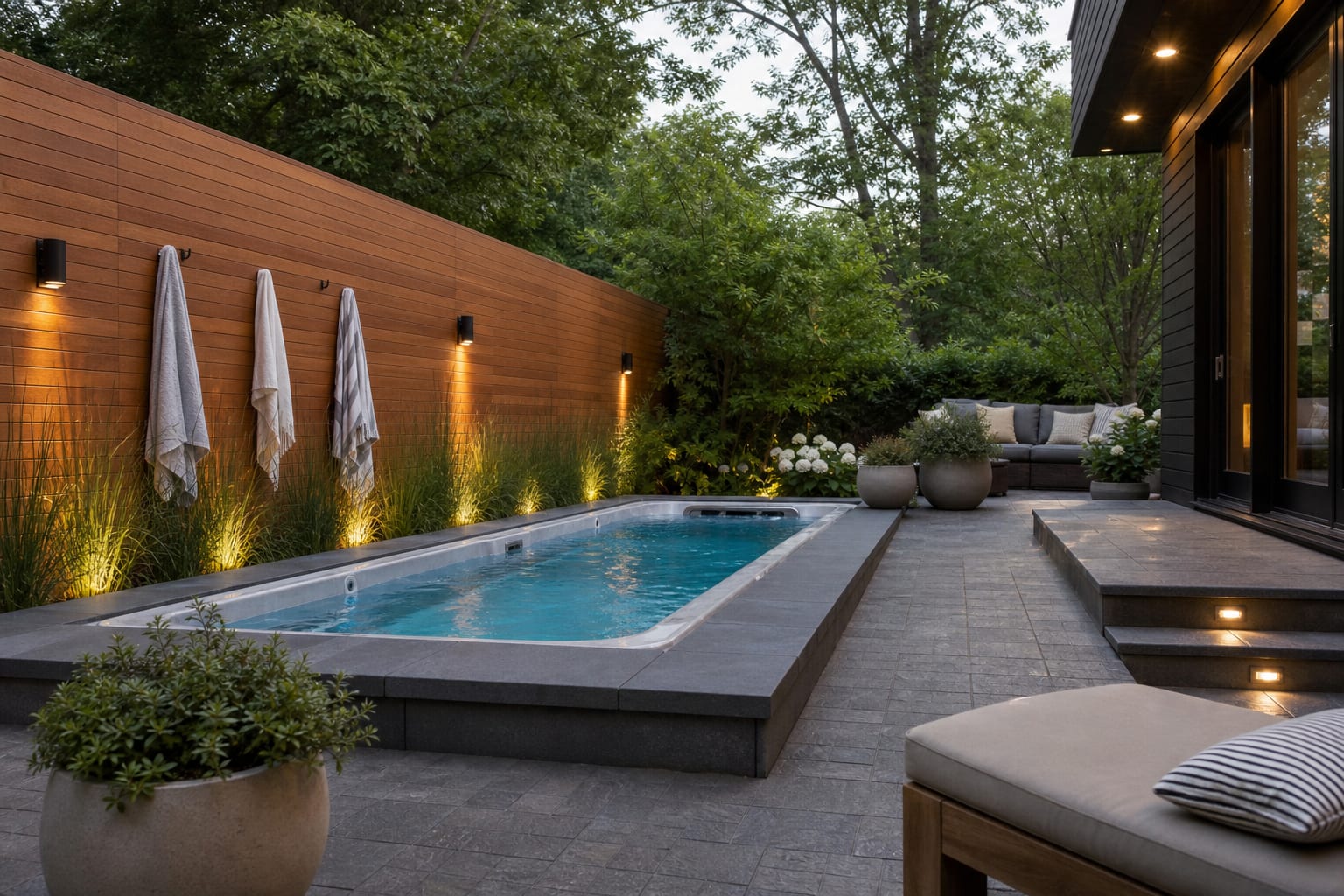
Swim spa ideas that earn their space in a small yard
- Recess into a low platform with one broad step instead of a skinny ladder. A 16-18 inch step height suits most adults, and a 48-inch-wide step gives wet feet a safer landing.
- Build a towel and robe wall near the exit. Hooks at 48-60 inches keep fabric off wet paving; a slim 12-inch shelf holds sandals and a phone without clutter.
- Screen only where the sight line exists. A 6-foot slatted screen along one exposed side beats fencing the whole yard; 1/4- to 1/2-inch gaps avoid a barricade feel.
- Add a cool-down seating zone 6-8 feet away. Two lounge chairs or a compact bench on pavers get used more than a distant dining set.
- Choose planting that tolerates splash and reflected heat. Ornamental grasses, dwarf evergreens, lavender, and rosemary are safer near the edge than thorny or heavy-leaf plants.
- Park the open cover against a blank wall. If the lifter raises vertically, face that side toward a fence or hedge so it's not the first thing seen from the kitchen window.
Repeat the fence stain, paver tone, house trim, or planter metal so the spa zone feels connected to the rest of the yard. If the privacy edge feels too hard, bamboo privacy screen ideas for small yards can soften a spa corner without walling it off.
Use AI to preview your swim spa layout before the crane arrives
AI design is useful here because the expensive decisions are about placement and mass before finishes. Upload a straight photo from the house door or main window, then preview the spa in two or three positions with the fence, gate, furniture, trees, and equipment route still visible.
Test the big moves first: above-deck, partially recessed, and tucked along the fence. Then compare finishes such as composite decking, textured concrete, cedar screens, and dark metal planters. The preview won't confirm structural support, electrical needs, crane access, drainage, or code clearances, but it can show whether the spa overwhelms the yard or settles into it.
This matters most in small yards, where a swim spa looks manageable in a product photo and enormous from the back door. Seeing the same angle with a deck, screen, cover, and planting helps decide between permanent construction and a simpler surface-mounted setup.
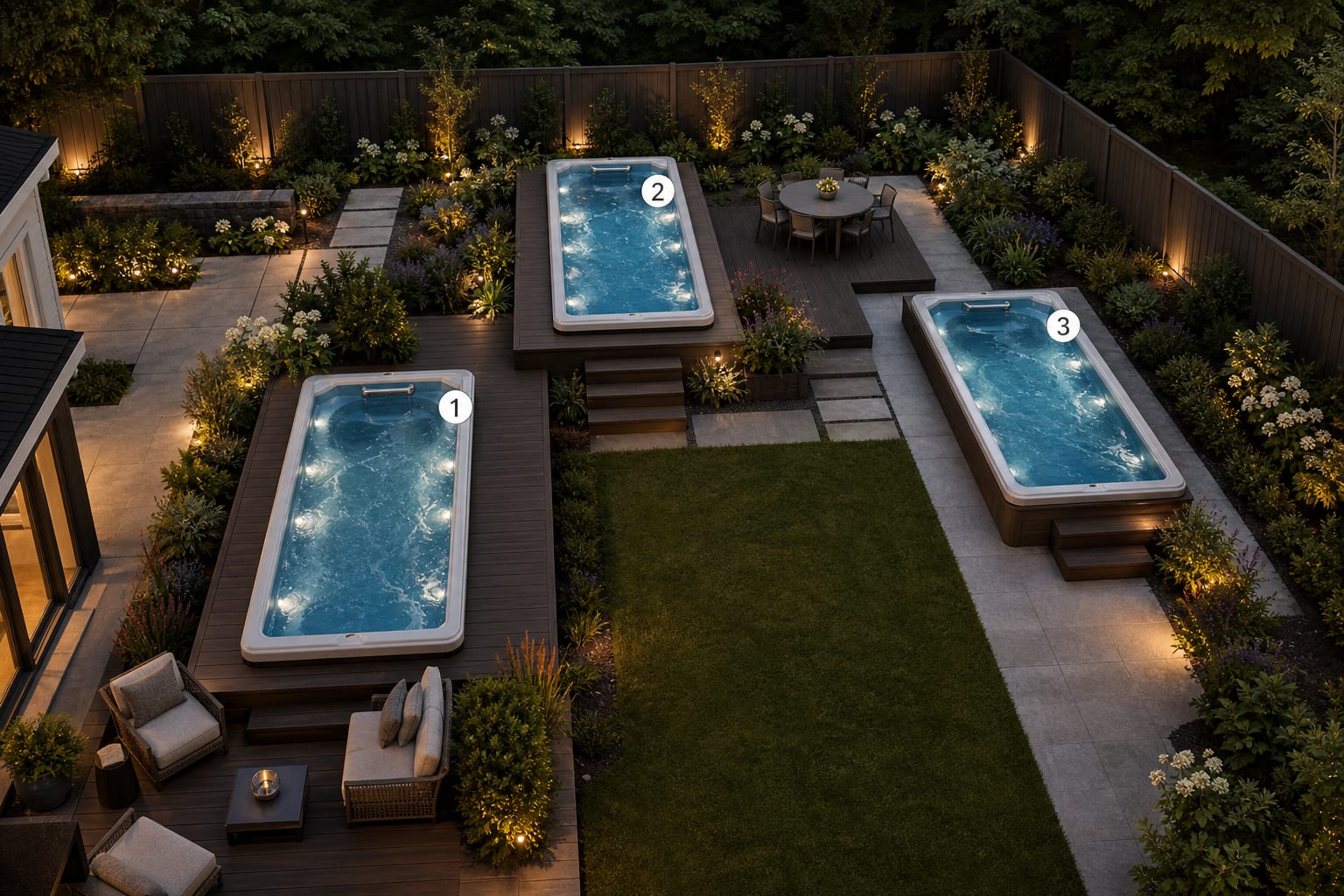
Common swim spa mistakes to avoid
- Choosing the biggest model that fits on paper. A 19-foot spa may fit inside the fence lines but still needs service clearance, steps, cover movement, and a towel route. Reduce the model size before you shave circulation.
- Sinking the spa too deep. A flush edge looks sleek, but panels, ventilation, and drainage still need access. Use removable deck panels or a lower service path instead of sealing the shell in.
- Ignoring the cover's parked position. The cover is large and used constantly; face the lifter toward a fence or planting bed so it doesn't block a gate or window view.
- Crowding seating right against the jets. Keep the main lounge zone 6-8 feet away so towels, drinks, and bare feet aren't fighting the wet path.
- Ignoring sound and sightlines to neighbors. Equipment hum, steam, and lighting travel differently than a normal patio; use planting and fixture direction to build in privacy from night one.
Frequently Asked Questions
What size is a swim spa?
Most residential swim spas run 12-19ft long by 7-8ft wide by 50-60in deep, a footprint that fits where a 35ft lap pool can't and that ships as a single drop-in shell.
Can I use a swim spa year-round?
Yes. An insulated cover, a dedicated heater, and a freeze-protected pump enclosure keep a swim spa usable at 85-95°F year-round, including in cold climates.
Is a swim spa cheaper than a pool?
Swim spas typically install for $25,000-$45,000 versus $45,000-$80,000+ for a comparable in-ground lap pool, but they cost more per cubic foot of water and may cost more to heat year-round.
Can I install a swim spa above ground?
Yes. Above-ground installation on a reinforced concrete pad is standard and avoids excavation cost; flush installation in a deck cutout costs more but reads as a built-in pool.
Do I need a permit for a swim spa?
Most municipalities treat a swim spa as a pool once its depth exceeds 24in, so expect to pull a building permit, comply with pool fencing rules, and provide an alarm or cover lock in most jurisdictions.
Three transformations to try
- Above-ground swim spa with cedar surround
- Flush-deck swim spa with pavers
- Swim spa with pergola enclosure