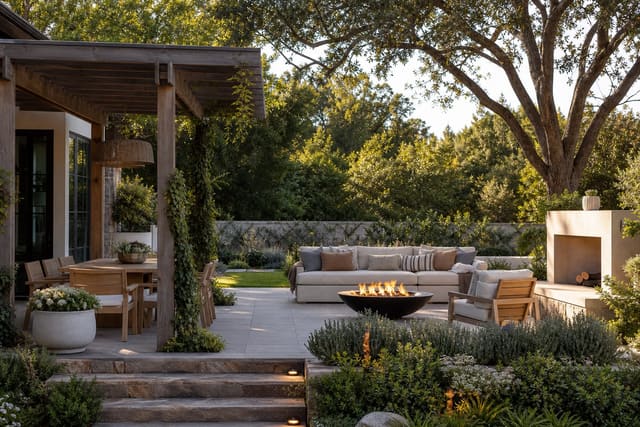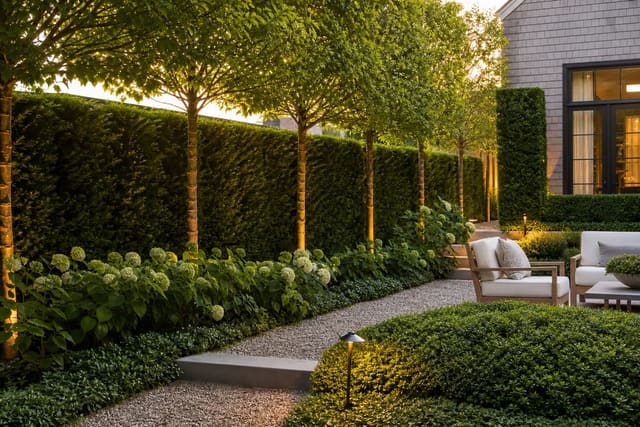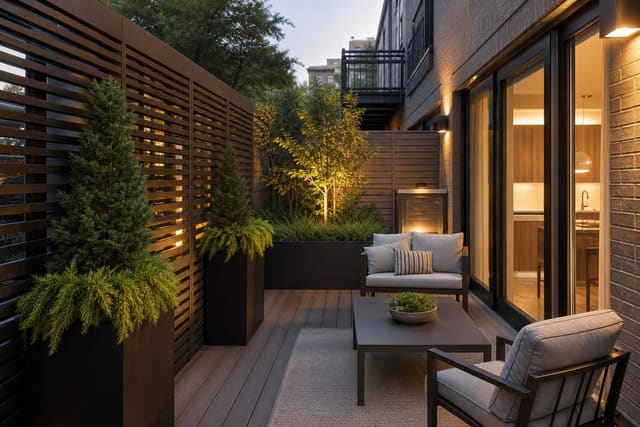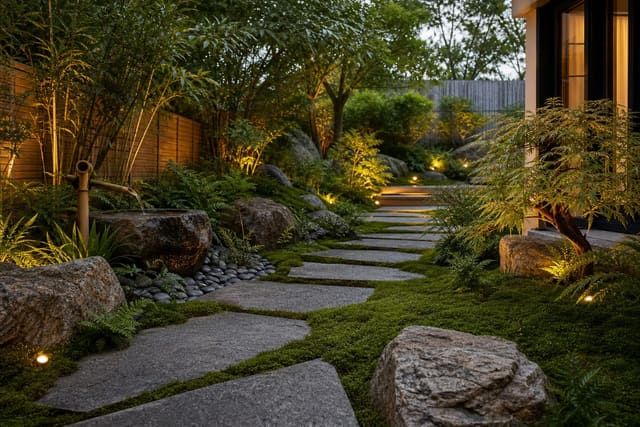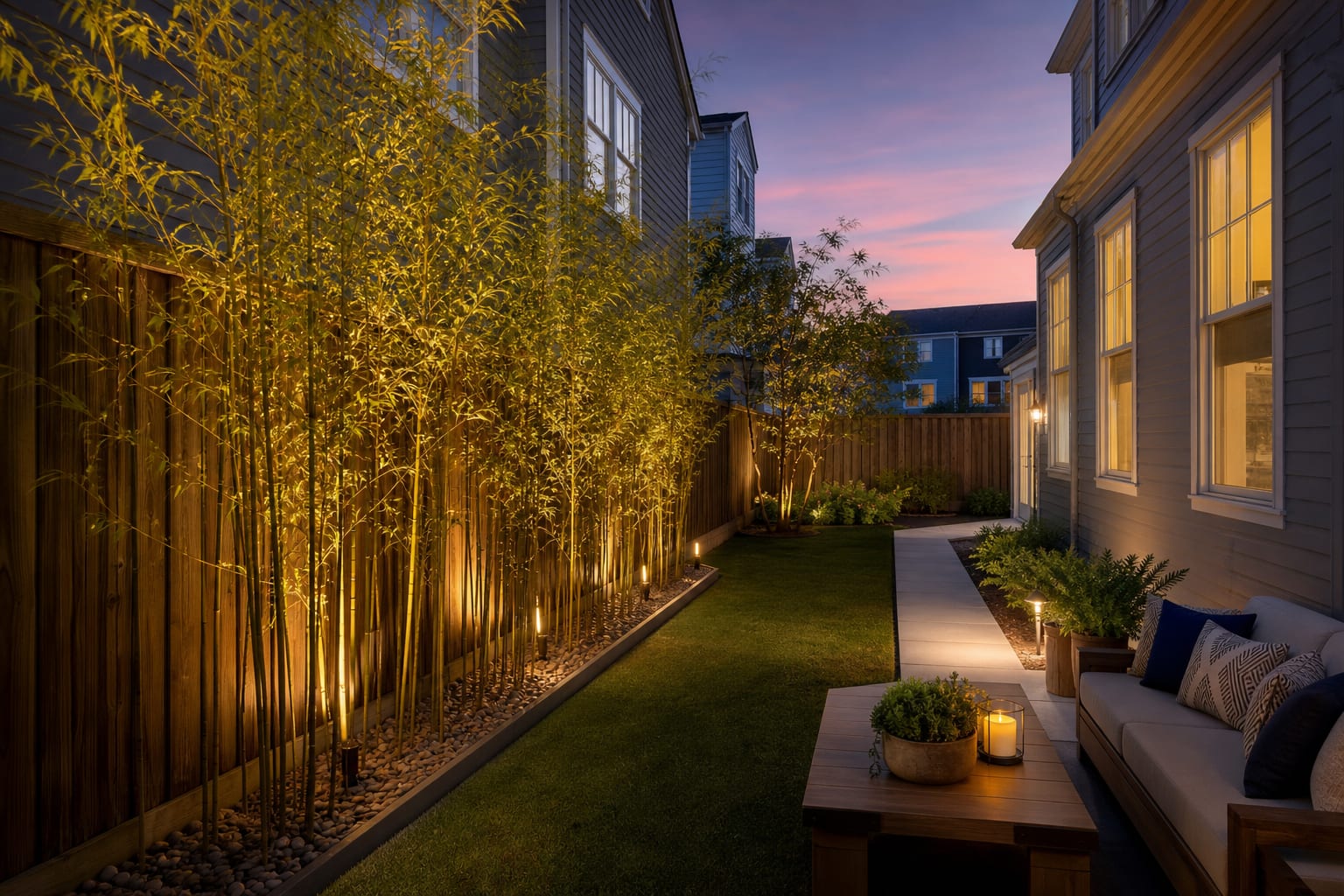
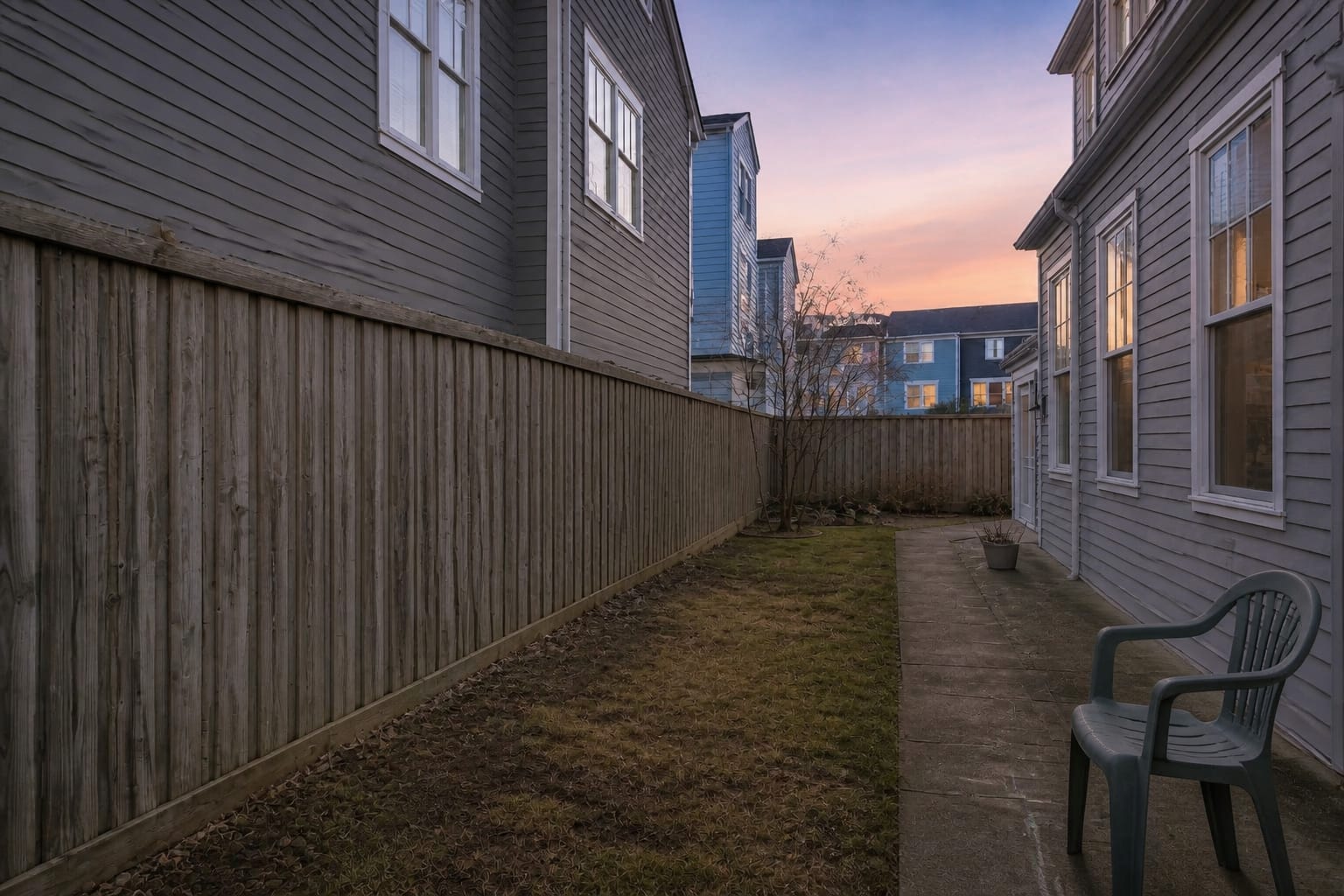
A bamboo privacy screen works best when you plant clumping species like Fargesia in a 2-4 foot deep bed, or contain running bamboo with a 60mil HDPE root barrier at least 30 inches deep. Space plants 3-5 feet on center and water deeply through the first two seasons until the screen closes.
Is bamboo a good privacy screen for a yard?
Bamboo works well when you choose clumping bamboo, give it enough planting width, and keep any running bamboo behind a real root barrier. It fails when you plant an aggressive runner next to a fence, skip maintenance, or expect a narrow planter to act like a full hedge.
Clumping bamboo is the safer starting point for most yards because the root crown stays tight. Plan for a mature screen 2-4 feet deep, not a thin green line on the property boundary. For a second-story window, target 7-12 feet of height; for a patio table, density from 30 inches to 6 feet matters more than overall height.
Running bamboo grows a fence-height screen faster, but it needs containment before the first cane goes in the ground. Use an HDPE root barrier at least 30 inches deep, leave a 2-inch lip above grade so rhizomes cannot climb over, and angle it slightly outward so roots turn upward where you can spot them. If that sounds like too much upkeep, pick clumping bamboo or screening panels instead.
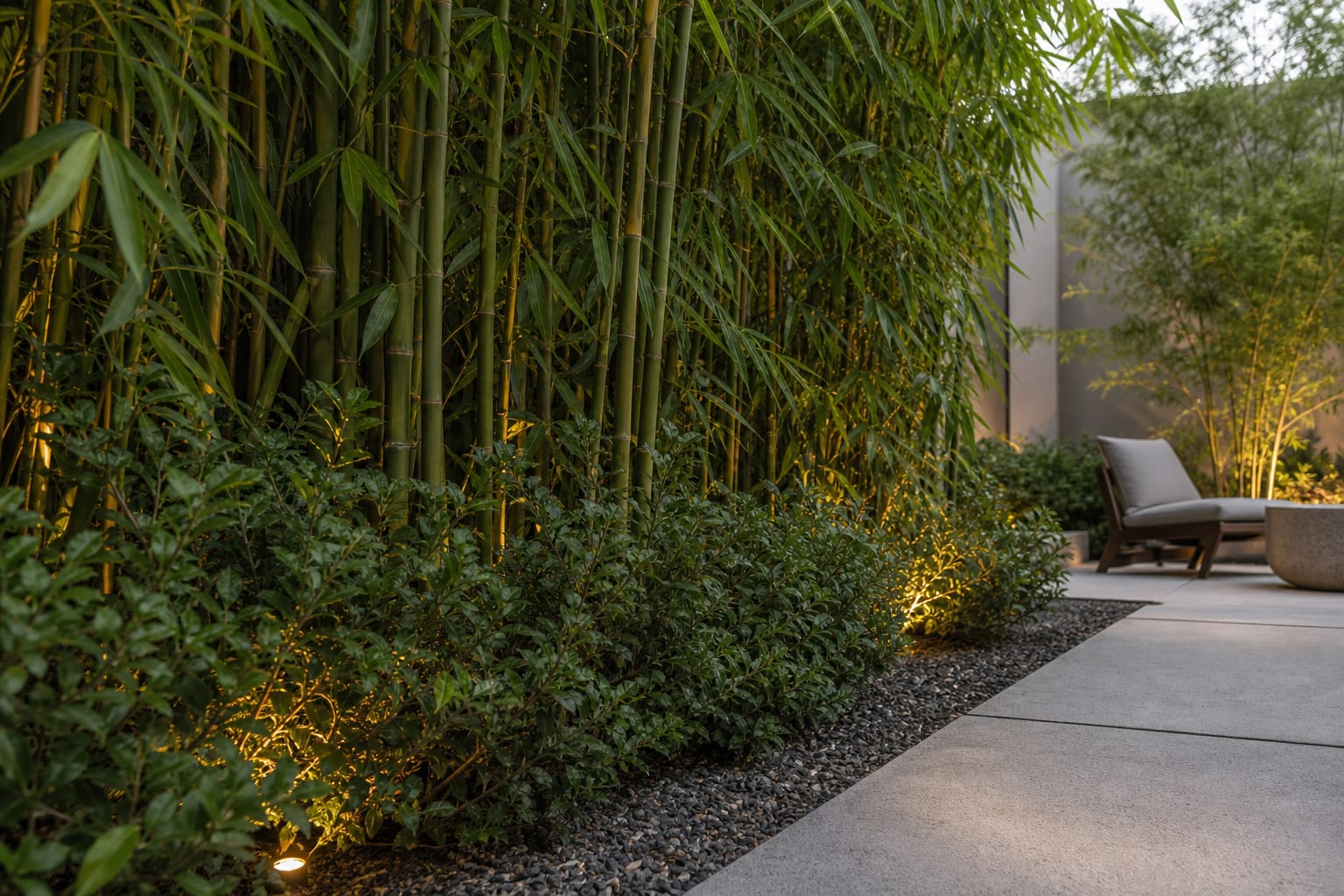
Give the bed a clean edge with gravel, steel edging, or a low curb so the base does not look weedy. If an existing fence already feels stark, bamboo can soften it; if the fence is failing, compare this green-screen approach with more permanent cedar fence design ideas for backyard privacy before investing in plants that will still expose a weak boundary.
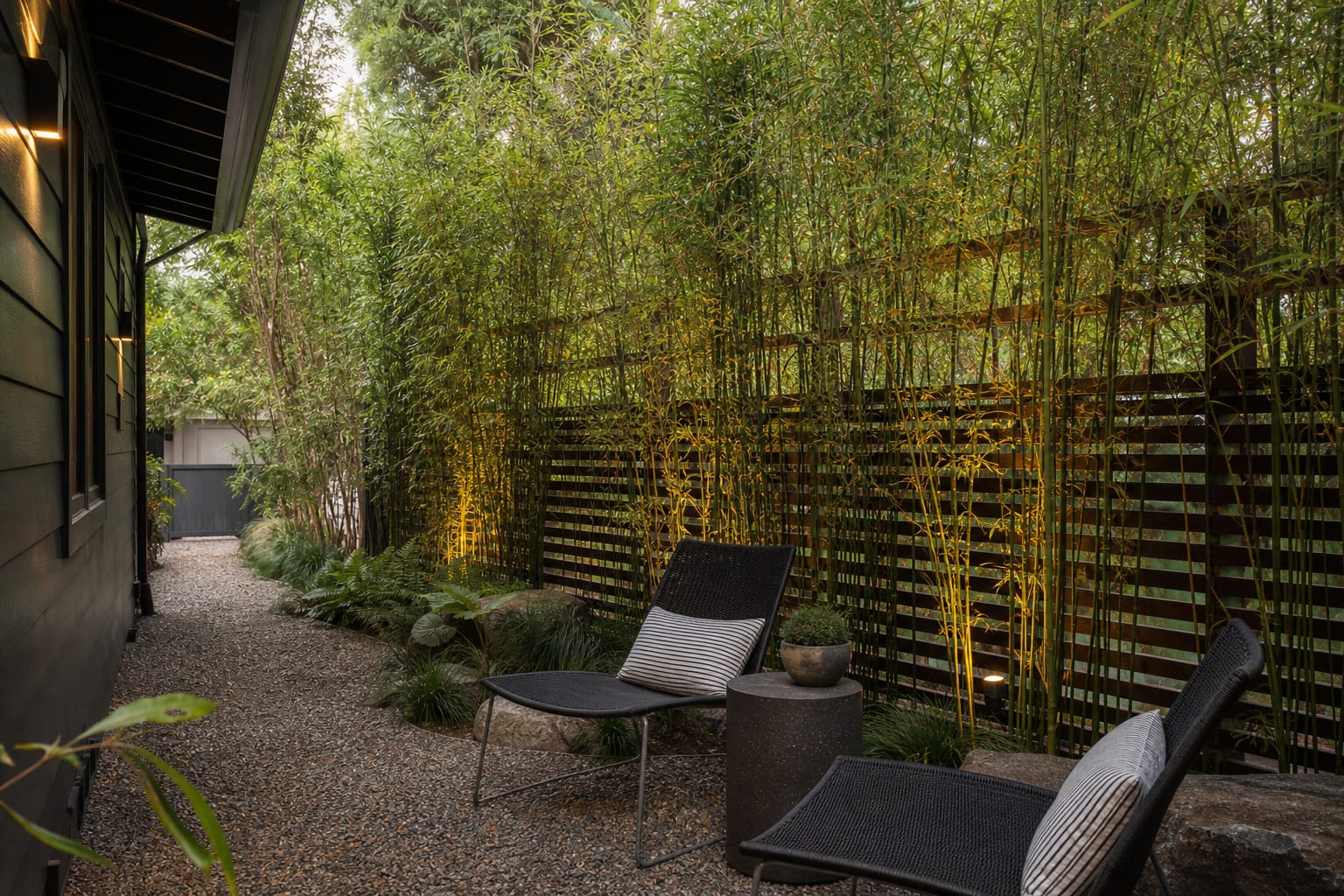
Test this on your own photo with ReDesign before committing to a direction; keep the house edge, horizon line, hardscape, beds, and main path visible so the preview matches your actual yard.
Which bamboo screen setup fits your site?
The right setup depends on whether you need a living hedge, a removable screen, or a hard panel softened by planting.
| Screen setup | Best use | Spec to copy | Watch-out |
|---|---|---|---|
| Clumping bamboo in ground | Long boundary with soil access | Plant 3-5ft apart in a 2-4ft deep bed | Needs irrigation during establishment |
| Running bamboo with barrier | Fast tall screen where containment works | 30in minimum root barrier, 2in exposed lip | Inspect the barrier edge yearly |
| Bamboo screening panels | Instant texture on a fence or balcony | Attach panels every 24-36in | Weathers fast touching wet soil |
| Large containers | Renters, decks, patios | Planters at least 24in wide and deep | Pots dry fast, limit height |
In-ground clumping bamboo is most convincing when you have real soil and a long-term privacy need. Add drip irrigation since new bamboo dislikes a dry first summer, especially beside reflective paving. Mulch 2-3 inches deep but keep it off the cane bases so rot and pests are easy to spot.
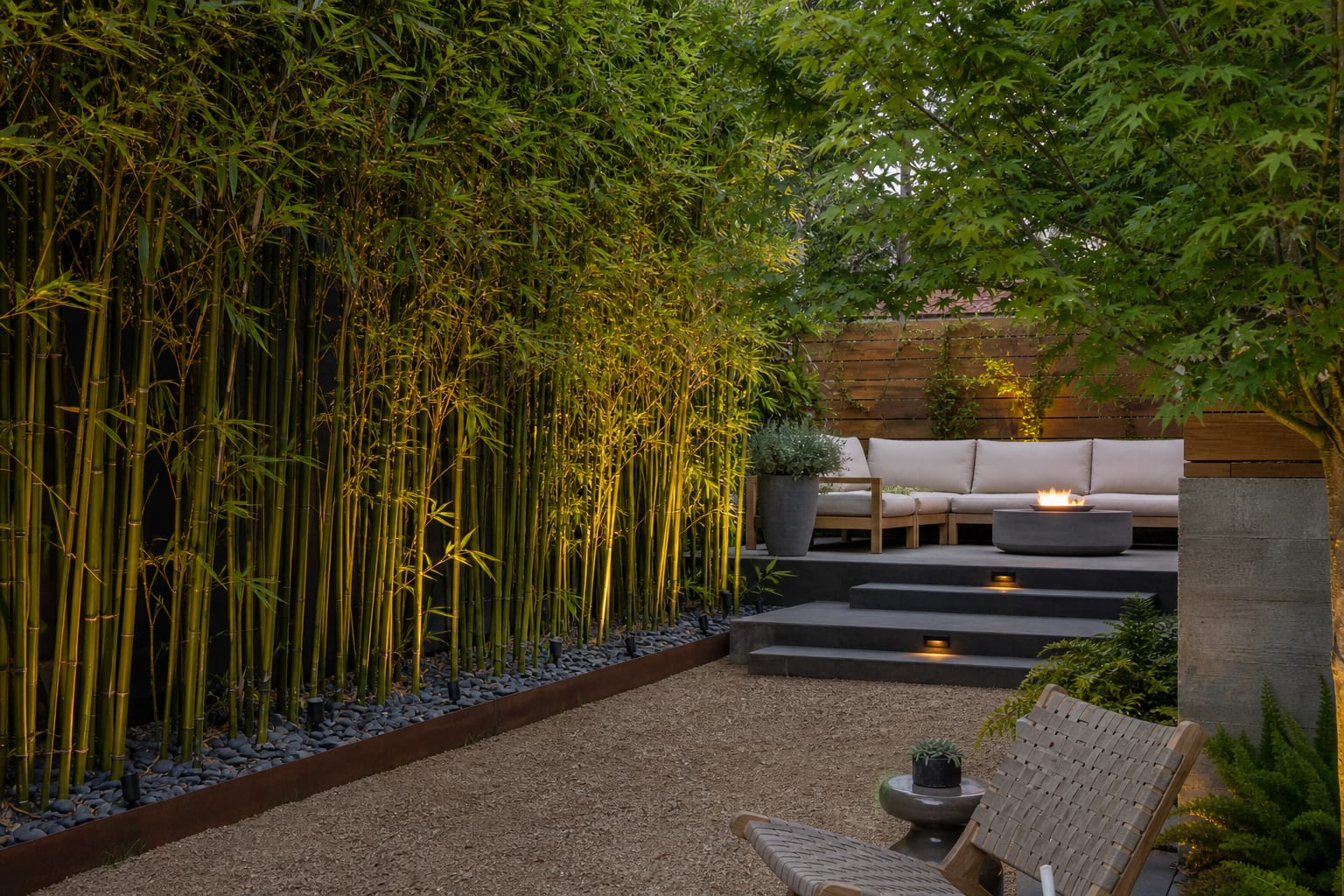
Bamboo privacy screen ideas that look intentional
- Frame one side only. A single 10-16 foot run of bamboo can block a neighbor's window while leaving breeze and a clear path for serving trays.
- Back an existing low wall. Plant clumping bamboo 18-24 inches behind the wall so canes rise cleanly above it, leaving room to prune.
- Pair with dark posts. Blackened timber or dark metal posts every 6-8 feet disappear behind green culms for a modern look.
- Set back from pools. Keep beds or containers outside the splash zone with 36 inches of circulation around loungers.
- Combine panels with live bamboo. Use rolled panels to cover an ugly fence fast, secured every 24-36 inches with the bottom 2 inches off the soil, then add living bamboo in front where depth allows.
- Layer with shrubs near play areas. A clipped evergreen at the base hides bare lower canes while bamboo adds height, softening the look versus a solid wall of stems.
Scale is the real design test. A thin bamboo in a small pot looks nervous next to a large dining set or swim spa layout; a proper bed or repeated planters make the privacy feel proportional.
Common bamboo privacy screen mistakes
Planting running bamboo with no barrier is the mistake that gives bamboo its bad name. If you cannot install and check proper containment, choose a clumping type or a panel system instead.
Picking the tallest variety on the label can backfire in a small yard; a 25-foot bamboo can shade a bungalow garden. Match mature height to the actual sightline; 8-12 feet handles most side-yard and patio privacy needs.
Planting too close to a fence traps moisture and blocks maintenance access. Leave room to remove dead culms and check for pests without jamming the screen against timber boards.
Ignoring leaf drop makes a clean patio messy; avoid placing bamboo directly over drains or narrow gravel strips that are hard to rake.
Expecting bamboo to block everything at ground level leads to disappointment. Many varieties show attractive exposed canes as they mature, so seated-eye-level privacy may need a companion shrub or denser spacing.
Using flimsy panels in a windy side yard looks cheap fast. If a panel flexes in your hand, mount it to a rigid frame or skip it.
Use AI design to preview bamboo before you plant
Bamboo changes the vertical rhythm of a yard, so see the height and density before buying plants or panels. Take a level photo from the patio door or main seating spot, then use Re-Design to preview clumping bamboo, panel screening, mixed shrubs, and different bed depths from that same angle.
The goal is deciding between a narrow green column, a layered boundary, a dark modern screen, or a softer natural backdrop. Test a 6-foot screen against an 8-foot one, and check whether the bamboo calms the space or just darkens it.
Once the visual direction feels right, confirm mature spread, winter hardiness, local rules, irrigation access, root barrier placement, and walkway clearance outdoors. Bamboo rewards planning and punishes wishful thinking.
Frequently Asked Questions
Will bamboo take over my yard?
Running bamboo will spread aggressively; clumping bamboo (Fargesia, certain Bambusa) stays contained. Never plant running bamboo without a 60mil HDPE root barrier at least 30 inches deep around the entire planting.
How fast does bamboo grow?
Clumping bamboo reaches a mature height of 8-15 feet in 3-4 years. Running bamboo can hit 20 feet in two seasons but requires aggressive containment to stay controlled.
How tall does bamboo get for a privacy screen?
Most clumping species used for residential screening top out at 10-15 feet. Certain timber bamboos reach 30-40 feet, which is too tall for most suburban lots.
Does bamboo work in cold climates?
Hardy clumping species like Fargesia rufa and Fargesia robusta survive zone 5 winters. Running bamboo and most timber bamboos need zone 7 or warmer to thrive.
How do I maintain a bamboo screen?
Thin the oldest canes every 2-3 years to keep the grove airy and remove dead culms in spring. Check the root barrier annually to make sure no runners have crossed it.
> Try this: Ready to see this on your own outdoor space? Open ReDesign and run the preview before you buy materials, plant, drill, or move furniture.
Three transformations to try
1. Clumping bamboo screen along fence