Backyards & Gardens10 min readMay 25, 2026

Living Fence Hedge Ideas and Pleached Hedges: The Most Beautiful Privacy Screen

Living fence hedge ideas use shrubs or pleached trees as a green privacy screen, shaping branches into a boundary that feels softer than a fence.

The transformation · 10-minute read

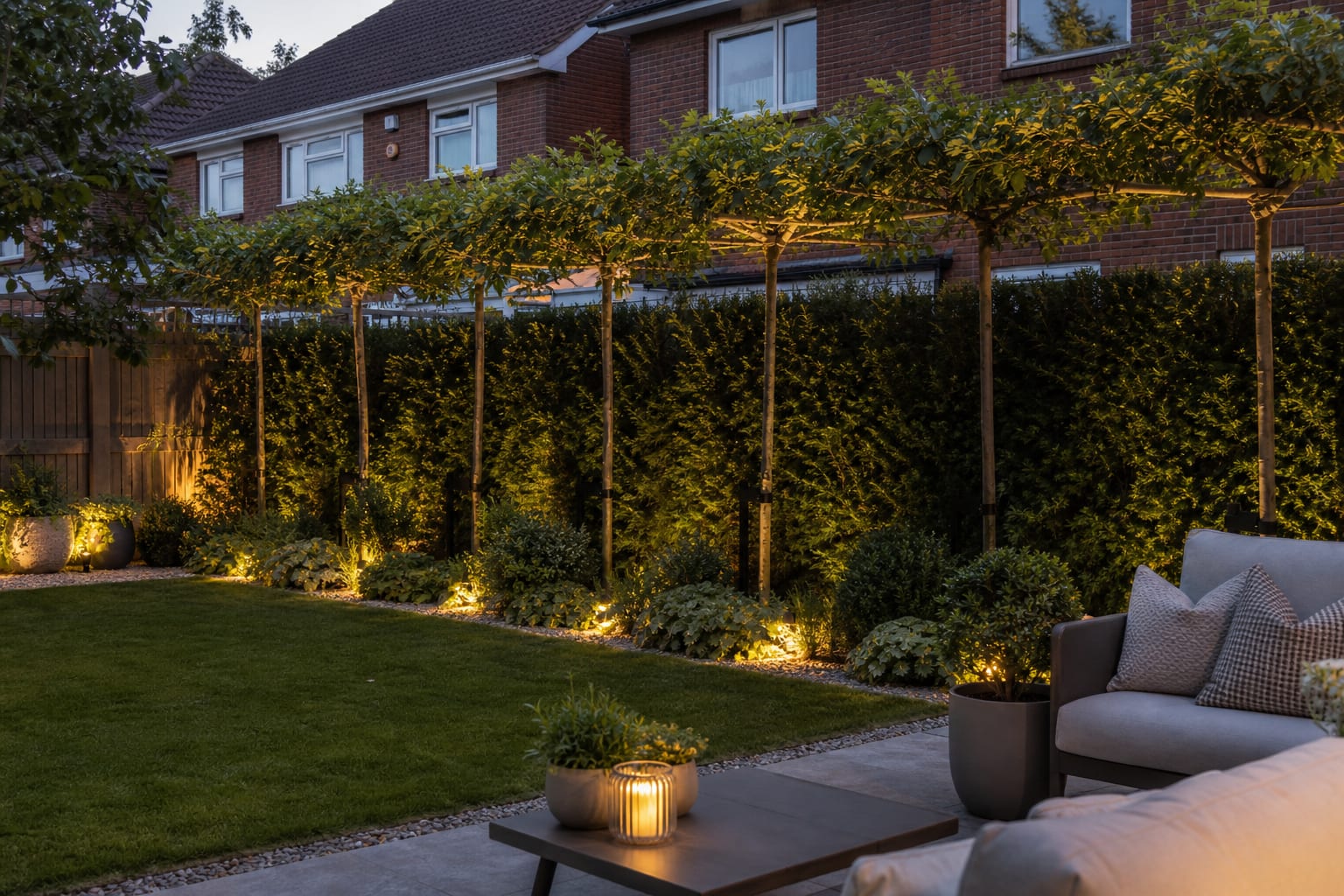
same garden angle with pleached trees, evergreen hedge plants, gravel edging, and layered groundcover forming a green privacy screen
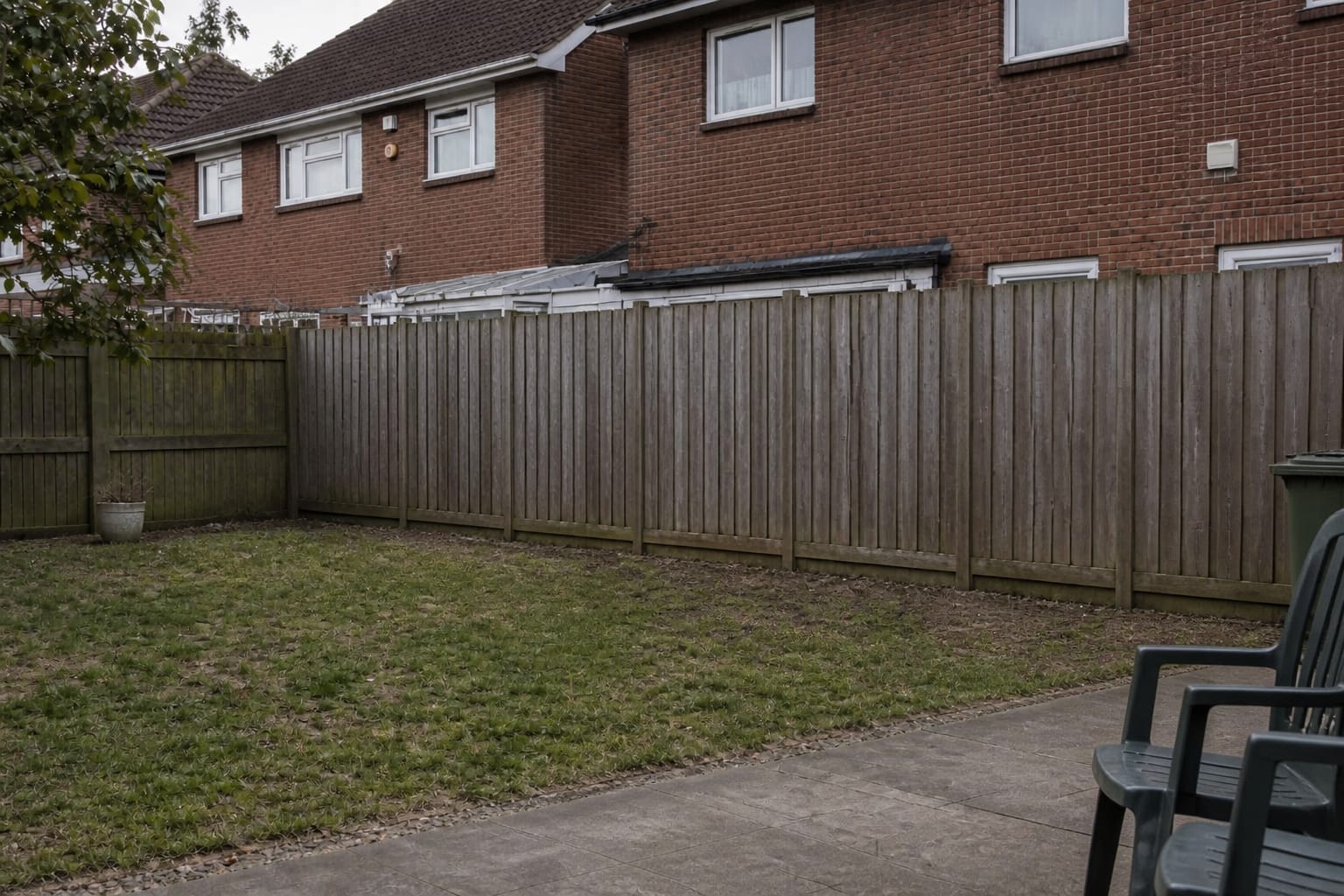
under designed garden boundary with a patchy lawn, exposed neighboring windows, scattered pots, and no planted privacy structure
Before
After

An exposed garden edge becomes a soft privacy screen with pleached trees, clipped evergreen structure, and low planting that hides bare soil.

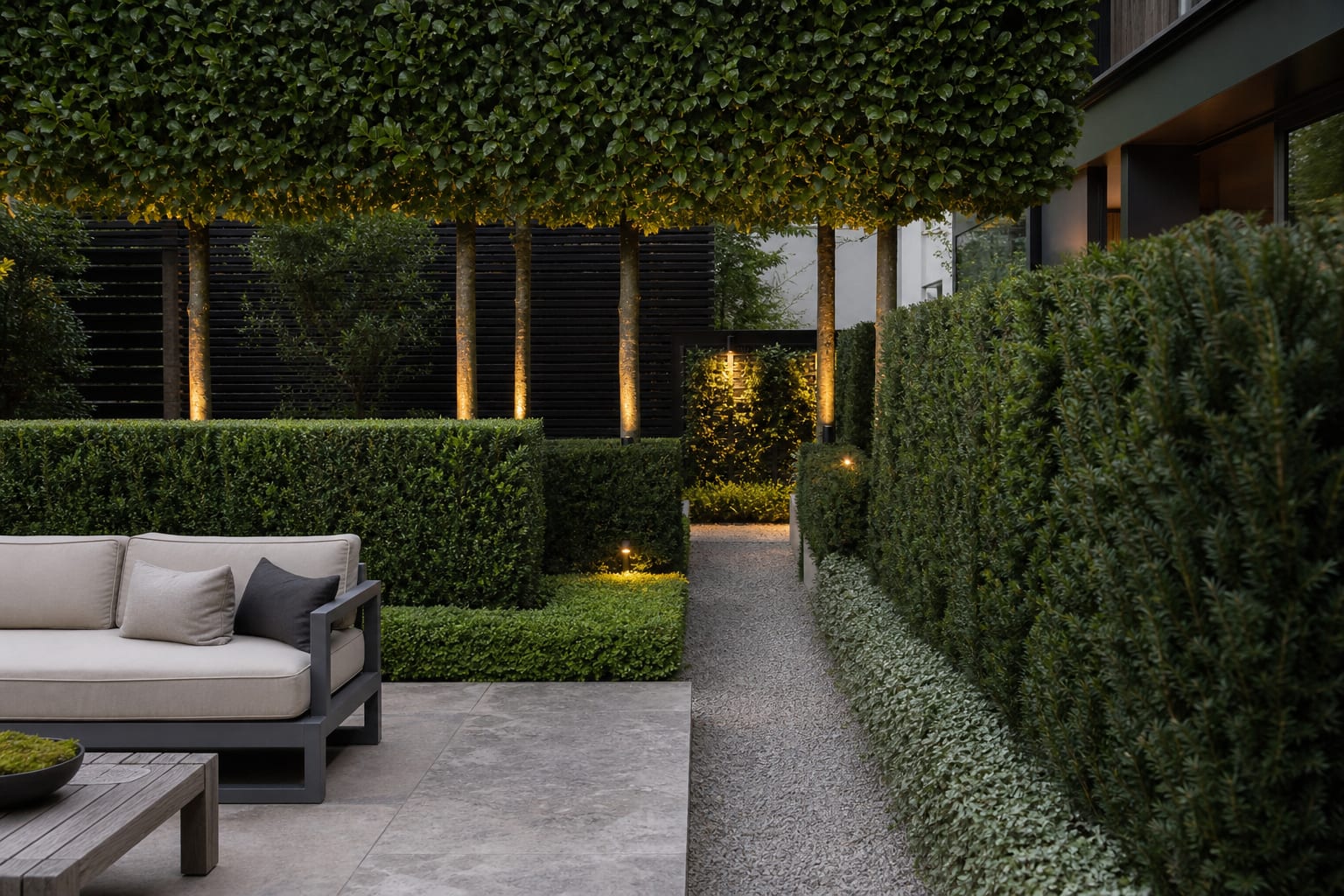
A living fence reads as a hedge — not a row of trees — when you space evergreens at 3-4ft on center for screening, pick a species that holds a tight column without aggressive shearing, plant in a slightly staggered double row to close gaps at the base, and water deeply through the first two growing seasons. A hard fence is not always the best answer to a privacy problem. In a garden, I would rather see a planted boundary earn its keep: screening the neighbor, cooling the edge, softening noise, and giving birds somewhere to land. The mistake is treating a hedge like a green wall you buy in one afternoon. This guide shows how to choose, space, train, and preview a living fence so it looks deliberate from year one and better in year five.

layered garden privacy screen with pleached trees, evergreen hedging, gravel path, and clipped groundcover beside a seating area

What is a living fence or pleached hedge?

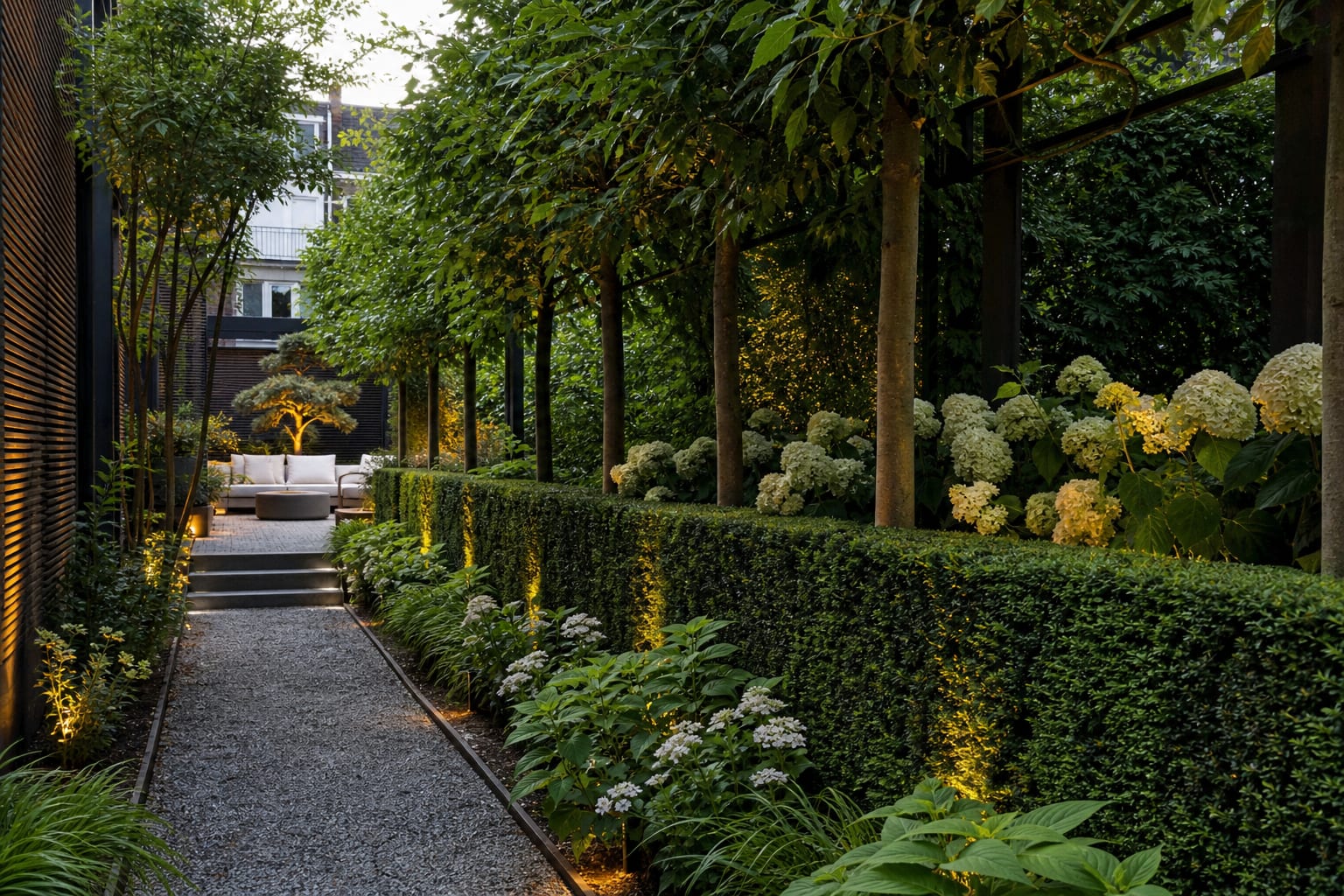
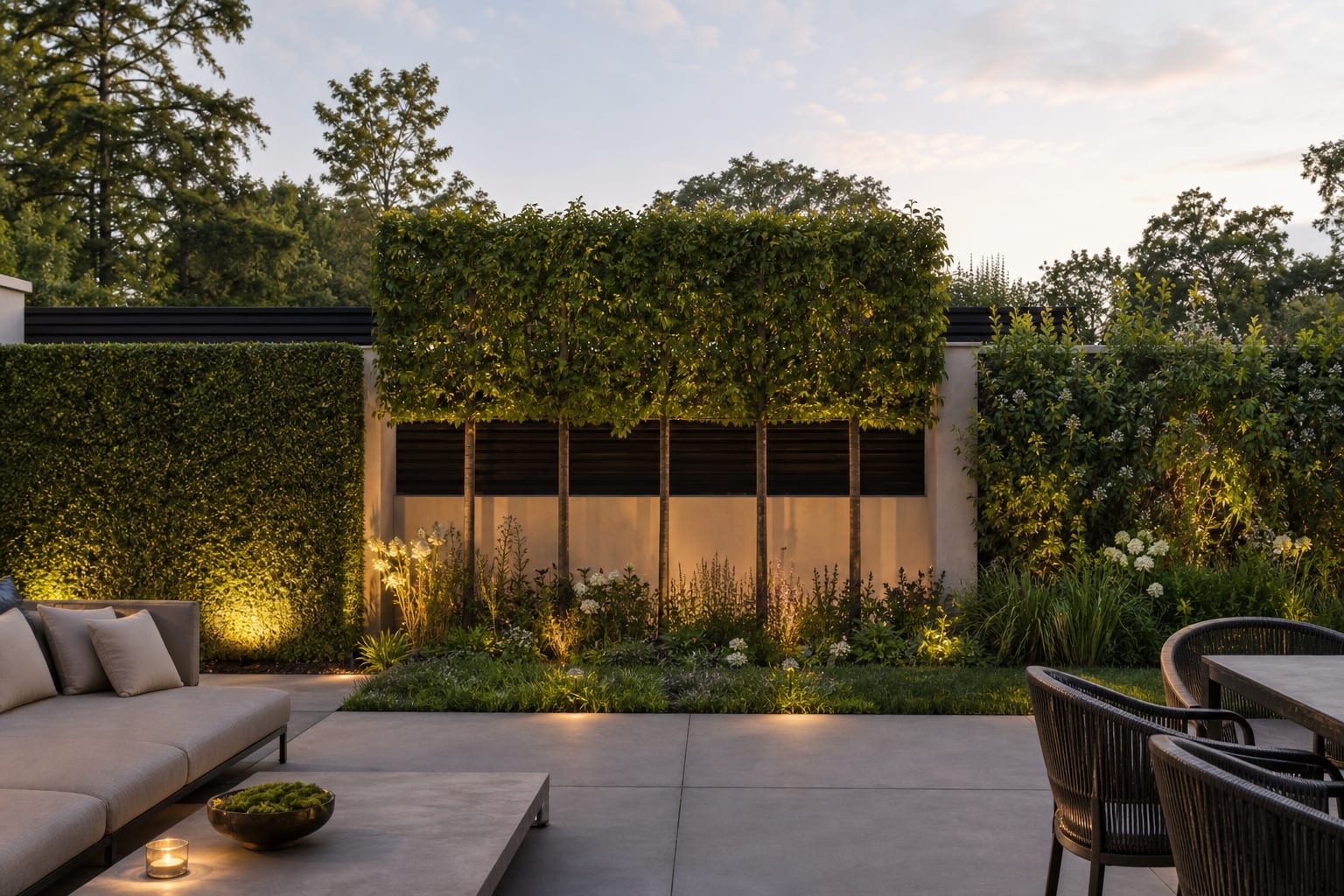
A living fence or pleached hedge is a planted privacy screen made from shrubs, trees, or trained branches that form a green boundary instead of a hard fence. A standard living fence relies on repeated shrubs, grasses, bamboo clumps, or small trees planted close enough to knit together. A pleached hedge design is more architectural: tree trunks rise to a clear stem, often 5'–6' high, then their upper branches are trained on a horizontal frame to create a flat leafy plane.

That difference matters because the two solve different views. A clipped hedge blocks eye-level views from the ground, while pleached trees are brilliant when the problem sits above a fence line, such as a raised deck, upstairs window, or balcony. If traffic noise is part of the discomfort, planting alone will not perform like a masonry wall, but a layered green edge can still make the garden feel calmer; use the same layout thinking behind a sound-buffering garden design and combine density, depth, and surface texture.

Give the planting real soil volume. A narrow evergreen hedge wants at least an 18"–24" deep bed, while a mixed living fence with shrubs, grasses, and climbers looks more natural in 30"–48" of depth. For pleached hornbeam, beech, lime, or crabapple, plan for trunks roughly 4'–6' apart, then confirm the mature crown width before you buy. The frame should sit plumb, the stakes should be temporary rather than decorative forever, and irrigation should reach the full run rather than just the first two plants near the hose.

::beforeafter{before="/articles/living-fence-hedge-ideas-before.jpg" after="/articles/living-fence-hedge-ideas-after.jpg" caption="An exposed garden edge becomes a soft privacy screen with pleached trees, clipped evergreen structure, and low planting that hides bare soil." beforeAlt="under designed garden boundary with a patchy lawn, exposed neighboring windows, scattered pots, and no planted privacy structure" afterAlt="same garden angle with pleached trees, evergreen hedge plants, gravel edging, and layered groundcover forming a green privacy screen" ariaLabel="before and after living fence and pleached hedge garden privacy design"}

Field Checklist

  • For living fence hedge ideas, keep the main walking line through the garden at about 36 inches clear before adding decorative layers.
  • Let living fence hedge ideas start with 3 dominant finishes, then repeat the calmest one where the eye needs a pause.
  • Use a living fence hedge ideas spacing rule of roughly 24 inches between repeated accents so the design reads connected, not scattered.

Test this on your own photo with ReDesign before you choose the final outdoor direction; keep the house edge, horizon line, hardscape, planting beds, and main path visible so the preview solves the space you actually have.

Which living fence idea fits your garden?

  • Use a clipped evergreen hedge when you want year-round privacy near a patio or dining area. Yew, holly, privet, laurel, and some arborvitae varieties can make strong screens, but the right choice depends on light, soil, and winter exposure. Keep the face slightly tapered, wider at the base than the top, so lower branches still receive light and do not thin out into bare legs.
  • Choose pleached trees when the privacy problem floats above the fence. A row of pleached hornbeam or lime can start with clear trunks at about 5'–6' and a trained canopy above, which blocks upper windows while preserving space below for a bench, path, or shade-tolerant planting. This is the most formal option, so it suits gardens with straight paths, rectangular beds, or crisp paving.
  • Mix deciduous shrubs with evergreen anchors when a solid block would feel too heavy. Place evergreen structure every 4'–8', then weave in flowering shrubs, grasses, and perennials so the living fence changes through the year. Finish the front edge with low plants; a strip of dense ground cover planting keeps soil from looking raw while the larger shrubs mature.
  • Treat espalier fruit as an edible fence alternative where sun is good and patience is realistic. Apples, pears, and figs can be trained against wires or a simple frame, with horizontal tiers often spaced about 12"–18" apart. This espalier fence alternative needs annual pruning and open access to the back, so do not squeeze it against a narrow service path where ladders and arms cannot move.
  • Add a vine-covered support only when the structure can carry the plant. Star jasmine, climbing roses, clematis, and honeysuckle can make a beautiful green veil, but they need airflow and pruning access. If the boundary already has posts or rails, borrow the practical rules from climbing plants on fences: match the vine to the support, leave room for stems, and avoid aggressive growth near gutters or roof edges.
pleached tree row above a low hedge with gravel path, clipped edging, and layered planting in a narrow urban garden

A good living fence also needs a rhythm. Repeating one plant every few feet can look calm, but repeating the wrong plant for 40' can look municipal. Break a long run with a gate, a small tree, a widened bed, or a change in texture every 12'–18' so the boundary has movement without becoming busy.

Common living fence mistakes

  • Planting too close for instant coverage is the mistake that punishes you later. A hedge packed tight may look full in the nursery year, then compete for water, thin at the base, and become harder to prune. If the mature plant wants 3' of width, give it a spacing plan that respects that width rather than forcing three plants into the space meant for two.
  • Buying privacy hedge plants without checking winter behavior creates disappointing screens. Deciduous beech and hornbeam can hold some brown leaves in winter, but they are not the same as yew or holly. If the view is unbearable in January, choose evergreen structure for the most exposed section and save deciduous plants for softer side layers.
  • Letting the hedge swallow the path makes the whole garden feel smaller. Main routes should keep about 36" of clear walking space after the plants mature, not just on planting day. If you only have a skinny side yard, choose columnar shrubs, pleached trunks, or a trained vine plane instead of a fat mixed hedge.
  • Ignoring maintenance turns a beautiful screen into a lopsided burden. Formal hedges may need clipping once or twice during the growing season, pleached trees need tie checks and pruning, and espalier fruit needs careful summer and winter attention. If you do not want that work, choose looser shrub masses that can be pruned selectively rather than sheared into a perfect plane.
  • Forgetting the neighbor-facing side is a design failure, not just a manners problem. A living fence seen from two properties needs a clean line, healthy backs, and access for pruning. Leave enough room to reach the planting, keep irrigation simple, and avoid thorny shrubs right on a shared boundary where maintenance will become a fight.

Use AI design to preview the green screen before planting

A living fence is difficult to judge from a plant tag because the result depends on the camera height, neighboring windows, existing fence color, and how deep the bed can be. Upload a straight-on photo of the garden edge, then test a clipped evergreen hedge, pleached trees, espalier fruit, and a mixed shrub screen from the same viewpoint. Keep the existing patio, path, and furniture visible in the image so the preview shows whether the planting improves the space rather than merely filling the boundary.

The most useful preview compares height and density. Try one version at 4', another at 6', and a pleached option with foliage above eye level if the exposed view comes from above. Also test the ground plane: mulch alone can make a new hedge look unfinished, while low planting, gravel edging, or stepping stones can make the young screen feel settled before it has fully grown in.

AI-style garden preview showing the same boundary with a clipped hedge option, pleached tree option, and mixed living fence option

Use the preview to make one brave decision before buying plants. Maybe the garden needs formal pleached structure because the architecture is square and the view is high. Maybe it needs a looser living fence because kids, pets, and uneven light would make a clipped hedge fussy. Either way, the image should help you choose the screen that belongs to the garden you actually have.

Frequently Asked Questions

What evergreens work best for a hedge?

Arborvitae 'Green Giant' for fast growth, hornbeam for formal sheared hedges, hicks yew for shade tolerance, and Eastern red cedar for native deer-resistant screening — pick the species to the conditions, not the look. Use the outdoor photo to compare the visible layout and fixed constraints before committing, because slope, shade, drainage, doors, utilities, and traffic paths decide whether the idea survives daily use.

How far apart should hedge plants go?

3-4ft on center for a 6-8ft screening hedge; closer spacing speeds closure but stresses roots, wider spacing leaves visible gaps for 2-3 seasons. Keep the preview honest by leaving the problem area visible in the frame, then compare one conservative version against one bolder version before you buy plants, materials, or furniture.

How fast does a hedge grow?

Arborvitae 'Green Giant' and Leyland cypress grow 3-5ft per year in good conditions; hornbeam, hicks yew, and boxwood grow 6-12in per year and need patience. Check the result against ordinary movement first: chair pullout, walkway width, gate swing, glare, storage reach, and evening light matter more than a perfect catalog angle.

How tall can a hedge get without HOA issues?

Most HOAs allow 6ft on side and rear lot lines; front-yard hedges typically max at 36-42in — check local code and HOA before planting tall species along the front. Use the image to narrow priorities and measurements before ordering anything custom; final purchases still need real dimensions, code checks, utility locations, and product clearances.

Does a hedge need a fence behind it?

Not for screening — a properly spaced and watered hedge gives full screening in 3-4 years — but a short interior fence can secure pets or kids while the hedge fills in. If the preview invents architecture or hides the awkward feature you need solved, rerun it with stricter instructions so the result remains tied to your actual outdoor space.

Three transformations to try

  1. Arborvitae hedge along property line
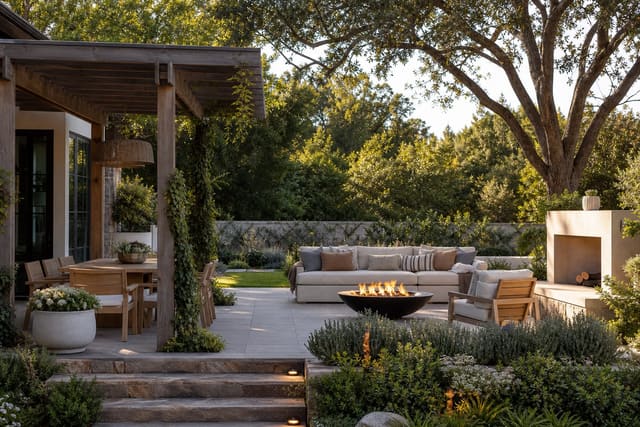
  1. Hornbeam hedge with sharp formal cut
  1. Mixed evergreen hedge with red cedar
living fence hedge ideaspleached hedge designprivacy hedge plantsespalier fence alternativegardengeneral

Ready to preview this in your space?

Use Re-Design to test the outdoor direction before you buy materials, plant, drill, or move furniture.

Try Re-Design Free

Related Articles

Back to all articles