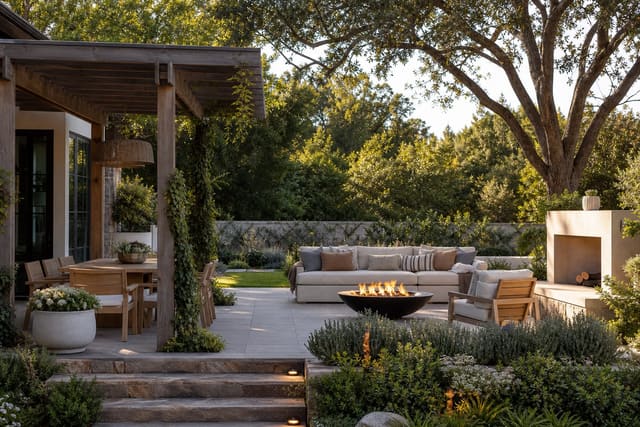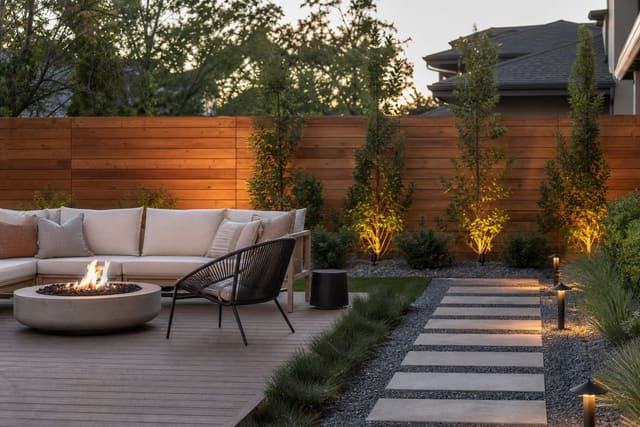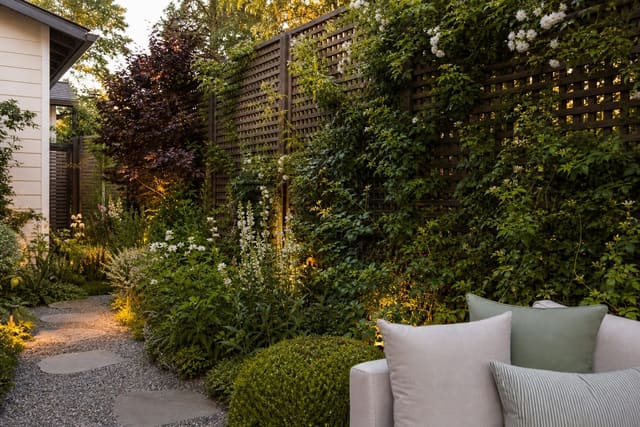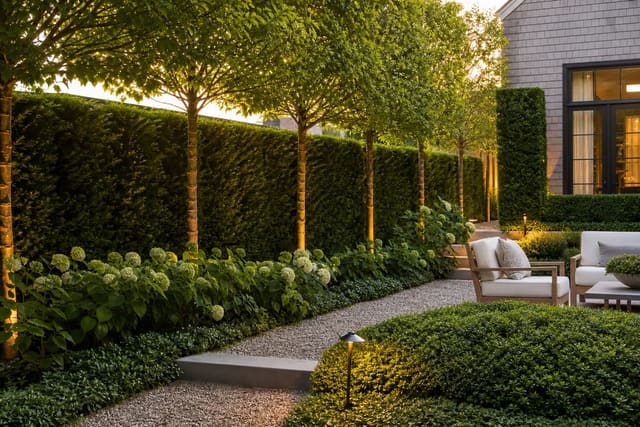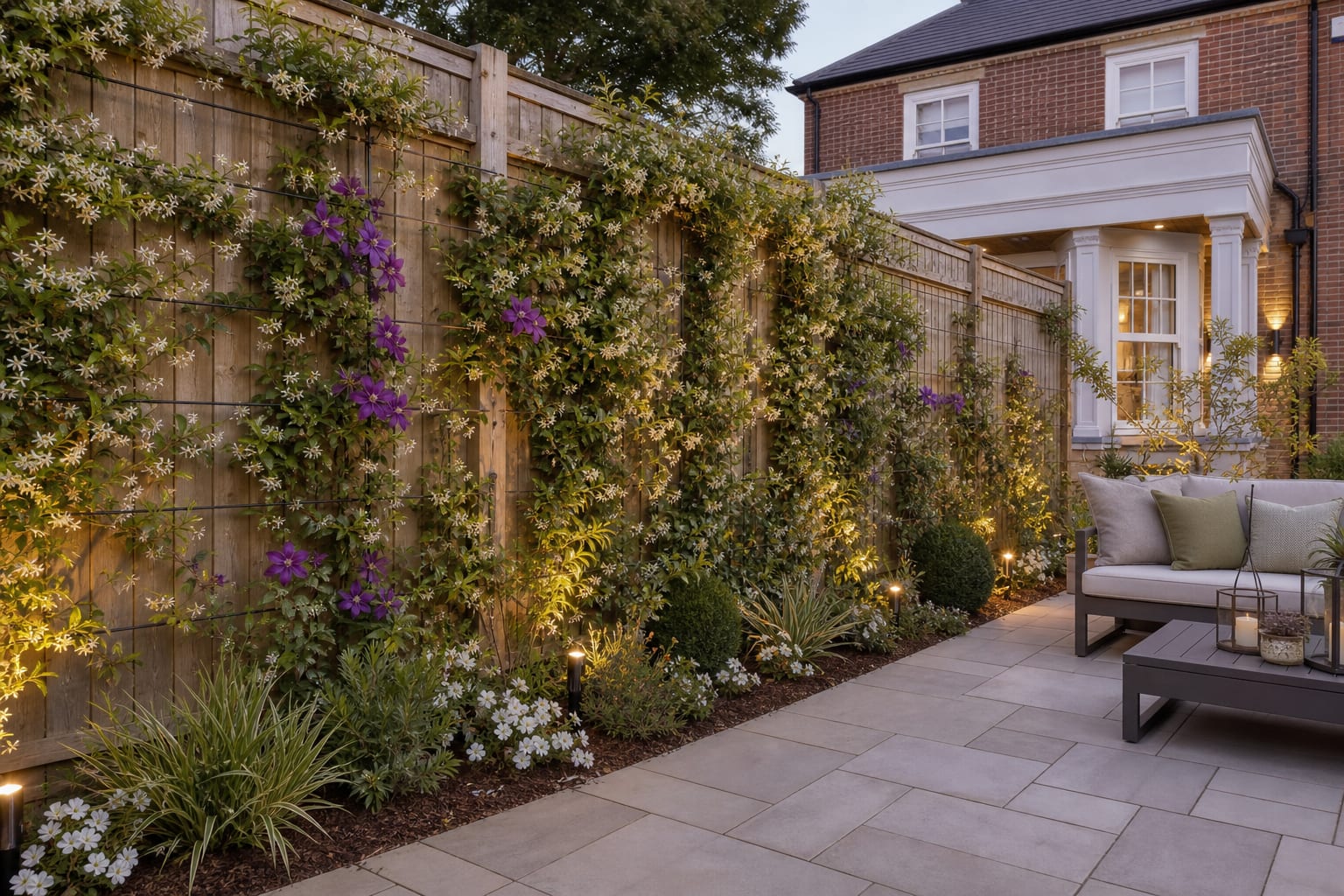
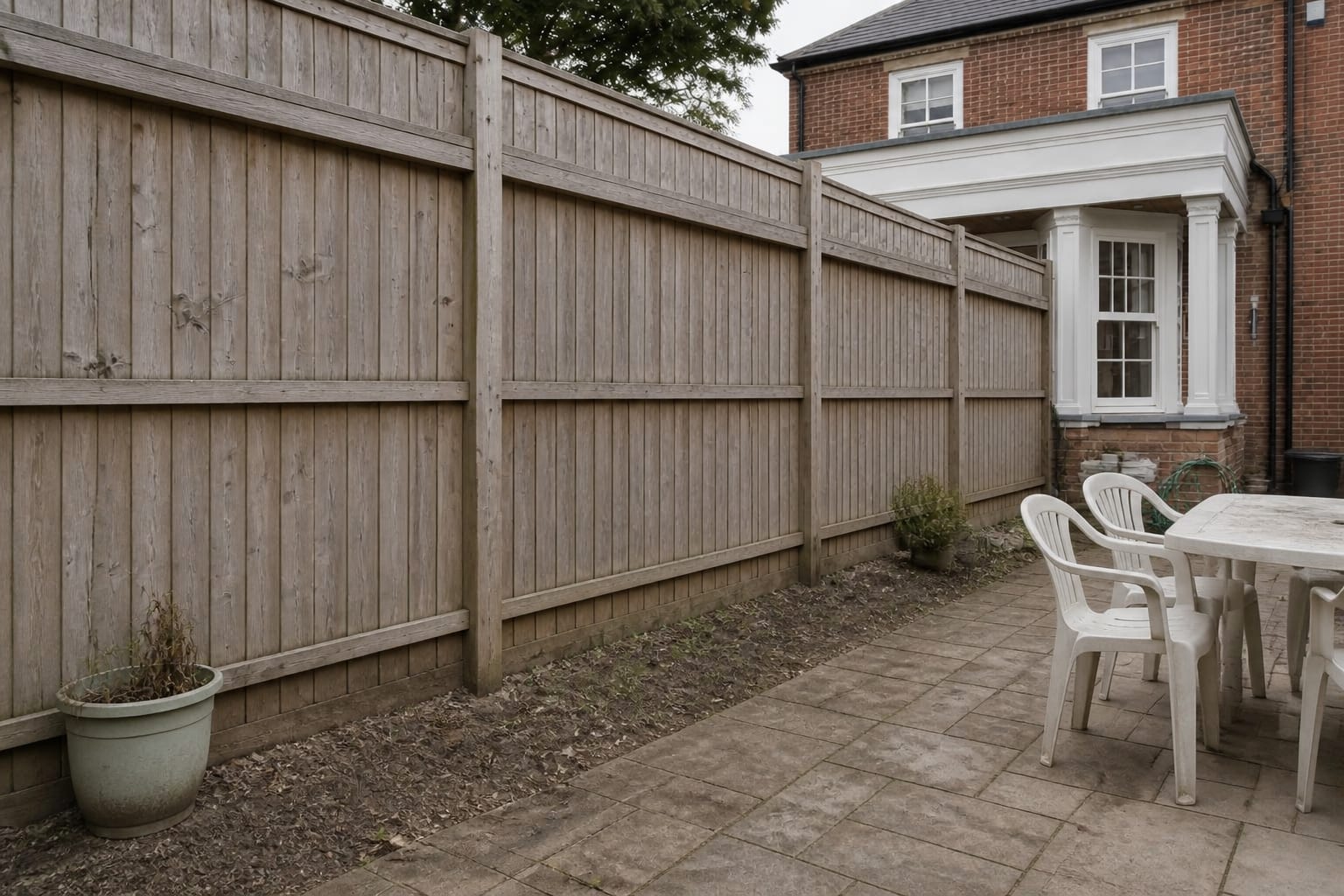
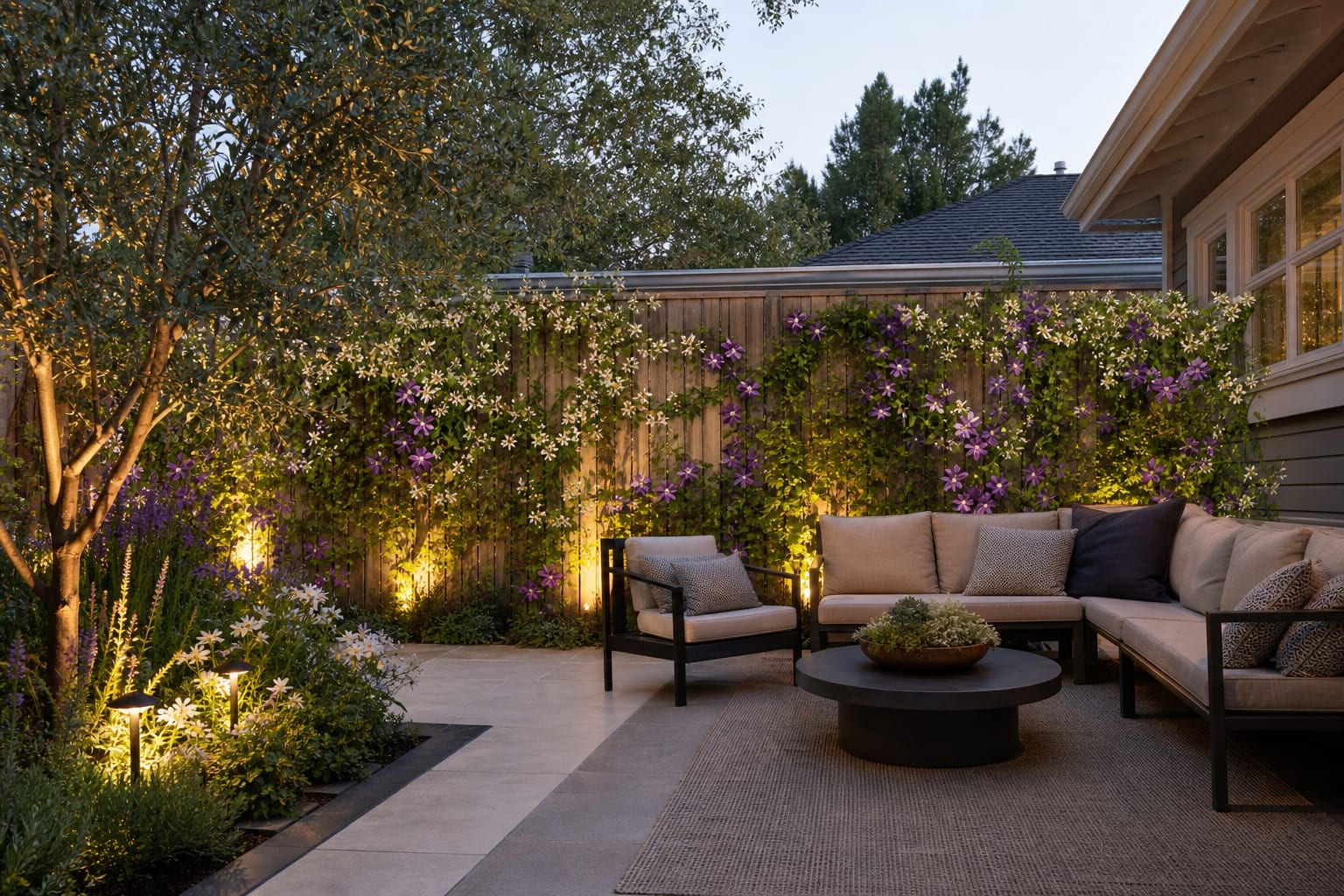
The best climbing plant fence ideas match the vine's climbing type — twining, clinging, or tendril — to your fence surface, mount horizontal wires or a panel system 2-3in off the boards for airflow, and pair one fast cover like clematis with one slower structural climber such as climbing hydrangea. This keeps the fence as background, not the main event.
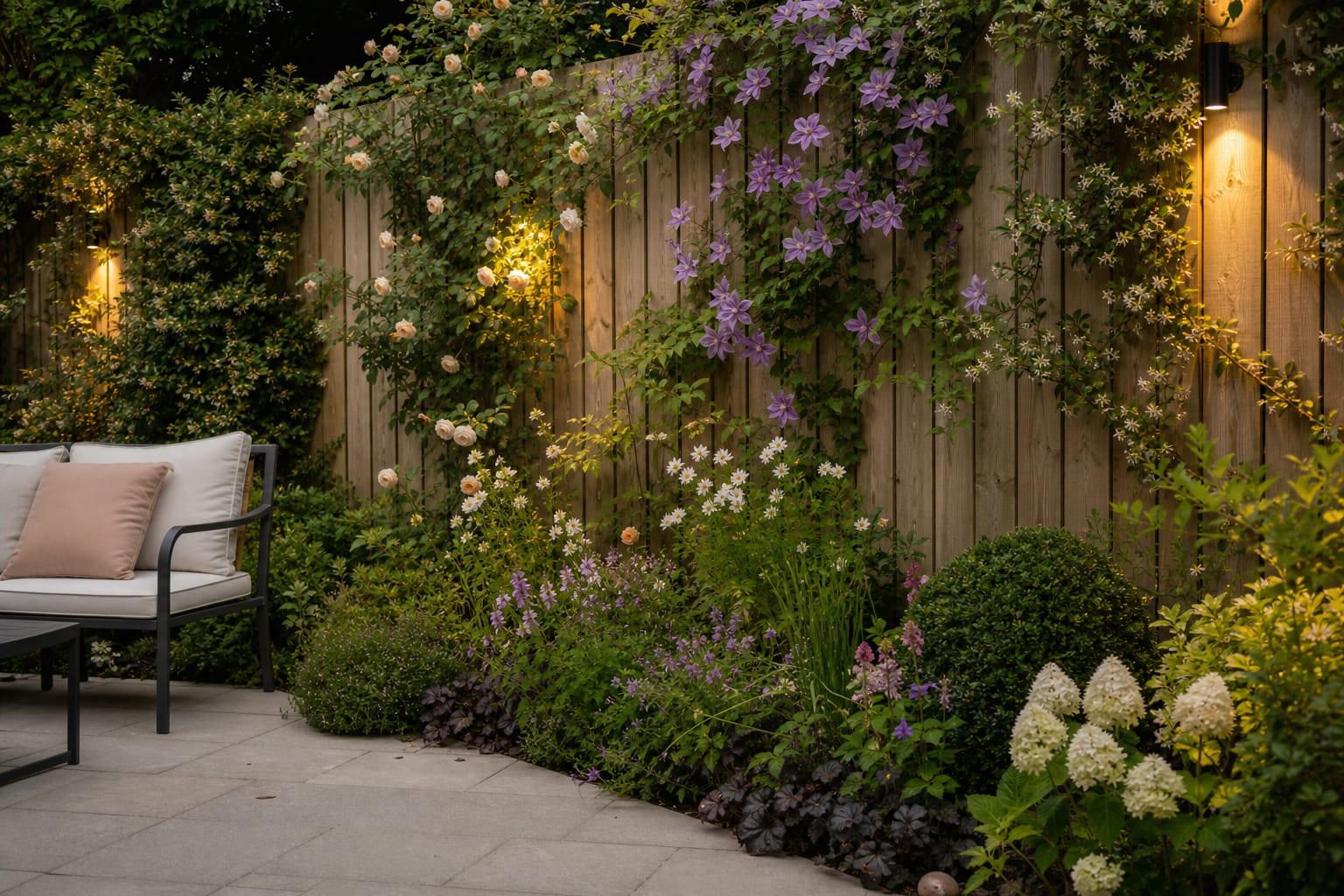
Which climbing plants are best for covering a fence?
Clematis, climbing roses, honeysuckle, star jasmine in mild climates, controlled ivy, and annual vines like sweet peas or black-eyed Susan vine all cover fences well. The right pick depends on light, fence strength, pruning tolerance, and how much green you want in winter.
Clematis is the easiest route to flowers without heavy woody weight. Plant the crown 2-3 inches below soil level, mulch the root zone with 2 inches of composted bark, and choose a variety maturing around 6-10 feet for a standard 6-foot fence.
Climbing roses need horizontal training wires spaced 12-18 inches apart — bending canes sideways produces more flowering shoots. Keep roses off weak lap panels; the wire system should anchor into posts, not thin boards.
Honeysuckle suits cottage fences and wildlife gardens where a looser shape looks better than a flat green wall. Star jasmine is more polished and evergreen in mild climates but slower to establish, and it wants shelter rather than an exposed, freezing corner.
Ivy demands a sturdy fence, easy trim access, and pruning 2-3 times a year. For a fully planted boundary rather than just a vine, pair climbers with living fence and hedge ideas for depth at ground level and height above.
How should the vine match the fence you actually have?
A vine-covered fence starts with the fence, not the plant label. Thin decorative panels, close-board fencing, chain link, and masonry-topped boundaries all carry weight differently.
| Fence type | Better climbing direction | Spec that prevents regret |
|---|---|---|
| New timber panel fence | Clematis, annual vines, light honeysuckle | Fix wires into posts, not boards; leave a 2in air gap |
| Close-board fence, solid posts | Roses, honeysuckle, mild-climate jasmine | Stainless/galvanized wires at 12-18in vertical intervals |
| Chain link fence | Honeysuckle, annual vines, lighter clematis | Thin woody stems so the mesh does not bow |
| Old fence, uncertain posts | Annual climbers or freestanding trellis | Set new posts 18-24in in front instead of loading the fence |
| Shaded fence | Ivy alternatives, climbing hydrangea, shade clematis | Expect slower coverage; prioritize foliage over flowers |
Don't plant a vigorous climber against a tired boundary just because the empty fence looks urgent. If posts move when pushed, fix the structure first or add a freestanding frame — a 6-foot fence can carry a light clematis, not years of wet, woody wisteria growth.
Fence lines run dry because boards block rain and nearby paving reflects heat. Loosen the top 8-10 inches of soil where roots allow, water deeply after planting, and keep mulch 1 inch clear of the stem. For bare soil below young climbers, try ground cover ideas for fence bases.
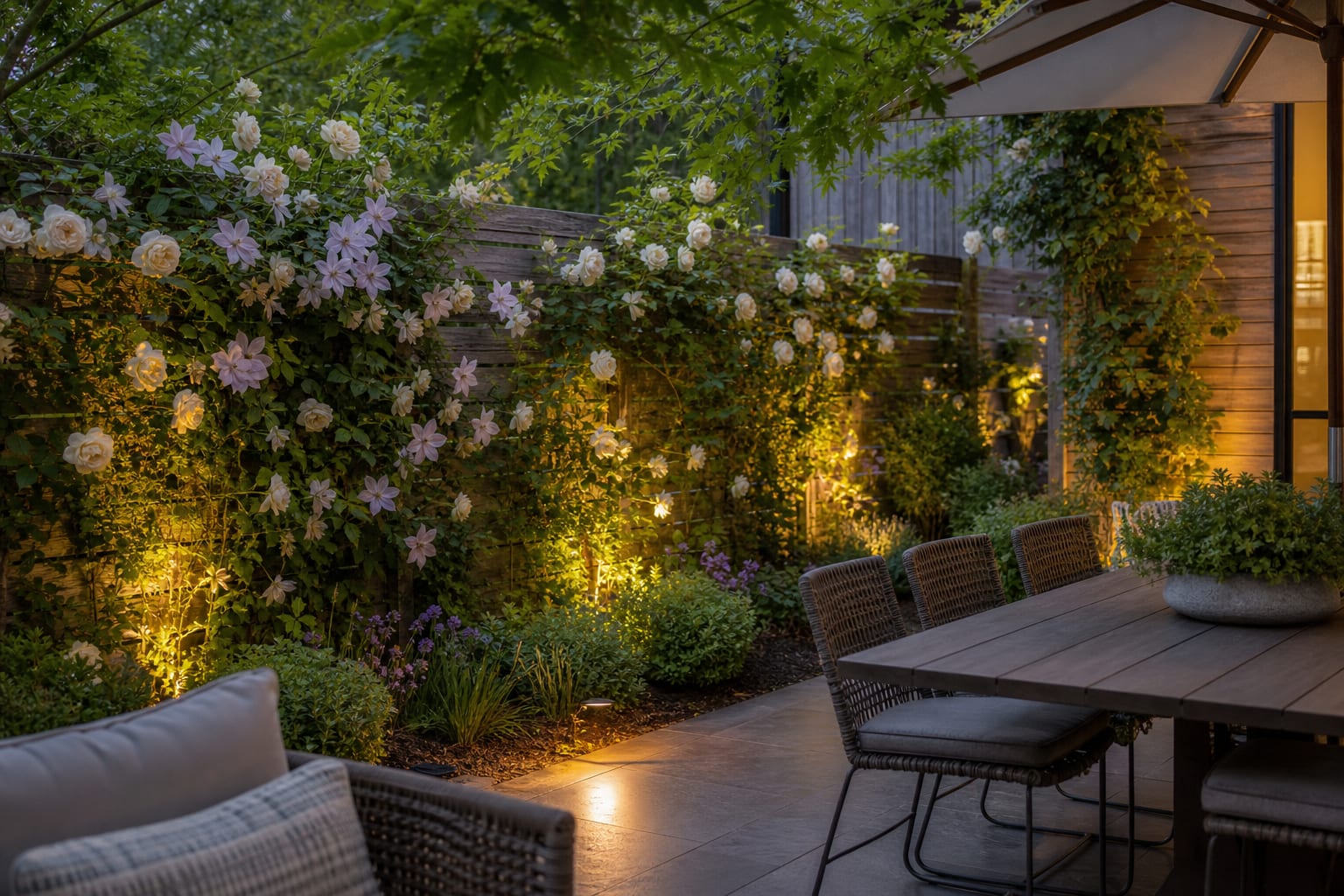
What support keeps a vine covered fence from becoming a mess?
The cleanest support is a wire system held 2-3 inches proud of the fence face, so air circulates and stems can be tied, untied, and redirected.
- Use vine eyes and tensioned galvanized wire for clematis, roses, and jasmine; set the first wire 12-18 inches above soil so new stems tie in before flopping forward.
- Hold trellis panels off the fence with 1-inch battens so leaves aren't pressed against damp timber.
- Train roses diagonally or horizontally, not straight up — vertical canes flower mostly at the top, leaving the lower 3 feet bare.
- Keep heavy self-clingers off fragile fences; mature woody growth plus wind or rain can pull panels loose.
- Leave an 18-inch working strip along the bed so tying, watering, and cutting back stay manageable.
Space one clematis every 4-6 feet on a mixed fence alongside roses or honeysuckle. Sweet peas can go closer, around 6-8 inches apart on netting, for quick annual cover — though they won't solve winter bareness.
Layer the planting instead of lining vines up single-file: evergreen jasmine at the seating end, two clematis with staggered bloom times in the middle, a climbing rose where the bed is widest. If noise is the bigger issue, climbers help, but sound barrier garden design combining shrubs, fences, and dense planting works better.
What mistakes ruin a climbing plant fence?
- Skipping the fence check. Repair wobbly posts and loose caps before the first rootball goes in — vines add real weight as they mature.
- Ignoring mature size. A vine wanting 20-30 feet belongs on a pergola or wall, not one 6-foot panel by a gate.
- Weaving stems through the fence itself. Tie growth onto removable wires or trellis so a broken panel can be repaired without cutting the plant down.
- Neglecting the root zone. Water new climbers deeply once or twice weekly in dry spells during their first season.
- Overplanting variety. Two or three climber types on a normal boundary outperform seven fighting for the same wires.
Clematis fence failures usually come from ignoring pruning groups. Group 1 flowers on old growth and is tidied after blooming. Group 2 needs light late-winter pruning. Group 3 can be cut back hard, often to a low framework — useful where you want the fence refreshed yearly. Keep the plant tag; guessing in February removes the season's flowers.
Use AI design to preview your vine covered fence before you commit
Test this on your own photo with ReDesign before buying materials or planting. Upload a straight-on photo showing the full fence height, at least 3 feet of ground in front, and fixed references like a gate or post.
Preview a romantic clematis-and-rose fence, an evergreen jasmine screen, a wildlife-style honeysuckle boundary, or a lightweight annual vine option. This is a composition test, not a horticultural guarantee — it shows whether the garden needs full coverage or spaced flowering columns before you check the plant against your actual climate, soil, and maintenance tolerance.
Frequently Asked Questions
Which climbers cover a fence fastest?
Clematis montana, akebia, and silver lace vine cover a 6ft fence panel in 2-3 seasons. Climbing hydrangea and wisteria take 4-7 years but become permanent structural plantings once established.
Do climbing plants damage fences?
Self-clinging climbers like English ivy, climbing hydrangea, and Boston ivy can damage wood and stucco. Twining and tendril climbers grown on a 2-3in standoff wire system do not touch the fence surface directly.
How do I attach climbers to a fence?
Use stainless steel cable on eye-bolt anchors spaced 2-3ft apart in a horizontal grid. The wire holds the plant off the fence so the surface stays dry and paintable.
Do climbing roses count as fence climbers?
Yes, though climbing roses need a structural support like wire or trellis since they don't self-attach. Train the cane horizontally along the fence to maximize blooms.
How much sun do climbing fence plants need?
Most flowering climbers want at least 4-6 hours of sun. Ivy, climbing hydrangea, and akebia tolerate part shade, so pick the climber to match your fence's orientation, not the other way around.
> Try this: Ready to see this on your own outdoor space? Open ReDesign and run the preview before you buy materials, plant, drill, or move furniture.
Three transformations to try
1. Cedar fence with clematis and roses