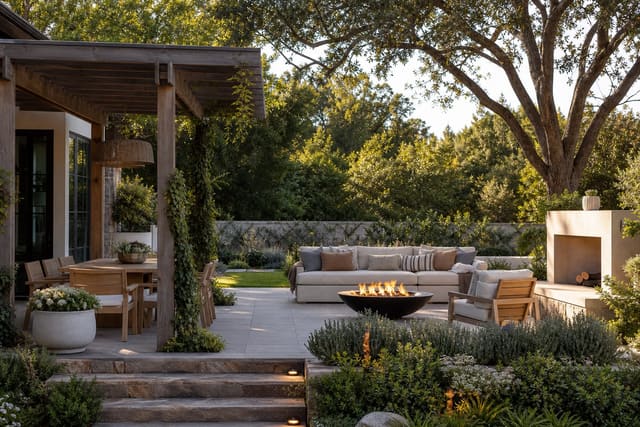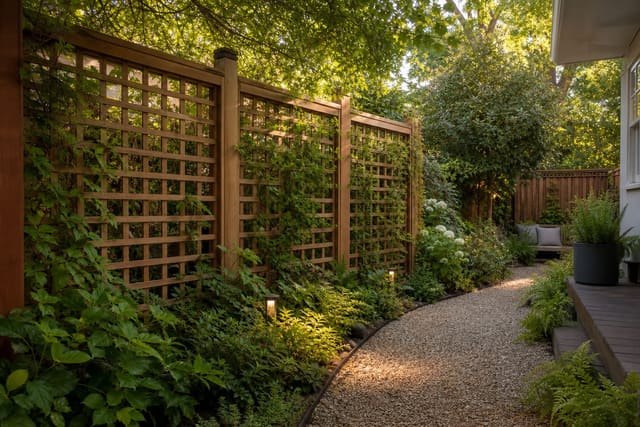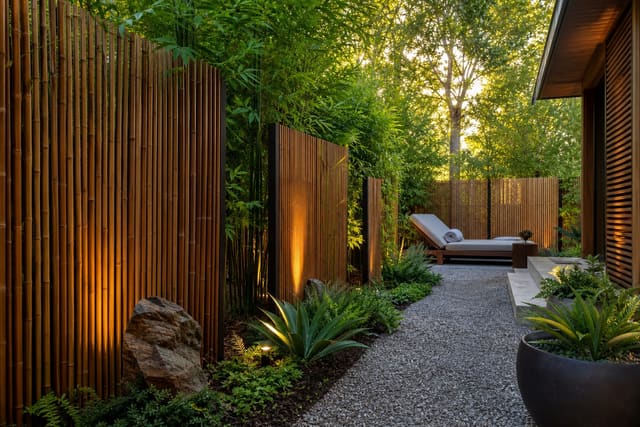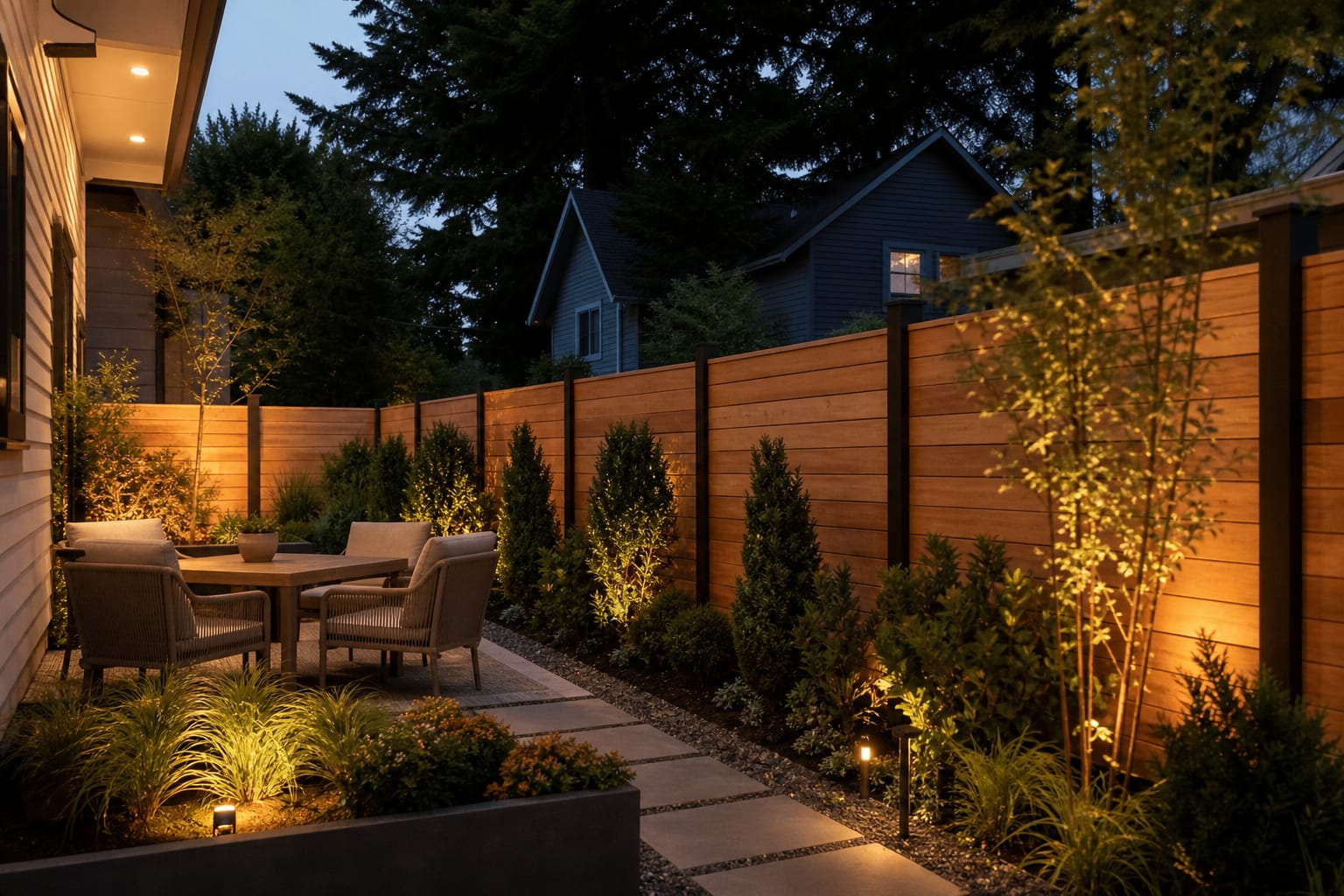
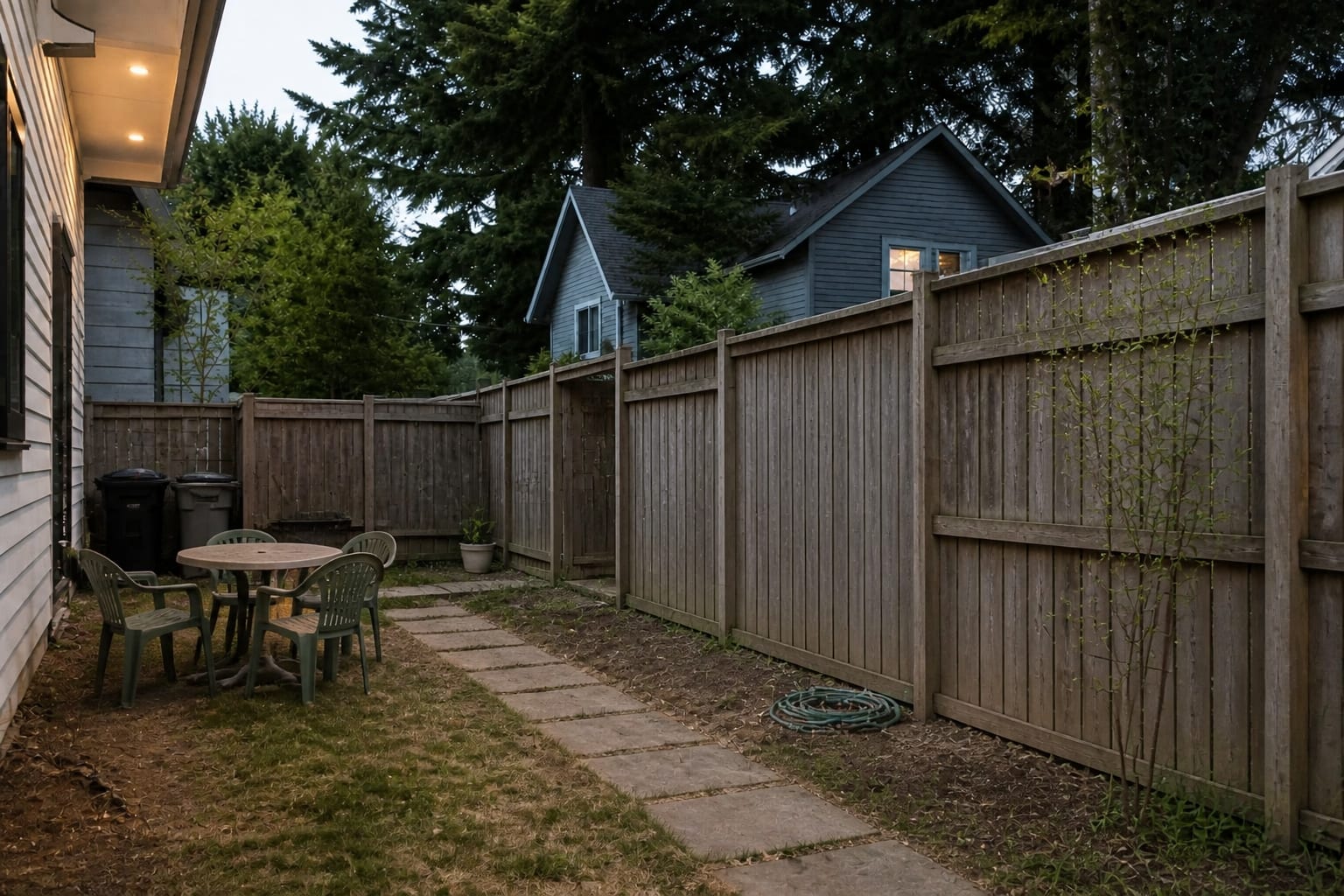
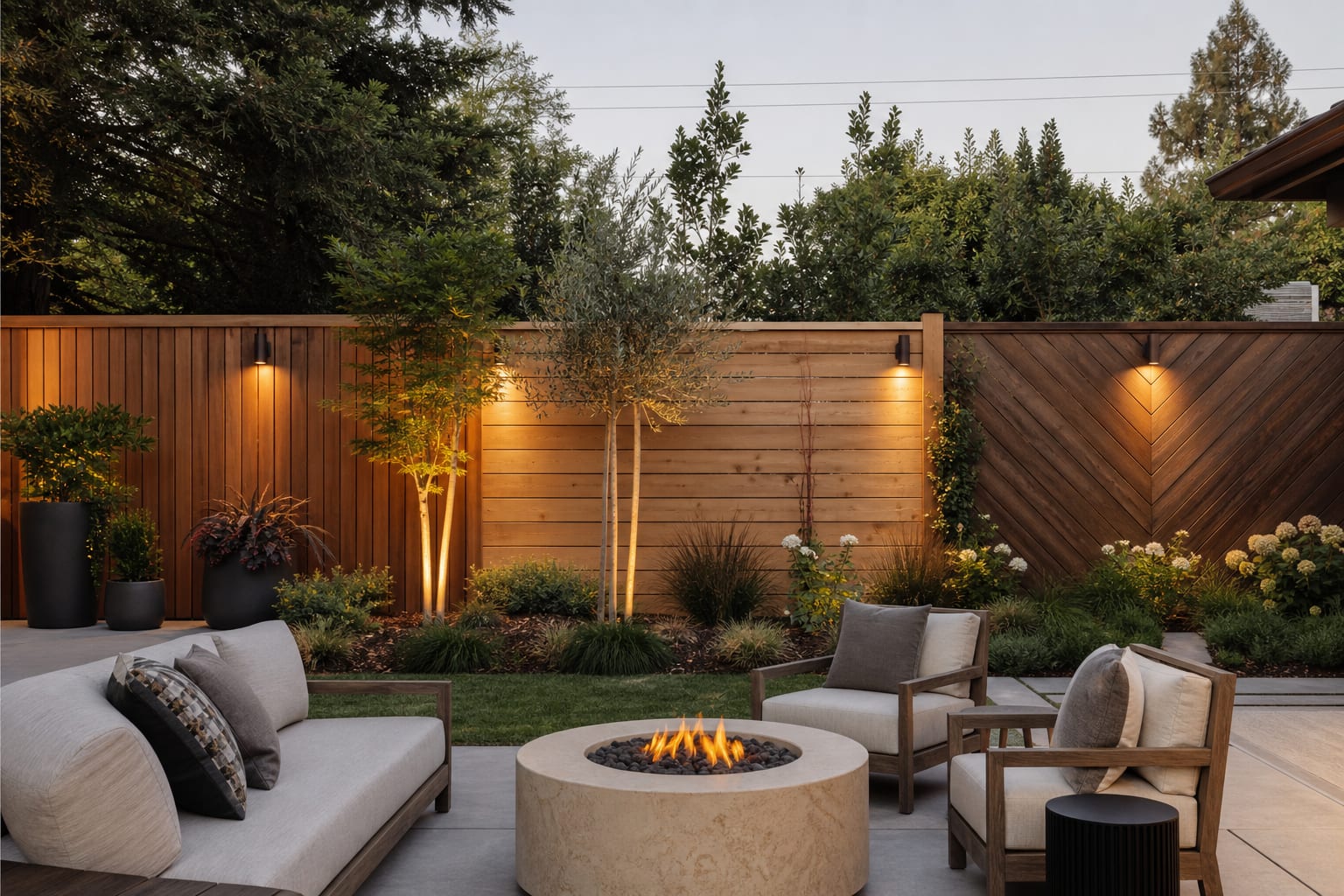
Cedar fences work as design, not just fencing, when you choose the right grade, profile, and finish schedule instead of nailing up generic boards. A cedar fence design balances privacy, weathering, and upkeep by getting board spacing, post rhythm, and stain right, so the fence settles into the landscape instead of looking tired after one season.
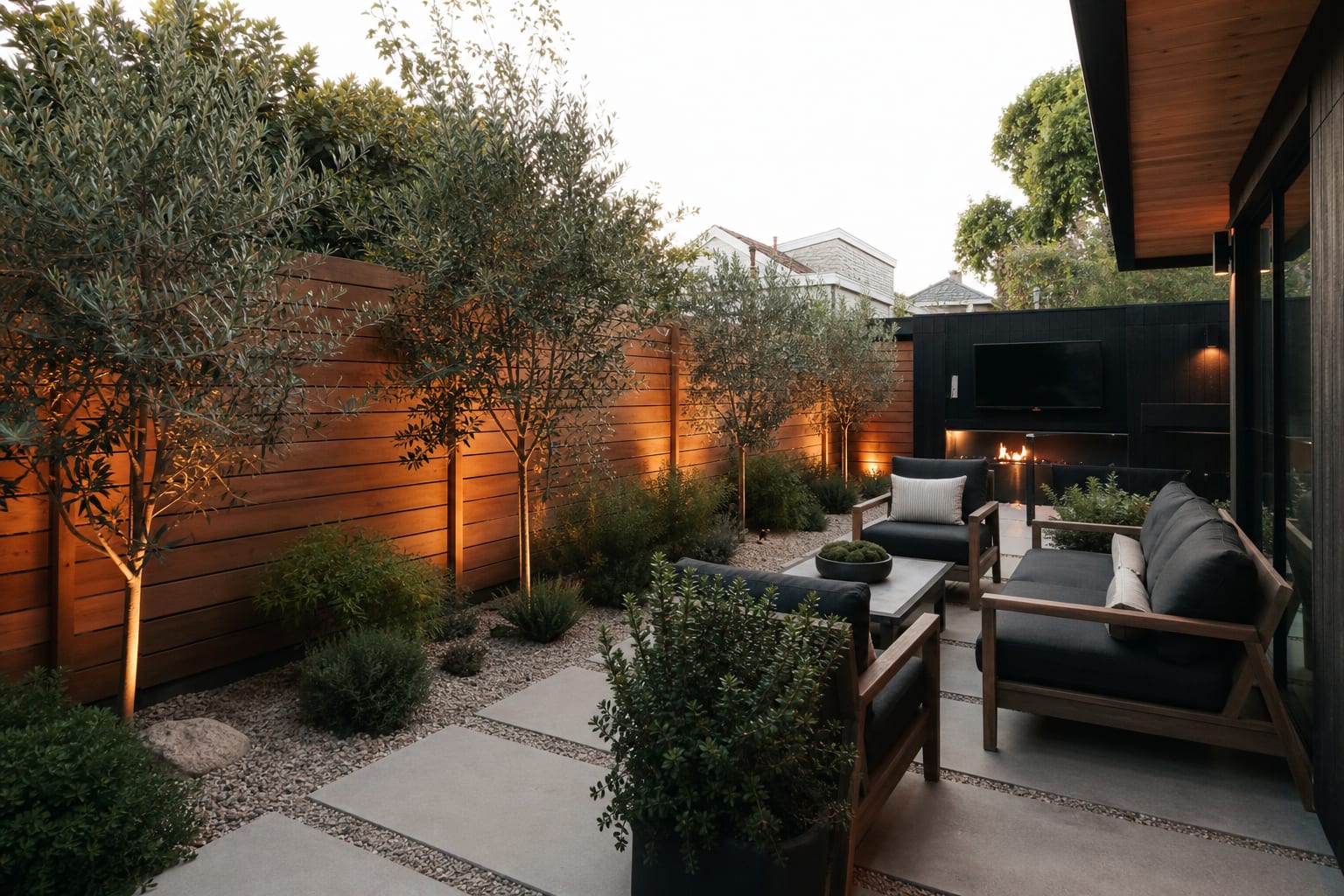
What Makes Cedar a Good Fence Material?
Cedar resists rot naturally, stays dimensionally stable, weighs less than most hardwoods, and takes stain well. Western red cedar is the most popular choice because its natural oils and straight grain suit both vertical and horizontal layouts.
Cedar is forgiving, not maintenance-free. Boards still need airflow, corrosion-resistant fasteners, and clearance from wet soil, so keep the lowest board at least 2 inches above mulch or grade. Aim irrigation heads away from the fence line, since repeated overspray ages cedar faster than rainfall.
Most backyards start with a 6 foot fence, which fits typical codes and blocks seated sightlines. Sloped lots or overlooking upper windows often need layered planting instead of extra fence height; compare that approach with bamboo privacy screen ideas before building a solid wall around the whole yard.
Test this on your own photo with ReDesign before choosing a final direction; keep the house edge, horizon line, hardscape, planting beds, and main path visible so the preview solves the space you actually have.
Which Cedar Fence Design Fits Your Privacy Problem?
Start from the exact view you want to block, not the board style you liked at the lumberyard. Stand at the patio chair, kitchen window, or pool step and mark the slice of privacy that feels exposed; that tells you whether the fence should be full height, semi-open, or paired with planting.
| Cedar fence type | Best use | Spec to copy | Design caution |
|---|---|---|---|
| Vertical board-on-board | Traditional full privacy | 6 foot height, boards overlap 1-1.5in | Can feel heavy without base planting |
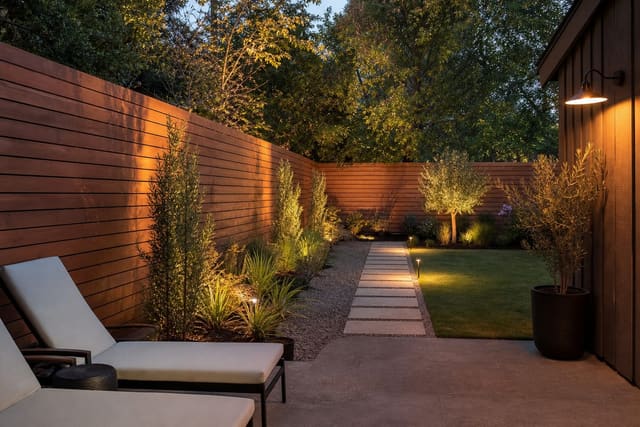
| Horizontal cedar slats | Modern boundaries | 1x4 or 1x6 boards, 1/8-1/4in gaps | Needs straight framing, careful end lines |
| Shadowbox cedar fence | Shared property lines | Alternating boards on both sides | Less private at sharp angles |
| Cedar screen panel | Patio or pool privacy pocket | 4-6ft panel near seating | Should align with furniture placement |
| Cedar and metal frame | Contemporary yards | Black steel posts ~6ft apart | Uneven boards and exposed screws show fast |
Finish choice should match the house. Clear finishes show off grain but need more upkeep to hold color. Semi-transparent stain is the safest middle ground, adding UV protection while keeping cedar recognizable. Solid stain hides variation and suits modern fences, especially with dark posts, but reads more like paint than wood.
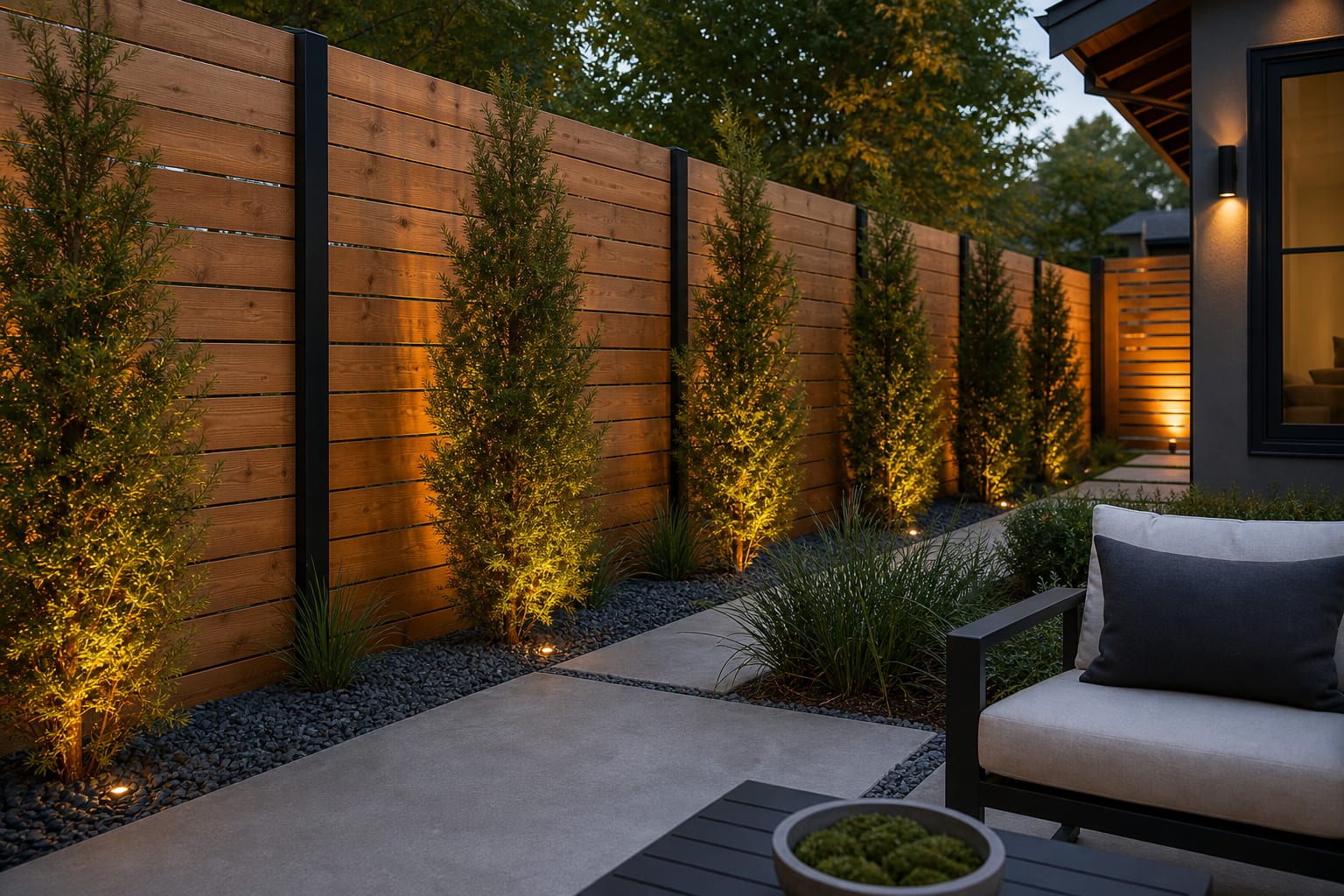
Which Cedar Fence Ideas Look Natural, Not Temporary?
- Vertical board-on-board for real privacy from multiple angles. Overlap boards 1 to 1.5 inches so seasonal movement doesn't open bright gaps, and keep the top simple with a cap rail on traditional homes.
- Horizontal cedar boards for modern windows or flat rooflines. Keep posts around 6 feet apart; longer spans make slight bows and wavy gaps obvious.
- A focused privacy pocket, not a full perimeter. A 12-16 foot screen behind an outdoor sofa can block a neighbor's deck while leaving the rest of the yard open.
- Cedar with black metal posts for a crisp look that keeps warmth. Dark verticals recede behind the wood, making gates and corners look deliberate.
- A 12-24 inch gravel strip at the base wherever fence meets lawn or planting. It cuts splashback, gives a trim edge, and reads more architectural.
- Cedar on one or two sides of a pool or plunge area, not all four, leaving at least 36 inches of clear space where people step out; the same circulation logic applies to plunge pool privacy ideas.
- Let cedar weather silver only when the yard supports it — handsome beside stone, gravel, and pale concrete, but can look neglected beside glossy new decking.
What Cedar Fence Mistakes Should You Avoid?
- Cheap grade on a visible fence. Knots and color variation suit a rustic boundary, but a main patio view deserves clearer, straighter boards.
- Boards too close to soil. Keep wood off damp grade with gravel or a planting strip, and avoid piling mulch against the lowest board.
- Wrong fasteners. Cedar reacts with some metals; specify stainless steel, aluminum, or hot-dipped galvanized hardware to avoid black streaks.
- Cedar vs. redwood as only a color call. Redwood is beautiful but availability and cost vary by region; cedar is usually easier to source for full runs and takes a wider range of stains.
- Ignoring the gate. Carry the same board direction, gap, and cap detail through the gate, and frame gates over 42 inches with metal so they don't sag.
- Staining too early. Let new cedar dry per the supplier's guidance and test stain on offcuts in sun and shade before finishing the whole run.
How Does AI Design Help You Settle the Cedar Fence Before You Build?
A cedar fence changes the horizon, color temperature, and perceived size of a yard, so preview it before setting posts. Upload a level photo of the fence line to Re-Design and compare vertical boards, horizontal slats, darker stain, natural weathered wood, and base planting from the same angle.
Use the preview for decisions that are expensive to undo: board direction, height, stain warmth, how much of the yard to screen, and whether privacy should come from cedar alone or cedar plus planting. Once the visual choice feels right, confirm the outdoor realities with your installer: property line, local height limits, post depth for your soil, gate swing, drainage, sprinkler overspray, and finish schedule.
Frequently Asked Questions
What cedar species is best for a fence?
Western red cedar suits most North American climates thanks to natural rot resistance, light weight, and good stain uptake. Northern white cedar works in cold zones but shows more visible knots.
How long does a cedar fence last?
Expect 20-25 years with proper installation and a stain refresh every 3-5 years. Unstained cedar left to weather naturally typically lasts 12-18 years before posts and rails fail.
Should I stain or seal a cedar fence?
Stain is the better choice for most yards. Semi-transparent oil-based stain protects against UV and water while letting the grain show, while clear sealer offers UV protection only and lets cedar silver within 1-2 years.
What is the difference between board-on-board and shadow box?
Board-on-board fully overlaps each board on alternating sides for complete privacy from both directions. Shadow box alternates boards with gaps, looking more open from both sides while still blocking direct sightlines.
How tall can a cedar fence be?
Most jurisdictions allow 6ft on side and rear lots and 36-42in in front yards. Check local code, HOA rules, and sight-triangle requirements before finalizing height.
> Try this: Ready to see this on your own outdoor space? Open ReDesign and run the preview before you buy materials, plant, drill, or move furniture.
Three transformations to try
1. Horizontal cedar fence with steel posts 2. Board-on-board cedar privacy fence 3. Cedar shadow box with planted base