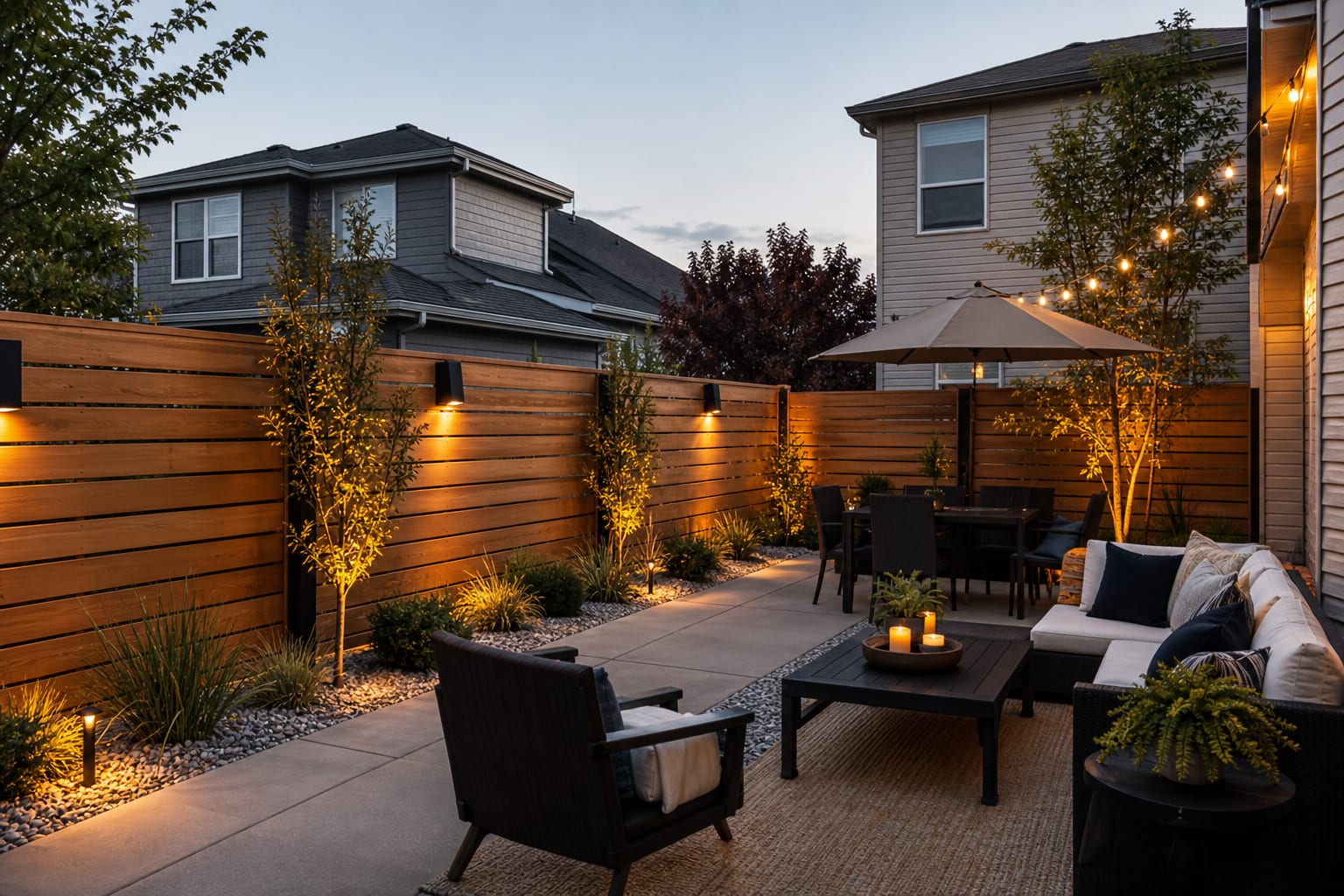
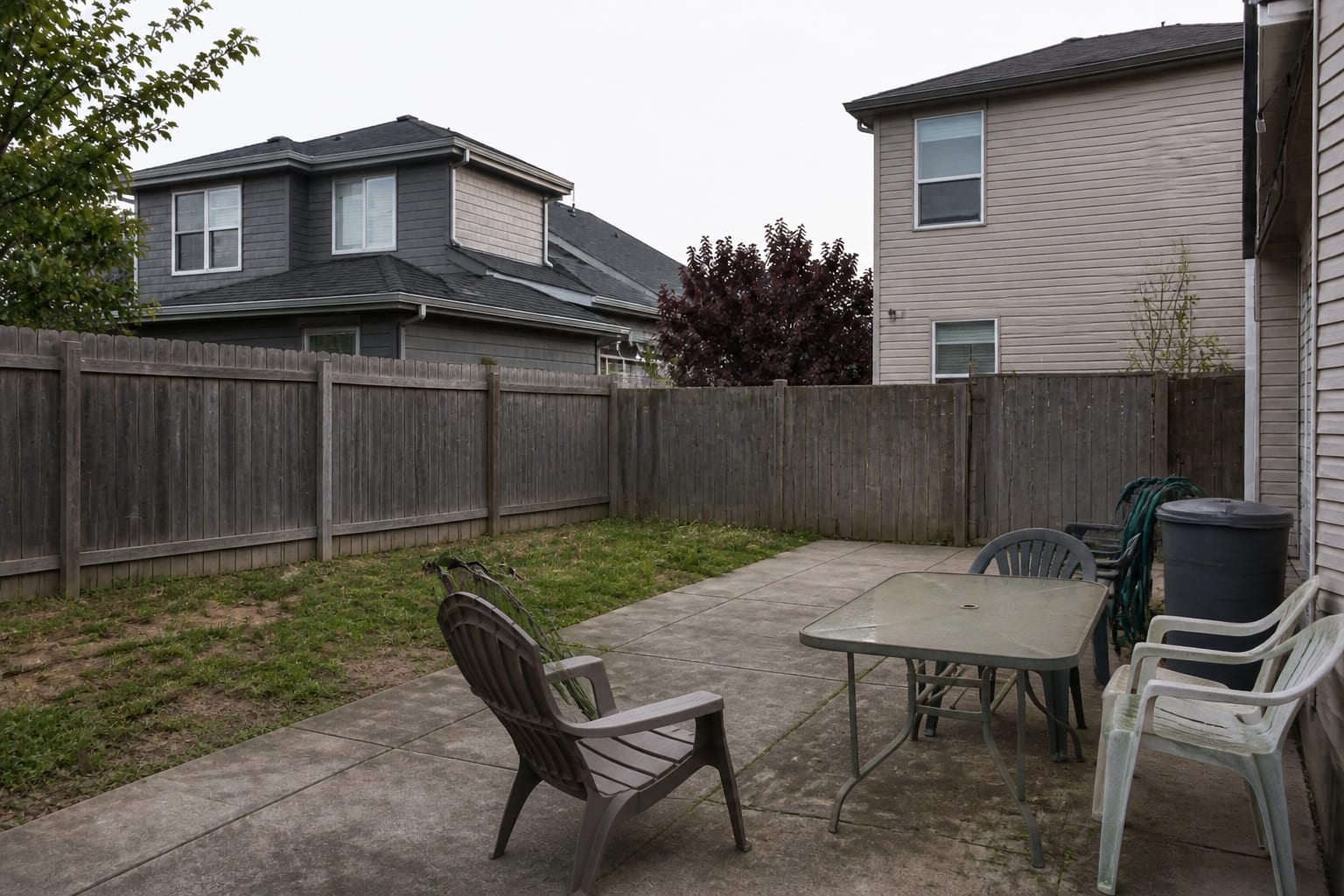
A horizontal privacy fence reads modern when slats run continuously without visible cuts, hold 4-6in widths with 1/2-3/4in shadow gaps, sit on 4x4 or hidden steel posts set 36in in concrete, and finish with a flat top cap. Get the spacing, height, and end details right, and the yard feels more architectural.
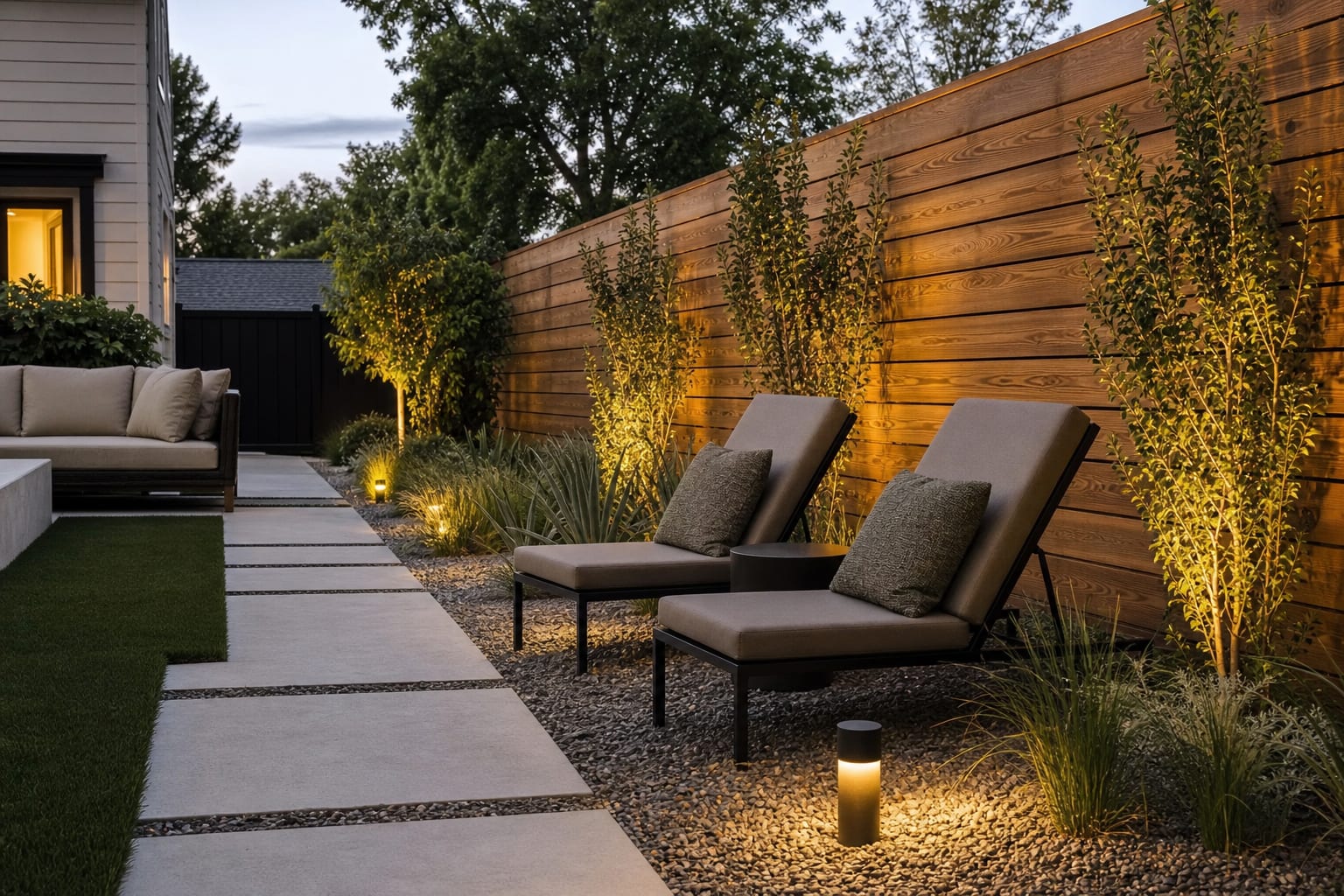
What makes a horizontal fence feel modern instead of just sideways?
A horizontal privacy fence feels modern when the slats create long, quiet lines, posts are minimized or intentionally framed, and gaps are sized for the view you need to block. Horizontal boards are less forgiving than vertical ones because every sag, uneven gap, and chopped end line shows from across the yard.
Start with height and sightline, not style. A typical backyard privacy fence runs 6 feet high, but a raised deck, sloped lot, or a neighbor's second-story window may call for a 6-foot fence plus planting, a 7-foot screen where local rules allow, or a shorter privacy pocket around the patio instead of a full perimeter. For seated areas, dense screening between 30 and 72 inches above grade matters more than a dramatic top edge.
For slats, 1x4 and 1x6 boards are the most versatile. A 1x4 with a 1/4-inch shadow gap reads crisp and tailored; a 1x6 feels calmer on a long run since fewer lines cross the fence. For true privacy, keep gaps between 1/8 and 1/4 inch, accounting for seasonal wood movement. For filtered screening behind shrubs or along a side yard, 1/2-inch to 1-inch gaps work well.
Test this on your own photo with ReDesign before you choose the final direction; keep the house edge, horizon line, hardscape, planting beds, and main path visible so the preview solves the space you actually have.
Which horizontal slat layout fits your backyard privacy problem?
The right layout depends on whether you need full screening, filtered screening, or a design layer in front of an existing boundary. A small city yard usually benefits from fewer materials and tighter gaps; a broad suburban backyard can handle wider boards, planting beds, and a stronger post rhythm.
| Fence layout | Best use | Spec to copy | Watch carefully |
|---|---|---|---|
| Tight cedar slats | Full privacy near patios and pools | 1x6 boards with 1/8-1/4 inch gaps | Wood movement can make gaps uneven |
| Slim modern battens | Contemporary houses with dark trim | 1x3 or 1x4 boards on dark posts | Too many lines look busy on long runs |
| Mixed-width boards | Warm modern yards that need texture | Repeat a 1x4, 1x6, 1x4 rhythm | Random widths look accidental fast |
| Screen over old fence | Budget refresh where structure is sound | New battens on a level secondary frame | Don't hide rot or leaning posts |
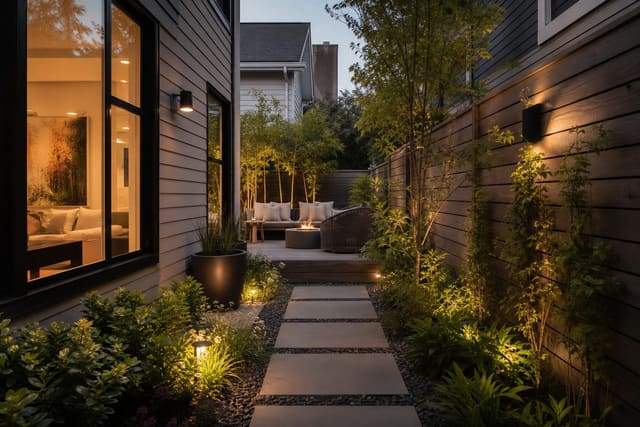
For a tight access strip, a full-height fence can turn a walkway into a chute. Borrow planning ideas from modern side yard design solutions: keep the fence simple, add low lighting, and leave at least 36 inches of clear walking width. In a compact lot, pair the fence with the same discipline used in narrow backyard layout ideas, where every inch of boundary, planting, and furniture has to earn its keep.
Material changes the mood. Cedar and redwood suit warm modern yards, pressure-treated pine is more budget-conscious but needs a cleaner stain plan, and composite slats reduce refinishing at a higher upfront cost. Black, charcoal, and deep brown finishes make the fence recede behind greenery; pale gray looks sharp near concrete but can feel cold beside beige stucco or tan pavers.
Five horizontal privacy fence ideas that look intentional
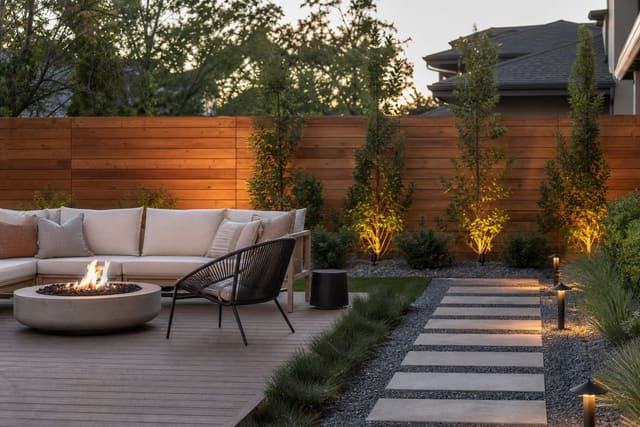
- Full-height cedar screen behind seating. A 10- to 16-foot run behind an outdoor sofa blocks a neighbor's view without boxing in the whole yard.
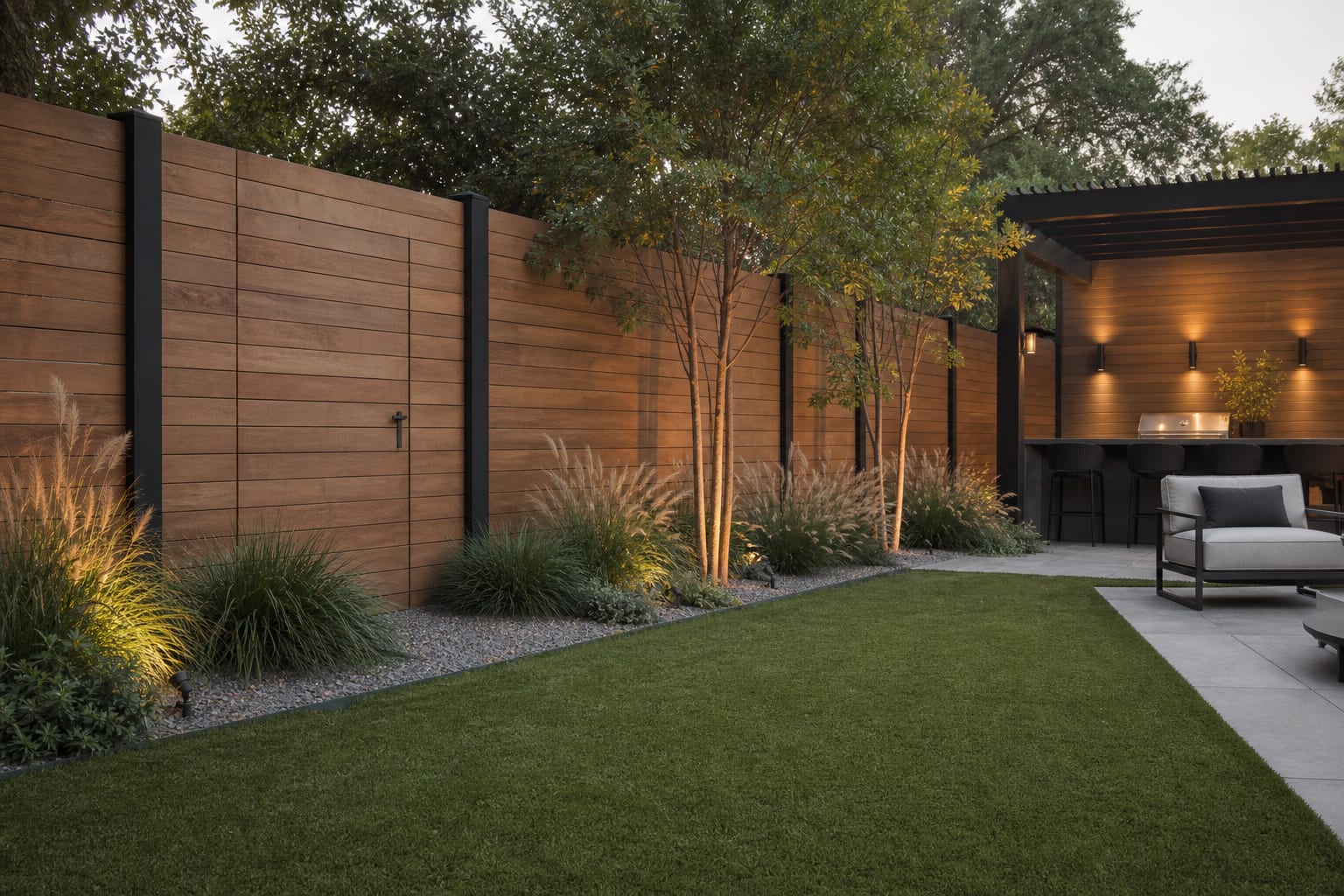
- Black metal posts proud of the boards. Works when the house has black window frames or steel railings; posts spaced about 6 feet apart create a steady rhythm against the horizontal wood.
- A 12- to 18-inch gravel planting strip at the base. Gravel, compact grasses, and low evergreen shrubs hide irrigation, soften the boards, and keep trimmers away from the finish.
- Semi-open screen around a fire pit zone instead of a solid perimeter. Paired with layouts like backyard fire pit seating area ideas, a 4- to 5-foot screen gives shoulder-level privacy while air and conversation still move.
- Carry the slat width and gap across the gate. Use a steel frame for gates over 42 inches wide, since wood-only gates sag and break the one continuous line that makes the fence feel custom.
Common horizontal fence mistakes to avoid
- Boards too thin. Thin slats cup, twist, or bow between posts; choose proper exterior boards and keep spans conservative, around 6 feet between posts.
- No drainage at the bottom. Keep the lowest board at least 2 inches above soil, mulch, or gravel. On sloped yards, step the fence in clean increments rather than letting the bottom line waver.
- Ignoring the neighbor-facing side. A fence that's polished inside but rough outside causes friction on shared property lines; use a framed double-sided design if both sides show.
- Choosing a stain without testing it outdoors. Cedar that looks warm indoors can turn orange beside red brick; sample offcuts in morning, shade, and evening light.
- Over-screening the whole yard. Privacy isn't the same as enclosure. Leave one long view open toward a good tree, sky, or garden bed beyond the fence line.
Use AI design to test the fence line before posts go in
A horizontal fence changes the entire horizon of a backyard, so preview the proportion before ordering lumber. Upload a straight, level photo of the yard to Re-Design and compare cedar slats, black posts, wider boards, tighter gaps, and base planting from the same camera angle.
The useful question isn't whether every board renders perfectly. It's whether the yard wants a warm horizontal wood fence, a darker modern fence, a semi-open slat screen, or a lower privacy pocket around one activity zone. Once the visual direction feels right, confirm the build details outside: property line, local height rules, post spacing, gate swing, drainage, and finish schedule.
Frequently Asked Questions
Why are horizontal fences more expensive?
Horizontal slats need stiffer posts and tighter post spacing (6-7ft on center vs. 8ft for vertical) to prevent sagging, and the labor and material cost per linear foot run 25-50 percent higher than vertical fencing.
What slat width works best for a horizontal fence?
Slats 4-6in wide with 1/2-3/4in shadow gaps give the most refined look. Wider than 6in starts to read agricultural, and narrower than 4in feels like louvers.
Do horizontal fences sag over time?
Yes, if posts are spaced beyond 7 feet or slats are thinner than 5/8in. Specify steel posts or 6x6 wood posts at 6-foot spacing for any span over 6 feet tall.
What wood works best for a horizontal fence?
Western red cedar, ipe, or thermally modified ash all hold the horizontal line without warping. Avoid pressure-treated pine for horizontal slats since it moves too much over seasons.
Can I install horizontal fence boards over an existing fence?
Yes, for low-stress retrofits: strip the old vertical boards, verify post integrity, and reclad with horizontal slats on the same rails. Replace any post that wiggles before adding new boards.
> Try this: Ready to see this on your own outdoor space? Open ReDesign and run the preview before you buy materials, plant, drill, or move furniture.
Three transformations to try
1. Horizontal cedar fence with steel posts