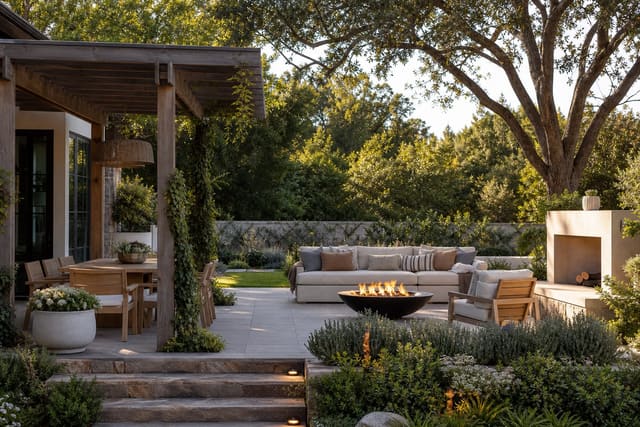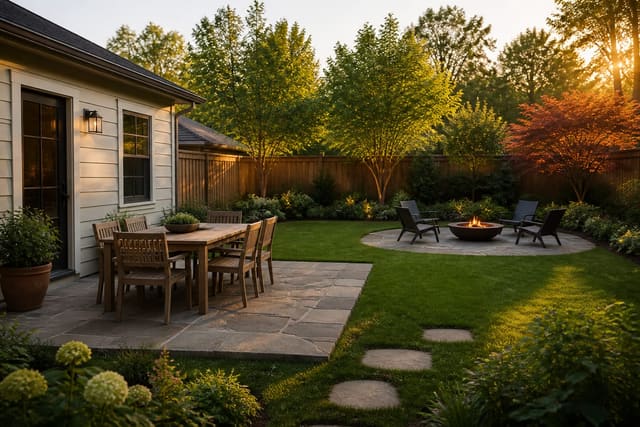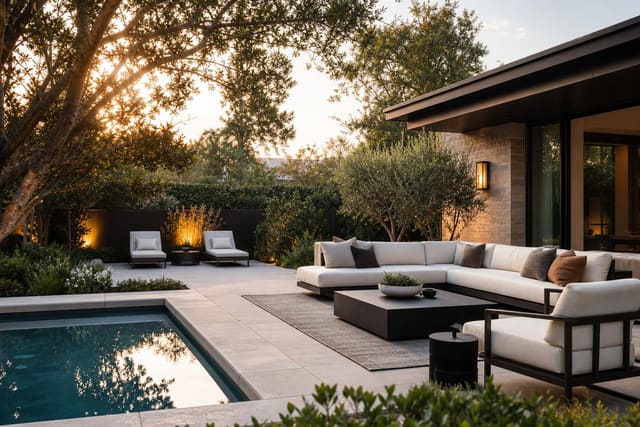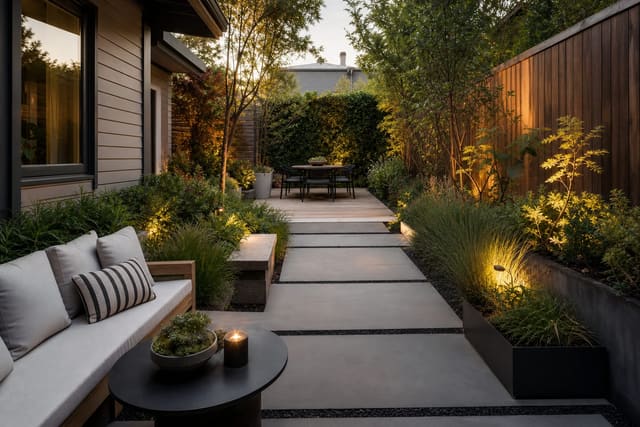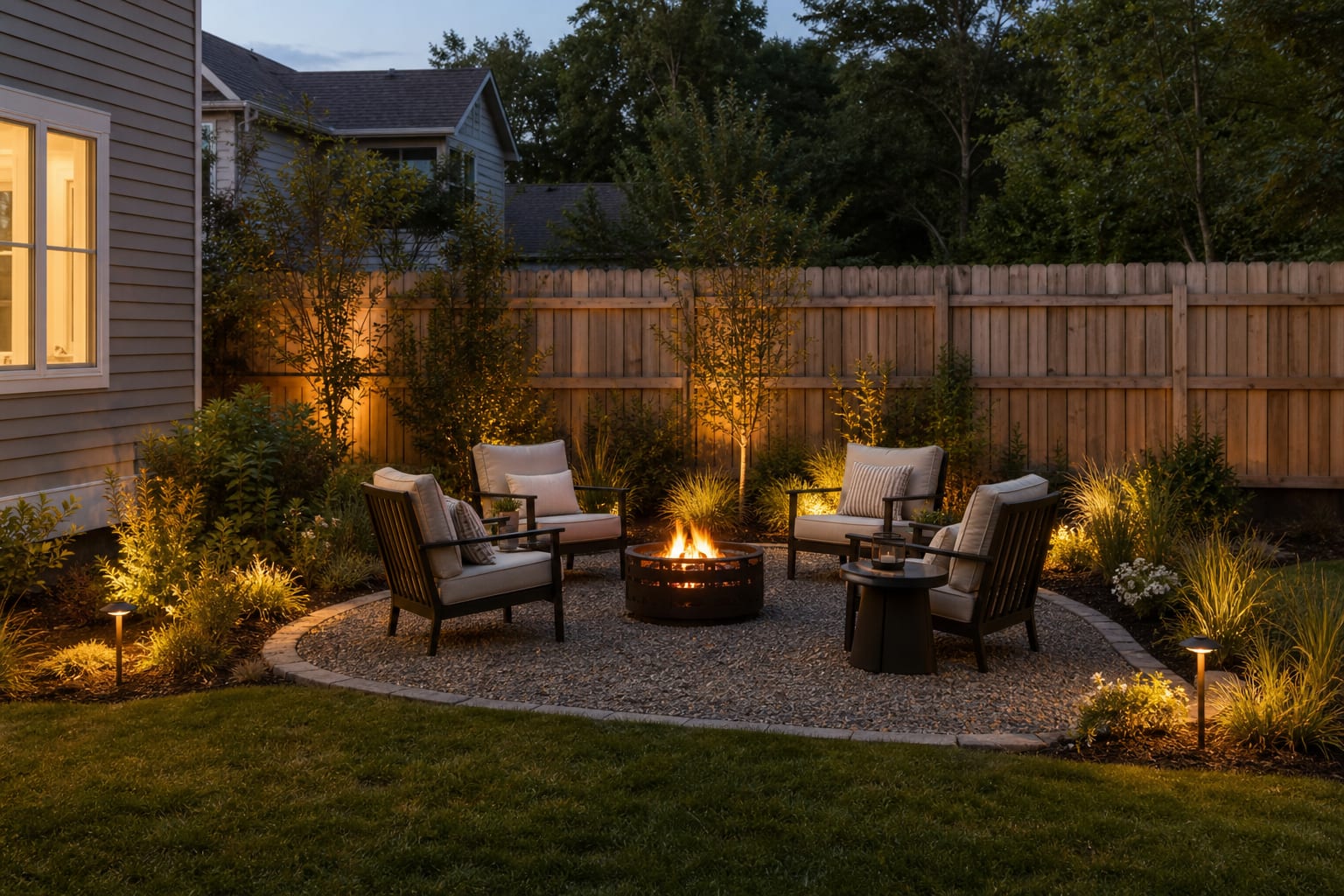
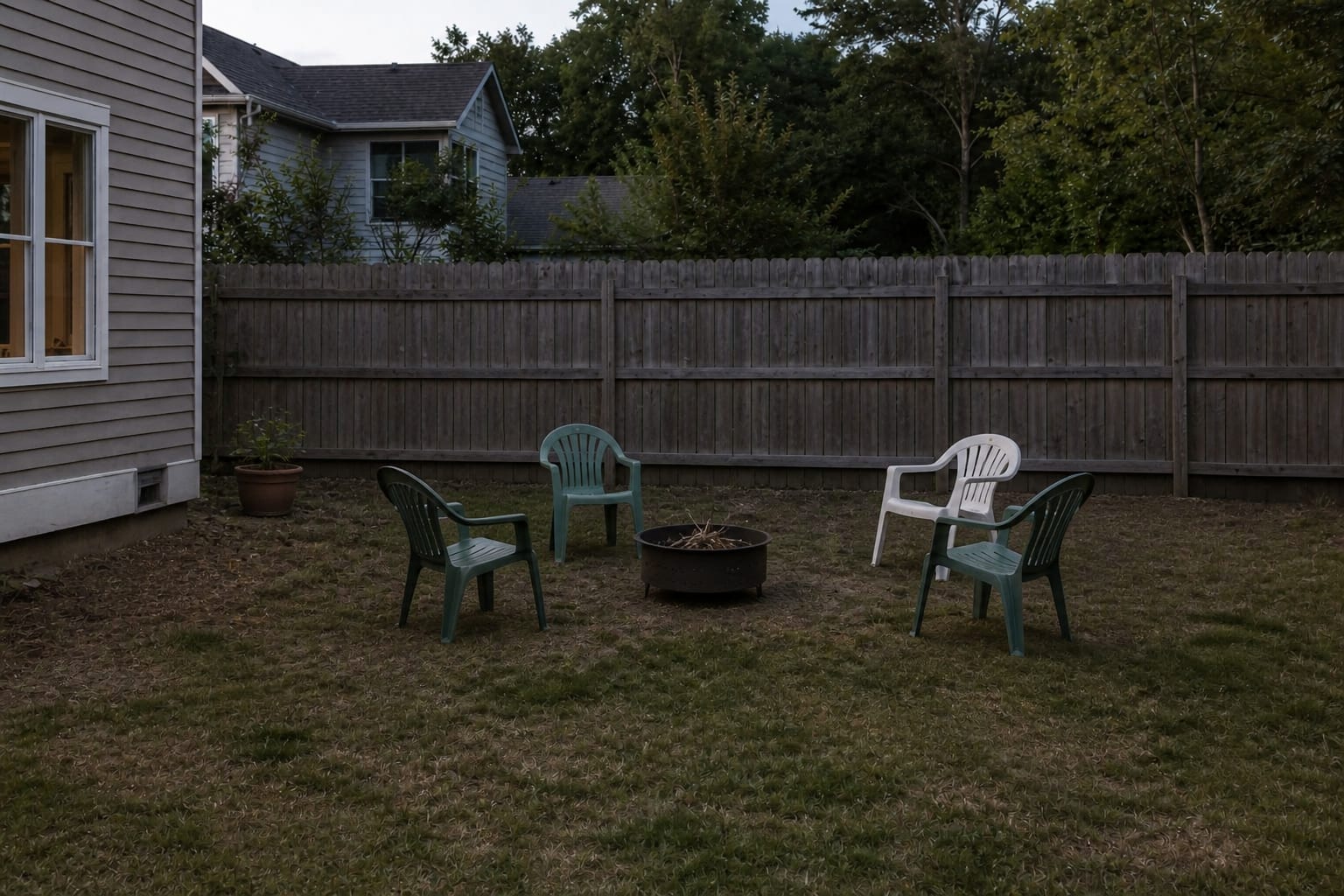
The best fire pit seating area idea is a 12-14ft circular pad of gravel, paver, or decomposed granite holding a 36-42in fire pit, ringed by four to six lounge chairs set 3-4ft from the flame, anchored by low planting or a stone seat wall, and reached by a clear path from the house.
How should seating actually sit around a fire pit?
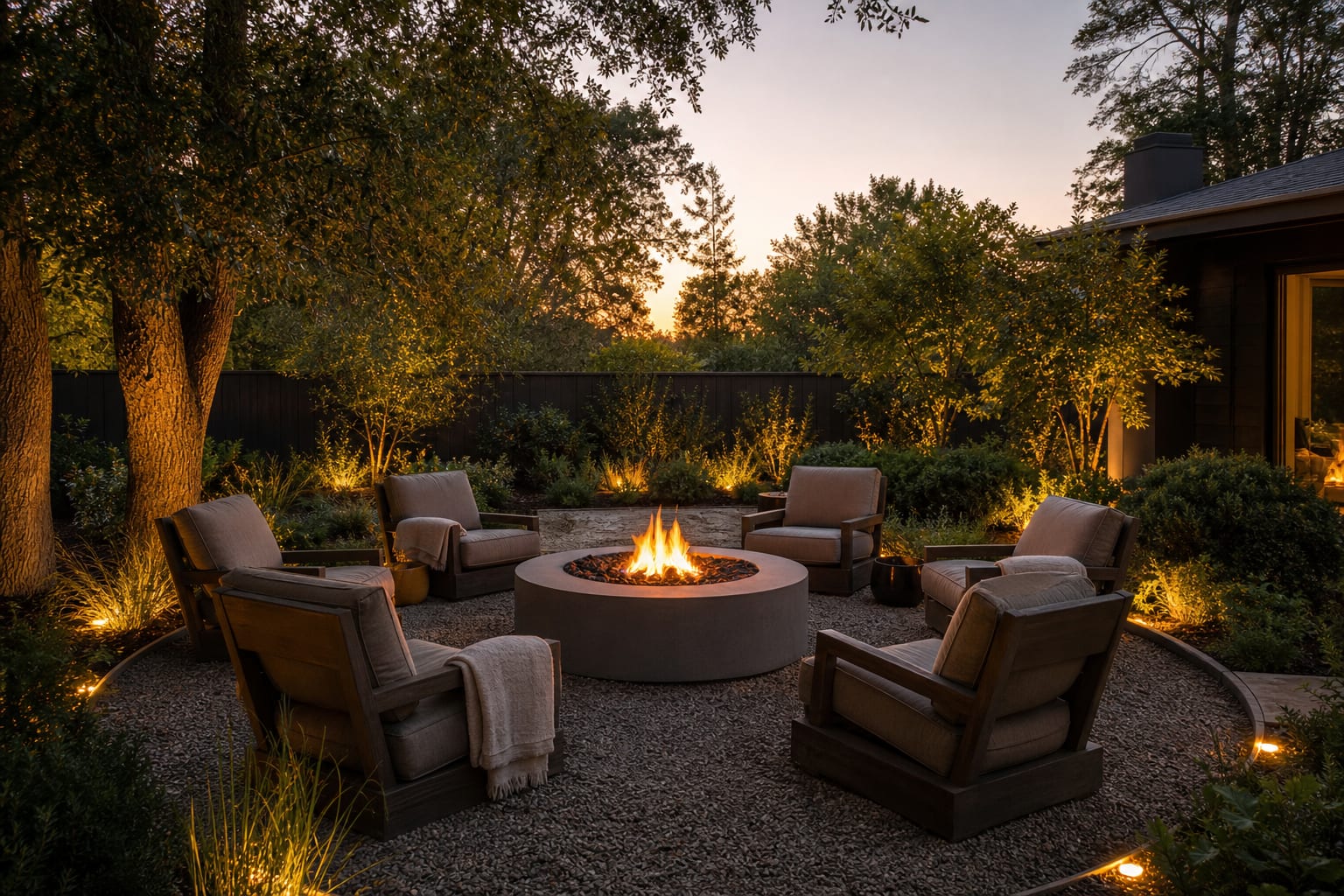
Arrange seating in a clear circle or U-shape around the flame, respect required heat clearance, and preserve a 36in walking route into the circle.
Start with 30in to 36in between the pit edge and the front of lounge chairs, keeping knees and cushions clear of heat while people still feel the fire. Wood-burning pits often need more clearance than a compact gas bowl, so follow the manual exactly and keep fencing, branches, and loose décor outside the zone. Propane and natural-gas pits still need the same respect near rugs and low cushions.
The seating footprint should extend at least 6ft beyond the fire feature in every active direction. A 36in fire bowl with four lounge chairs typically needs about 12ft of total diameter once chairs and circulation are included. In narrow yards, pull the layout into a long oval instead of forcing a perfect circle; see narrow backyard layout ideas for examples.
Quick clearance checklist: - Keep lounge-chair fronts 30in-36in from the flame edge unless the manual requires more. - Plan about 12ft of diameter for a four-chair fire circle, including pit and path. - Extend gravel, pavers, or stone dust at least 24in beyond the outside furniture legs.
Which fire pit circle design fits your yard?
The right design depends on how the yard is entered. A U-shape usually feels more natural when people approach from one side, while a full circle works best when it has a visible edge, like in the middle of a lawn or gravel court.
A round gravel pad is the simplest way to anchor a freestanding pit. Edge it in metal, stone, brick, or concrete, and make the diameter at least 12ft for four chairs, or 14ft-16ft for six, especially with reclining or thick-armed chairs. Angular gravel locks better under chair legs than pea gravel; pavers or stone dust are steadier for accessibility.
A square or rectangular pad suits modern yards and patios that already use straight lines. A 10ft x 14ft pad can hold a slim gas fire table, a loveseat, and two lounge chairs, pairing well with a larger outdoor room design plan with dining and shade nearby.
A low seat wall, around 18in high and 16in-18in deep, adds overflow seating and blocks wind without trapping smoke. Use it as a partial wrap rather than a full ring around the pit.
| Layout choice | Best use | Spec that keeps it comfortable |
|---|---|---|
| Full circle | Open lawn or gravel court | 12ft diameter minimum for four lounge chairs around a compact pit. |
| U-shape | Fire pit near a patio edge or view | Leave the open side aimed at the main path or best sightline. |
| Rectangle | Narrow yard or modern patio | Use a 10ft x 14ft zone for a fire table, loveseat, and two chairs. |
| Partial seat wall | Sloped yard or windy corner | Keep the wall near 18in high for casual sitting and enclosure. |
Test this on your own photo with ReDesign before choosing a final layout; keep the house edge, horizon line, hardscape, and main path visible so the preview matches your actual yard.
Five fire pit seating area ideas that do real work
- Build a gravel circle with four matching lounge chairs and two mismatched side tables (16in+ tops) so the setup stays functional without feeling like a showroom.
- Use Adirondack chairs (30in-34in deep) only when the ring can handle their footprint; place them 36in+ from the pit edge and skip them in tight side yards.
- Pair a gas fire table with an outdoor sectional, leaving 18in-24in between the table and seat edge so guests can step in safely.
- Add a 2ft-3ft deep planting bed of grasses, lavender, or evergreen mounds behind the chair ring instead of pushing seating against a bare fence.
- Treat a side yard pit like a linear room: a slim rectangular pit, two chairs on one side, a bench on the other. See side yard gathering spot ideas for tight passages.
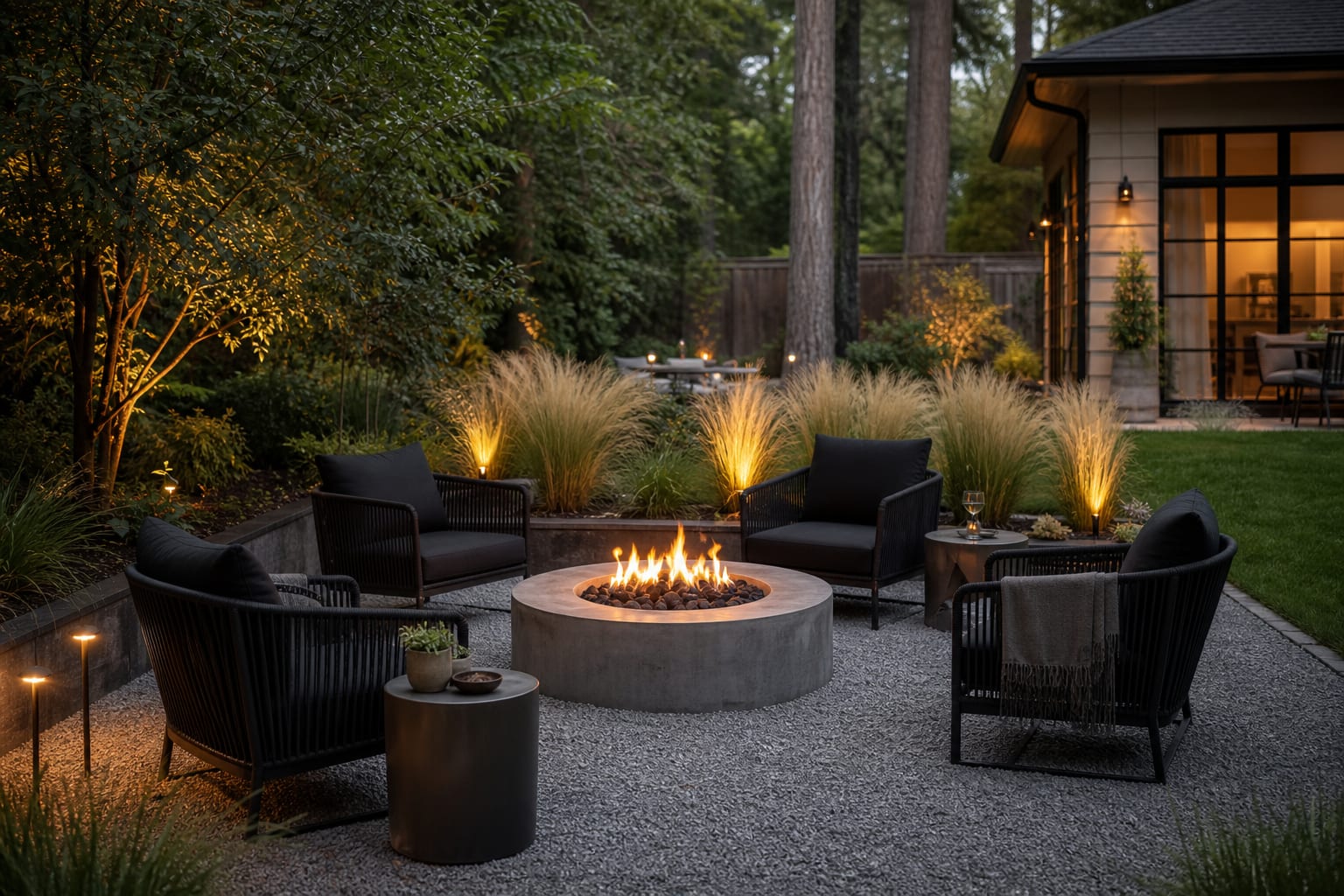
Keep lighting quiet: use path lights along the entry route rather than fixtures aimed at faces. Warm 2700K lamps flatter skin and planting, while cooler light feels like a driveway. Hang string lights 8ft-10ft above grade with outdoor-rated hardware, with no sag over open flame.
Common fire pit seating mistakes
- Buying the pit before measuring the ring. A 48in pit can swallow a small patio once chairs and side tables arrive; mark the pit and chair fronts with tape or hose first.
- Using dining chairs because they fit. Upright dining chairs make guests perch instead of settle; choose lounge chairs with weatherproof cushions or slings, seat height 14in-18in.
- Ignoring smoke, wind, and neighbors. Keep wood pits away from canopies, wood fences, and bedroom windows, check local burn rules, and leave room for smoke to move.
- Skipping a daytime focal point. An empty bowl looks bleak in daylight; add a planted edge, stone border, stools, or a dark fence panel behind the lounge.
- Choosing the wrong rug. Outdoor rugs work under gas fire tables but not wood-burning pits; use noncombustible paving under wood fire and add softness with cushions and planting instead.
Use AI design to preview your fire pit lounge
AI design helps most here because judging scale from your actual yard is the hard part. Upload a photo from the path you use to enter the space, then test a round gravel pad, a rectangular paver zone, a U-shaped chair plan, and a partial seat wall before committing to excavation or furniture.
Frequently Asked Questions
How big should a fire pit seating area be?
Plan a 12ft-14ft circular pad with a 36in-42in fire pit in the center, leaving 3ft-4ft of clear pad between the pit edge and the seat fronts.
How many chairs go around a fire pit?
Four to six chairs works for most residential setups. Eight is the upper limit before the circle gets too large for conversation, and three tends to read as incomplete.
What chair material works around a fire pit?
Powder-coated steel, aluminum, or stone benches hold up best. Avoid plastic or thin synthetic wicker, which can warp under radiant heat even at 3ft offsets.
Should a fire pit sit on grass or paving?
Use paving, gravel, pavers, or decomposed granite for safety, traction, and easy maintenance. Gas-fed fire pits on lawn create scorched dead zones within a season.
Wood or gas fire pit?
Gas pits start instantly, burn cleanly, and meet HOA codes that ban open flame. Wood pits deliver crackle and aroma but need roughly a 20ft setback from structures and trees.
> Try this: Ready to see this on your own outdoor space? Open ReDesign and run the preview before you buy materials, plant, drill, or move furniture.
Three transformations to try
1. Gravel fire pit pad with curved seating