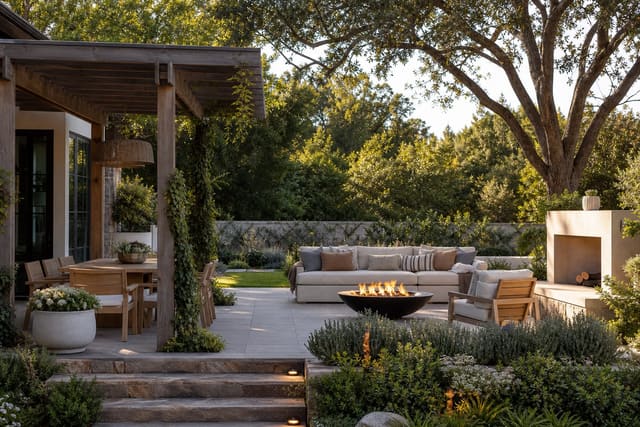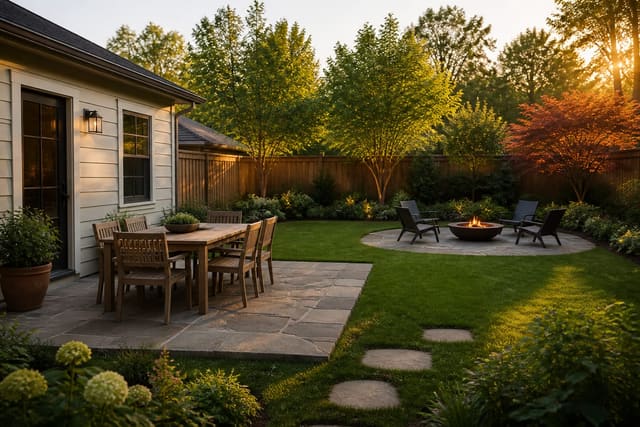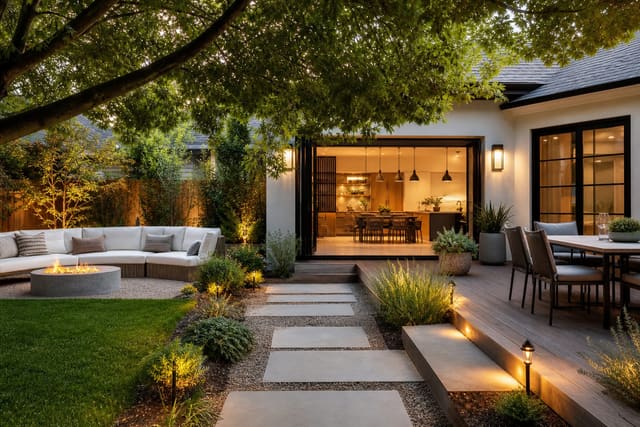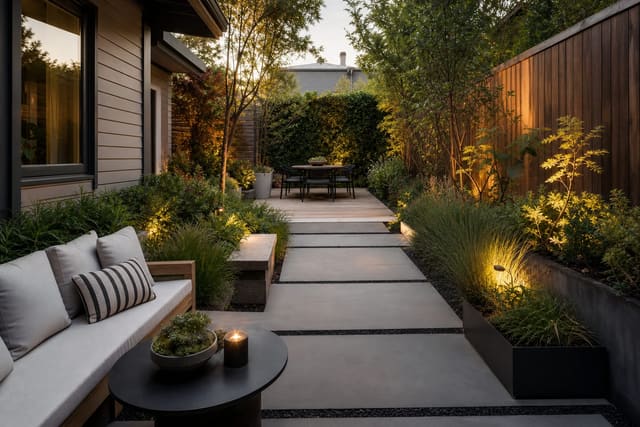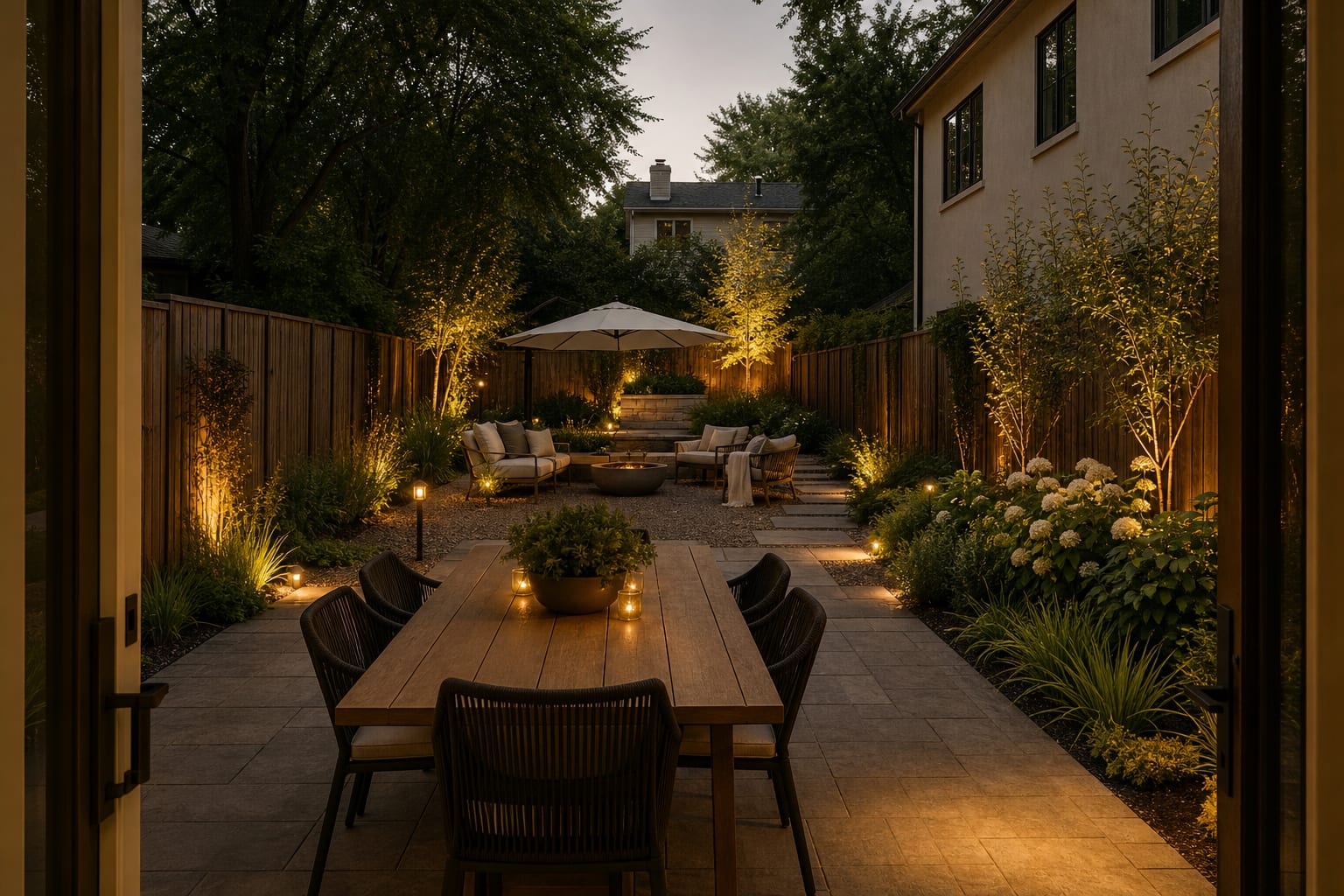
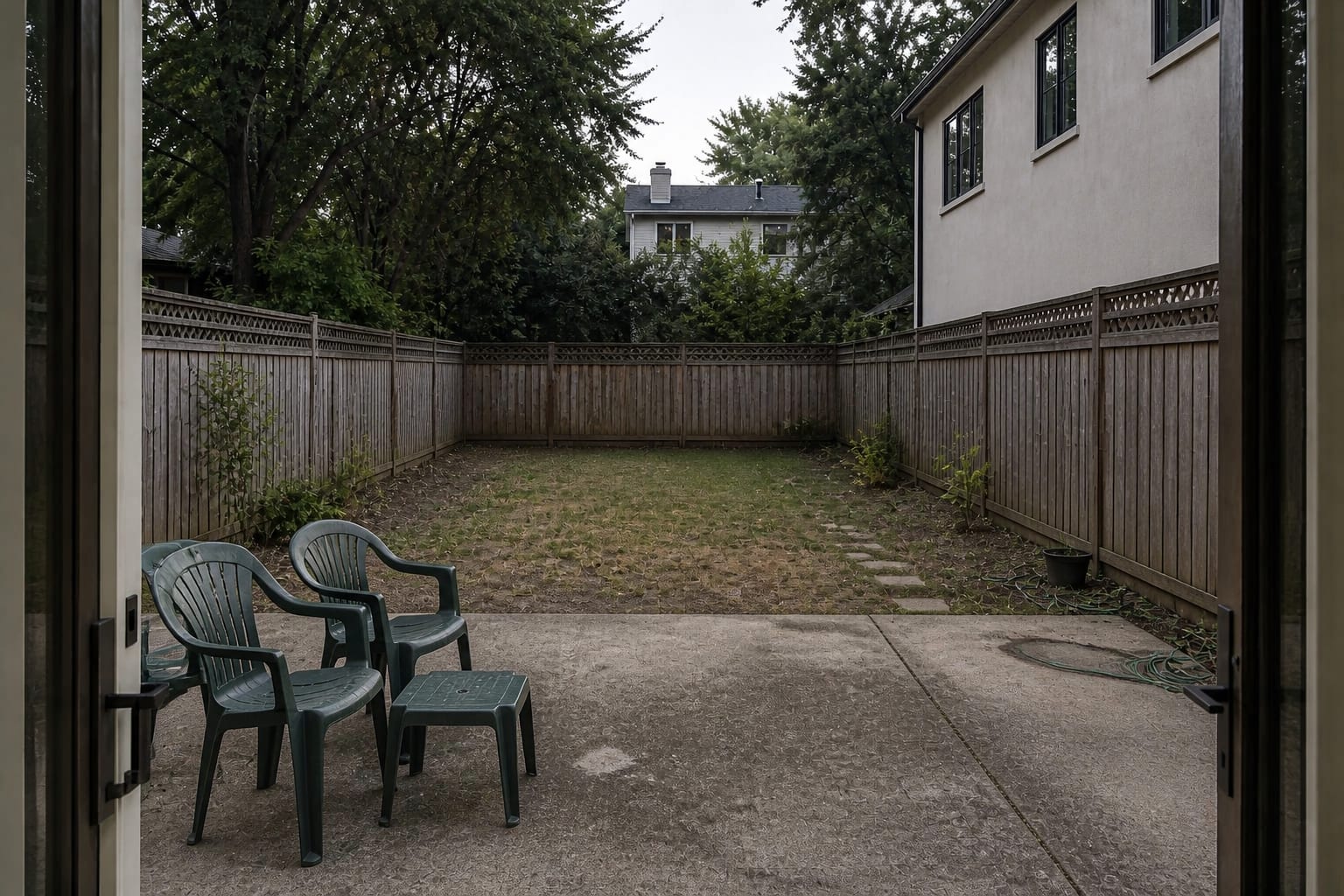
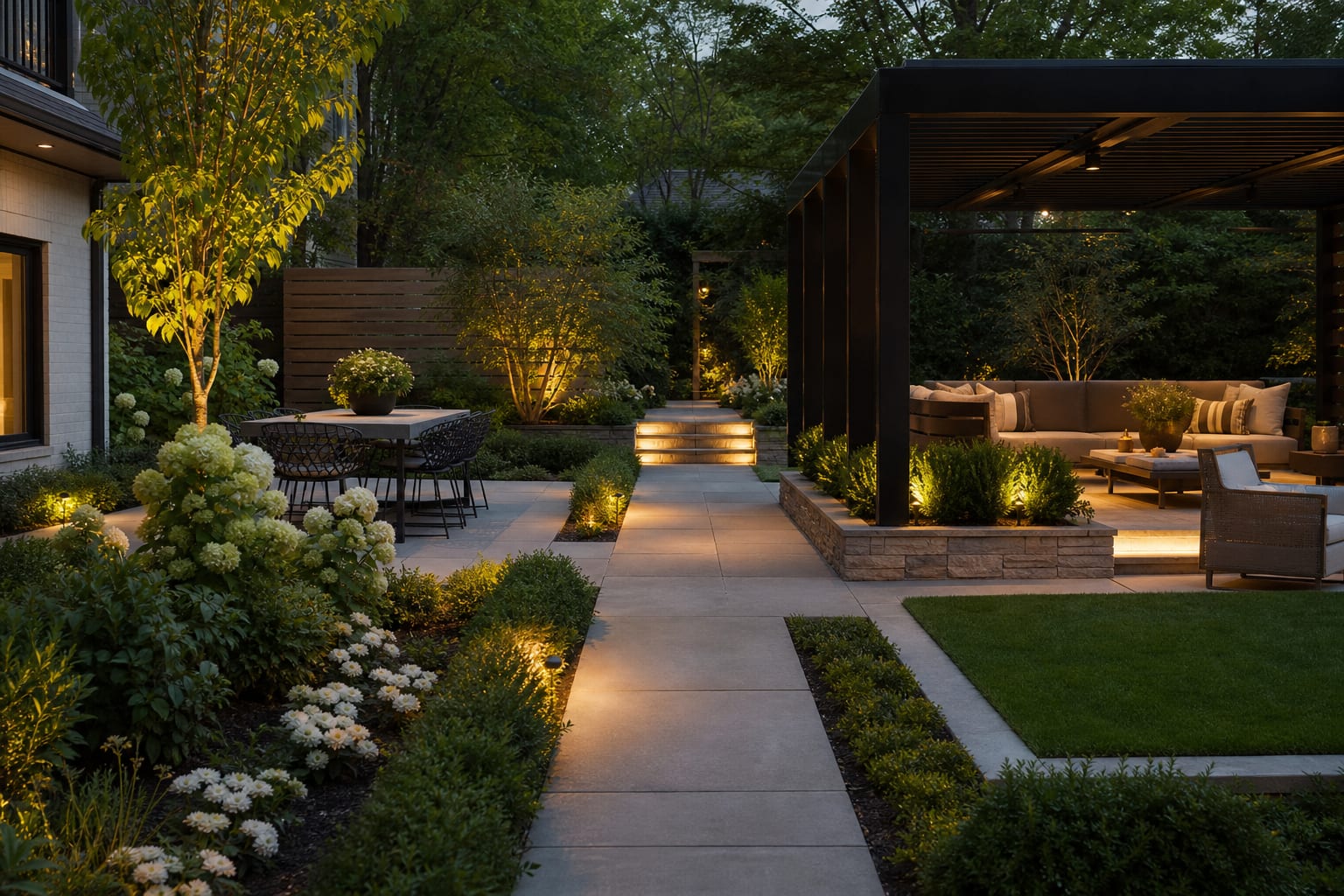
Outdoor room ideas work by giving each zone its own floor, edges, shade, and lighting instead of asking one flat lawn to serve dining, lounging, play, and fire all at once. Assign each area a purpose, define at least two edges, and connect zones with clear paths. That's what makes a yard feel designed instead of undecided.
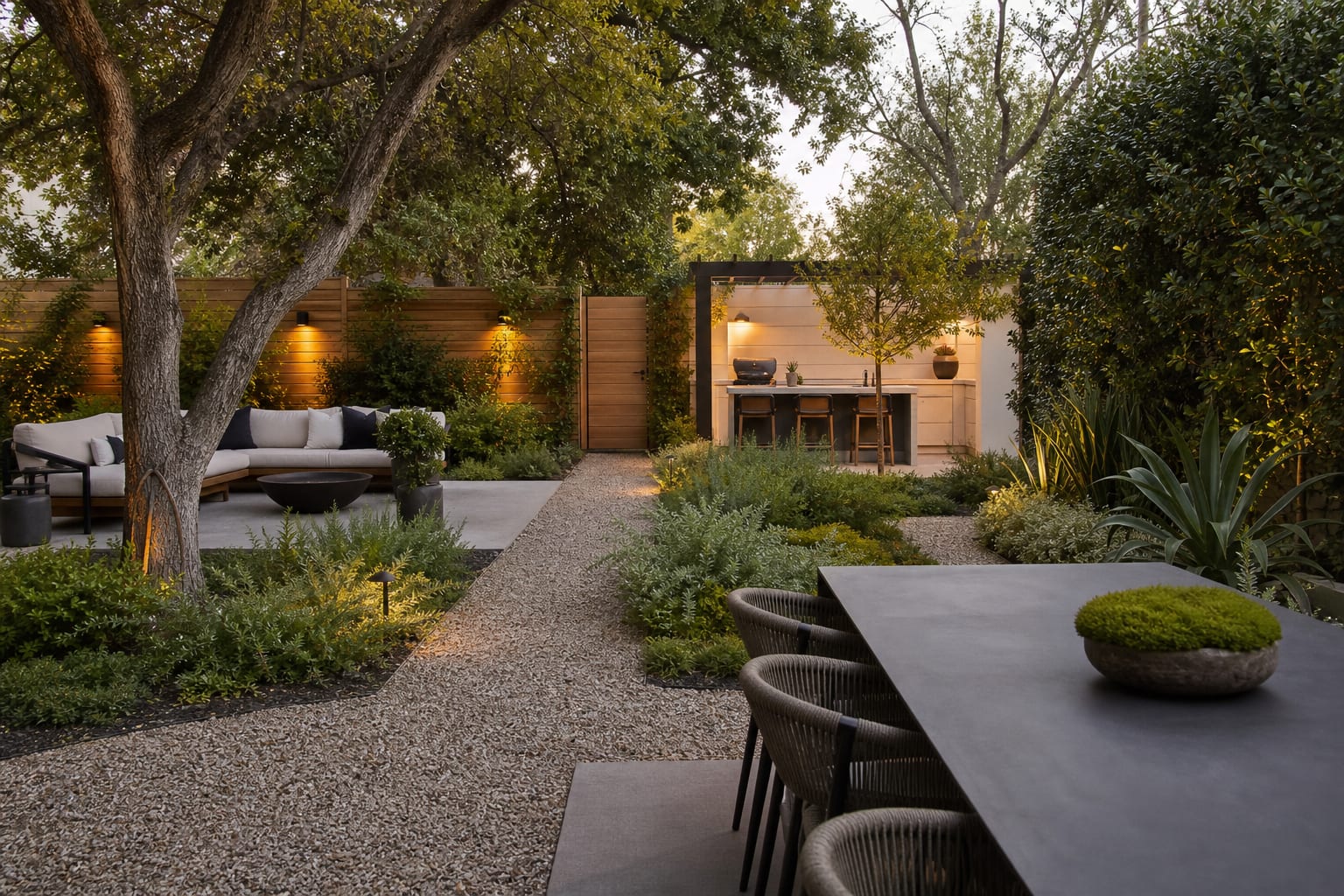
What makes a backyard feel like a set of rooms?
A backyard feels like a set of rooms when each zone has a floor, a ceiling cue, side edges, and a clear threshold from the next space. Indoors, walls do that work automatically; outside, you build the suggestion of walls with planting, furniture backs, pergola posts, paving changes, and light.
Start with the view from the main door. Place the first room within 6 to 12 feet of the exit so it feels reachable — dining near the kitchen or grill, lounging farther out, a fire area away from foot traffic and the back door. For long, thin lots, borrow the sequencing logic from narrow backyard zoning ideas instead of lining rooms up side by side.
The strongest outdoor rooms combine at least two of four signals: a different ground surface, a vertical edge, overhead shade, and dedicated lighting. A gravel dining pad under a pergola already reads as a room. A lawn play area framed by two planting beds and a bench does too, no fence required.
Which zone should you design first?
Choose the primary outdoor room, then let smaller zones support it. Dinner hosts anchor with dining; families who live outside anchor with a lounge; kids, pets, or gardening should be protected before a sectional swallows the yard.
Most yards work in three bands: a transition near the house (a 4x6 foot grill landing or paver path), a main living zone with the best surface and furniture, and a quieter destination at the far end — a bench under a tree, raised beds, or a small fire bowl.
| Outdoor room | Comfortable starting size | Clearance that matters |
|---|---|---|
| Dining for four | 8 by 10 feet | 36 inches behind chair sides |
| Lounge for four | 10 by 12 feet | 30 inches between table and seating |
| Grill station | 5 by 7 feet | 42 inches in front of the grill |
| Fire seating | 12 foot diameter zone | Follow the fire product's clearance |
| Garden bench | 4 by 6 feet | 30 inch path to reach it |
Don't split space evenly. A 20x30 foot yard can't hold a full dining room, living room, kitchen, fire circle, and lawn without becoming an obstacle course. One generous room with two modest supporting zones reads as more expensive than five cramped ideas.
Test this on your own photo with ReDesign before finalizing anything — keep the house edge, horizon, hardscape, planting beds, and main path visible so the preview solves the space you actually have.
Five outdoor room ideas with specs
- Dining room: an 8x10 foot paver, brick, or decomposed granite pad for a four-person table, framed on one side by a 24 to 30 inch planting bed.
- Lounge room: arrange a sofa or two chairs so the backs form a partial wall, keep the coffee table 16 to 18 inches from the seat edge, and add a rug under at least the front legs.
- Destination at the back fence: a 6 to 8 foot bench, one small tree, and two shielded lights. For flames, check compact fire pit seating layouts before buying a round set that needs more clearance than you have.
- Garden room: layer plants in three heights — 12 to 18 inch groundcover, 24 to 36 inch shrubs or grasses, and one taller screen or small tree for privacy.
- Side yard room: a 36 inch path with wall-mounted lights and narrow planters turns a passage into a useful transition; see side yard design ideas for yards connecting to trash storage, bikes, or a secondary door.
Add a ceiling cue wherever a room feels exposed — a 9 foot umbrella, shade sail, pergola, or tree canopy makes furniture usable in afternoon sun instead of decorative from the kitchen window.
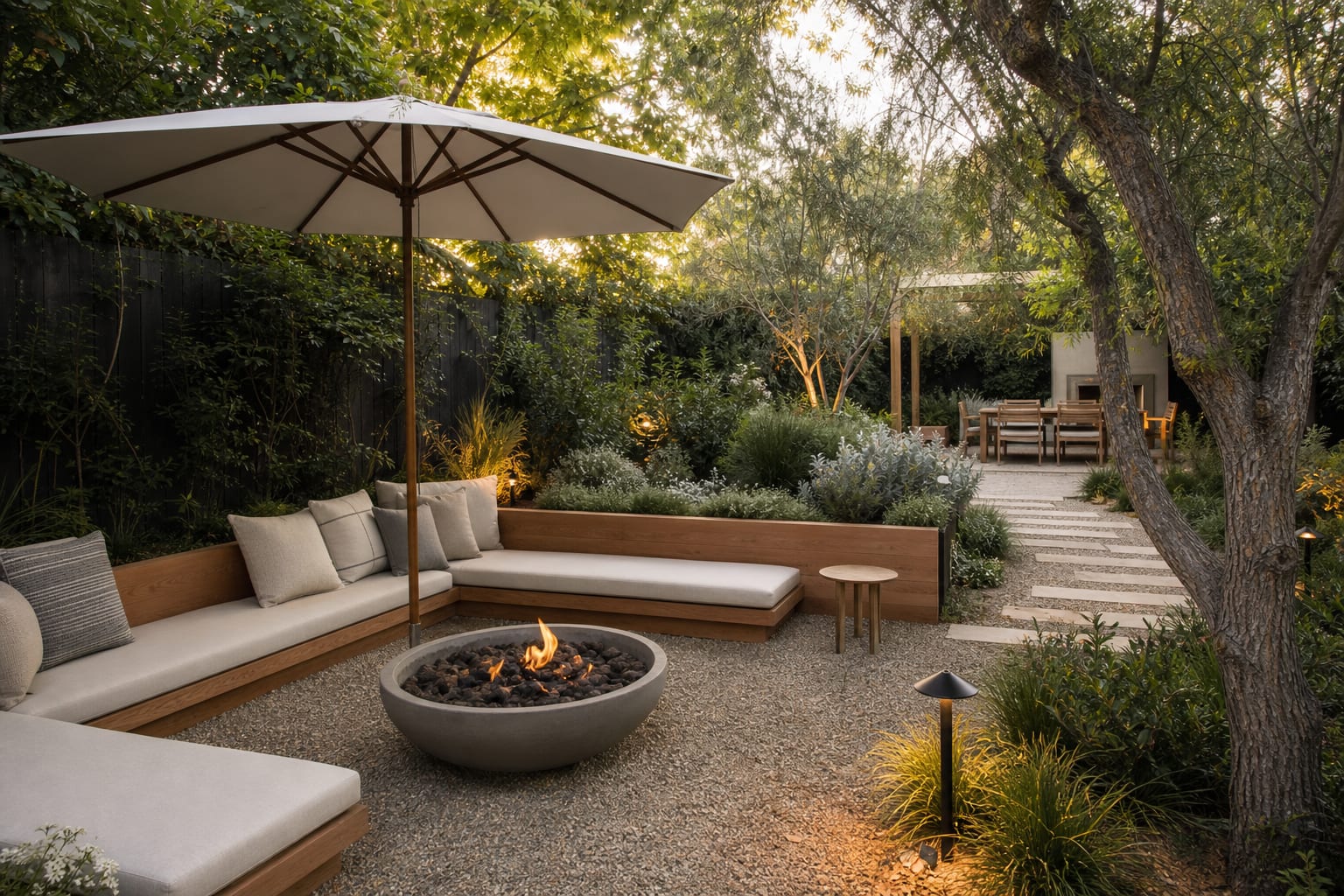
What mistakes ruin outdoor room plans?
- Ignoring chair movement. A table may fit on paper, but pulled-out chairs need room for bodies and serving. Tape the furniture footprint on the ground and add 30 to 36 inches for movement.
- Screening everywhere. Solid panels can make a yard feel smaller and hotter. Screen only the view that bothers you most; use open shrubs or lattice elsewhere.
- Changing surfaces too often. Mixing pavers, turf, gravel, decking, mulch, and tile in one small yard looks chopped up. Keep one dominant surface, one secondary surface, and planting as the softener.
- Forgetting nighttime. Use warm 2700K bulbs, shield the source from view, and space path lights 6 to 8 feet apart at steps and edges.
- Putting the grill in the prettiest spot. Cooking needs ventilation and a clear route to the kitchen; don't let it block the best lounge view or send smoke across seating.
How can you preview outdoor rooms before committing?
Upload a straight backyard photo taken from the house at chest height, with fence corners, the back door, existing trees, and ground surface visible. Preview versions with a dining pad, lounge area, planted edges, lighting, and a destination at the far end. Judge the result by whether paths, chair clearance, and planting depth still look believable, not by how glamorous it looks.
Move loose toys and clutter out of frame, but leave gates, steps, drains, meters, and slopes visible — a good preview should solve those constraints, not hide them. Renters should test movable pieces first: outdoor rugs, freestanding screens, planters on saucers, plug-in lights, folding furniture, and weighted umbrellas. Owners can use the same composition to compare permanent choices like a paver landing, pergola posts, or built-in lighting. If a preview only works by filling every open inch, reject it — a room still needs sky and circulation.
Frequently Asked Questions
How many outdoor rooms should a yard have?
Two to four works for most residential yards — dining, lounge, and one quiet or destination zone. More than four fragments the space and dilutes the budget available for each room.
How are outdoor rooms separated?
Floor changes, such as gravel to paver to lawn, read more strongly than fences. Layered planting, low hedges, or slatted screens reinforce the boundary while still letting air and views through.
Should outdoor rooms have a ceiling?
A ceiling cue is optional but useful. A pergola, sail shade, tree canopy, or string lights overhead gives a room a sense of enclosure that open sky alone doesn't provide.
What size does an outdoor room need to be?
A dining room needs about 12x14 feet to fit a six-person table with pullback room; a lounge needs 10x12 feet for a sofa and two chairs; quiet zones can be as small as 6x8 feet.
How do paths connect outdoor rooms?
Stepping stones, gravel walks, or a continuous paver path link rooms in sequence. Good sight lines reveal the next room only after a visitor enters the current one, keeping the yard's reveal gradual.
> Try this: Ready to see this on your own outdoor space? Open ReDesign and run the preview before you buy materials, plant, drill, or move furniture.
Three transformations to try
1. Backyard with paver dining and gravel lounge 2. Three outdoor rooms with planted dividers 3. Outdoor rooms under pergola shade